Are Potty Training Rewards Just Bribery? Where the Line Is


A reward follows a behaviour that has already happened, such as a sticker for a wee that is already in the potty. A bribe is offered during resistance, to buy cooperation in the moment, such as chocolate promised if your child will just sit down. Rewards given after the fact, kept small and allowed to fade, do not become bribery.
Say your child does a wee in the potty and you say ‘you did it, pick a sticker’: that is a reward. Say your child is refusing to sit down and you say ‘if you sit on the potty I will give you a chocolate button’: that is a bribe, because it is offered to end a standoff, not to mark something your child has achieved.
Plenty of parents feel a flicker of guilt handing over stickers, as if they are paying their toddler to use the toilet. You do not need to carry that guilt. A reward that arrives after the behaviour, for something your child genuinely did, is ordinary positive reinforcement, the same mechanism behind praising a first wobbly bike ride.
The other thing worth knowing up front: rewards here are a short-term scaffold, not a permanent payment scheme. They are there to make a new, slightly scary habit feel worth doing while it is still unfamiliar, and they are designed to step back once it is not.
What turns a reward into a bribe during potty training?
Four checks tell you which side of the line you are on, without needing anyone’s opinion. Run through them honestly and most parents can place themselves in seconds.
| Situation | Reward | Bribe |
|---|---|---|
| Child has just weed in the potty | ‘You did it, choose a sticker’ | Not possible, it already happened |
| Child is refusing to sit down | Nothing offered, wait calmly | ‘Sit down and I’ll give you chocolate’ |
| Child is mid-tantrum about the toilet | Stay calm, try again later | Raising the offer until they comply |
| Accident has happened | No sticker, no telling off, try again next time | Threatening to withhold a treat |
Timing is the first check: before the behaviour or after it. A bribe is always offered beforehand, to get something to happen. A reward is always given afterwards, because something already did.
Who is steering is the second check. A reward marks your child’s own effort. A bribe is you negotiating your way out of a standoff, and your child learns that holding out gets them a better offer.
Escalation is the third check, and the easiest to miss in the moment. The instant you catch yourself raising the price mid-refusal, from a sticker to a biscuit to a trip to the park, you have slid from reward into negotiation.
If you notice you have already slipped into bribing, the repair is simple: drop back to praise plus a small reward given only after the fact, and reset from the next attempt rather than trying to undo what already happened. Accidents are never punished and a sticker is never taken back for one. An accident is part of learning the skill, not a withdrawal from the reward account.
Why most sticker charts stop working after a few days
A fixed chart that pays the same single sticker for every success, easy or hard, tends to run out of steam within a week. The novelty wears off around day three or four, exactly when the actual work gets harder and a plain sticker stops feeling like enough.
Many parents find day four or five the hardest day of the week, not day two. By then your child is usually bored of being asked ‘will you tell me when you need a wee?’ over and over, and that boredom shows up as pushback and refusal rather than progress. The fix on that day is not a bigger reward, it is asking less often and handing your child more of the responsibility for noticing and telling you.
Read more on why sticker charts stall if this is the stage you have hit, or see which kind of reward chart works if you are choosing a format from scratch. One more thing worth checking on your own chart: if it rewards ‘sat on the potty’, it is training sitting, not signalling, and those are different skills with a very different finish line.
The reward ladder: 3, 5, 7 and 9 squares, in that order
The Potty Training Box builds this fading directly into its sticker cards rather than leaving a parent to invent it mid-week. There are twenty sticker cards across four sizes, three, five, seven and nine squares, used strictly in that order.
The first reward comes fast, at just three squares, so your child sees quickly that the system actually works. After that the gap between rewards widens as your child improves, so the habit outlasts the stickers instead of stopping abruptly the day the cards run out. There are 100 animal stickers and 20 poo stickers to go with the cards.
This sits inside the wider Potty Training Box Method, a day-by-day programme that keeps the first three days at home, where most of the learning happens, before moving on to short outings, and that works from potty towards toilet while your child learns to signal the need themselves. If you only want the reward side on its own, perhaps for a second child or a refill, the (Extra) Reward system Potty Training covers that, and it is also sold in a boy and a girl version with their own sticker designs.
What you are actually rewarding: the child telling you, not the clock
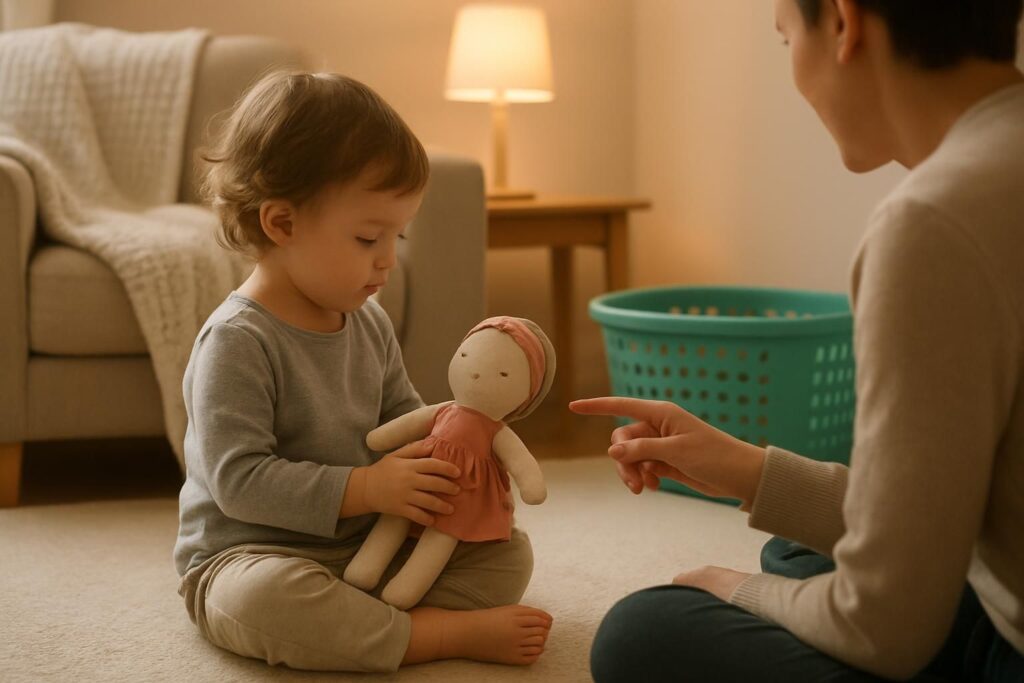
The behaviour worth a sticker is your child telling you they need to go, not simply sitting when you put them there. Instead of offering the potty on a fixed schedule, you ask ‘will you tell me when you need a wee?’ and wait for your child to take the lead.
There are only a few fixed moments where you offer rather than wait: before and after sleep, and before you leave the house. That stays true both during the training week and long afterwards. Everywhere else, offering the potty on a timer, every thirty minutes regardless of what your child needs, teaches the opposite lesson to the one you want, which is your child learning to read their own body.
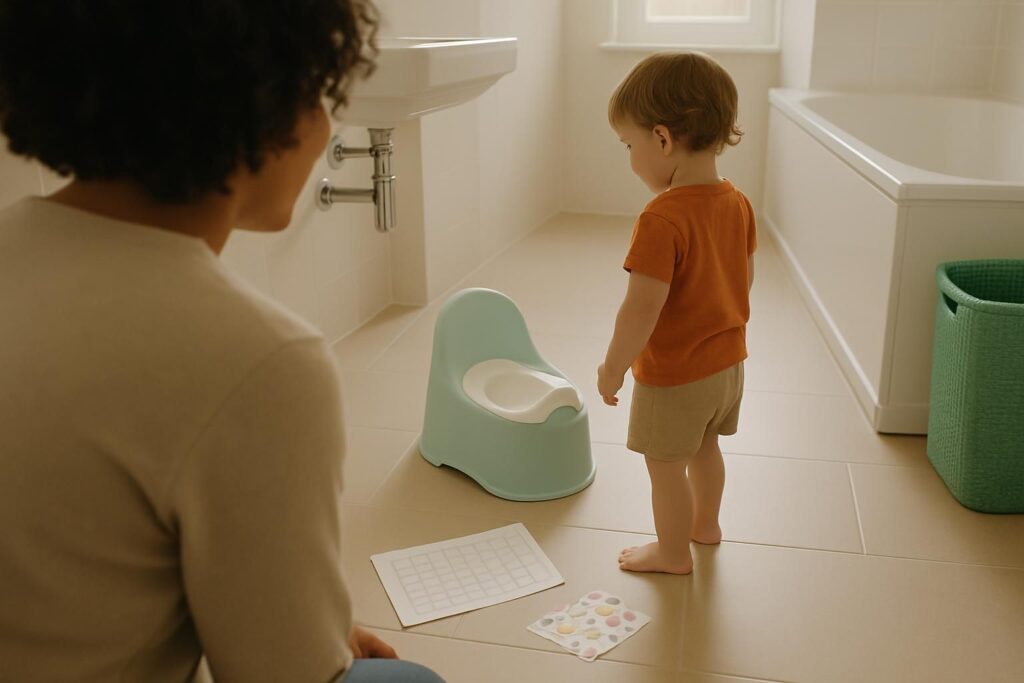
The tracking schedules exist to record when this particular child actually goes, so you learn their pattern rather than impose one. A typical card tracks these columns:
| Column | What it captures |
|---|---|
| Time of drinking | When your child had a drink |
| Time on toilet | When they sat down |
| Nothing happened | Yes or no |
| Wee | Green for a success, red for an accident |
| Poo | Green for a success, red for an accident |
| Notes | Anything else worth remembering |
Let your child drink a cup in one go rather than in sips spread across the morning. Only then can you actually see how much went in and how long it takes before they need a wee, which is exactly the link between amount and timing the schedule is designed to show. If you would rather print one off, the tracking chart you can print is the same layout.
Potty training reward ideas that do not escalate
A big prize on day two leaves nowhere to go by day five, which is why rewards need to start small and stay small on purpose. A sticker, a few bubbles blown together, one page of a favourite book, choosing the next song in the car, or a quick phone call to grandma to share the news, all work well precisely because there is still room to grow from there.
Food and sweets are the easiest reward to escalate and the hardest to quietly withdraw later, because a toddler notices immediately when a chocolate button stops appearing. Attention costs nothing and is usually the strongest reward a toddler has: a proper fuss, eye contact, your full focus for thirty seconds, often beats an object outright.
For the days you genuinely run out of fresh ways to say well done, the box’s compliment cards exist for exactly that gap. And if you are tempted towards bigger physical prizes, potty training toys that actually help covers which small, one-off options are worth having rather than feeding an escalating list.
How do you stop the rewards without the progress stopping?
The widening ladder does the fading for you automatically, so there is no single awkward day where rewards simply stop. As the gaps between sticker cards grow, from three squares up to nine, your child gets used to going longer between prizes without noticing a cliff edge.
Alongside that, shift what your praise is actually about. Move it from the outcome towards the signalling itself: ‘you told me all by yourself’ matters more at this stage than ‘well done for the wee’, because the telling is the skill that needs to stick once stickers are gone.
The wee certificate and the poo certificate that come with the programme work well as a closing marker for the week rather than an ongoing incentive, something to hand over once rather than something to chase daily.
On timing, most children are dry in the daytime in about a week using this approach. Some manage it in three days, others need two or three weeks, and that range is entirely normal rather than a sign anything has gone wrong. Night-time dryness is a separate skill that typically follows later on its own, as the NHS page on potty training also notes, and the box makes no promises about it. If a week in it genuinely is not working, the method’s own advice is to stop, put things away for a while, and try again later rather than pushing through, which when potty training is not working covers in more detail.
When rewards are not the problem
A child who is frightened of the potty or the toilet is not a motivation problem, and no reward, however appealing, fixes fear. The honest move is to build familiarity first, perhaps letting your child simply sit on it clothed or watch a sibling use it, and start the actual training later once that fear has eased.
Common readiness signs include staying dry for a couple of hours at a stretch, showing an interest in the toilet or potty, being able to pull pants up and down, and telling you, even after the fact, that they have just had an accident. If you are not sure where your child stands, the readiness quiz gives a clearer picture than guessing.
The same reward ladder is used successfully with children who are autistic, have Down syndrome, or are non-verbal, usually over a longer stretch and leaning on reading the child’s own signals rather than waiting to be told in words.
Withholding stool, ongoing constipation, or pain when weeing are medical matters, not motivation matters, and belong with a GP or health visitor rather than a sticker chart. The NHS page on soiling is a sensible place to start if any of that sounds familiar.
Celebrate the first success together
The first time it actually happens is worth marking properly rather than rushing past it. Watching something together right after a first win often lands better with a toddler than a verbal explanation of how proud you are.
When the moment comes, let your child peel the sticker off and press it on themselves rather than doing it for them. The small act of placing it is part of what makes it feel like their own achievement, not something that happened to them.
Frequently asked questions
Is a sticker chart bribery?
A sticker chart is not bribery as long as the sticker is handed over after the behaviour has happened, not offered during a refusal to get your child to comply. It becomes bribery the moment you start offering bigger rewards mid-standoff to end resistance.
What rewards work best for potty training?
Small, cheap rewards given straight after success work best: a sticker, a few bubbles, a favourite song, or simply a big fuss and your full attention. Keep them small on purpose, because a big prize early leaves nowhere to go as the week goes on.
How do you use a potty training sticker chart?
Give one sticker immediately after a success, not before it, and let your child choose and place it themselves. A chart that widens the gap between rewards as your child improves, rather than paying the same every time, tends to keep working for longer.
How often should you offer the potty when potty training?
Rather than offering on a fixed schedule, ask your child directly whether they will tell you when they need a wee, and wait for them to lead. The only fixed moments to offer are before and after sleep and before leaving the house, both during training and afterwards.
Should you take a sticker away after an accident?
No. Accidents are a normal part of learning the skill and are never punished or used to withdraw a sticker already earned. Simply reset calmly and try again at the next opportunity.
When should you stop giving rewards for using the potty?
Rewards should fade gradually rather than stop all at once, which is exactly what a widening reward ladder, from three squares up to nine, is designed to do. Alongside that, shift your praise towards your child telling you they need to go, since that is the skill you want to outlast the stickers.
Ready for the next step?
The Potty Training Box holds the day-by-day programme this article is built on: tracking charts that show you when your child actually needs to go, instruction cards for each day, and a reward system that tapers off on its own.
Sources
- NHS (Night-time dryness is a separate skill that typically follows daytime dryness later on…)
- NHS (Withholding stool, ongoing constipation and soiling are medical matters that belong wit…)
This article was written with AI assistance and checked by Dustin van de Sande.