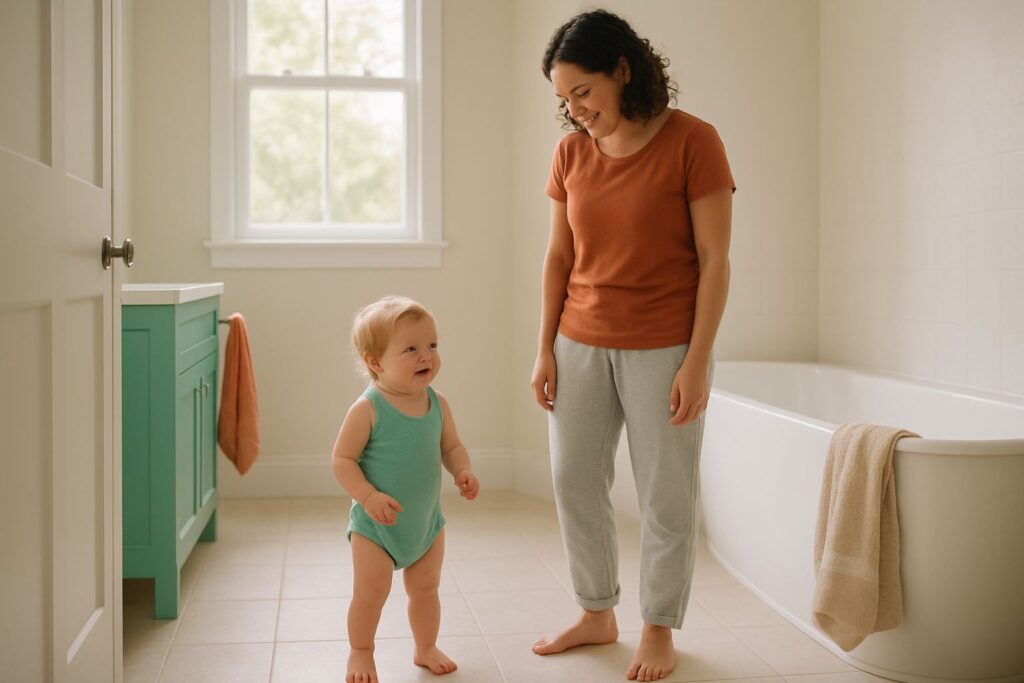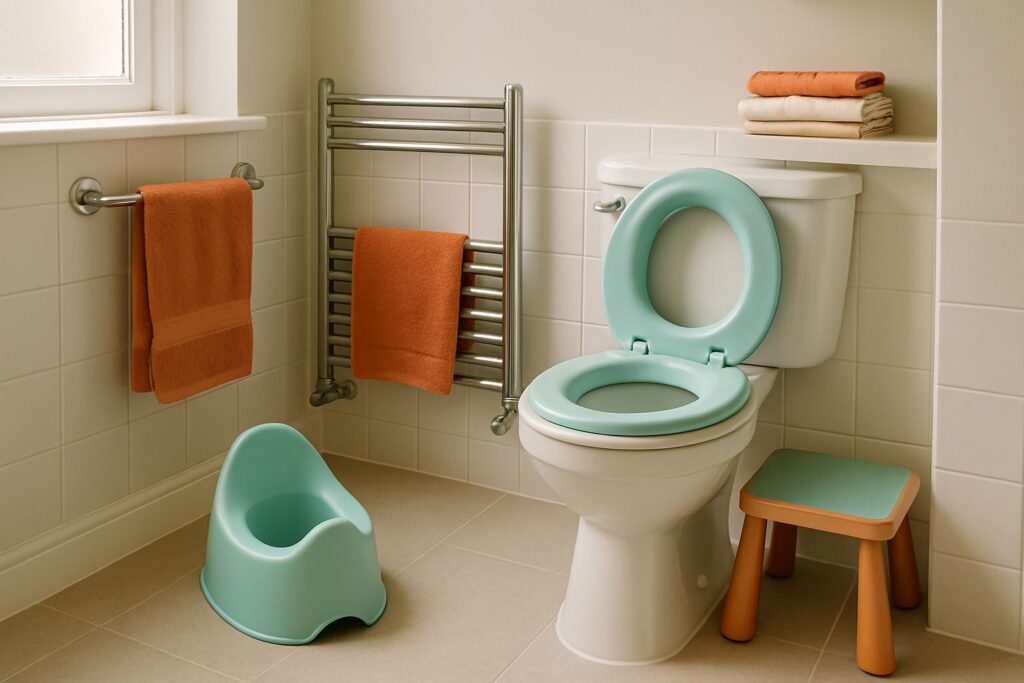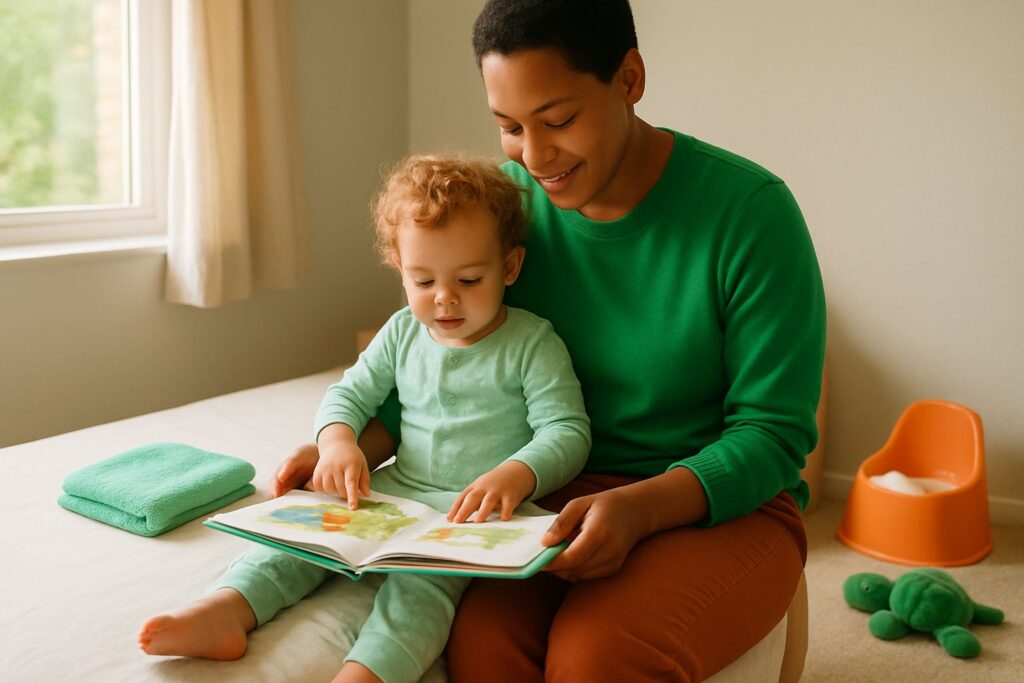

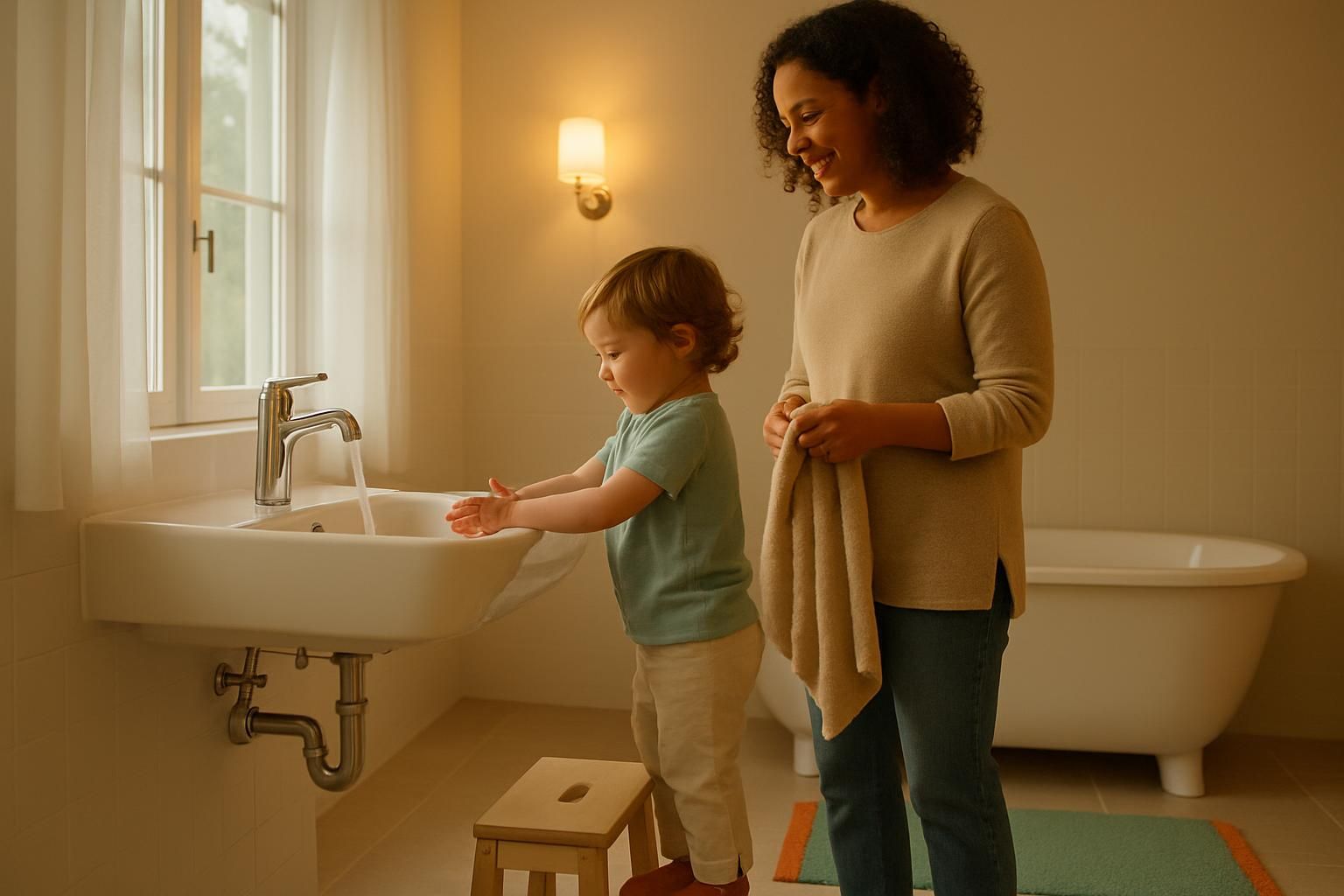
Most toddlers stay on the potty for roughly the first three days of training, then move to the toilet once wees and poos are landing reliably in the potty. There is no fixed age for the switch: it follows your child’s confidence and readiness, not the calendar, and the two overlap for a while rather than swapping overnight.
When should you move from potty to toilet?
You will know the switch is ready to happen when you notice a few things changing in your child’s behaviour. Look out for:
- Sitting on the potty happily and without being reminded
- Telling you themselves that they need to go
- Asking to try the big toilet because an older sibling or a friend at nursery uses one
- Simply looking a bit too big for the potty
Some children barely use the potty at all and go straight to the toilet with a seat reducer and step stool from day one, and that can work just as well: it depends on what this particular child finds easiest to get to in time. If you are not sure whether your child is ready to start the whole process yet, the readiness quiz can help you work that out before you worry about the switch itself.
Why the first few days are mostly on the potty
The potty is low, feet-on-the-floor, and needs no climbing or waiting, which matters hugely when a child has only just learned to notice the feeling of needing a wee. The gap between recognising the signal and actually getting there is the whole battle in week one, and a potty sitting in the same room you are both in closes that gap almost to nothing.
That is also why the first three days of training are usually spent at home rather than out and about: staying close to the potty means fewer accidents and more successes for the child to feel proud of. If you want the fuller week by week plan before you get to the switch itself, how to toilet train walks through it from day one.
The Potty Training Box Method sets out exactly this shape: three days mostly on the potty at home, short outings after that, and a gradual move onto the toilet across the rest of the first week, all while the child keeps the lead in saying when they need to go rather than being sat down on a schedule.
How do you actually make the switch, day by day?
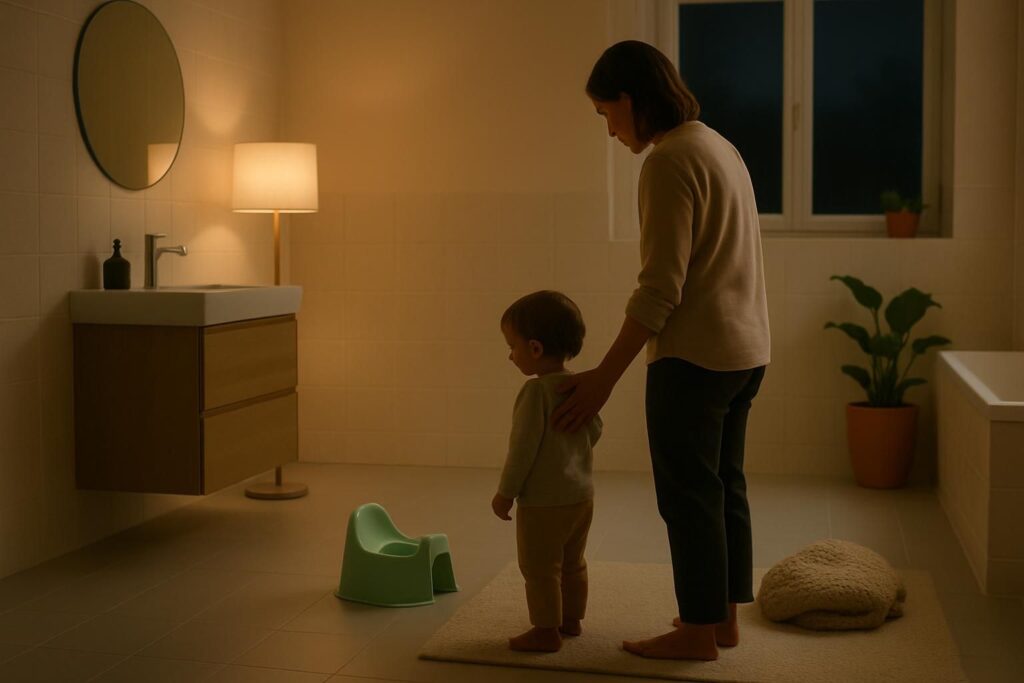
Set the bathroom up before you start moving the potty across, not after. A seat reducer in place, a step stool positioned so your child can climb up without help, loo roll within easy reach, and the light already on so nobody is fumbling in the dark at bedtime.
Begin with the two sits that were never really about the potty anyway: before bed and before you leave the house. These stay part of life long after training finishes, so moving them onto the toilet first gets your child used to the bigger seat in a low-pressure moment.
For a few days, offer both and let your child pick. Move the potty physically closer to the bathroom, then just inside it, then eventually out of the room altogether once the toilet has become the obvious choice. Keep asking ‘will you tell me when you need a wee?’ rather than putting them on at set times. Poos often move across to the toilet later than wees, sometimes by a week or two, and that lag is completely normal rather than a sign anything has gone wrong.
| Stage | What the child usually uses | What you watch for and say |
|---|---|---|
| First days at home | Potty, kept nearby | ‘Will you tell me when you need a wee?’, recording what happens on the schedule |
| Middle of the week | Both available, toilet first for bedtime and before leaving the house | Letting the child choose, praising either choice equally |
| After the first week | Toilet, potty tucked away | Same question, now mostly answered unprompted |
Keeping the child in charge of the move
The aim of the whole switch is the same as the aim of training itself: your child telling you they need to go, whether that is on the potty or the toilet. Offering the potty, and later the toilet, early on is just how you gather information while that skill develops, not the method itself.
Two moments stay as fixed prompts for good, even once your child is confidently telling you the rest of the time: before and after sleep, and before you leave the house. Outside those two, the question stays ‘will you tell me when you need a wee?’ rather than a timed sit.
A tracking schedule is how you learn this particular child’s own pattern instead of guessing. The card has columns for the time they had a drink, the time they sat on the potty or toilet, whether nothing happened, a wee column marked green for a success or red for an accident, the same for a poo, and a notes column for anything else worth remembering. Give your child a drink in one go rather than little sips through the morning, because that is the only way to see how much went in and how long it then takes before they need a wee: that link between the two is exactly what the schedule is there to show you. There is a printable tracking chart you can use for this.
What you need in the bathroom before you start
A toilet seat reducer stops your child feeling like they might fall into a big, open hole, and a step stool gives their feet something solid to push against. Feet planted on a stool rather than dangling in mid-air genuinely helps with poos, because a child can brace and push properly, which is covered in more detail in the best sitting position on the potty or toilet. Keep a stack of pants downstairs or wherever the bathroom is, rather than in a bedroom two floors up: a spare pair should never be further away than the accident is quick.
Some links in this article are affiliate links, which means we earn a small commission if you buy through them. It costs you nothing extra and does not affect what we recommend.
For a seat reducer, the Munchkin Sturdy Potty Seat sits securely on most toilets, and for a step stool the Dreambaby 2-Up Step Stool is wide enough for small feet to stand on comfortably while they get themselves up and down.
What if your child is scared of the toilet?
Fear of the toilet is common and almost always about one specific thing: the sudden noise of the flush, the size of the hole, worry about falling in, or the unfamiliar echo of a public loo. None of this means your child is behind, and none of it means push through it anyway.
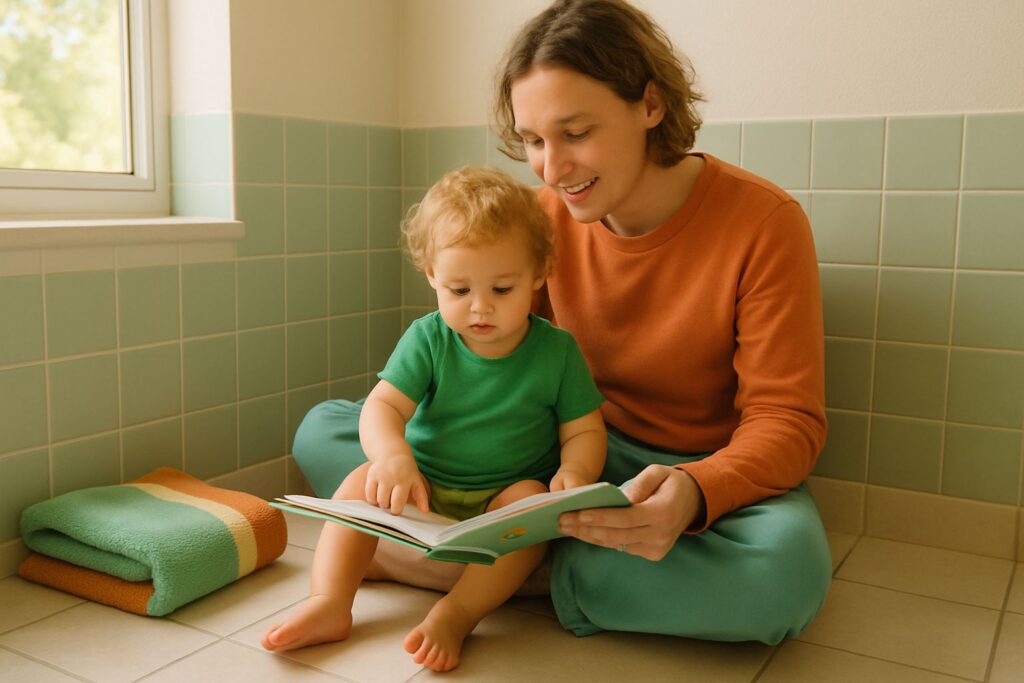
Build familiarity before you ask for anything else. Let them sit on the lid fully clothed while you read a story, flush only once they have already left the room, and let them be the one to press the flush when they feel like it rather than you doing it for them. Going back to the potty for a while is not a step backwards, it is simply giving them more time.
If the toilet itself is the sticking point, watch this short video together so your child sees a friendly face going through the same worry.
If your child is genuinely frightened rather than just hesitant, that is the honest sign to wait and come back to the toilet switch later rather than forcing it now.
Out and about: public toilets, nursery and grandparents
Short outings usually start after the first three days at home, once the basics are holding up reasonably well indoors. Carrying a lightweight folding seat reducer in the changing bag, or simply holding your child steady on a big public seat yourself, covers most situations.
What frightens a child in a public loo is rarely the toilet itself: it is almost always the hand dryer or the automatic flush going off without warning. Covering the sensor with your hand, or warning your child before you flush, solves most of this. Tell nursery exactly which phrase you use at home, such as ‘will you tell me when you need a wee?’, so your child hears the same question in both places. Keep the before you leave the house sit as a standing habit everywhere you go, including at grandparents’ houses.
Parents racing a school start date often ask about this specifically, and toilet trained before reception covers that side of things in more depth.
When it does not go smoothly
Refusing the toilet after several good days on the potty is common and usually passes within a day or two rather than signalling a real setback. Day four or five is often the hardest day of the whole week, not day two, because this is typically when a child gets fed up of being asked ‘will you tell me when you need a wee?’ so often. Asking a little less and handing them a bit more responsibility for noticing it themselves usually settles this.
Accidents at this stage are part of learning the new seat, not a sign anything has failed. If an attempt genuinely is not working, the method’s own advice is to stop, put things away for a few weeks, and try again later rather than pushing through a bad run.
If your child is withholding poo, straining with pain, or seems constipated, that needs a GP or health visitor rather than a training plan. Night-time dryness is a separate skill that tends to follow daytime training on its own timetable, and the switch from potty to toilet does not change that either way.
What the box gives you for this part
The Potty Training Box includes a day-by-day programme booklet that covers the move from potty to toilet specifically, along with tracking schedules for recording when your child actually goes. The sticker cards come in four sizes, used in order from three squares up to five, seven and then nine, so the reward lands quickly at the start and becomes rarer as your child gets more confident, which helps the habit outlast the stickers rather than stopping the day they do. There is also a wee certificate and a poo certificate for your child, which tend to land well once the move onto the toilet is settled. If you want to do it your own way, separate reward systems are available, and potty training reward charts has more on what tends to work.
Frequently asked questions
How long should my child use a potty before moving to the toilet?
Most children spend roughly the first three days of training mostly on the potty, then move onto the toilet across the rest of the first week once wees and poos are landing reliably. There is no set number of days: it depends on how confident your child is, not the calendar.
My child will wee on the toilet but only poos in the potty. What do I do?
This is very common and usually sorts itself out within a week or two once wees have fully moved across. Keep offering both for poos a little longer rather than forcing the issue, and if it continues with straining or discomfort, speak to your GP or health visitor.
What should I do if my child is scared of the toilet flushing?
Let them sit on the closed lid fully clothed first, flush only once they have left the room, and let them press the flush themselves when they are ready rather than you doing it for them. Going back to the potty for a while is a reasonable pause, not a failure.
Do I need a toilet seat reducer, or can I just hold my child on the seat?
Holding them works for occasional outings, but a seat reducer at home means they can sit securely without you, which builds confidence faster. A step stool alongside it also helps their feet brace properly, which makes poos easier.
Can we skip the potty and go straight to the toilet?
Yes, some children go straight to the toilet with a seat reducer and step stool and barely use a potty at all. It depends on which setup this particular child finds easiest to reach in time, rather than one route being better than the other.
How often should I put my child on the toilet during the day?
Rather than a fixed interval, the approach is to ask 'will you tell me when you need a wee?' and record what actually happens on a tracking schedule, so you learn this child's own pattern. The two exceptions that stay as fixed moments are before and after sleep, and before leaving the house.
Ready for the next step?
The Potty Training Box holds the day-by-day programme this article is built on: tracking charts that show you when your child actually needs to go, instruction cards for each day, and a reward system that tapers off on its own.
This article was written with AI assistance and checked by Dustin van de Sande.