

Most children who are ready become dry in the daytime in about a week, though some take three days and others two to three weeks. Working backwards from a September start, aim to begin the three-day home phase by late spring or early summer, ideally over a school holiday, so there is time left for a pause and a second attempt if the first one does not stick.
The Easter holidays are a popular window for exactly this reason: two weeks off, no nursery drop-offs to disrupt, and still months of runway before term starts. A quiet week of annual leave in May or June works just as well. What matters is leaving slack in the calendar, not the specific month.
Night-time dryness is a separate skill and it develops on its own timeline, often well after daytime training, and it is not something reception expects. If you are also wondering about that side of things, there is a separate guide on becoming dry at night once the daytime side is settled.
| Time before term | What to do |
|---|---|
| 12 weeks | Check readiness signs, buy the kit |
| 8 weeks | Run the three days at home |
| 6 weeks | Short outings, practise in uniform |
| 4 weeks | School loo skills, pack spare pants |
| Term starts | Tell the teacher, agree a plan |
Does my child actually have to be toilet trained for school?
The Department for Education’s guidance for early years providers, Help for early years providers, states that most children should be out of nappies before starting reception, with an exception made for children who have a diagnosed medical or developmental need. That is the national position, but individual schools and nurseries vary in what they actually ask parents to arrange, so it is worth checking the admissions or induction pack your school sent you.
A late start, or no start yet, is genuinely common. Plenty of parents are reading this in July with a nappy bag still in the car, and school staff who deal with new reception classes every September have seen it before.
Children with additional needs are a recognised exception, not an afterthought, and schools generally have a process for this. A late start is fixable, not a mark against you or your child.
Is my child ready, or should we wait a bit longer?
Readiness signs include staying dry for longer stretches between changes, noticing and reacting to a wet or dirty nappy, being able to pull pants up and down, following a simple two-step instruction, and showing curiosity about the toilet or potty. NHS and ERIC (the Children’s Bowel and Bladder Charity) guidance both describe this cluster of signs rather than a fixed age, because children reach it at different points, commonly somewhere between two and three and a half.
A child who is frightened of the potty or the toilet is not ready yet, whatever the calendar says. The honest move is to build familiarity first, perhaps just sitting on the potty fully clothed while reading a book, and to start the real attempt later. If you want to check where your own child stands before picking a date, the 12-sign readiness checklist is worth ten minutes.
If an attempt does not work, the Potty Training Box Method‘s own advice is to stop and leave it a while before trying again, rather than grinding through days that are clearly not landing. A pause is part of the process, not a failure of it.
The three-day start: what the first week actually looks like
The first three days are spent at home, because that is when a child learns the fastest with the fewest distractions. No nursery, no shopping trips, no visitors if you can help it, just the potty, the child, and a lot of repetition.
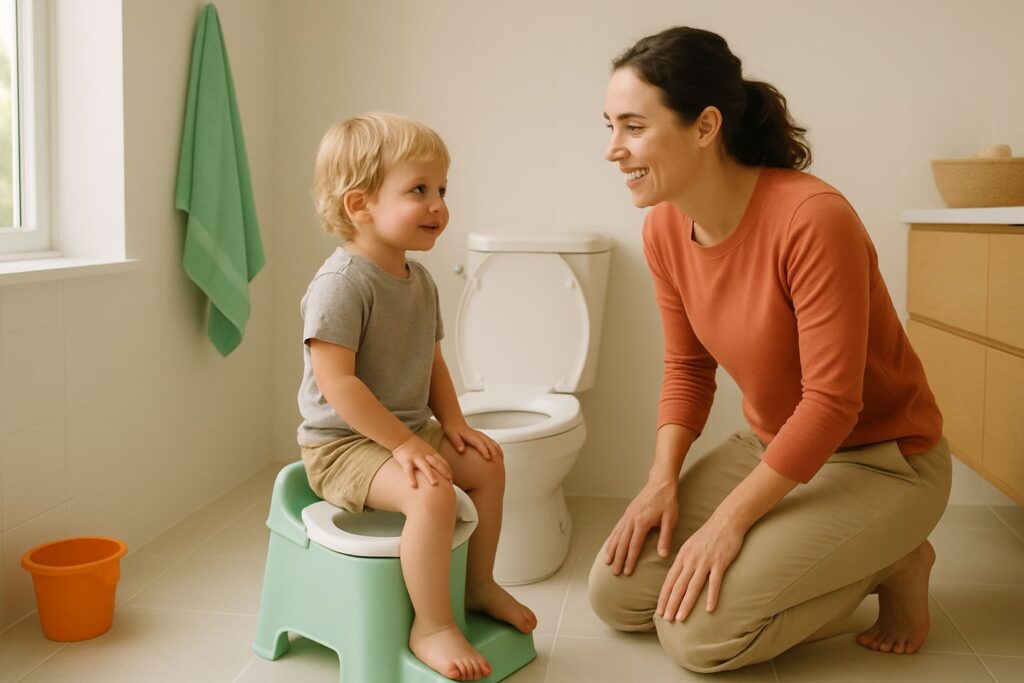
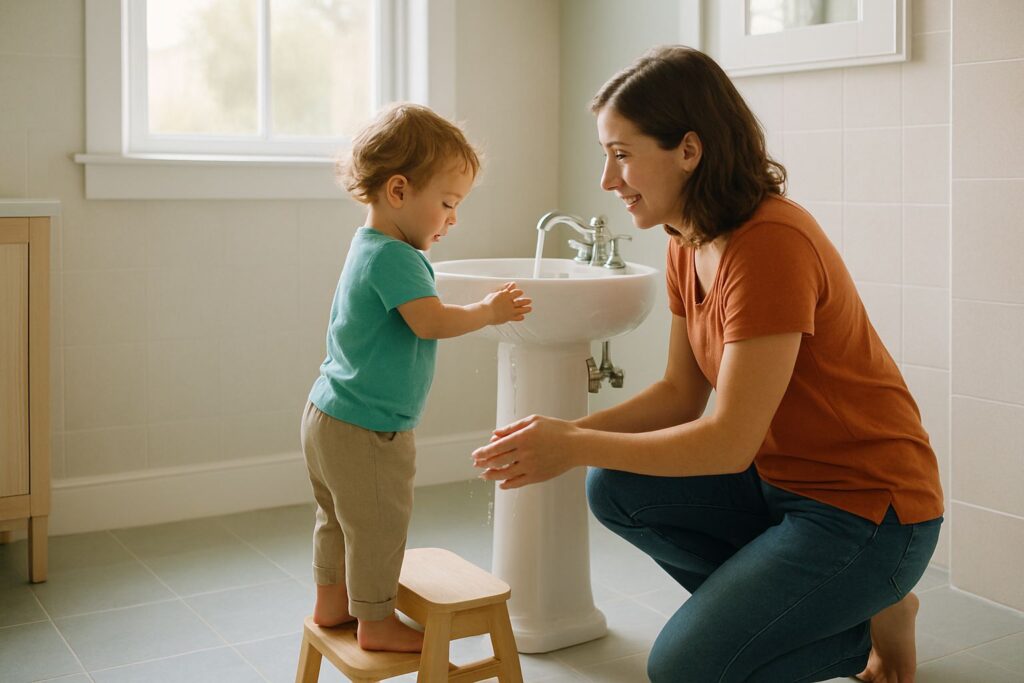
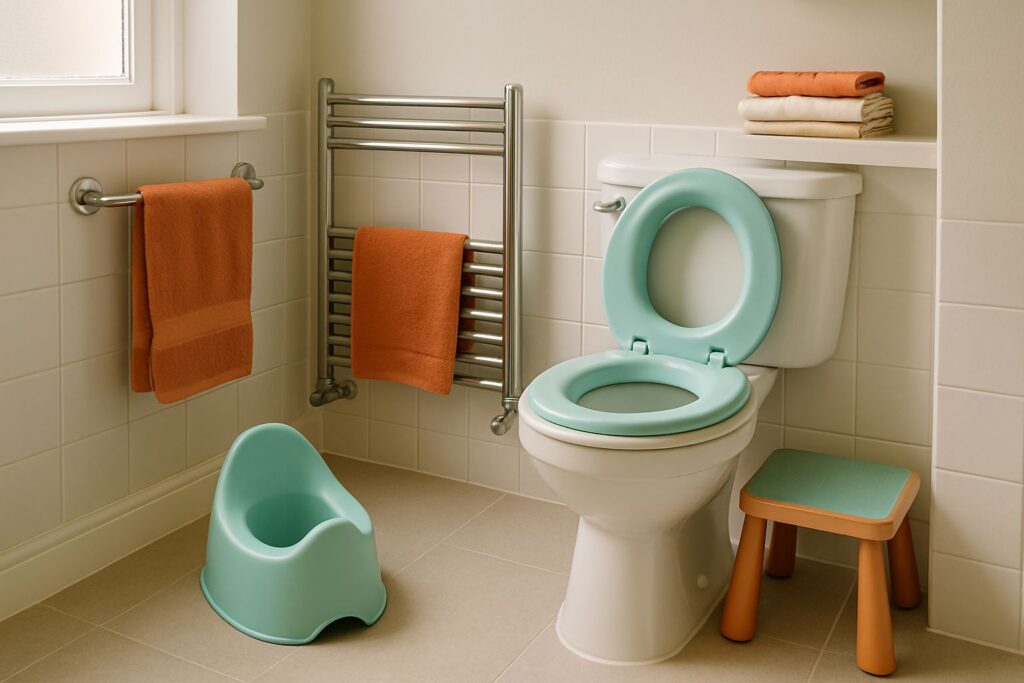
Short outings begin from around day four: a walk to the postbox, then a trip to the local shop, gradually building up. The potty is the main tool for roughly the first three days, then most families move towards the toilet with a seat reducer and a step stool so the child can climb up and sit independently.
Accidents in this first week are part of learning, not a sign it is going wrong. Rewards work best when they come quickly and often at the start and then grow rarer as the child improves, so the new habit outlasts the stickers instead of stopping the moment they do.
How often should I put my child on the potty? (and why that is the wrong question)
The real goal is not a schedule, it is the moment your child tells you they need to go. Instead of sitting them down at fixed intervals, ask them directly: will you tell me when you need a wee? That question, repeated often, is what teaches the skill the clock cannot.
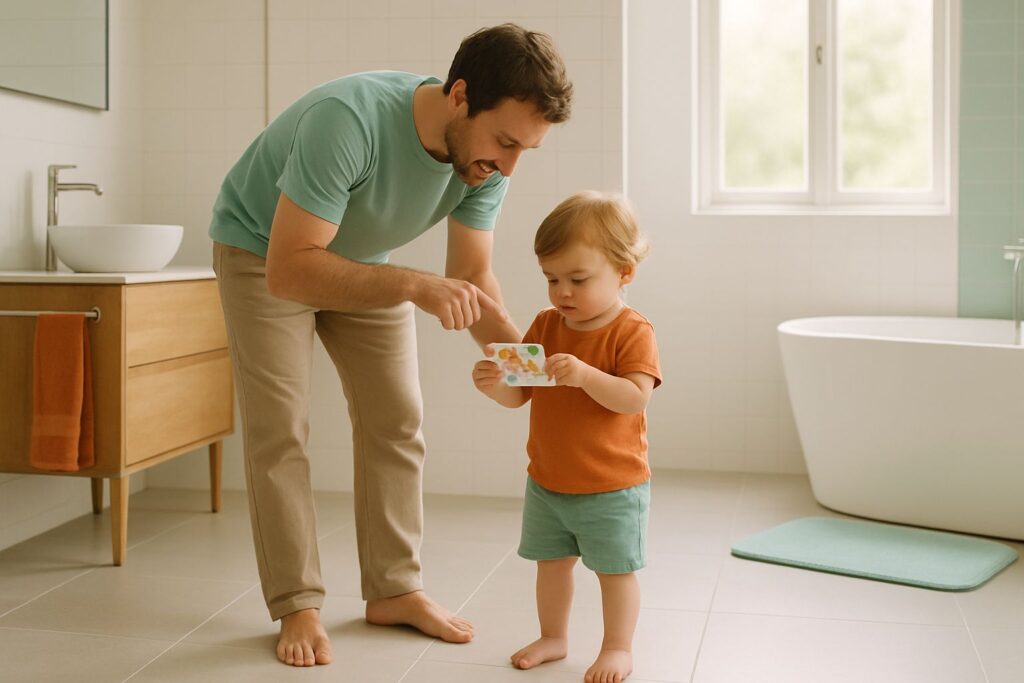
A tracking schedule exists to record when your particular child actually goes, not to impose a routine on them. A typical schedule has columns for the time they drank, the time they were on the toilet, whether nothing happened, whether the wee was a success (green) or an accident (red), the same for a poo, and a notes column. Used over a few days, it shows you your child’s own pattern rather than a generic one.
For that pattern to be visible, it helps if a drink is finished in one go rather than sipped across the afternoon, because only then can you see how long it actually takes between a full cup and a wee. There are, though, a small number of moments worth keeping fixed even once training is well underway: before and after sleep, and before leaving the house.
| Column | What it records |
|---|---|
| Time drinking | When the drink was finished |
| Time on toilet | When they sat down |
| Nothing happened | Yes or no |
| Wee | Green for success, red for accident |
| Poo | Green for success, red for accident |
| Notes | Anything else worth remembering |
What your child needs to manage on their own at school
Daytime dryness is only part of what reception expects. Your child also needs to manage the physical and social side of a school toilet without you standing next to them, which is worth practising specifically rather than assuming it follows automatically.
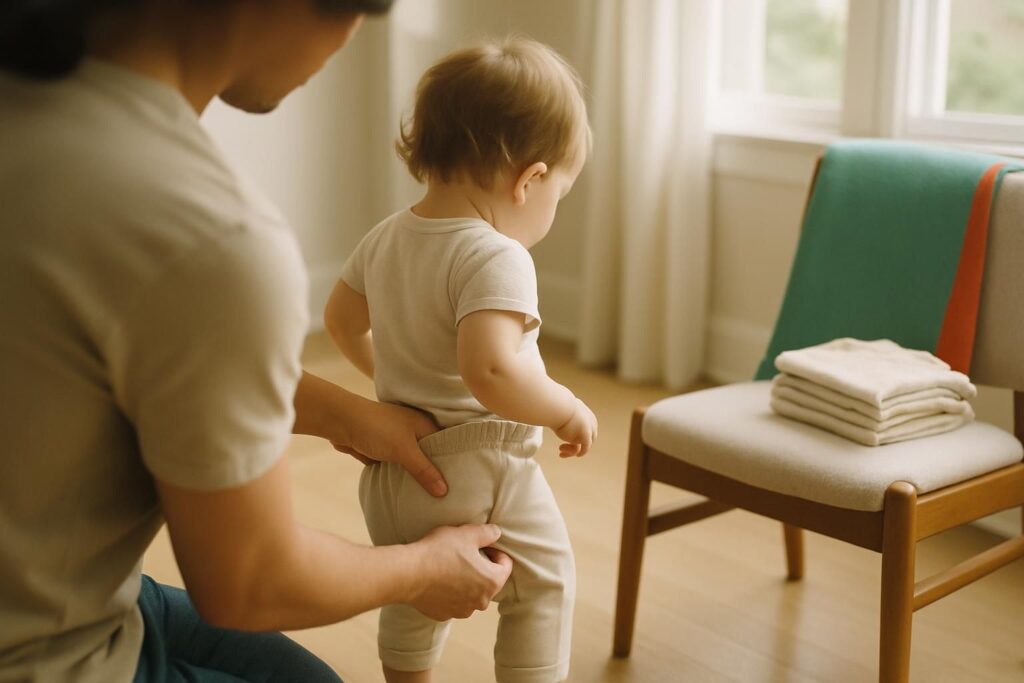
- Pulling trousers and pants up and down unaided, practised in the actual school uniform, since a fiddly button or tight tights that fit fine at home can defeat a four year old in a rush
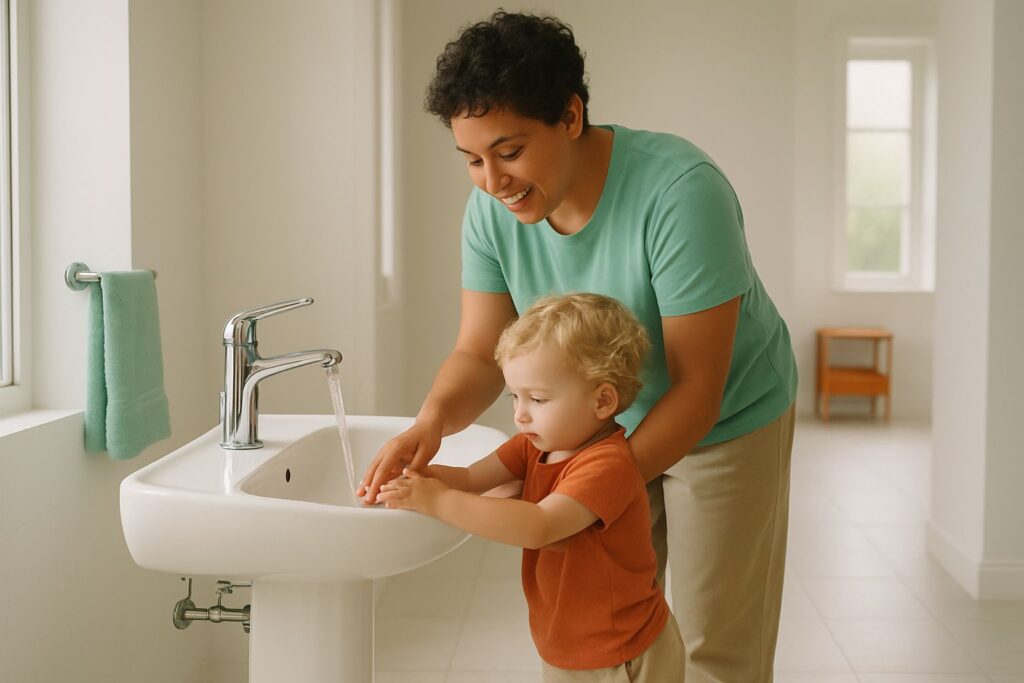
- Wiping, flushing and washing hands without a reminder
- Telling an adult, including one they do not know well, that they need to go
- Coping with a school loo that looks nothing like home: a different height, hand dryers that are loud, cubicle doors, and a queue of other children waiting
- Knowing that spare pants and trousers are in their bag, and being able to say so if the teacher asks
If you have not covered the full method yet and want the day-by-day version rather than a summary, the guide on how to toilet train walks through it in more detail.
What to do if September arrives and they are still having accidents
Accidents in the first term of reception are common and are not a reason to go back to daytime nappies. A new building, new adults, and a much busier day are enough to throw off a child who was reliably dry at home over the summer.
Pull-ups for sleeping are entirely separate from daytime training and can continue for as long as your child needs them regardless of how the school day is going. Tell the class teacher before term starts, agree what happens if there is an accident, and settle on a simple word or phrase your child can use to ask to go.
Some regression around a new school start is normal and usually settles within a few weeks; if it does not, the article on regression in potty training covers the common causes and what tends to help. A handful of things belong with a GP or health visitor rather than being managed at home: constipation, a child who seems to be withholding poo, a suspected urinary infection, developmental concerns, or bedwetting that continues past around age six, since NHS guidance treats bedwetting as common up to that age and only worth a GP conversation if it persists beyond it.
What you need to buy before day one
Whatever method you use, a few things are the parent’s to source: a potty, a toilet seat reducer, a step stool, at least fifteen pairs of pants, something to protect the mattress and sofa, a handful of small rewards, and pull-ups for the night. It is far better to have these ready on day zero than to be caught out on day one.
The Potty Training Box is the day-by-day programme itself. It sets out what to do on day one, two and three, including the days that go badly, with tracking schedules to learn your child’s own timing and a year of access to a community where the brand’s experts answer questions seven days a week. It is reusable for a second child later on, and the sticker sets can be topped up separately through the extra reward system refills.
None of this is required to follow the method. The approach in this article, the three days at home, the tracking, the child’s own initiative, can be run without buying anything at all; the box simply lays out what to do on the days that go badly and gives you somewhere to ask.
Children with additional needs and a school start
The same method has been used successfully with children who are autistic, have Down syndrome, or are non-verbal, usually over a longer stretch than a week and with more emphasis on reading the child’s own signals rather than waiting to be told in words. Patience and repetition tend to matter more than pace here.
If your child has an EHCP or is on the SEN register, it is worth speaking to the SENCO before term starts so a plan for toileting is agreed alongside everything else in their transition arrangements. Anything tied to a specific diagnosis, medication, or clinical concern is a matter for your child’s own clinical team, not something to work out from a general article.
If you are looking for reassurance that a week really can be enough, one parent’s week is worth reading, not as a promise of the same result but as a picture of what the process actually looks like day to day.
Frequently asked questions
Should children be potty trained before starting school in the UK?
Department for Education guidance for early years providers states that most children should be out of nappies before starting reception, with an exception made for children who have a diagnosed medical or developmental need. Schools and nurseries can vary in exactly what they ask parents to do, so it is worth checking your school's own admissions or induction pack for specifics.
How long does it take to potty train a child before reception?
Most children who are ready become dry in the daytime in about a week once training starts, with some managing it in as little as three days and others taking two to three weeks. Working backwards from September, most families do best starting the intensive home phase in the Easter holidays or a quiet week off work in late spring, leaving time for a pause and a second attempt if needed.
What should I do if my child starts reception and is not toilet trained?
Speak to the class teacher before term starts so you can agree together what happens if there is an accident and how staff will support your child. Daytime accidents in the first term are common and not a reason to return to nappies during the day, and pull-ups for sleeping can continue separately regardless of daytime progress.
At what age is it concerning that a child is not potty trained?
There is no single fixed age at which delay becomes concerning, since children reach readiness at different points, commonly somewhere between two and three and a half. If your child is well past four, shows no readiness signs at all, or you have a specific worry such as ongoing constipation or a suspected urinary infection, that is worth raising with a GP or health visitor rather than waiting.
What is a red flag for potty training?
A child who is genuinely frightened of the potty or toilet is not ready yet, and pushing on through fear tends to make things harder rather than easier. Straining, pain, very hard or infrequent stools, or a child who appears to be deliberately withholding poo are also signs to raise with a GP rather than manage through a training method alone.
Can I potty train my child during the summer holidays before school starts?
Yes, the summer holidays are one of the most common windows parents choose, since six weeks is enough for the three days at home, a stretch of short outings and, if needed, a pause before trying again. It leaves less slack than starting in spring, so if the first attempt does not stick, there may not be room for a second full run before term starts.
Ready for the next step?
The Potty Training Box holds the day-by-day programme this article is built on: tracking charts that show you when your child actually needs to go, instruction cards for each day, and a reward system that tapers off on its own.
Sources
This article was written with AI assistance and checked by Dustin van de Sande.