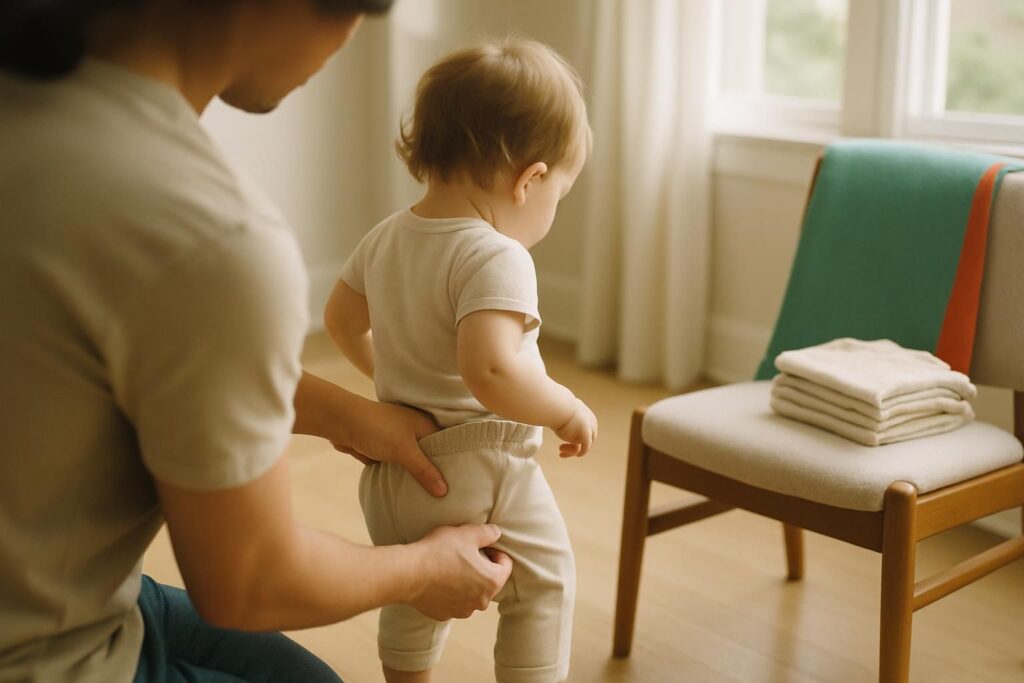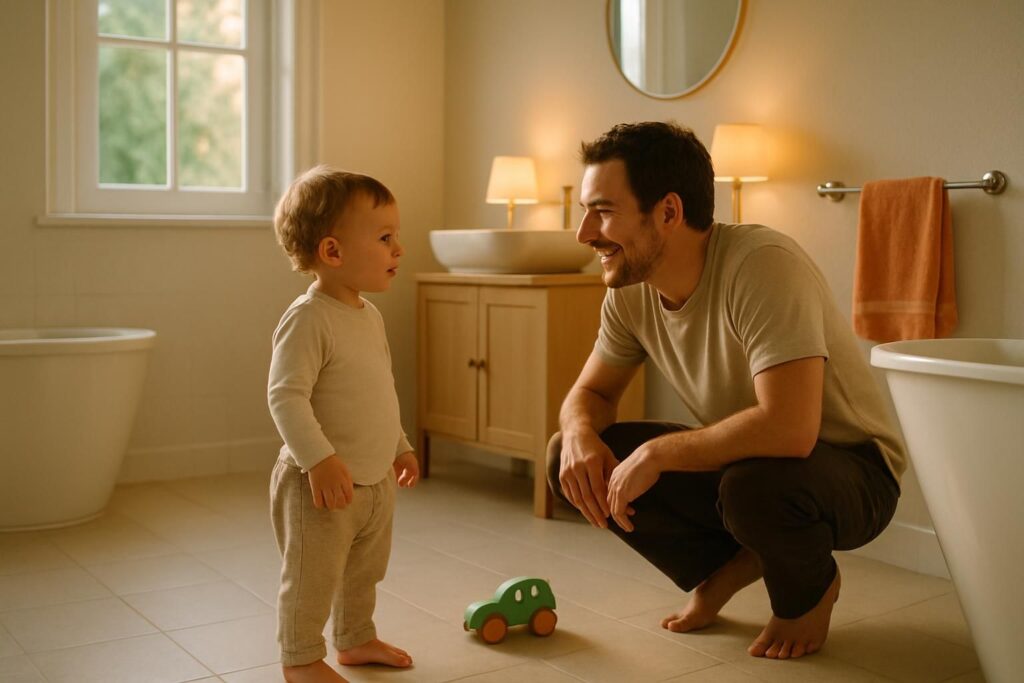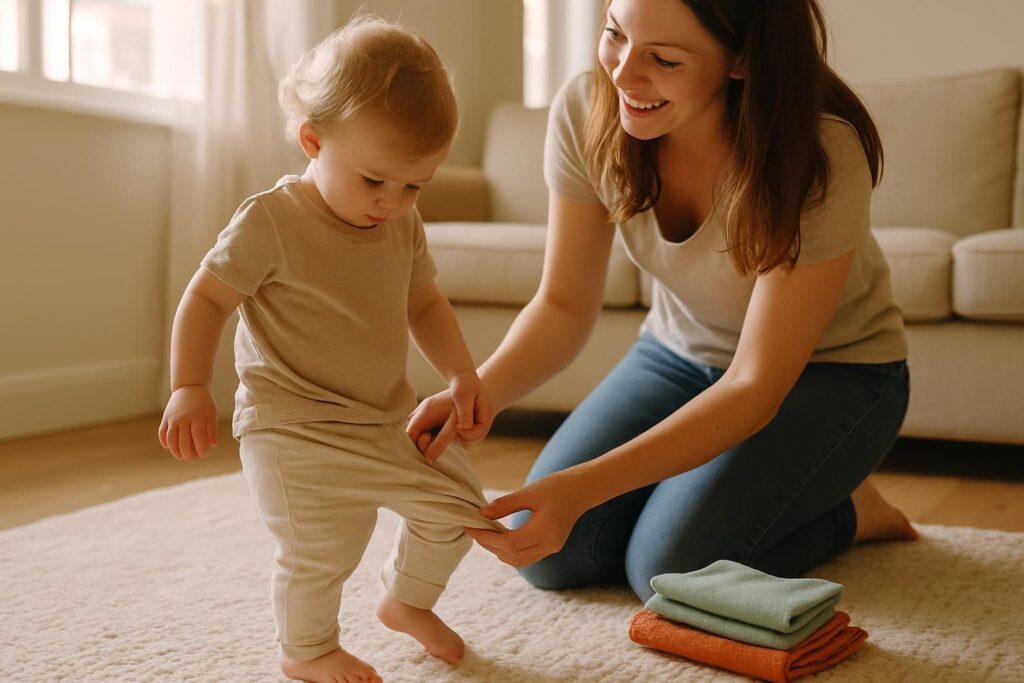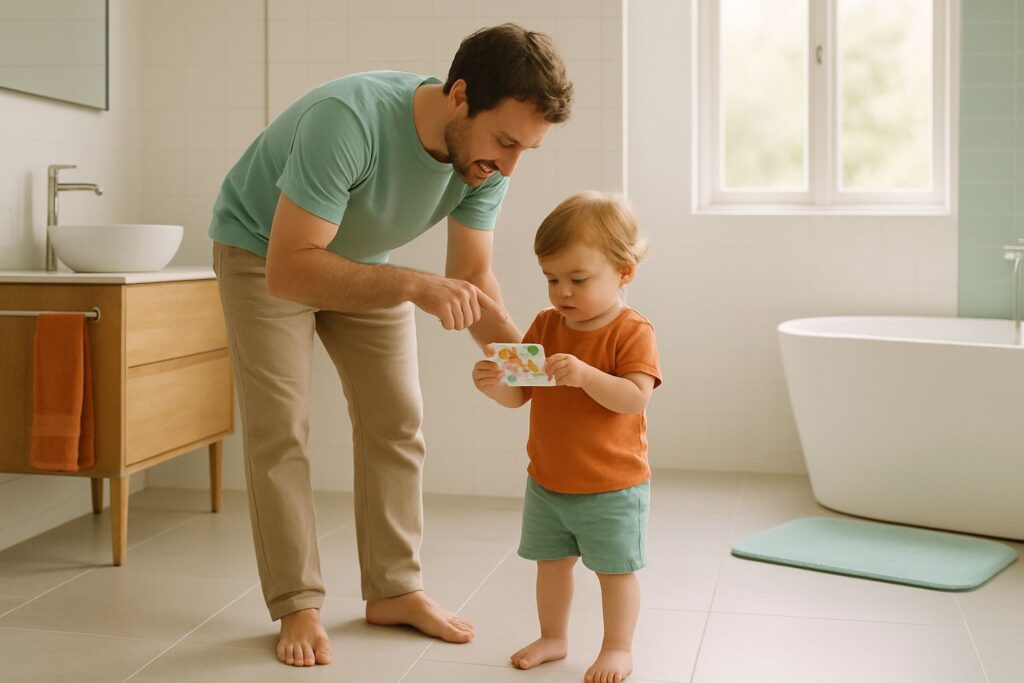

Stop asking your toddler to sit on the potty for a few days and take the pressure off. Build familiarity instead: leave it out, let them sit on it clothed, let a teddy take a turn first. Refusal usually means fear, boredom with being asked, or simply not being ready yet.
If you have already tried once and stopped, you have not failed at anything. Plenty of children need two attempts, sometimes three, and a pause between them is normal. A child who is genuinely frightened of the potty or the toilet is not ready, and the honest answer is to build familiarity first and start again later.
Why do toddlers refuse to sit on the potty?
Most refusal falls into one of five buckets, and working out which one you are looking at changes what you should do next.
Not ready yet. Some toddlers simply have no awareness of being wet, no interest in the bathroom, and no reason to sit still for something that means nothing to them yet. Pushing ahead here usually makes the next attempt harder, not easier.
Fear. The flush is loud, the hole looks like it could swallow them, the seat is cold, or the height makes them feel unsteady. For a toddler, this is a completely rational response to something unfamiliar.
Fear of the poo itself. Some children are alarmed by the idea of something leaving their body, and some are genuinely uncomfortable because stools are hard or being withheld. If your child seems to be holding poo in or is clearly in pain, that is a question for a GP or health visitor, not something to work through with a sticker chart. Poo refusal specifically is common enough that it deserves its own answer, and we have covered when your toddler will not poo on the potty in detail elsewhere.
Control. A toddler who says no to shoes, dinner and bedtime is also going to say no to the potty, especially if it is presented as a demand.
Boredom and over-asking. Being asked over and over turns the bathroom into a battleground, even for a child who was previously fine with it.
Timing. A new baby, a house move, starting nursery, or a bout of illness can all knock a child’s confidence sideways for a few weeks. None of this is a sign you have done anything wrong. Refusal is ordinary and common, not a verdict on your parenting.
Refusal or fear: how to tell the difference (and why it matters)
These two look similar from the outside but need opposite responses, so it is worth slowing down to tell them apart.
| What the refusal looks like | What it usually means | What to do next |
|---|---|---|
| Cries, clings, or runs from the bathroom | Fear | Build familiarity and wait, do not push |
| Wanders off, shows no interest at all | Not ready yet | Pause a few weeks and try again later |
| Sits happily when it is their idea, refuses when asked | Control or power struggle | Swap to asking them to tell you instead |
| Was going fine, suddenly refuses on day four or five | Bored of being asked constantly | Ask far less often, hand back responsibility |
| Holds on, refuses to poo, or seems in pain | Possible constipation | Speak to your GP or health visitor |
If what you are seeing matches the last row, that is a medical question, not a potty training one. Your GP or health visitor can check whether anything physical is going on, and there is no benefit to guessing at this one yourself.
Is my child actually ready, or did you start too soon?
Starting before a child is ready is the single most common reason a first attempt stalls. Age alone decides nothing. Signs worth looking for instead include:
- Staying dry for longer stretches between nappy changes
- Telling you, in words or gestures, that they are wet or have soiled
- Showing curiosity about the toilet or the bathroom
- Being able to pull pants up and down largely unaided
- Following a simple two-step instruction
Most children show these signs somewhere between eighteen months and three years old, though this varies widely from child to child and age by itself tells you very little.
Not sure where your own child stands? A short online check can help you see it more clearly than guessing on your own.
Waiting a few more weeks is not a setback, it is simply timing. Children who are autistic, have Down syndrome, or are non-verbal often take longer, and progress generally comes from reading their signals carefully rather than waiting for them to say the words.
How to make the potty feel safe again in a week of no pressure
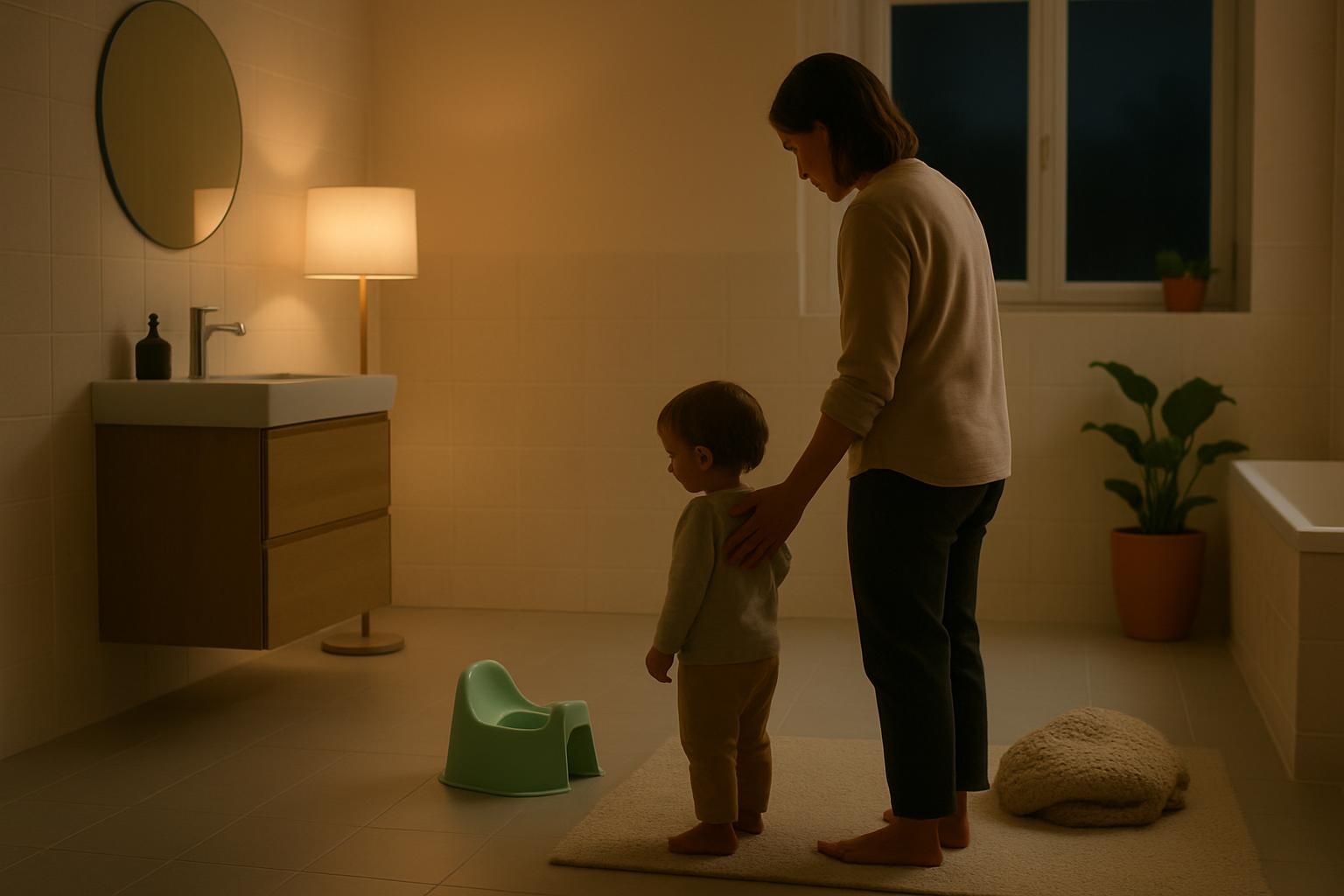
If fear is what you are seeing, the fix is familiarity, not persuasion. Leave the potty out somewhere ordinary, like the living room, with no expectation attached to it at all.
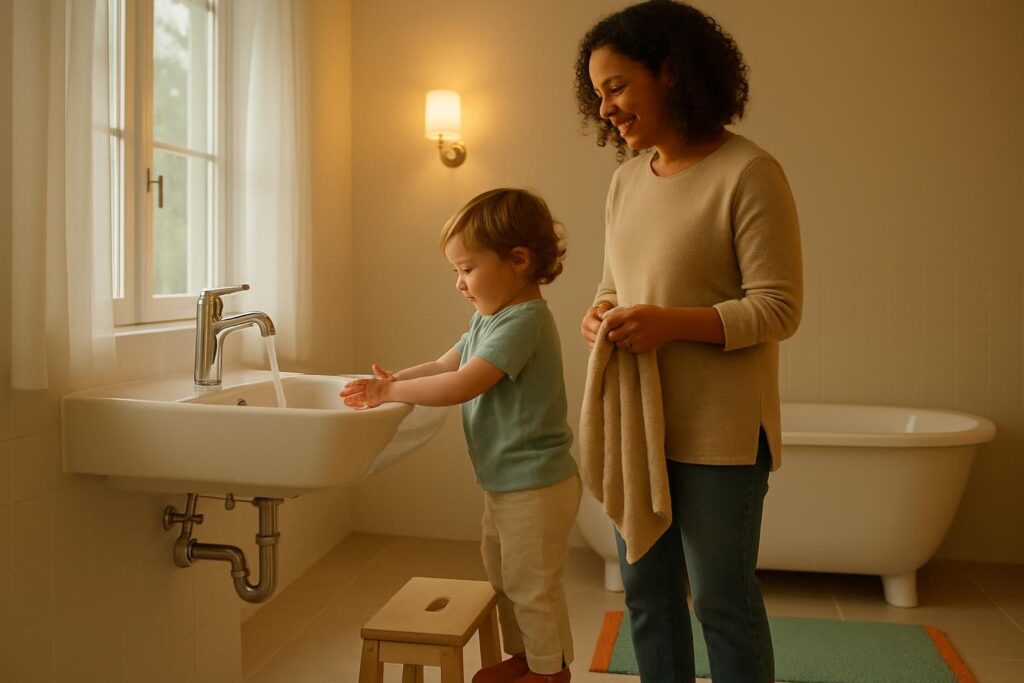
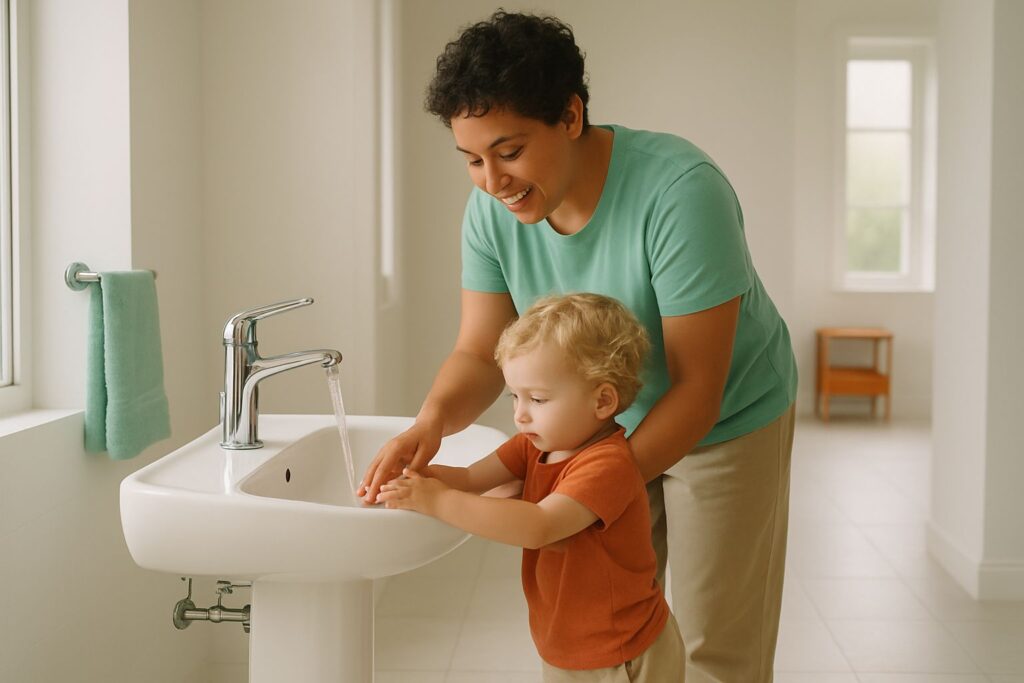
Let your child sit on it fully clothed, lid down, with a favourite teddy nearby while you read together. Let the teddy or a doll take a turn on the potty first, so your child watches rather than performs. Let them flush the toilet themselves if that is what frightens them, watch you use it, and wash hands afterwards as part of the same small ritual.
A step stool so their feet are supported rather than dangling, and a toilet seat reducer so the seat feels smaller, both help a nervous child feel steadier. These are things worth having ready alongside whatever else you are using, rather than anything you need to buy specially for this stage.
Some links in this article are affiliate links, which means we earn a small commission if you buy through them. It costs you nothing extra and does not affect what we recommend.
Never hold a child on the potty and never force a sit. A potty story at bedtime, read somewhere calm and unhurried, can help too. Ready for My Potty is a simple option worth keeping by the potty for exactly this.
If your child is old enough to enjoy a short video together, this one is built for exactly this moment.
Stop asking them to sit: the question that works better
Swap ‘come and sit on the potty’ for ‘you tell me when you need a wee’. This one change ends most power struggles, because there is nothing left to refuse: the decision belongs to your child, not to you.
This is the core idea behind the Potty Training Box Method. In practical terms it works like this: nappy comes off and ordinary cotton pants go on, the first three days are spent at home, and rather than sitting your child down on a schedule, you record when they actually go using a set of tracking schedules, so you learn their own pattern instead of guessing at one. Rewards sit on sticker cards that grow from three squares to five, to seven, to nine, so the praise comes quickly at first and gets rarer as the habit settles in. Over roughly a week, the child moves from potty to toilet, led throughout by their own signals rather than a timer.
This is also why clock-based sitting, a fixed interval, or putting a child on the potty every half hour because a schedule says so, works against you here. That approach treats the potty as something that happens to a child on a timetable, and a toddler who feels managed rather than asked tends to dig in. The only moments worth keeping fixed, during training and afterwards, are before and after sleep, and before you leave the house. Everything else is led by what your child tells you.
The tracking schedule itself is simple: a column for when they drank, a column for time on the toilet, a yes or no for nothing happening, green or red for a wee, green or red for a poo, and a note. It works best if the drink is given in one go rather than sipped over the afternoon, because that is the only way to see how long it actually takes between drinking and needing a wee, which is exactly what how long after drinking a toddler needs a wee looks at in more depth. You can find a printable version of this layout at the tracking chart.
Once your child is relaxed and familiar with asking rather than being asked, the rest of the week tends to follow its own shape. If you want to see what that looks like day by day, the full week, step by step walks through it in order.
What to do on the day resistance suddenly appears mid-training
If your child was doing fine and then suddenly refuses, this is usually day four or five, not day two, and it almost always means they are bored of being asked rather than genuinely struggling. By this point in a week of training, ‘you tell me when you need a wee’ has often been said so many times that a child starts pushing back against the question itself.
The fix is to ask less, not more. Hand the responsibility back fully: stop prompting, stop reminding, and let a few accidents happen without comment beyond a calm change of clothes. Accidents at this stage are part of learning, never a sign of failure, and treating them that way is part of what keeps a child willing to keep trying.
Keep any praise specific and genuine rather than automatic. If you find yourself running out of ways to say well done, that is exactly what compliment cards are there for, a small stack of fresh phrasing for the moments your own words have worn thin.
If nothing shifts after a day or two of easing off, the method’s own advice is to stop altogether and leave it for a few weeks before trying again, rather than pushing through. That pause is a deliberate part of the plan, not an admission of defeat. If what you are actually seeing looks more like a step backwards than ordinary resistance, our piece on accidents and regression is worth a read, though it is not something to solve by starting again from scratch.
When refusal is a reason to talk to your GP or health visitor
Some signs sit outside what any potty training approach can or should address, and they are worth naming plainly rather than guessing at.
- Pain or crying when weeing or pooing
- Blood in the nappy, pants or potty
- Hard, infrequent or withheld stools, or a child who seems to be holding poo in on purpose
- Going long stretches without weeing at all during the day
- Sudden daytime wetting after months of being reliably dry
- A four year old or older showing no progress whatsoever
Any of these belong with a GP or health visitor, not with this article or any potty training approach. They are the people who can actually examine your child and rule things in or out, and there is no advice here that should substitute for that.
What a step-by-step plan gives you that a tip list does not
A tip list can tell you what to try. It cannot tell you what to do when day four goes badly, or who to ask when you are not sure if what you are seeing is fear or a power struggle. That is the gap a structured plan fills.
The Potty Training Box is a physical box built around exactly that week: a programme booklet that walks you through each day, seven instruction cards as a quick daily reminder, six compliment cards for when you have run out of praise, fourteen tracking schedules to learn your own child’s pattern, and twenty sticker cards running from three squares up to five, seven and nine. There are also a hundred animal stickers, twenty poo stickers, a wee certificate and a poo certificate for your child, and a year of access to a community where the brand’s own experts answer questions seven days a week, including on the days that go badly.
Training works with the nappy off and ordinary cotton pants rather than training pants, because a child feels a wet pair of cotton pants in a way they simply do not feel through a padded training pant, and that feeling is part of how they learn. The box is also reusable for a younger sibling later on, and refill sticker sets are available separately if you go through a set before the habit is fully settled.
If you would rather put together your own version without the box, a separate reward system is worth looking at rather than printing or drawing your own chart from scratch; a standalone reward system gives you the same small, increasing rewards without the rest of the kit.
Whatever route you take, most children are dry in the daytime in about a week, some manage it in as little as three days, and others take two or three weeks, all of which is entirely normal. Night-time dryness is a separate skill that tends to come later, and no approach, including this one, promises it as part of daytime training.
Frequently asked questions
Why do toddlers refuse to potty train?
Most refusal comes down to one of a few things: the child is not developmentally ready yet, they are frightened of the potty or toilet, they are testing control the way toddlers do with everything else, or they have simply been asked too many times and gone off the idea. It is rarely defiance and almost never a sign anything has gone wrong on your end.
My 2 year old screams when I put her on the potty. Should I stop?
Yes. Screaming and distress are signs of fear, not stubbornness, and pushing through fear usually sets a child back further. Stop sitting her on it for now, leave the potty out with no pressure attached, and let her get used to it on her own terms before trying again.
Should I force my toddler to sit on the potty?
No. Holding or forcing a child onto the potty tends to make them more frightened of it, not less, and it can slow the whole process down. If they resist being sat down, back off and work on familiarity instead, letting them approach it when they are ready.
Is it normal for a 4 year old not to be potty trained?
Most children are out of daytime nappies well before four, so if a four year old is showing no progress at all, it is worth a conversation with your GP or health visitor to rule out anything physical or developmental getting in the way. This is not something to diagnose or manage alone from an article.
My toddler will wee on the potty but refuses to poo. What should I do?
This is a distinct and common pattern, often linked to the sensation of something leaving the body rather than general potty refusal. We cover it in detail in our separate article on when your toddler will not poo on the potty, and if there is any pain, straining or holding involved, that belongs with a GP or health visitor first.
How long should I wait before trying potty training again?
There is no fixed number of weeks, but a few weeks is a reasonable gap rather than trying again the next day. The method's own advice is to stop a stalled attempt and leave it be for a while rather than pushing through, which gives your child time to settle before you try once more. Starting again too soon, before whatever caused the resistance has passed, usually just repeats the same standoff.
Ready for the next step?
The Potty Training Box holds the day-by-day programme this article is built on: tracking charts that show you when your child actually needs to go, instruction cards for each day, and a reward system that tapers off on its own.
This article was written with AI assistance and checked by Dustin van de Sande.