Toilet Training and School Readiness: What the Picture Actually Looks Like

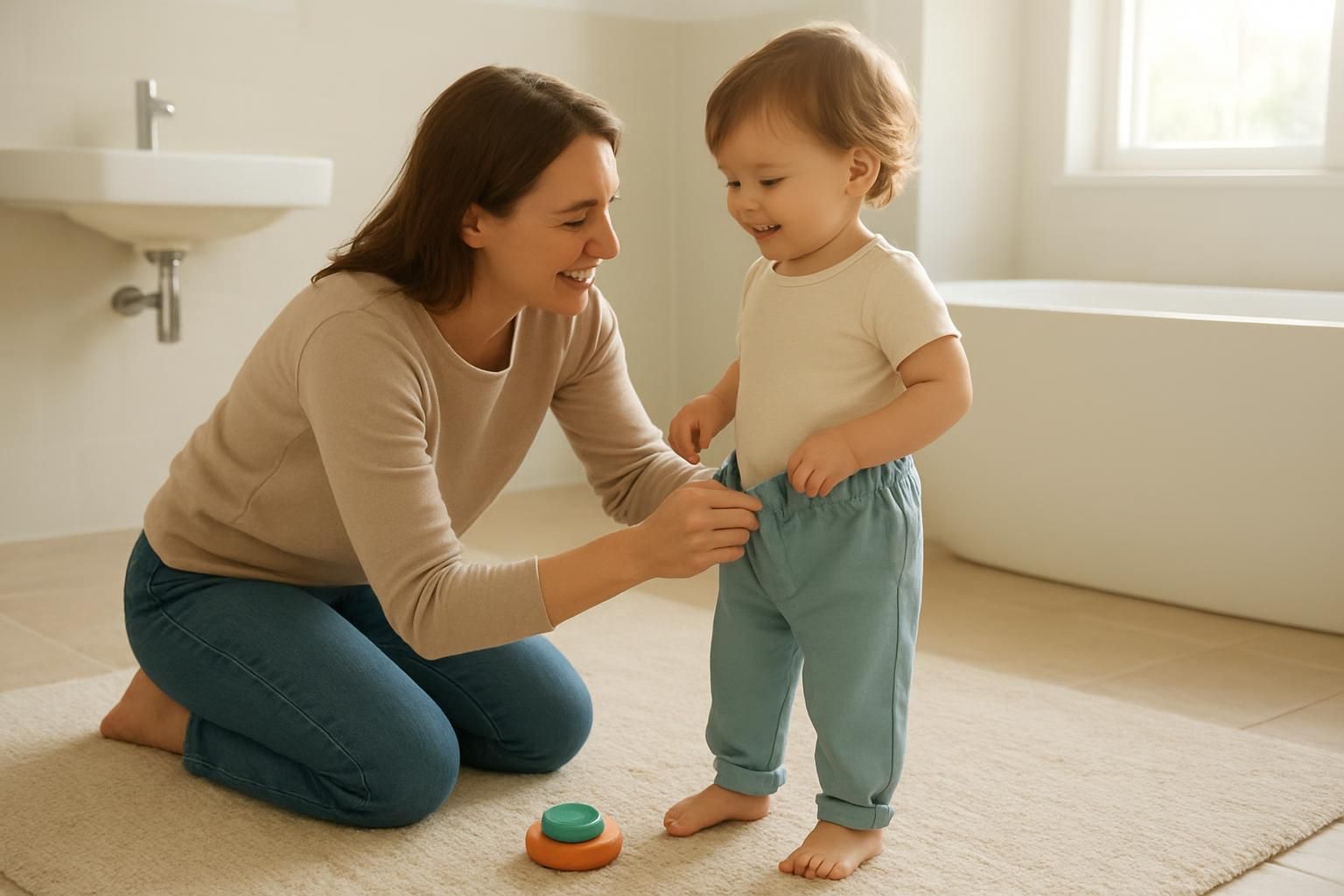
Schools expect children to manage the toilet independently by Reception, but toileting is not part of the standard school admissions criteria, so a child who is not quite there yet is not turned away. Most children become dry in the daytime in about a week of focused training, some in three days, some in two or three weeks. A child who is not ready yet is better off waiting than being pushed.
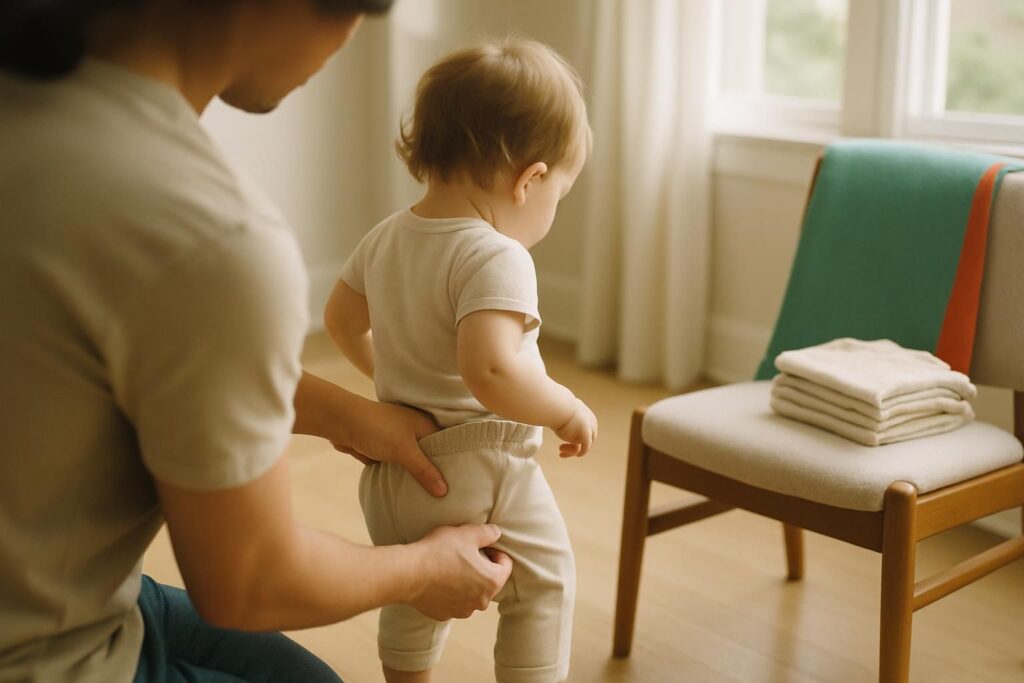
Independent toileting at school means something fairly specific and fairly manageable. It means your child can tell an adult they need the toilet, manage pulling their own trousers and pants down and back up, wipe themselves well enough, and wash their hands afterwards. None of that is the same as being able to go a full day without a single accident. Schools see accidents every term and deal with them calmly, because small children have accidents.
What the numbers on school readiness actually say
If you are reading this with a knot in your stomach, the numbers are on your side more than you might expect. Cumberland Council reported that around one in four children starting school nationally are not yet able to use the toilet independently, and that school staff estimate they lose an average of 2.4 hours of teaching time a day supporting children who are not yet school ready (Cumberland Council). Westmorland and Furness Council cites the same one in four figure in its own guidance for parents of Reception starters, developed as part of the government’s Best Start in Life strategy (Westmorland and Furness Council).
Both councils now send this kind of guidance out as a matter of course, not as a special intervention for a struggling minority. That is worth sitting with for a second: if your child is starting school in nappies or pull-ups, you are one of a genuinely large group of parents in exactly the same position, not an outlier who has somehow missed something everyone else managed.
Where the 18 to 30 month window came from, and what it means for you
You have probably seen the figure 18 to 30 months somewhere, often attached to government messaging about toilet training. NHS guidance states that almost all children can be potty trained somewhere in that window, with night-time dryness following on its own, usually later and separately (NHS).
A window is not a deadline, and it was never meant to be read as one. Readiness varies by child, not by calendar, and the signs your own child is giving you matter far more than which month it happens to be. Plenty of children start at three or even three and a half, and once they are actually ready, they still typically get there in about a week. Starting later because a child genuinely was not ready is not the same as starting late through delay.
Is your child ready, and how do you tell?
A child is usually ready when several things line up together, not just one of them. Look for dry nappies lasting two hours or more, curiosity about the toilet or potty, the ability to follow a simple two-step instruction such as fetch your cup and put it on the table, and the ability to pull trousers down and up with a bit of help. Many children will also start telling you after a wet nappy, even if they cannot yet tell you beforehand.
Fear changes the picture completely. A child who cries, stiffens or refuses to go near the potty or toilet is not showing you stubbornness, they are showing you that they are not ready yet. The right response is to build familiarity first with no pressure attached, perhaps reading a book about using the potty together such as Pirate Pete’s Potty, and to start the training itself later. The box keeps until then.
For the complete list of signs laid out in one place, the readiness signs checklist covers it in full.
If you want a clearer picture than a list on a page can give you, the readiness quiz asks about your own child’s specific signs and gives you a straightforward answer.
Starting before these signs are there rarely saves time. A false start that gets abandoned after a few frustrating days typically costs more time overall than simply waiting another three or four weeks until the signs are genuinely present.
The week that gets you there: what each day actually involves
The first three days are spent entirely at home, with no outings planned, because this is when a child learns fastest and with the fewest distractions. Short trips out, starting with something quick like a walk to the postbox, follow once your child is managing reliably at home.
The nappy comes off and stays off during the day, replaced with ordinary cotton pants rather than training pants or pull-ups. A child needs to feel wetness to learn from it, and a padded training pant blunts that feeling in exactly the moment it matters most.
Rather than sitting your child on the potty at fixed intervals through the day, the central question is simple: will you tell me when you need a wee? That single question hands the initiative to your child instead of running the whole day to a clock. The only moments worth keeping fixed are before and after sleep, and before you leave the house, both during the training week and for a good while after it.
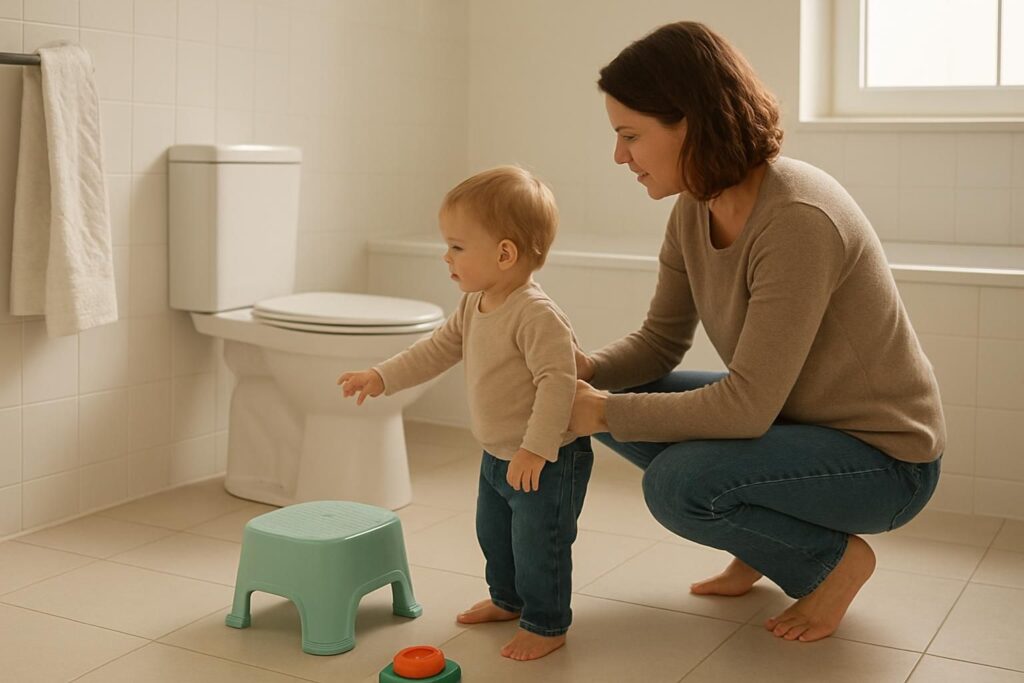
The potty does most of the work for roughly the first three days. After that, most families start moving towards the toilet, with a seat reducer and step stool making it something your child can manage with less help.
Day four or five is usually the hardest day of the week, not day two. By this point a child is often simply tired of being asked the same question over and over, and some resistance is normal rather than a sign that things are going wrong. The practical fix is to ask less often around this point and hand your child a bit more responsibility for noticing the feeling themselves.
Accidents through all of this are part of learning the timing, not a failure of the attempt. A calm note and a change of pants tells a child far more than a reaction does.
The Potty Training Box is built around exactly this structure: a day-by-day training programme booklet, tracking schedules for your child’s own timing, and sticker cards that start generous and grow rarer as the days go on, plus a year of access to a community where the brand’s experts answer questions about your child’s particular week seven days a week. This whole approach is called the Potty Training Box Method: a day-by-day programme run over about a week, moving from potty to toilet, that uses tracking and a fading reward system to build towards the moment your child tells you themselves, rather than you working to a timetable.
For the fuller breakdown of what happens on each individual day, the day-by-day plan for the week goes through it in more detail.
How do you work out your own child’s timing without putting them on a clock?
A tracking schedule exists to record when your own child actually goes, not to impose a timetable on them. Over the first few days you write down what you observe, and the pattern that emerges tells you when this particular child tends to need the toilet, rather than borrowing a generic schedule that fits nobody’s child exactly.
One habit makes the record far more useful: give your child the whole cup of a drink in one go rather than letting them sip it across the morning. That way you can actually see how much went in and how long it took before they needed a wee, and that relationship between quantity and timing is exactly what the tracking card is designed to show you.
A tracking card itself has six columns: the time of drinking, the time on the toilet, whether nothing happened, a wee marked green for success or red for an accident, a poo marked the same way, and a notes column for anything worth remembering. Green means it worked, red means an accident happened, and over a few days the pattern on the page starts to speak for itself.
| Column | What you record | What it tells you |
|---|---|---|
| Time drinking | When and roughly how much | Links drink to timing |
| Time on toilet | When you offered or they went | Builds their own pattern |
| Nothing happened | Yes or no | Rules out a near miss |
| Wee | Green success, red accident | Shows progress over days |
| Poo | Green success, red accident | Shows progress over days |
| Notes | Anything unusual | Context for a pattern |
As your child starts signalling on their own, the offering tapers off. You ask less, they say more, and that handover from your questions to their initiative is the entire point of the exercise, not a leftover habit to break later.
A printable version of this layout is available as a printable tracking chart, if you want to see the columns laid out before you start.
What keeps a three year old motivated for a whole week
The reward system is built to fade rather than stop outright. Sticker cards come in four sizes, with three, five, seven and nine squares used in that order. The first reward comes quickly, after only three squares, so a child sees straight away that the system works. After that the cards get bigger and the reward gets rarer, so the habit outlasts the stickers instead of ending abruptly when they do.
Animal stickers and poo stickers give your child something to choose between each time, and compliment cards are there for the days you have genuinely run out of fresh ways to say well done. A wee certificate and a poo certificate mark the end of the week itself.
Watching the first success together can help some children understand what all the fuss is about.
If you would rather run the reward side of things your own way, separate reward systems are available on their own, with the same small and increasing structure.
What to have ready before day one
A handful of things make the week go more smoothly, and it is worth having them ready rather than hunting for them on day two. The physical side covers a potty, a toilet seat reducer and a step stool, alongside at least fifteen pairs of ordinary cotton pants, something to protect the mattress and the sofa, a handful of small rewards, and pull-ups for sleeping, which stay separate from the daytime training entirely.
Some links in this article are affiliate links, which means we earn a small commission if you buy through them. It costs you nothing extra and does not affect what we recommend.
| What you need | What it is for | Where to look |
|---|---|---|
| Potty | First few days, before moving to the toilet | BabyBjörn Potty Chair |
| Toilet seat reducer | Makes the big toilet feel manageable | Munchkin Sturdy Potty Seat |
| Step stool | Lets your child climb up and brace themselves | Dreambaby 2-Up Step Stool |
| Mattress and sofa protection | Covers the inevitable accident indoors | Huggies DryNites Bed Mats |
| Pull-ups for sleeping | Separate from daytime training entirely | Huggies Pull-Ups Trainers Night |
Choosing the week matters as much as the kit. A week with three clear days at home, free of a house move, a new sibling arriving or a run of visitors, gives the training the best chance to settle before real life interrupts it.
| When | What you do | What you are looking for |
|---|---|---|
| Eight weeks before term | Watch for readiness signs | Dry stretches, curiosity, following instructions |
| Four weeks before | Gather potty, pants, step stool | Everything ready, not a scramble |
| The week before | Pick three clear home days | No moves, no new baby, no big trips |
| The training week | Nappy off, cotton pants on | Child telling you, fewer accidents by day five |
| After term starts | Keep the same questions and routine | Consistency with the school day |
For a fuller countdown from the first readiness sign through to term starting, what to do in the week before day one walks through it step by step.
What if it does not work before term starts?
If an attempt genuinely is not working, the honest move is to stop and leave it a few weeks before trying again, rather than pushing through a run of bad days. That pause is part of the method itself, not an admission of defeat, and a child who was not ready in September is often entirely ready by October half term.
Tell the nursery or school early rather than waiting to be asked. Staff deal with exactly this situation every single year and most settings have a straightforward, unembarrassed way of handling it.
Night-time dryness is a separate skill that develops later and on its own timetable. It is not expected by the time a child starts school and is not part of the training week at all.
The approach is also used successfully with children who are autistic, have Down syndrome, or are non-verbal, usually over a longer stretch than a week and by reading the child’s own signals closely rather than waiting to be told in words.
A few things sit outside what any potty training approach should try to solve on its own. Ongoing constipation, a child who seems to be withholding poo, repeated urinary infections, or bedwetting that continues past the age of six are worth raising with your GP or health visitor rather than working through alone. NHS guidance on constipation in children is a good place to start if you want more detail on what is typical and what is worth getting checked (NHS).
If you have already read the NHS advice, this piece covers the practical version, day by day: you have read the NHS advice. And if term is now genuinely close, starting school in nappies covers the Reception-specific side of this in full.
Frequently asked questions
Can a school refuse my child a place if they are not toilet trained?
Toileting is not part of the standard school admissions criteria, so a child is not turned away for still being in nappies. Schools are used to supporting children through this in the early weeks of Reception, and most have a plan for exactly this situation.
How many children start Reception still in nappies?
Council reporting puts the figure at around one in four children nationally starting school unable to use the toilet independently. If your child is among them, they are in a large and unremarkable group, not an unusual one.
Is 3 too late to start potty training before school?
No. Many children start potty training at three or three and a half and still typically become daytime dry in about a week once they show genuine signs of readiness. Age matters far less than whether the readiness signs are actually there.
How long before term should I start potty training?
Most families allow around four to eight weeks before term, which gives time for three clear days at home, a settling-in period, and a backup attempt if the first one does not take. Starting earlier than that rarely helps if a child is not yet showing readiness signs.
Will nursery help with toilet training, or is it all down to me?
Nursery staff generally support whatever routine you have started at home once your child is using the toilet or potty consistently, but the first few days of learning typically happen at home, where the child learns fastest. Tell your setting what you are doing so they can keep it consistent.
Does my child need to be dry at night before starting school?
No. Night-time dryness is a separate skill that develops later and on its own timetable, and it is not expected by the time a child starts school. NHS guidance treats daytime and night-time dryness as two distinct stages, not one milestone.
Ready for the next step?
The Potty Training Box holds the day-by-day programme this article is built on: tracking charts that show you when your child actually needs to go, instruction cards for each day, and a reward system that tapers off on its own.
Sources
- Cumberland Council (Around one in four children starting school nationally are not yet able to use the toil…)
- Westmorland and Furness Council (Government backed guidance for parents of Reception starters cites the same one in four…)
- NHS (Almost all children can be potty trained between 18 months and 2 and a half years, with…)
- NHS (Night-time dryness is a separate stage from daytime dryness with its own age norms)
- NHS (Constipation in children is a matter for a GP or health visitor, with guidance availabl…)
This article was written with AI assistance and checked by Dustin van de Sande.