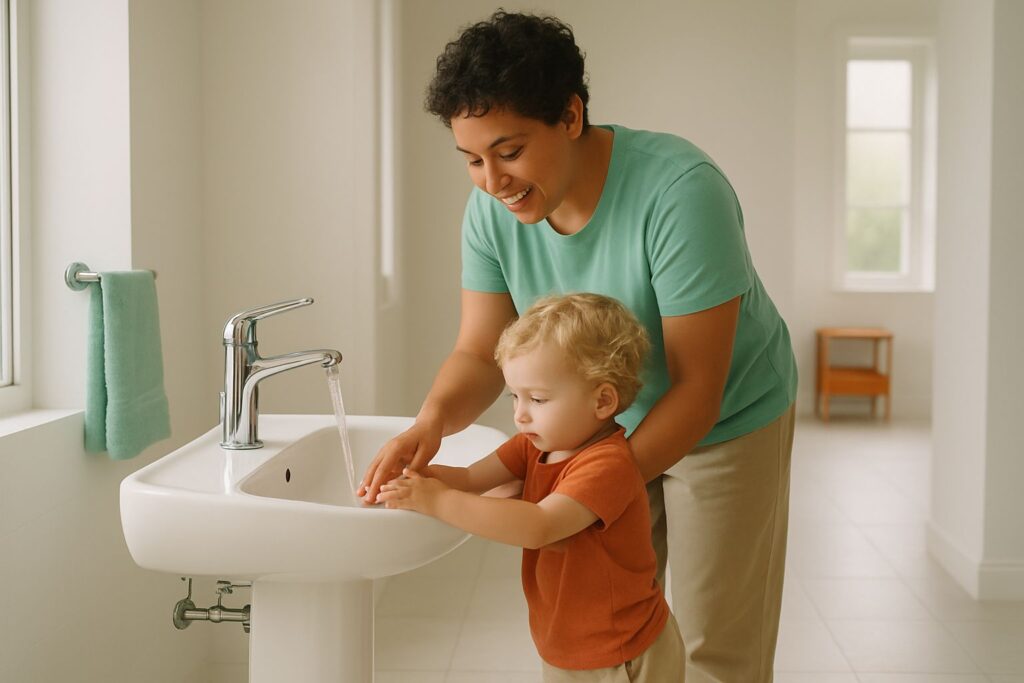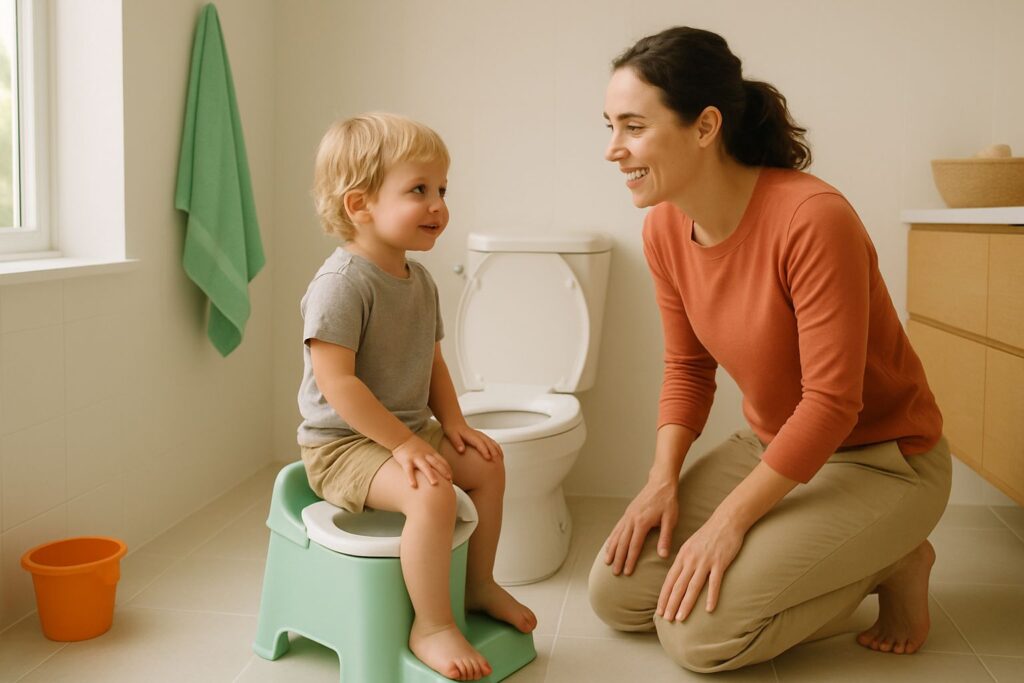

On day one, take the nappy off first thing, dress your child in plain cotton pants, and stay home all day. Give a full cup of drink in one sitting, ask your child to tell you when they need a wee rather than sitting them on a schedule, and reward each success straightaway. Expect several accidents; that’s normal.
What do you actually do on day one of potty training?
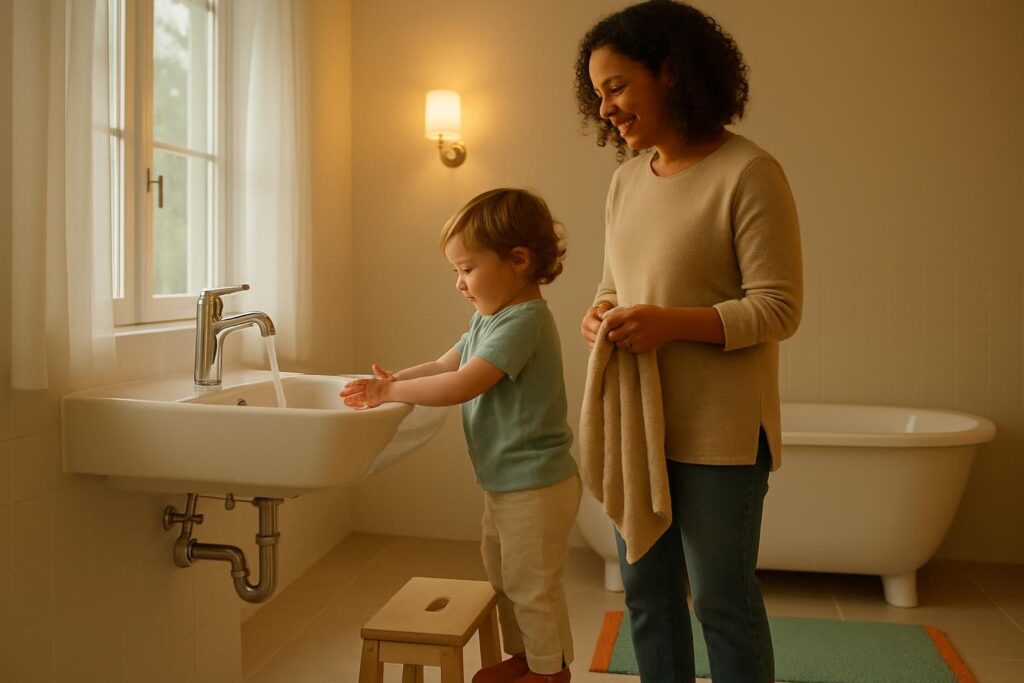
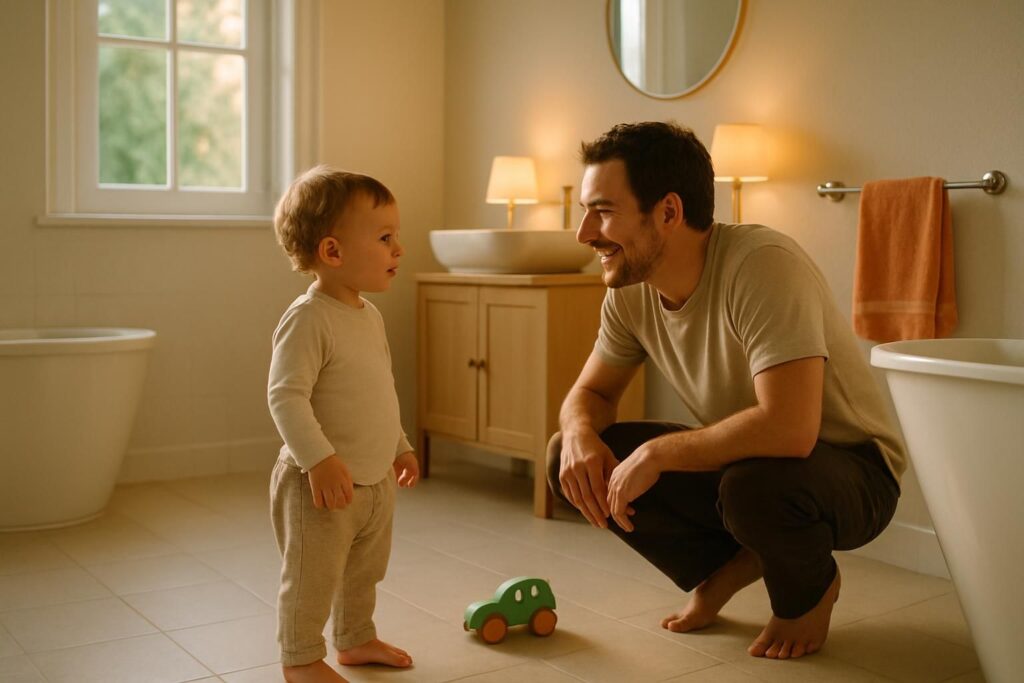
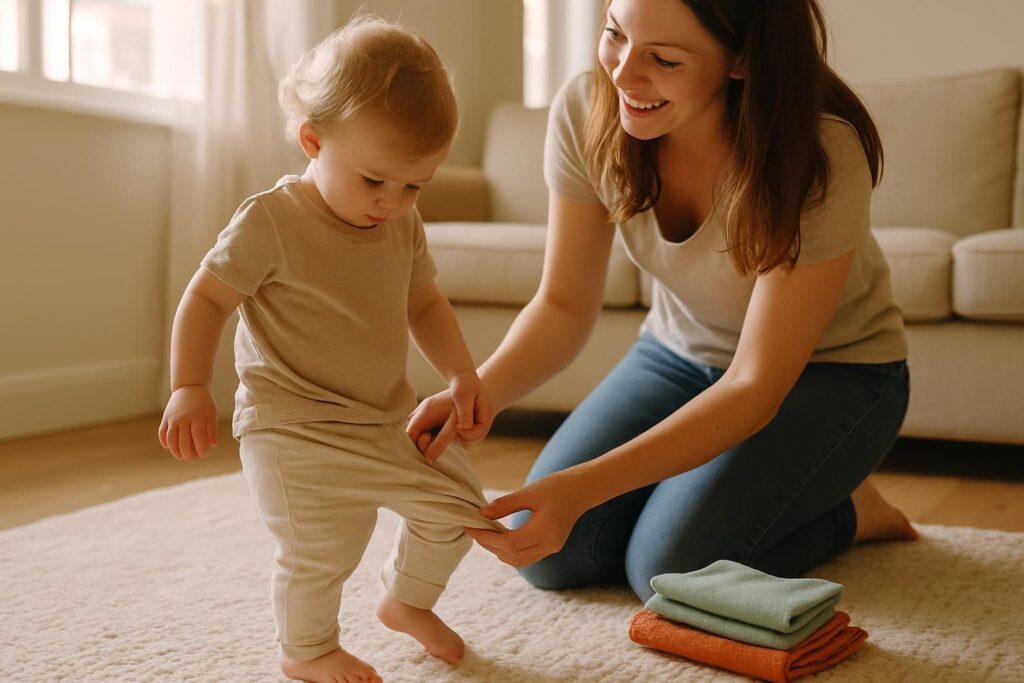
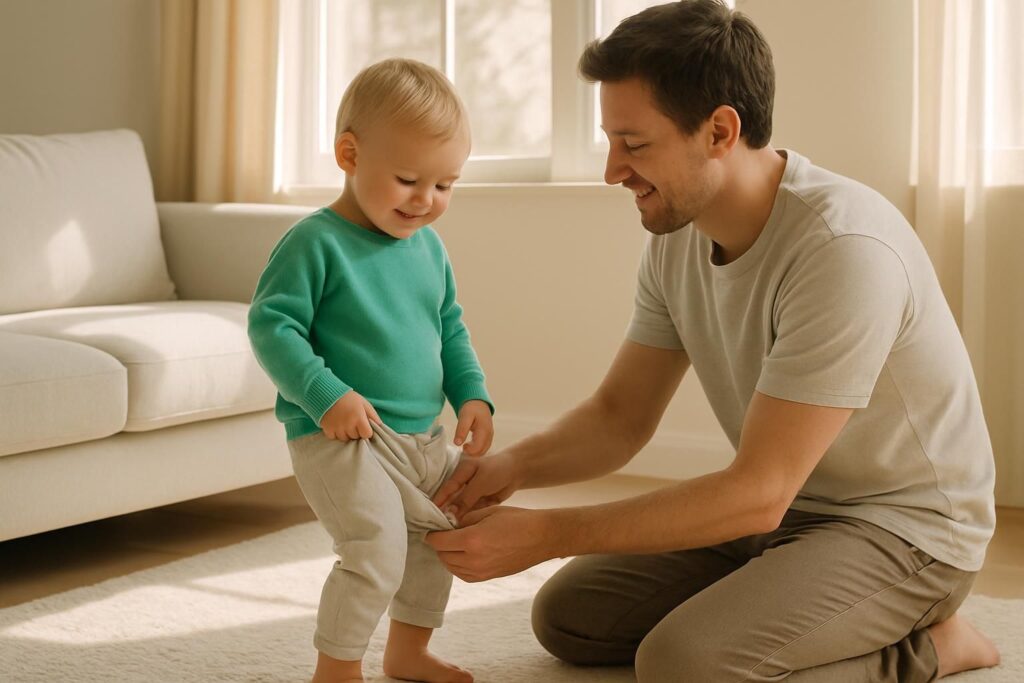
Day one starts the moment you take the nappy off, usually first thing in the morning, and your child goes straight into plain cotton pants rather than back into anything nappy-like. You explain simply what is happening: no more nappies in the day, wee and poo now go in the potty or toilet.
Stay home all day. No nursery drop-off, no shopping trip, no visitors popping round. Your child needs to feel what a wet pair of pants feels like, without the distraction of a car seat or someone else’s living room.
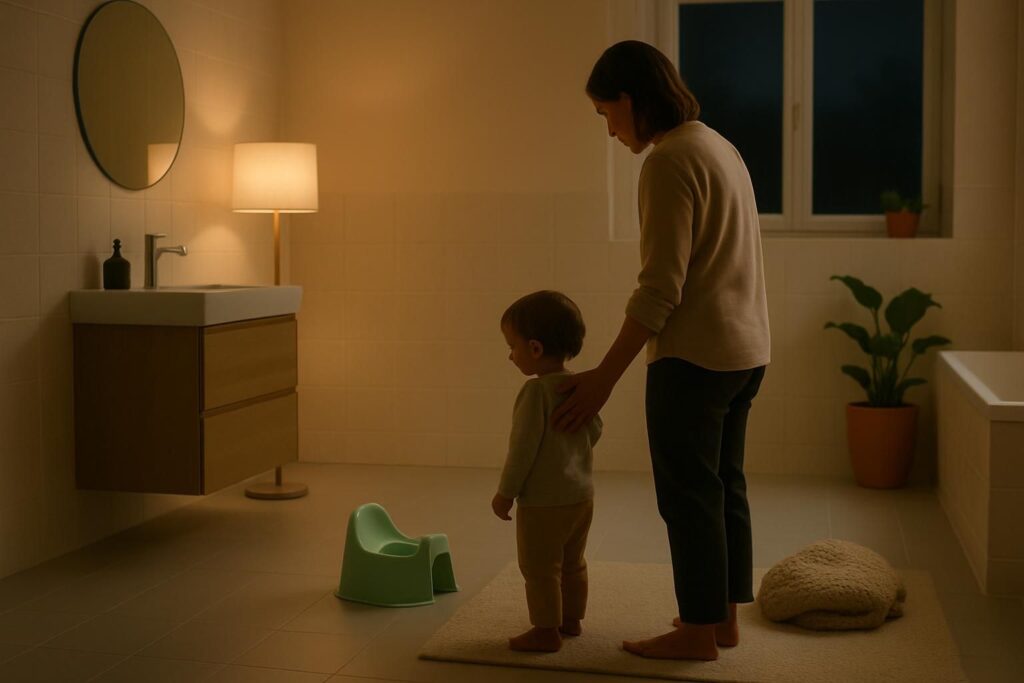
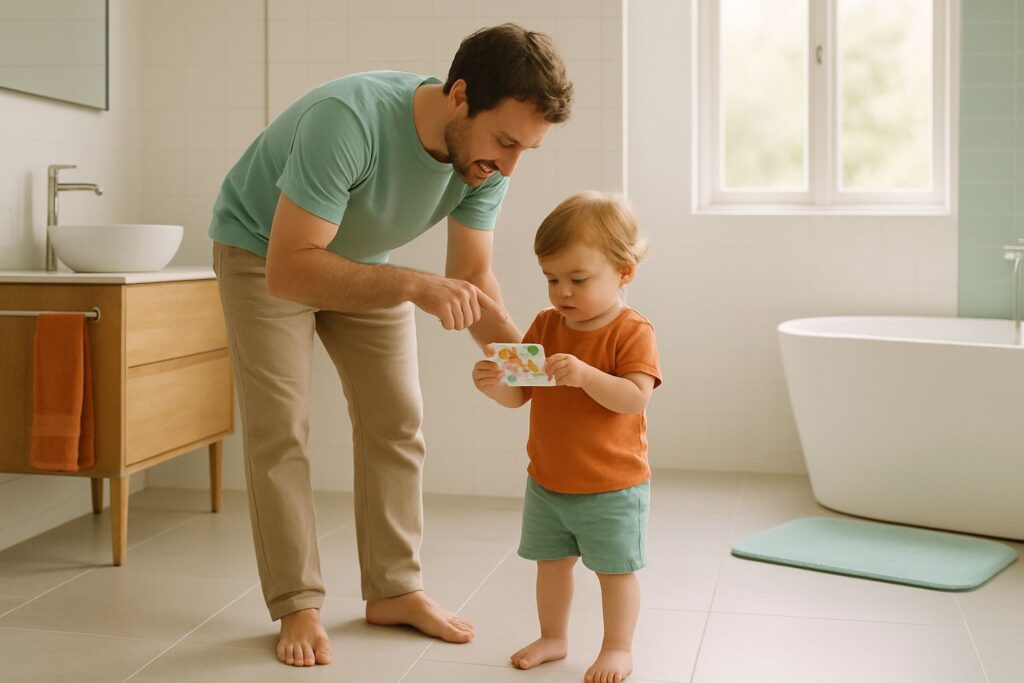
Rather than sitting your child on the potty every so often, you ask something simple: will you tell me when you need a wee? Offer a full cup of drink in one go, then watch closely and write down what happens, using it to work out your own child’s pattern rather than following a generic schedule. Reward the first successes quickly with a sticker and plenty of praise, and expect several accidents along the way. That is what day one is for.
What do you need to have ready before you take the nappy off?
Have a potty ready (it mostly earns its keep in the first three days), along with a toilet seat reducer and step stool for when your child moves on to the big toilet. At least fifteen pairs of plain cotton pants matter more than people expect, because why plain cotton pants work better than training pants comes down to your child actually feeling wet, which thicker training pants are designed to hide.
Protect the mattress and the sofa, keep a handful of small rewards to hand, and have pull-ups ready for sleeping only, since night-time is a separate stage that comes later. Clear the actual day too: no nursery, no errands, no guests dropping by unannounced.
Some links in this article are affiliate links, which means we earn a small commission if you buy through them. It costs you nothing extra and does not affect what we recommend. For the potty and toilet seat side of things, a toilet seat reducer with a built-in step stool covers both jobs in one piece of kit, and something like a fold-and-go potty seat is handy once your child moves on to the toilet. For protecting the mattress, a pack of absorbent bed mats saves a lot of midnight stripping of sheets.
If you would rather sort your own reward system than use the box’s, there is a separate reward system sold on its own, built on the same sticker ladder.
Is your child actually ready to start, or should you wait?
Common signs of readiness include staying dry for longer stretches between nappy changes, telling you after a wet nappy rather than ignoring it, showing curiosity about the toilet, and being able to pull their own pants up and down. None of these guarantee a smooth week, but together they are a reasonable green light.
A child who is genuinely frightened of the potty or the toilet is not ready yet, whatever the calendar says. The honest move is to build familiarity gently first, perhaps reading a story about it together, such as I Want My Potty!, and start the real attempt later.
The NHS guidance on potty training points out that most children start somewhere between eighteen months and three years old, though exactly when varies a great deal from child to child, and that variation is normal rather than a sign something is wrong.
If you are not sure which camp your own child is in, the readiness quiz gives you a clearer picture before you commit a day to it.
Hour by hour: how day one usually goes
No two children follow the exact same timetable, but most day ones follow a recognisable shape. The table below is a guide to what to expect, not a schedule to enforce.
| Time of day | What you do | What to expect |
|---|---|---|
| Morning | Nappy off, into cotton pants, explain what’s changing, offer the first full cup | Confusion at first, maybe an early accident before the first wee is understood |
| Mid-morning | Stay close, respond calmly to any accident, change together without fuss | One or two accidents is common; your child is still learning the feeling |
| Lunchtime | Second full cup, keep asking rather than sitting them down on a timer | You start to see roughly how long after drinking your child needs a wee |
| Afternoon | Celebrate the first real success with a sticker and genuine praise | This is often the turning point where your child notices it works |
| Early evening | Stay patient, keep offering | Poo often comes later in the day than wees, so don’t read it as a setback |
| Bedtime | Pull-up on for sleeping, talk through the day positively | Night dryness is separate and comes later, so this isn’t a step backwards |
Why you ask ‘will you tell me when you need a wee?’ instead of watching the clock
The whole point of day one, and every day after it, is reaching the moment your child says they need to go, not a parent who has memorised a timer. So instead of putting your child on the potty on a fixed schedule, you ask them directly: will you tell me when you need a wee? That question does the work that sitting-every-twenty-minutes cannot, because it hands the initiative to the child rather than the clock.
Sitting a toddler down every twenty or thirty minutes regardless of any signal is a different approach, and not the one this box teaches. The only genuinely fixed moments, during training and afterwards, are before and after sleep and before leaving the house. Outside those, offering the potty in the early hours is scaffolding, there to create chances to succeed and to gather information, and it is meant to come down quickly as your child starts signalling on their own.
This whole shape, nappy off, three days at home first, recording what happens, rewarding it, and working towards the child’s own signal rather than a parent’s timetable, is what people mean when they refer to the Potty Training Box Method. If you want to see how the days after day one build on this, the day-by-day plan for the whole week lays it out properly, and if you are weighing it against the better-known three-day approach, it helps to understand what the 3-day method really involves before you pick one.
How to fill in the tracking schedule on day one
A tracking schedule is simply a sheet you fill in through the day to learn your own child’s timing, not a form you hand in to anyone. The version used in the Potty Training Box has six columns, shown below, and the box includes fourteen of them, enough to cover the training week and the days that follow.
| Column | What you write in it |
|---|---|
| Time of drinking | The time your child finished the cup, drunk in one go rather than sipped |
| Time on the toilet | The time they sat on the potty or toilet, whether or not anything happened |
| Nothing (yes/no) | Tick yes if they sat and nothing came out |
| Wee | Green for a success, red for an accident |
| Poo | Green for a success, red for an accident |
| Notes | Anything else worth remembering, like fidgeting beforehand or a long gap |
Let your child drink the cup in one sitting rather than in sips spread across the morning. A half-finished cup drunk slowly tells you very little, but a full cup drunk at once lets you see clearly how long it takes before they need a wee, which is exactly the pattern the schedule exists to reveal.
By the end of day one, most parents have a rough sense of their child’s own timing and the small signals, a certain stillness, a particular word, that come just before they need to go. A printable version of this exact chart is available at the tracking chart page if you want to try it before deciding on anything else.
How rewards work on day one: the 3, 5, 7, 9 sticker ladder
Rewards on day one come from a set of sticker cards that grow in size, three squares, then five, then seven, then nine, used in that order rather than all at once. Three squares means your child fills the card and gets the reward quickly, so they see straightaway that it works, and the cards grow rarer as the days go on so the habit keeps going after the stickers stop being the main point.
Inside the box you also get a hundred animal stickers and twenty poo stickers to go with the cards, plus a wee certificate and a poo certificate to mark real milestones once your child gets there. For the days your own words run dry, there are six compliment cards with fresh ways to say well done, because praise matters just as much as the sticker itself.
If day one ends with that first proper success on the potty, it’s worth sitting down together and watching it celebrated on screen.
What to do when the first accident happens
Stay calm and matter of fact, change your child together without telling them off, and treat it as information rather than a setback. Accidents on day one are completely normal and most parents see several of them; by day three there are usually far fewer.
Write it down in red on the tracking schedule and move on. Avoid asking ‘did you have an accident?’ in a disappointed tone, since the goal on day one is simply to gather honest information about your child’s pattern, not to keep score.
What counts as a good day one (and what does not mean you should stop)?
A good day one is one where you have learned something about your child’s pattern, not one with dry pants from morning to night. Most children are dry in the daytime in about a week, some manage it in as little as three days, and others take two or three weeks, all within the normal range.
Many parents expect day two to be the hardest, but it is usually day four or five that tests you most, once your child gets bored of being asked over and over whether they need a wee and starts pushing back. The hardest day is usually day 4 or 5, and the fix there is simply to ask less often and let your child take a bit more responsibility for saying it themselves.
If a genuine attempt really is not working after a few days, stop and leave it a few weeks before trying again rather than pushing through; that pause is part of the plan, not a failure of it. Night-time dryness follows on its own later and is a separate matter the box does not promise.
What comes after day one
Days two and three still happen at home, building on what day one taught you, before short outings start to bring the toilet routine into the rest of your child’s day. The potty usually gives way to the toilet seat reducer and step stool somewhere in this stretch, once your child is confident with the basic signal.
The Potty Training Box carries you through this whole stretch: a programme booklet and seven instruction cards tell you what to do on each of the following days, including the difficult ones, and a year of community access means there are people to ask when a particular day goes sideways. If you want the full picture before deciding, what is in the box and who it suits covers it properly.
Frequently asked questions
How should the first day of potty training go?
The first day should be spent entirely at home, with the nappy off first thing and your child in plain cotton pants. You offer a full cup of drink, ask your child to tell you when they need a wee rather than sitting them down on a timer, record what happens, and reward every success. Expect several accidents; that is normal and part of how you learn your child's pattern.
How do I start potty training immediately, in one day?
You can start today by taking the nappy off in the morning, clearing the day of outings and visitors, and dressing your child in cotton pants rather than a nappy or training pants. Offer drinks, watch for signals, and reward the first successes straightaway. One day alone will not finish the job, but it is a genuine and valid start, not a trial run.
Is 2 too early to potty train?
Two is not automatically too early; NHS guidance on potty training points out that most children start somewhere between eighteen months and three years old, so a two-year-old sits well within that range. What matters more than the exact age is whether your child shows the usual signs of readiness, and if they seem frightened or uninterested, it is fine to wait a little longer.
What is the 10-10-10 rule for potty training?
The term 10-10-10 is usually used to describe sitting a child on the potty for around ten minutes, roughly ten times a day, as part of some fixed-interval approaches. The Potty Training Box Method works differently: instead of a timed schedule, you ask your child to tell you when they need to go, using a tracking schedule to learn their own pattern rather than imposing one on them.
Should I put my child on the potty every 20 minutes on day one?
No, sitting a child on the potty every twenty minutes regardless of any signal is a different, clock-based approach. This method asks your child directly whether they need a wee and uses a tracking schedule to learn their real timing, with offering the potty used only as early scaffolding that is withdrawn quickly.
Do I use pull-ups or pants on the first day?
During the day, your child wears plain cotton pants rather than a nappy or a training pant, because training pants are designed to hide wetness and that makes it harder for your child to feel what has happened. Pull-ups are kept for sleeping only, since night-time dryness is a separate stage that comes later and the first day is not trying to tackle it.
Ready for the next step?
The Potty Training Box holds the day-by-day programme this article is built on: tracking charts that show you when your child actually needs to go, instruction cards for each day, and a reward system that tapers off on its own.
Sources
This article was written with AI assistance and checked by Dustin van de Sande.