Pull-Ups or Pants? When Pull-Ups Help With Potty Training and When They Get in the Way


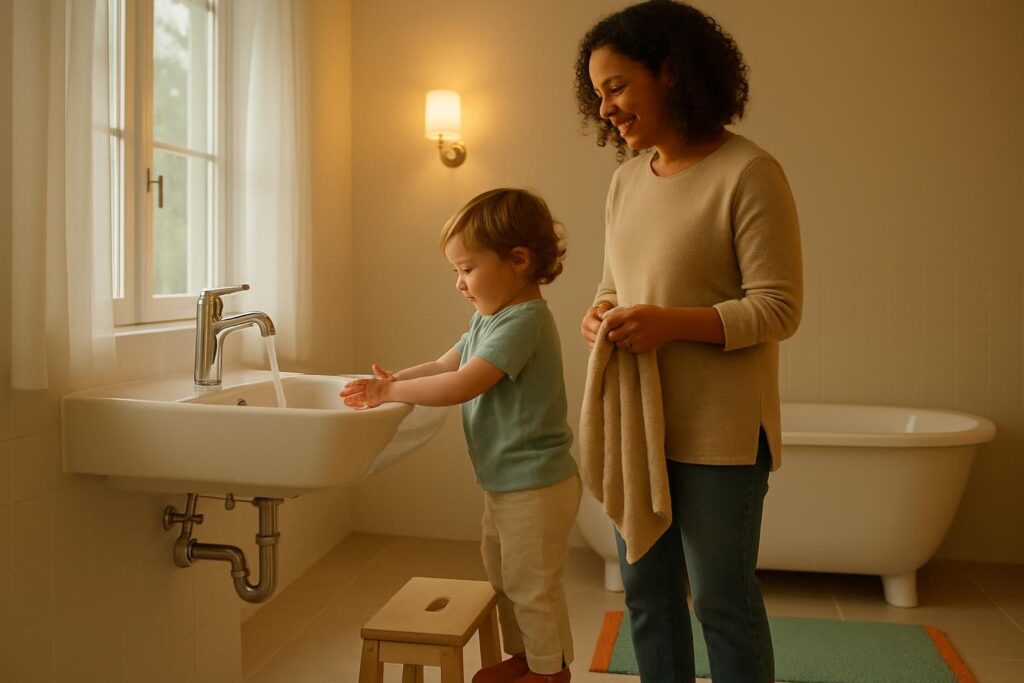
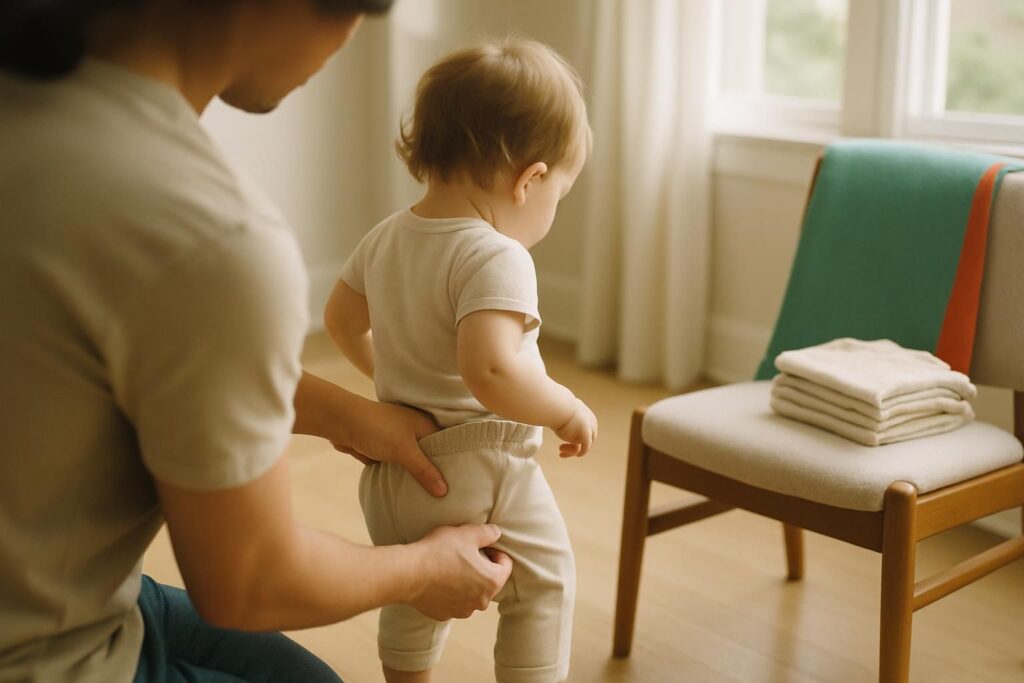
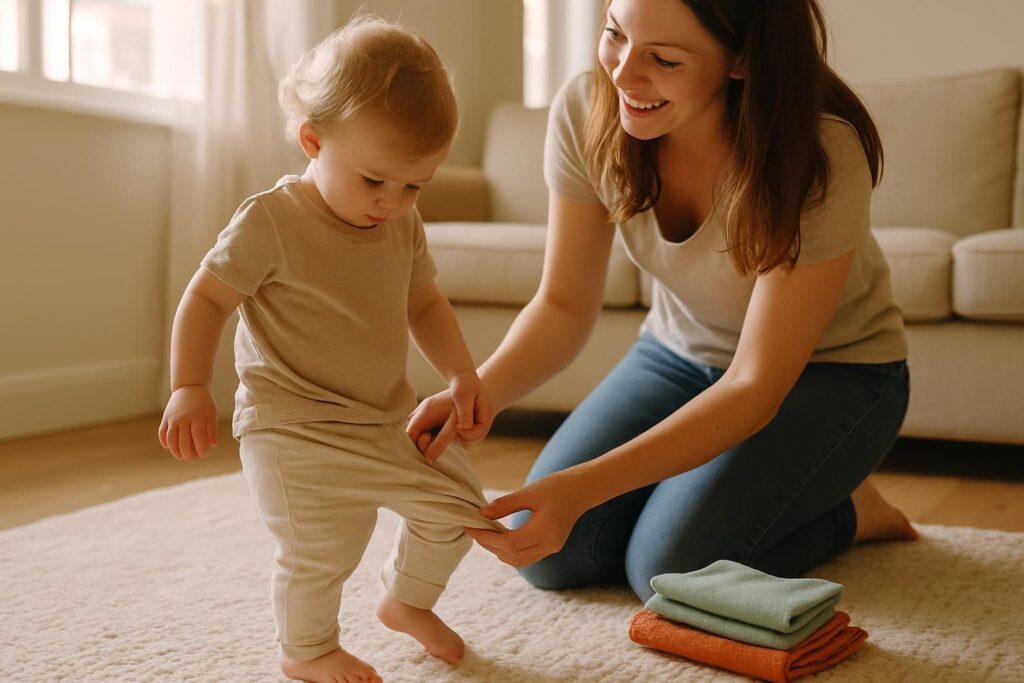
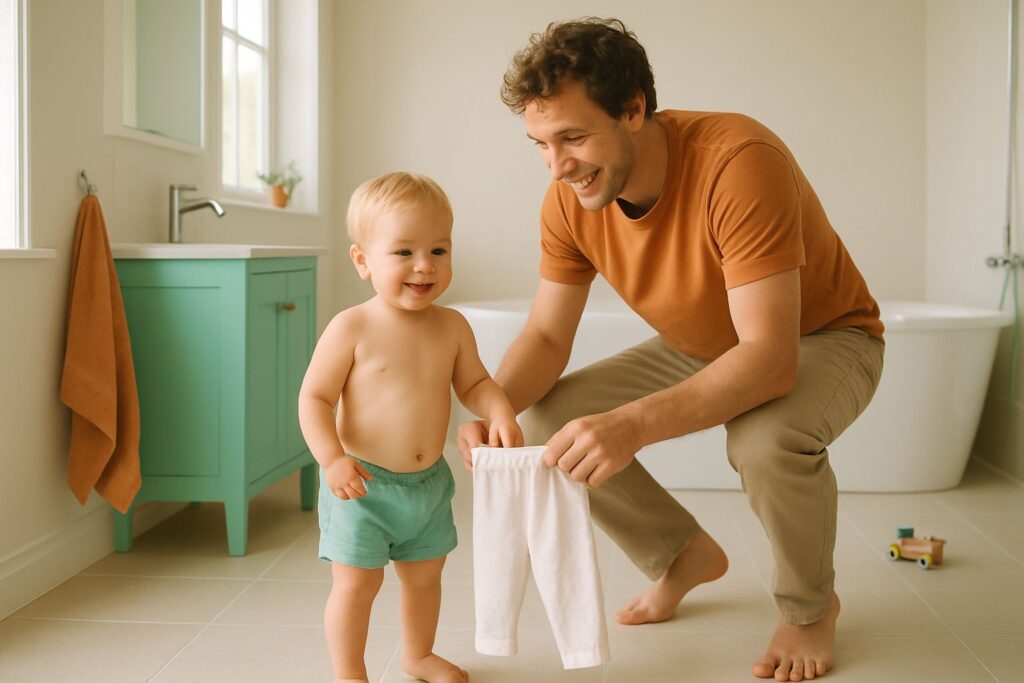
For daytime training, take the nappy off and go straight into ordinary cotton pants rather than pull-ups. A child feels wet pants immediately, and that feeling is what teaches them. Pull-ups are kept for sleep. Most children manage daytime dryness in about a week, some in three days, others two or three weeks.
If you have been using pull-ups up to now, that is completely normal and nothing to feel bad about. They are brilliant for the newborn and toddler years. It is simply that once you start daytime training properly, they stop helping and start getting in the way.
Why pull-ups make daytime training slower
Pull-ups are built to pull wetness away from the skin as fast as possible, which is exactly what makes them useless for training. A child who wees in a pull-up barely feels it, so there is nothing to connect the feeling of needing to go with the feeling of having gone.
Putting a pull-up on and taking it off also looks and feels like a nappy to a toddler. Nothing has visibly changed in their world, so there is no reason for them to behave differently. Padded fabric training pants fall into the same category for the same reason: anything designed to absorb removes the one piece of feedback the child needs.
This is why the method works with ordinary cotton pants instead. It is worth having at least fifteen pairs ready before you start, because you will go through more than you expect in the first few days and running out mid-morning is a genuine hassle. If you want more detail on the thinking behind this choice, why plain cotton pants work better from day one covers it properly.
When pull-ups genuinely do help
Pull-ups still have a real job during training: sleep. Day naps and night-time sleep are a separate matter from daytime training, and the box does not promise night dryness as part of the same process. Keeping a pull-up on for sleep while the daytime hours run in cotton pants is standard and sensible.
They can also earn their keep as a one-off for a long car journey or a flight in the first few days of training, when you simply cannot manage frequent stops. Use them as an occasional pause button for a specific journey, not as a daily habit that creeps back in once the going gets difficult.
If your child is not ready yet, pull-ups are also the right choice while you wait. A child who is frightened of the potty or the toilet is not ready to start, and the honest answer is to build familiarity first and try again in a few weeks rather than push on. A gentle picture book shared together, such as Pirate Pete’s Potty, can help build that familiarity before you start.
What about nursery, grandparents and the childminder?
The first three days of training happen at home, because that is when a child learns the most, so the question of what nursery does comes a little later. By the time your child is heading back to nursery or to grandma’s, you want everyone saying and doing the same thing.
Send cotton pants, plenty of spares and a wet bag, and tell whoever is looking after your child exactly what you say at home. The one sentence worth everyone using is you tell me when you need a wee, said instead of constantly offering the potty, so your child keeps being the one who notices and speaks up.
Mixed messages slow things down. If pants are the rule at home and pull-ups are the rule at nursery, your child gets two different sets of feedback and takes longer to work out which one matters. Some settings will insist on pull-ups regardless, and that is their call to make, but it is worth a calm conversation about trying cotton pants for a settling-in period if they are willing. Even where pull-ups stay in place at nursery, you can keep using the same phrase and the same toilet trip before and after sleep at home, so the cue stays consistent even if the clothing does not.
Out and about: how to leave the house without reaching for a pull-up
Short outings start after the first three days at home, beginning with something as brief as twenty minutes. The habit that stays even once training is finished is simple: toilet before you leave the house, and toilet after sleep.
Pack spare pants, spare trousers, a towel for the car seat, and keep something to protect the sofa and the mattress at home during this period. An accident on an outing is part of learning, not a setback, and the calmer you are about it the faster your child moves past it.
If an accident does happen while you are out, it helps to talk it through together once you are home.
A short, calm conversation right after an accident, with your child alongside you, tends to land better than a lecture in the moment it happens.
How do you know your child is ready to come out of pull-ups?
Look for a child who stays dry for longer stretches between changes, who tells you they have gone or are about to, who shows curiosity about the toilet, and who can pull their own trousers up and down and follow a simple instruction. None of these need to all appear at once, but a few together is a good sign.
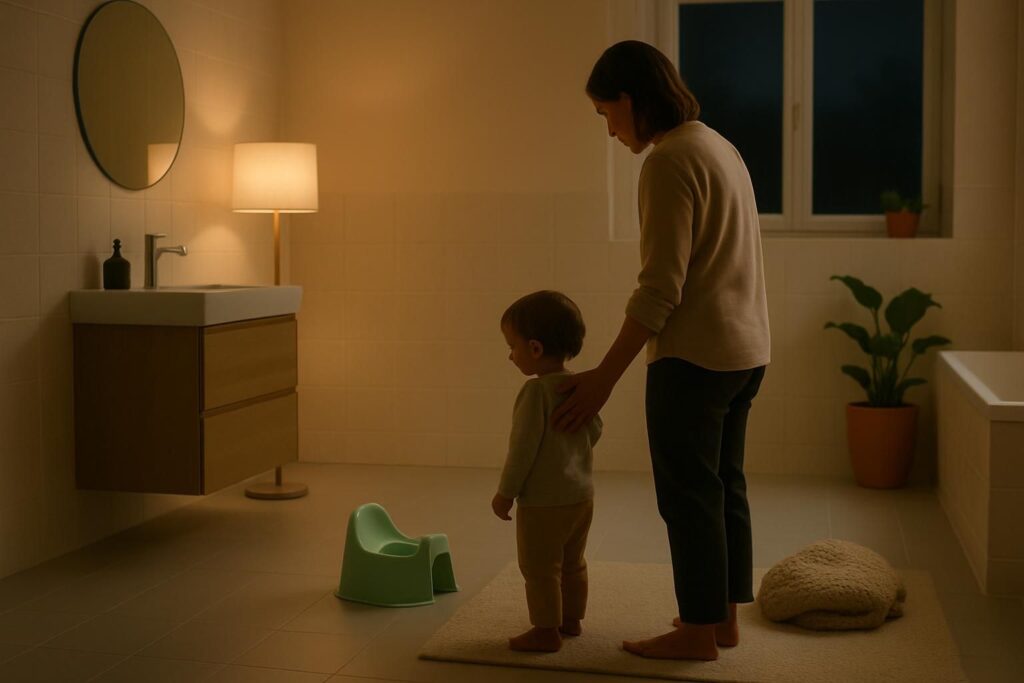
A child who is frightened of the potty or the toilet is not ready, whatever their age. Build familiarity with the bathroom and the potty in an unpressured way first, and start properly once the fear has gone. There is no single right age to start, and this can happen anywhere from around 18 months to 4 years old, with night-time dryness following on its own timescale once daytime dryness is established.
- Stays dry for an hour or two at a time
- Tells you, in words or gestures, that they have gone or need to go
- Shows interest in the potty or toilet, or in watching you use it
- Can pull trousers and pants up and down mostly unaided
- Can follow a short, simple instruction
If you are unsure where your own child stands, our readiness quiz walks through this in a few quick questions.
What replaces the pull-up: how the Potty Training Box Method works
The Potty Training Box Method takes the nappy off entirely, spends the first three days at home, starts on a potty before moving to the toilet, and adds short outings once the basics are in place. There is no pull-up anywhere in the daytime part of the plan, because the whole point is for your child to feel what is happening.
The Potty Training Box builds this around a day-by-day booklet, tracking schedules for recording when your particular child drinks and goes, and sticker cards that grow from 3 squares up to 5, 7 and then 9 so the reward comes fast at first and gets rarer as your child improves. It contains no training pants, because the method deliberately works with the nappy off and ordinary cotton pants instead. If you want to try the tracking chart on its own first, a printable version is available.
The tracking schedule is there to learn your child’s own timing, not to impose a timetable on them. To get a clear picture, give the drink in one go rather than in sips spread through the morning, so you can see how long after drinking the wee actually comes. Instead of sitting your child down every half hour, you ask you tell me when you need a wee, with the only fixed moments being before and after sleep and before you leave the house. If your child is going through a stage of very frequent tiny wees once the absorbent pull-up is off, it is worth reading about what to do when your toddler keeps weeing small amounts.
If you would rather build your own version of this without the box, there are standalone reward systems you can use instead, with sticker cards that run from small to large in the same way.
Day 4 and day 5 are usually the hard ones, and what to do then
Many parents expect day two to be the hardest, but resistance more often shows up on day four or five, once your child is simply bored of being asked you tell me when you need a wee so often. This is the point where some children push back, hold on longer, or seem to regress.
The fix is to ask less, not more. Hand a bit more responsibility back to your child rather than checking in constantly, and the pushback usually eases within a day or two. If your toddler refuses to sit on the potty at this stage, it is often this boredom rather than a sign they are not ready.
Reaching for a pull-up mid-week to get through a rough patch undoes the feedback your child has only just started to use, and tends to add days rather than save them. If a particular attempt genuinely is not working, the method’s own advice is to stop and leave it a few weeks before trying again, rather than pushing through. Accidents and setbacks happen to almost every family, and it is worth reading about accidents and regression before you decide whether to pause.
When should you stop using pull-ups at night?
Night-time dryness is a separate skill from daytime dryness, and it often arrives months or even years later. Most children are dry during the day well before they are dry at night, and the Potty Training Box does not promise night dryness as part of its daytime programme.
A reasonable sign that a night pull-up can go is a child who is consistently dry most mornings without one. Keep a mattress protector and spare bedding within easy reach for the transition, and avoid waking your child to use the toilet on a fixed schedule, since that works against the same self-signalling the daytime method is built on.
| Situation | What your child wears | Why |
|---|---|---|
| First three days at home | Cotton pants, nappy off | Feedback teaches the feeling of wet pants |
| Short outings after day three | Cotton pants, spares packed | Builds on what has already been learned at home |
| Nursery or childminder | Cotton pants plus spares and a wet bag | Consistent message with home speeds things up |
| Naps and night | Pull-up | A separate skill that arrives later |
| Long car journey in week one | Pull-up, as a one-off | Practical for a specific journey, not a habit |
If bedwetting continues regularly past around age five or six, that is worth raising with your GP or health visitor rather than managing on your own, since there can be underlying causes worth checking.
Some links in this article are affiliate links, which means we earn a small commission if you buy through them. It costs you nothing extra and does not affect what we recommend.
For the night-time stretch, many parents find a dedicated night pull-up such as Huggies DryNites pyjama pants more comfortable for an older child than a daytime nappy pant, and disposable bed mats such as the Huggies DryNites Bed Mats save a lot of midnight stripping of sheets.
Frequently asked questions
Are pull-ups bad for potty training?
Pull-ups are not harmful, but their absorbency works against daytime training because it pulls wetness away so the child barely feels it happen. For the daytime hours, ordinary cotton pants give the feedback a child needs to connect the feeling of needing to go with the feeling of having gone. Pull-ups still have a sensible place for sleep and the odd long journey.
Do pull-ups hold as much wee as nappies?
Pull-ups absorb wetness efficiently enough that your child barely feels it happen, which is exactly why they are not helpful for daytime training. Exactly how much they hold compared with a nappy matters far less than the fact that either way, the child gets little or no sensation of being wet. For training purposes, the feedback they fail to give is the real issue.
Should my child wear pants under a pull-up?
No, pants are not worn underneath a pull-up. Pull-ups are designed to sit directly against the skin so they can absorb properly, and adding pants underneath would simply trap moisture rather than help with training. During daytime training it is better to use cotton pants alone, with no pull-up involved.
How long should my child wear pull-ups at night?
There is no fixed length of time, because night dryness is a separate skill that often follows daytime dryness by months or longer. A reasonable point to try dropping the night pull-up is once your child is consistently waking dry most mornings. If bedwetting continues regularly past around age five or six, it is worth discussing with your GP or health visitor.
What do I do if nursery insists on pull-ups?
Have a calm conversation about trying cotton pants for a settling-in period if nursery is willing, since consistent messaging between home and nursery speeds up training. If the setting insists on pull-ups regardless, that is a reasonable policy decision on their part and not something to push back against hard. Keep using the same phrase, you tell me when you need a wee, in both places so your child still gets a consistent cue even if the clothing differs.
Are reusable training pants any better than disposable pull-ups?
Not for daytime training purposes. Washable training pants are still designed to absorb wetness, so they give a child just as little feedback as disposable pull-ups do. For the daytime hours of training, ordinary cotton pants work better than either kind, because they let your child actually feel when they are wet.
Ready for the next step?
The Potty Training Box holds the day-by-day programme this article is built on: tracking charts that show you when your child actually needs to go, instruction cards for each day, and a reward system that tapers off on its own.
Sources
This article was written with AI assistance and checked by Dustin van de Sande.