


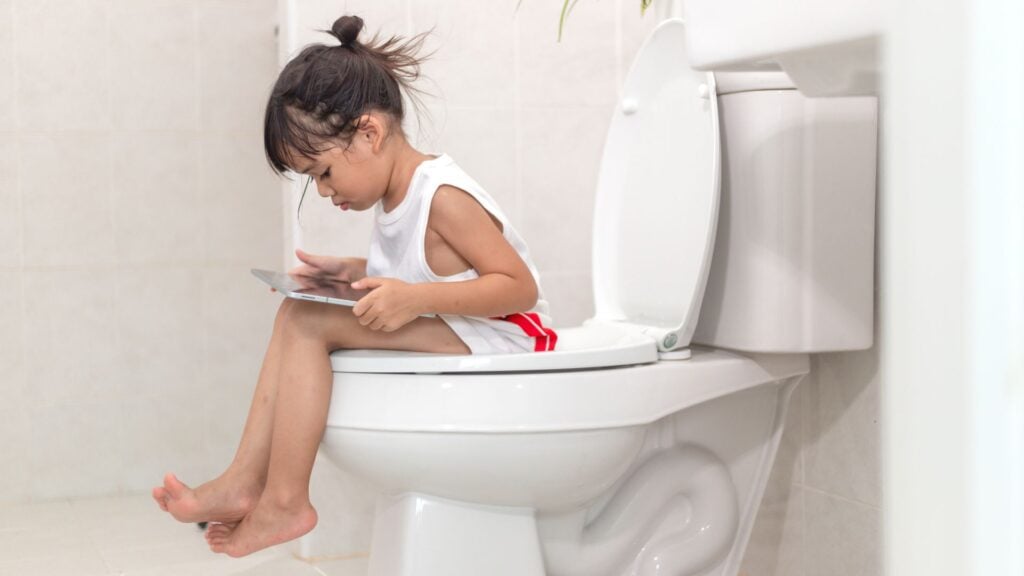
My child keeps peeing small amounts — if you’ve searched for this, you’re in good company. In the first days of potty training, a constant urge to pee in tiny bursts is one of the most common things parents ask us about. It’s frustrating to watch, and it can make you wonder whether something is wrong. The reassuring answer: in most cases it’s completely normal, it has a clear cause, and there’s plenty you can do about it.
Why does my child keep peeing small amounts?
There are three main reasons this happens, and they often overlap.
1. The bladder muscles are still developing
Young children’s bladders are still learning to work. In the early stages of potty training, the muscles that control filling and releasing the bladder aren’t yet working in a coordinated way. The bladder may feel “full” before it actually is, or it may release before it’s been properly emptied — leaving a little urine behind that creates another urge moments later. This isn’t a sign of a problem; it’s simply the bladder building strength through use.
2. Tension and distraction
Potty training is mentally demanding for a toddler. If your child is excited, anxious, or in a hurry to get back to playing, they won’t sit long enough to fully empty the bladder. They pee a little, feel temporary relief, and hop off — only to feel the urge again ten minutes later. This creates a cycle of small, frequent wees that can last all day.
3. They haven’t yet learned what “finished” feels like
Knowing when you’ve fully emptied your bladder is actually a learned sensation. In nappies, children never needed to develop this awareness. During potty training, they’re discovering it for the first time — and it takes practice.
What to do when your child keeps peeing small amounts
Create a calm, unhurried bathroom environment
The single most effective thing you can do is slow things down. A child who feels rushed will not sit long enough to empty properly. Remove distractions — no toys or tablets near the potty — but do give them something calm and quiet to focus on while they sit: blow bubbles together (the slow breathing genuinely helps relax the pelvic floor), read a short book, or sing a quiet song. The goal is for them to feel settled enough to let the bladder do its job fully.
A short story about the potty gives them something calm to focus on while they sit, so they stay put long enough to finish, like this one:
Some links in this article are affiliate links, which means we earn a small commission if you buy through them. It costs you nothing extra and does not affect what we recommend.
Use regular, timed potty breaks
In the first two or three days of potty training, don’t wait for your child to say they need to go. Build in a potty break every 60–90 minutes. A small visual timer works well — it makes the routine predictable for your child and takes the pressure off you to guess the right moment. As the days progress, gradually extend the intervals and start waiting for your child to give you signals before suggesting the potty.
Adjust how you use rewards
In the very first days, reward every attempt — even a tiny wee. This builds positive association and gets your child comfortable with the whole process. After two to three days, shift the reward criteria: only celebrate a proper, full wee. Explain it kindly and clearly: “Well done for sitting on the potty — next time let’s try to do a big wee, and then we can put a sticker on the chart.” This teaches your child that the goal is a complete emptying, not just sitting down.
Teach them to wait until they feel really done
Once they’ve peed, encourage your child to sit for another 20–30 seconds before getting up — even if they think they’re finished. You can count together quietly, or use a short song. This simple habit dramatically reduces the “I need to go again” loop because the bladder gets a moment to fully release.
Remind gently — but don’t overdo it
Asking “Do you need the potty?” every five minutes creates anxiety and often backfires, because children will say no reflexively. After the first couple of days, scale back reminders. Trust your child to recognise the feeling, while gently stepping in if you notice clear signals: holding themselves, hopping from foot to foot, sudden stillness. Commenting on what you observe (“It looks like you might need to go”) is less pressured than direct questions.
Making potty training easier — the Potty Training Box
The Potty Training Box is a complete, structured approach to potty training in 7 days — including a step-by-step method, a reward chart, and everything you need to keep your child motivated through the tricky moments like this one. Over 50,000 families in the UK and Europe have used it.
How long will the small wees continue?
For most children, frequent small wees settle within three to five days once a consistent routine is in place. The bladder quickly adapts when it’s being properly used. By the end of the first week, most children are emptying fully and going less frequently. If you’re still seeing very frequent, tiny amounts after the first week — and your child seems uncomfortable or you notice other symptoms — it’s worth a quick call to your GP to rule out a urinary tract infection (UTI), which can cause exactly this pattern and is easily treated.
Signs that it might be a UTI
Most of the time, small frequent wees during potty training are behavioural and developmental — not medical. But occasionally a urinary tract infection is the cause, especially if you notice:
- Your child seems to find peeing painful or cries when they go
- The urine smells unusually strong or looks cloudy
- Your child has a temperature
- The small-wee pattern appears suddenly after a period of normal potty use
If any of these apply, contact your GP. A UTI is easy to diagnose and quick to treat.
A quick summary
Small, frequent wees in the early days of potty training are almost always caused by an immature bladder, tension, or simply not knowing what “done” feels like — none of which are cause for worry. The most effective approach: slow the whole process down, use a calm and consistent routine, adjust your reward system after the first couple of days, and teach your child to sit a little longer before getting up. Most children are through this phase within a week.
Want a step-by-step plan to get through this?
Our structured 7-day approach gives you a clear day-by-day method — including exactly how to handle the early days when small wees are most common.
More potty training help
If you’re working through another challenge, these articles might help:
Ready for the next step?
The Potty Training Box holds the day-by-day programme this article is built on: tracking charts that show you when your child actually needs to go, instruction cards for each day, and a reward system that tapers off on its own.