What Is a Potty Training Programme? What a Structured Plan Actually Includes

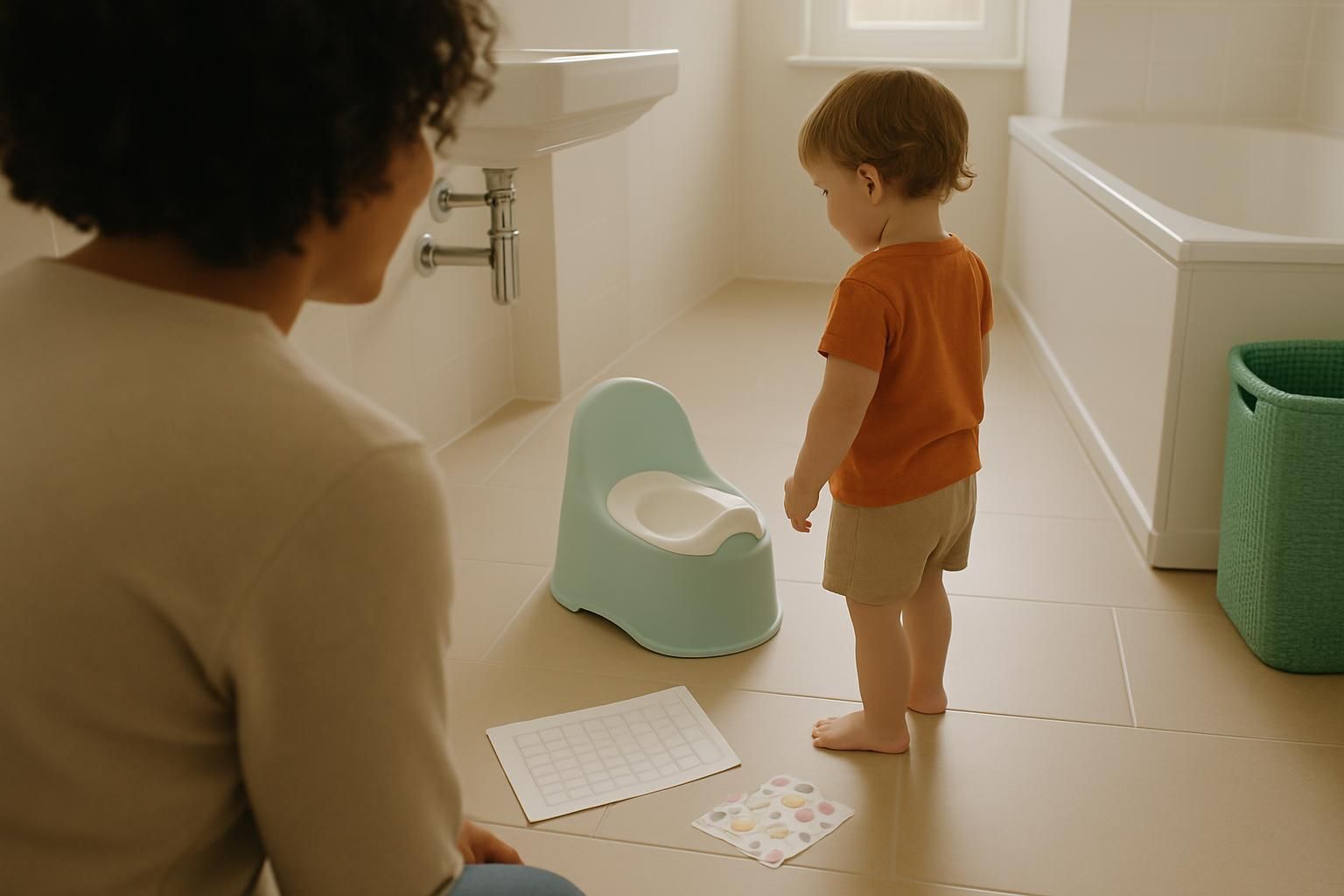
A potty training programme is a day-by-day plan: what you do on day one, two and three, how you record what your child does, and how you reward progress as it happens. Most children are dry in the daytime within about a week, some in three days, others in two or three weeks.
Some parents search for a potty training scheme, others for a plan or a method. You mean the same thing: a sequence someone has already worked out, rather than tips you have to turn into a sequence yourself.
Why tips alone leave you stuck on day two
You probably already know the readiness signs and roughly the right age window, because that information is everywhere. The NHS Best Start in Life guidance says most children are ready to start potty training sometime between 18 months and three years, and that night-time dryness usually comes later, once daytime dryness is settled.
What general advice rarely covers is what to actually do at eleven in the morning on day two, when your toddler has had their fourth accident, you are on the third load of washing, and you do not know whether to push on or stop for the day. That is the gap a programme is built to close: it decides in advance so you are not making tired decisions in the moment.
This is not about anyone having done it wrong the first time. Plenty of parents start, stall, and try again a bit later once their child is older or more interested. A structured plan is there for the second or third attempt just as much as the first, and it does not ask you to explain why the first attempt did not stick.
What goes into a structured potty training programme
A structured programme usually brings together four things: a daily guide for you, a way to record your particular child’s pattern, a reward system that changes as the week goes on, and somewhere to ask a question when a day goes badly. The Potty Training Box is built around exactly this shape.
Inside it, a training booklet coaches you through the week step by step, alongside seven short instruction cards, one for each day, so you are never guessing what today’s job is. Fourteen tracking schedules help you learn when this particular child actually needs to go, rather than applying someone else’s average.
The reward side runs on an escalating ladder of sticker cards, in sizes of three, five, seven and nine squares, used in that order. The first reward comes within minutes at three squares, and then gets rarer as your child improves, which is what lets the habit outlast the stickers rather than stopping the moment the stickers do.
Watching a sticker chart pay off is often the moment a wobbly week turns a corner, so it helps to see what that actually looks like for a child.
Six compliment cards help on the days you have run out of fresh ways to say well done, and two certificates, one for wees and one for poos, mark the finish for your child. A year of access to a parent community means you can ask the brand’s experts a question seven days a week rather than guessing alone at eleven at night.
The approach behind this is called the Potty Training Box Method: three days spent mostly at home, because that is when a child learns fastest, followed by short outings, moving the child from potty to toilet, and teaching them to signal the need themselves rather than being managed by a clock.
How a tracking schedule works (and what it is not)
A tracking schedule records what this child actually does. It does not dictate a timetable to them. Each card uses the same columns, and knowing what each one is for helps before you start filling one in.
| Column | What it tells you |
|---|---|
| Time of drinking | How much your child drank and when, so you can see how long it takes before a wee follows |
| Time on the toilet | When you offered the potty or toilet and how long your child sat |
| Nothing happened (yes/no) | Whether that particular attempt was blank, which matters as much as a success |
| Wee (green/red) | Green marks a success, red marks an accident |
| Poo (green/red) | Green marks a success, red marks an accident |
| Notes | Anything else worth remembering: tiredness, a missed nap, a new place |
One detail matters more than it looks: let your child drink the cup in one go rather than in sips spread across the morning. Only then do you know how much went in and how long afterwards it takes before they need a wee, which is exactly the pattern the schedule is trying to show you. A half cup sipped over an hour will not tell you that.
You can download a printable version of this chart from the potty training tracking chart page if you want to try it before deciding on the rest of the kit.
The question that makes the whole thing work: will you tell me when you need a wee?
The centre of the Potty Training Box Method is asking your child to tell you, rather than putting them on the potty on a timer. Instead of offering it at fixed intervals, you ask something like ‘will you tell me when you need a wee?’, and the tracking schedule shows you how close your child already is to managing that on their own.
There are only a few fixed moments where you still offer rather than wait: before and after sleep, and before you leave the house. Those two stay in place during training and after it, because they are sensible habits rather than a timetable imposed on your child.
Many parents find day four or five harder than day one or two, because by then the child is bored of being asked the same question over and over and starts pushing back. The fix is not to ask more, it is to ask less, and hand your child a bit more responsibility for noticing it themselves.
What a week on a structured programme looks like
The first three days are usually spent at home, nappy off, in ordinary cotton pants rather than training pants. A child feels a wet pair of cotton pants far more clearly than a training pant, and that feeling is part of what teaches them to notice in time, so swapping to cotton underwear on day one matters more than it sounds.
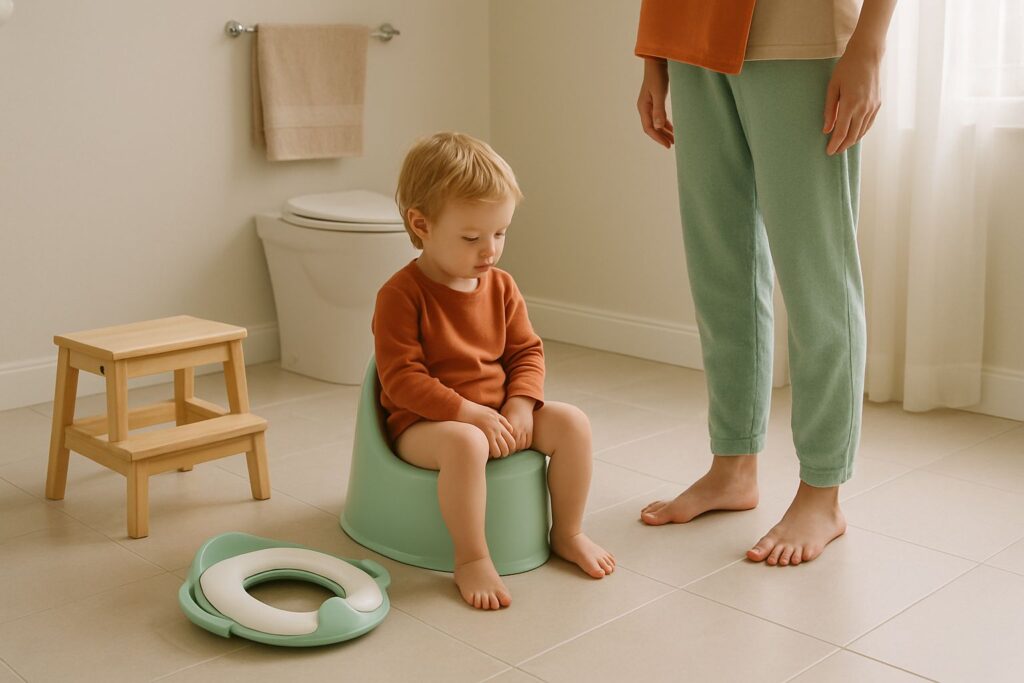
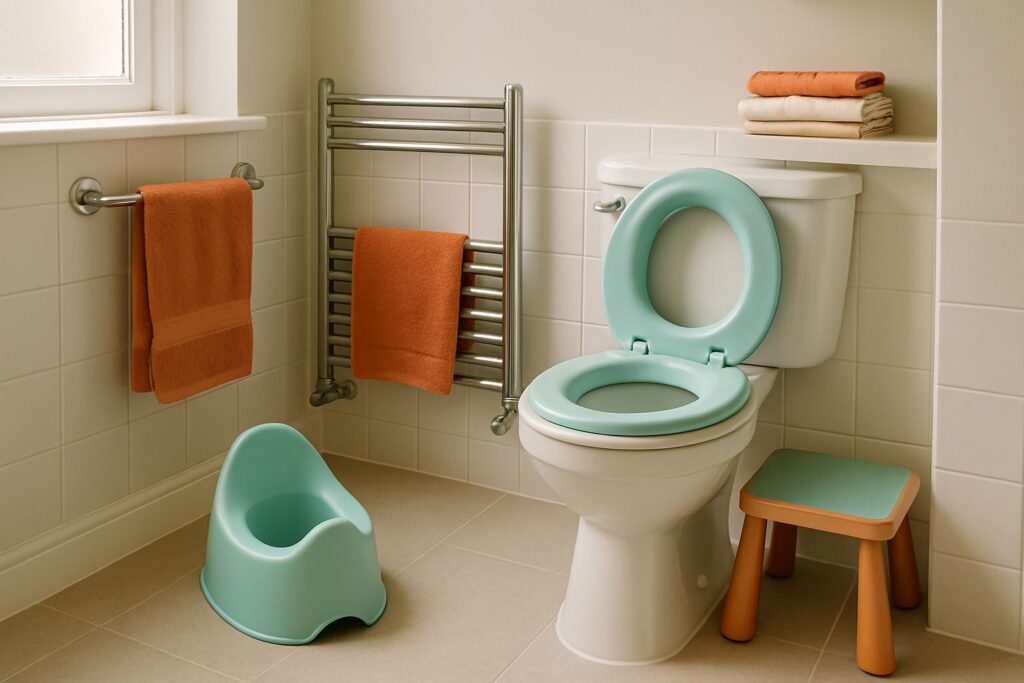
Short outings tend to start from around day four, once the pattern at home is reasonably settled. The potty usually comes first, for roughly the first three days, before moving on to the toilet with a seat reducer and a step stool so your child can get up and down on their own.
Night-time dryness is a separate matter and usually comes later, once daytime dryness is well established, so a daytime programme is not something you should expect to also fix night wetting on its own. For the detail of what happens on each individual day, see the day-by-day plan for the week, or what the week looks like after the NHS advice if you have already read the general guidance and want the practical version.
What to have ready before day one
Before day one, it helps to have a potty, a toilet seat reducer, a step stool, at least fifteen pairs of pants, something to protect the mattress and sofa, a handful of small rewards, and pull-ups for sleeping. None of this needs to be expensive or elaborate, it just needs to be in the house before you start, so you are not hunting for a step stool on the morning you meant to begin.
It is also worth clearing two or three days in the diary with nothing booked, because the first stretch at home is where most of the learning happens, and a day full of errands or visitors works against it.
If you want help choosing which of these is actually worth buying and which you can skip, what is actually worth buying goes through it item by item.
Is your child ready for a programme at all?
A programme will not make a child ready before they are. Signs worth watching for include dry stretches of an hour or two, telling you before or after they have gone, interest in the toilet or potty, being able to pull pants up and down, and being able to follow a simple instruction.
Guidance for early years settings from the Department for Education notes that most children are ready to start toilet training from around 18 months, though readiness varies a good deal between children of the same age.
If your child is frightened of the potty or the toilet, that is a sign to build familiarity first and start later rather than push through it. The box, or any kit you have bought, will keep until then.
If an attempt does not go well, the method’s own advice is to stop and leave it a while before trying again, rather than persisting through a run of bad days. That pause is part of the method, not a failure of it.
Not sure where your child stands? A few short questions in the readiness quiz can give you a clearer picture before you commit a week to it.
The same approach is also used successfully with children who are autistic, have Down syndrome, or are non-verbal, usually over a longer stretch and by reading the child’s own signals rather than waiting to be told.
Do you need a kit, or can you follow a programme yourself?
A kit mainly adds two things: the sequence decided for you in advance, including what to do on the days that go badly, and people to ask when they do. Neither is essential, but both save a lot of guessing partway through a hard week.
If you would rather put a programme together yourself, separate reward systems such as the extra reward system are sold on their own, for parents who want to run their own version of the escalating sticker idea without the rest of the kit.
A kit is also reusable for a later child, and refill sticker sets can be bought separately rather than buying the whole thing again. If accidents or regression come up partway through, whether you are using a kit or not, accidents and regression covers the common causes.
Whichever way you lean, whether potty training kits are worth it looks at the question in more depth if you are still deciding.
Frequently asked questions
What is the 3 day potty training rule?
It usually refers to spending the first three days at home with the nappy off and your child in ordinary cotton pants, so they can feel when they are wet and you can learn their pattern. It is not an official rule, more a common shorthand for the intensive start that most structured programmes, including the Potty Training Box Method, build in.
What is the 10, 10, 10 rule for potty training?
This is not a term used in the Potty Training Box Method or in official UK guidance, so there is no fixed definition to point you to. If you have seen it described elsewhere as a timed routine, treat it with caution: this method works from your child's own signals and a tracking schedule rather than a fixed count or interval.
At what age should a child be potty trained?
There is no single correct age. Guidance for early years providers from the Department for Education notes that most children are ready to start from around 18 months, while NHS guidance puts the usual window as somewhere between 18 months and three years. Readiness varies a lot between children of the same age, so it is worth watching for signs rather than going by a date.
Is age 3 too late to start potty training?
No. Plenty of children start around three, and some start a bit later than that without it being a problem. What matters more than the age on the calendar is whether your child shows the usual readiness signs, such as dry stretches, telling you they have gone, and interest in the toilet or potty.
How often should I put my child on the potty?
Rather than a fixed interval, the Potty Training Box Method has you ask your child to tell you when they need to go, apart from a few fixed moments: before and after sleep, and before you leave the house. You use a tracking schedule in the first few days to learn when this particular child tends to need to go, and the offering becomes less frequent as they take over.
Does a potty training programme work for night-time too?
No, not directly. Daytime dryness and night-time dryness are separate skills, and night-time usually follows on its own once daytime dryness is well established. A structured daytime programme is not designed to guarantee dry nights, and pull-ups for sleeping are a normal part of the process for a good while after the daytime training is done.
Ready for the next step?
The Potty Training Box holds the day-by-day programme this article is built on: tracking charts that show you when your child actually needs to go, instruction cards for each day, and a reward system that tapers off on its own.
Sources
- NHS Best Start in Life (Most children are ready to start potty training sometime between 18 months and three ye…)
- Help for early years providers, Department for Education (Most children are ready to start toilet training from around 18 months, though readines…)
This article was written with AI assistance and checked by Dustin van de Sande.