
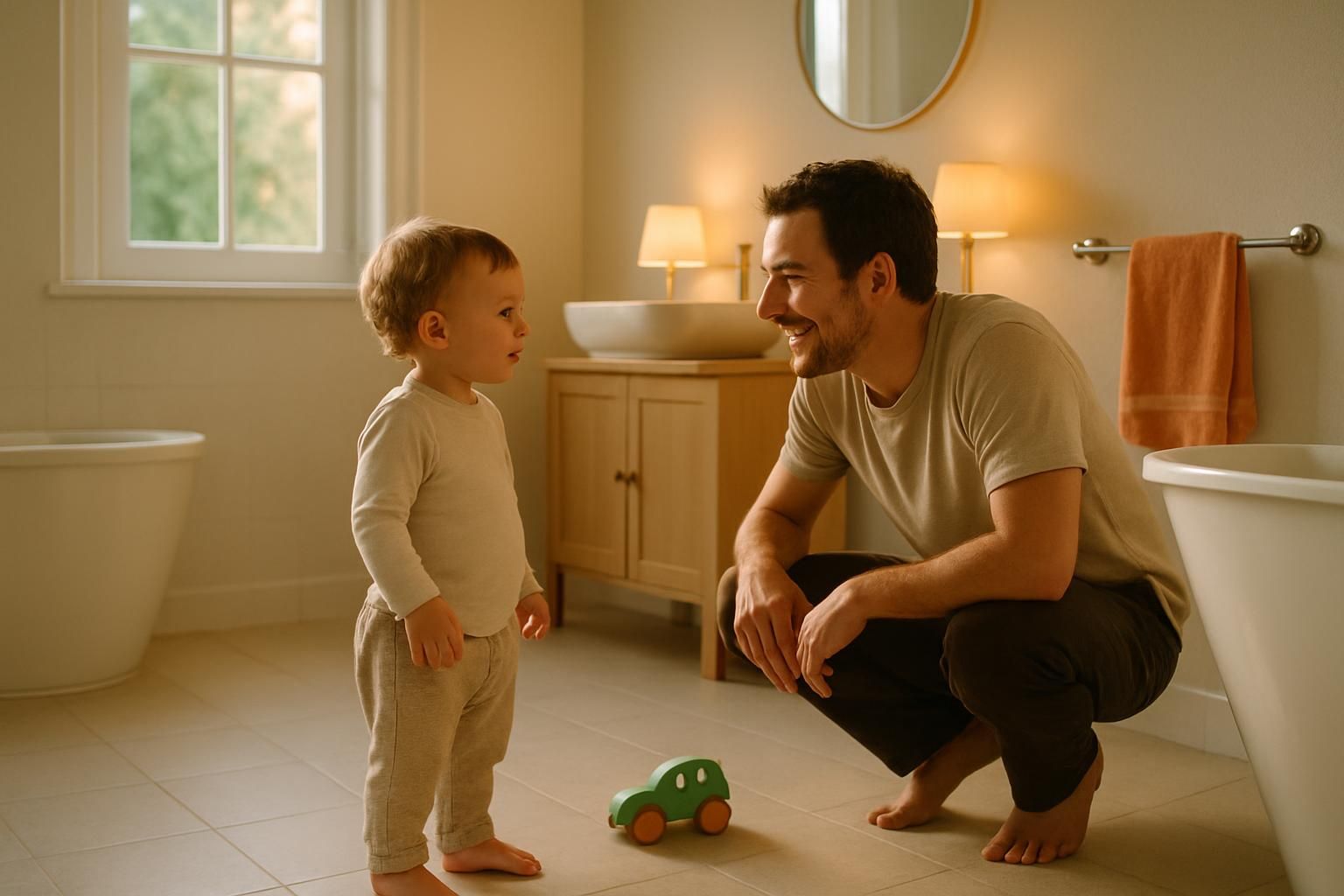
Yes, there is a potty training schedule, but it is a record, not a timer. You write down when your child drinks and when they wee or poo, so you learn their pattern. Sitting them on the potty every 15 or 30 minutes trains them to wait for you, not to notice their own body. The aim is your child telling you.
Is there a potty training schedule, and how often should you sit your child on the potty?
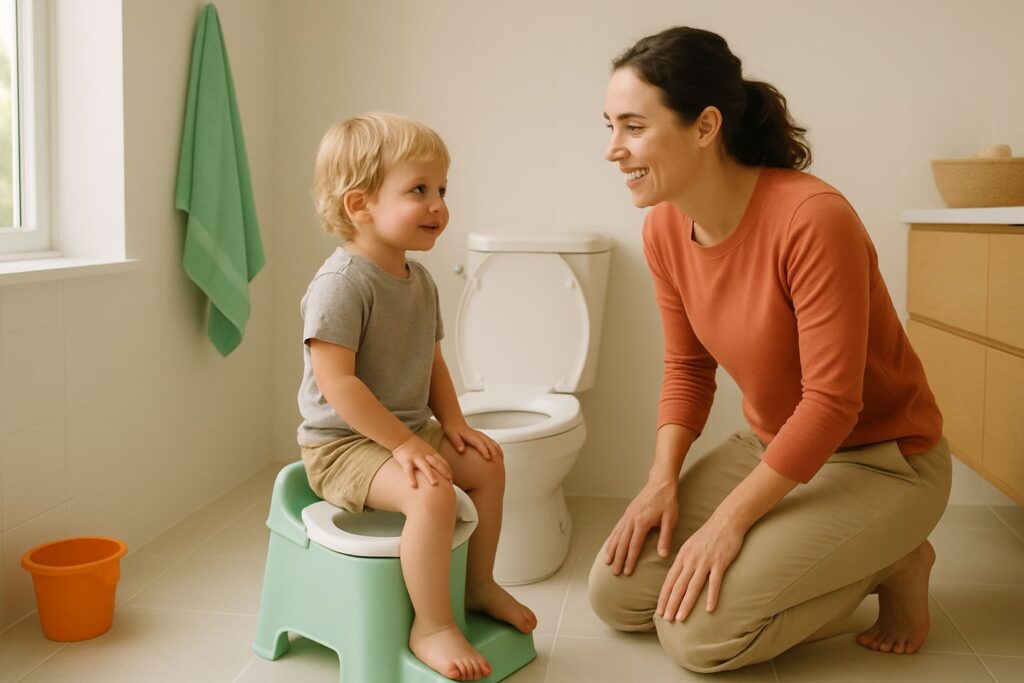
Sitting a toddler down on a fixed clock interval, every quarter of an hour or every half hour whatever happens, teaches a different lesson than the one most parents think they are teaching. It teaches the child to wait to be put there, rather than to notice the feeling and act on it themselves. The whole point of potty training is the moment your child says they need to go before you ask.
The Potty Training Box is built around a method with exactly this aim, called the Potty Training Box Method: a day by day plan that runs across roughly a week, with the first three days spent entirely at home because that is when a child learns the most, followed by short outings once the basics are holding. Through those first days, you record when your child actually goes, not when a clock tells you to offer the potty. That record is what lets prompting fall away.
What a potty training tracking chart actually records
A tracking chart for potty training is a sheet with columns for drinking time, toilet time, and the outcome, marked in green for a success and red for an accident, so you can read a week at a glance without rereading notes. It is there to show you a pattern in your own child, not a generic schedule copied from someone else’s toddler.
The box contains 14 of these tracking schedules, enough to cover the main training week and the fortnight of settling in that often follows, because the pattern you see on day two is rarely the final one. One card lays out like this:
| Column | What you write in it |
|---|---|
| Time of drinking | When your child finished the cup |
| Time on the toilet | When they sat or were offered it |
| Nothing happened | Yes or no |
| Wee | Green for success, red for an accident |
| Poo | Green for success, red for an accident |
| Notes | Anything that explains the row: wriggling, a long gap, a new place |
Green and red are the whole point of the layout. Flicking back through a few days, you can see at a glance whether successes are clustering after a particular drink, at a particular time, or in a particular place, without having to read every line of writing. A printable version of this layout is also available as a potty training tracking chart, if you want to try the format before deciding on anything further.
Why your child should drink the cup in one go
The chart only tells you something useful if your child drinks a full cup in one sitting, not a few sips spread across an hour. A single, complete drink gives you one clean start point, so you can see how long it actually takes between drinking and needing the toilet.
That gap, between the cup going in and the wee coming out, is the exact pattern the chart is built to show you. Once you know your child’s rough gap is, say, twenty five minutes after a full cup, you know when a toilet trip is actually worth suggesting, rather than guessing every time.
If your child does sip on and off rather than drinking it down, write that in the notes column rather than treating the row as clean data. A sipped drink across an hour will not tell you anything reliable about timing, and pretending it does will only muddy the pattern you are trying to build.
What you say instead of ‘do you need a wee?’
The core instruction in the Potty Training Box Method is a single sentence, said to your child rather than a question put to them: ‘you tell me when you need a wee’. It hands the job of noticing back to the child, instead of you doing the noticing for them by asking every few minutes.
There are two standing exceptions, and they stay even once the main training week is over: before and after sleep, and before you leave the house. At those moments you still offer the potty or toilet yourself, because they are the moments a child is least likely to notice or mention it unprompted.
Outside of those moments, prompting should thin out as the week goes on. On day one you might still ask fairly often while you are both learning the pattern on the chart. By day five or six, most of that asking has been replaced by your child coming to find you.
How the week actually runs, day by day
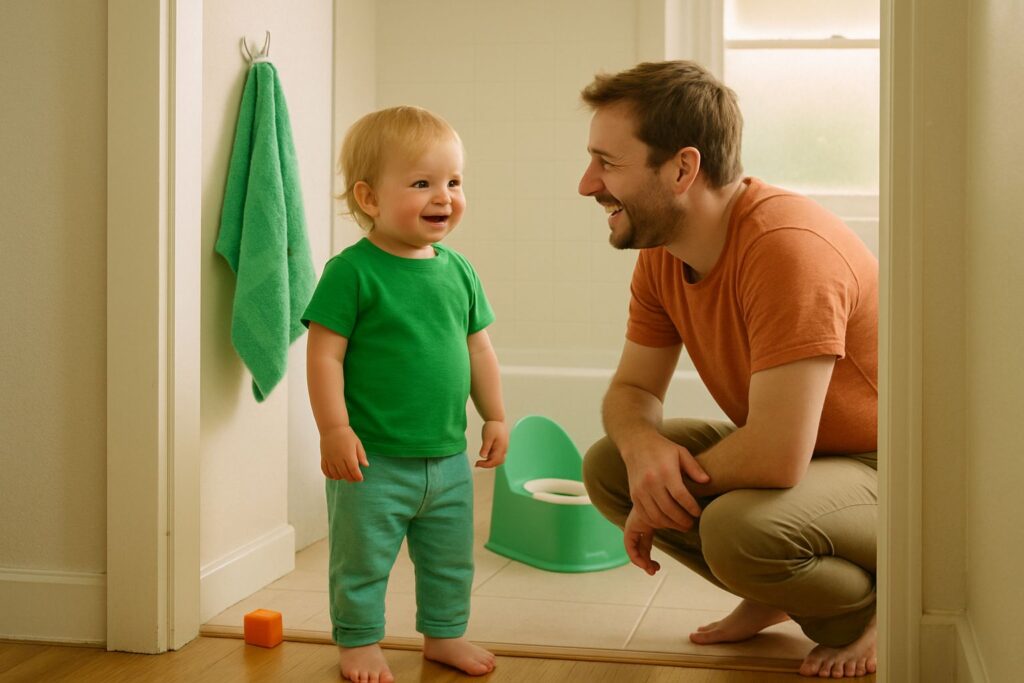
The first three days are spent entirely at home, nappy off, ordinary cotton pants on. This is when a child learns the most, because there are no car journeys, buggies or other people’s bathrooms to complicate things, just the chart, the potty, and the chance to notice the feeling in familiar surroundings.
Short outings usually start from around day four: a trip to the shop, a walk to the park, something brief enough that an accident is a minor inconvenience rather than a disaster.
Day four or five is usually the hardest day of the week, not day two. By this point many children are bored of constantly being asked whether they need a wee, and some resistance or pushing back is common. The fix is not to ask more; it is to ask less, and hand more of the responsibility over to your child.
Most children are dry in the daytime in about a week using this approach. Some manage it in three days, others take two or three weeks, and that range is normal rather than a sign anything has gone wrong. Night-time dryness is separate, usually comes later, and the box does not promise it on any timeline.
How to read your chart after two days
By the end of day two you should have enough rows on the tracking schedule to start looking for a pattern rather than just recording one. Look first for the usual gap between a full cup and a wee: if it is consistently twenty minutes, that is the moment worth watching for, not a random check every quarter of an hour.
Next, look at when accidents cluster. A string of red marks in the hour after lunch, for example, tells you something a single day never would.
Alongside the chart, watch your child directly for their own signals: going quiet, wriggling, crossing their legs, hiding behind furniture, or suddenly holding still. These are the signs the chart is helping you notice faster, not a replacement for them.
If you are still unsure whether your child is showing enough of these signs to be ready at all, it is worth checking before you start rather than partway through a hard week.
Take the two minute readiness test
Rewards on a rising scale, not a sticker every time
The box includes 20 sticker cards across four sizes, used in that order: 3 squares, then 5, then 7, then 9. The reward comes quickly at three squares, so your child sees straight away that the system works, and then gets steadily rarer as the card sizes grow, so the habit outlasts the stickers instead of stopping the moment they do.
Alongside the cards are 100 animal stickers and 20 poo stickers, plus two certificates at the end of the week: one for wees and one for poos.
Watching a success together can help a child connect the reward to what they just did. If you want to watch something with your child about that first moment, this one fits.
What to have ready before day one
Alongside the box, a few ordinary things make the first three days go more smoothly: a potty, a toilet seat reducer and step stool once you move to the toilet, at least 15 pairs of plain cotton pants rather than training pants, something to protect the mattress and sofa, a handful of small rewards, and pull-ups for sleeping.
Cotton pants matter more than they sound like they should. A child feels wetness far more clearly in ordinary cotton than in a padded training pant, which is part of why the method asks for the former and not the latter.
Some links in this article are affiliate links, which means we earn a small commission if you buy through them. It costs you nothing extra and does not affect what we recommend.
| Item | Why you need it | Where to get it |
|---|---|---|
| Potty | Used mainly for the first three days at home | BabyBjörn Potty Chair |
| Toilet seat reducer | Bridges the move from potty to the big toilet | Munchkin Sturdy Potty Seat |
| Step stool | Lets your child climb up and feel steady and in control | Dreambaby 2-Up Step Stool |
| Cotton pants (at least 15 pairs) | Lets your child feel wetness clearly, which training pants do not | Any plain cotton multipack suits this |
| Mattress and sofa protection | Covers the inevitable accident while things settle | Huggies DryNites Bed Mats |
| Pull-ups for sleeping | For night-time, which is separate from the daytime training | Huggies DryNites pyjama pants |
When a schedule is not the problem and you should wait
A child who is frightened of the potty or the toilet is not ready for this week yet, whatever the chart says. The honest move is to build familiarity first, with no pressure to perform on it, and start the training properly once that fear has settled. The box keeps until then.
If an attempt does not go well, the method’s own advice is to stop and leave it a while before trying again, rather than pushing through a week that clearly is not landing. That pause is part of the method, not a failure of it.
Constipation, withholding poo, repeated urinary tract infections, or bedwetting that continues past the age of six are medical matters, not training matters, and they belong with your GP or health visitor rather than with a chart. According to ERIC, The Children’s Bowel and Bladder Charity, ongoing bedwetting is common and usually improves with the right support, and it is worth discussing with a professional rather than troubleshooting alone.
The method is also used successfully with children who are autistic, have Down syndrome, or are non-verbal, usually over a longer stretch than a single week, relying more on reading the child’s own signals than on waiting to be told in words.
What the box gives you that a timer app does not
A phone timer can remind you to ask. It cannot tell you whether your child needs asking at all, which is the actual problem a schedule is meant to solve. The box gives you a day-by-day plan to follow, the 14 tracking schedules already described, and a year of community access where the brand’s experts answer questions seven days a week, which matters most on the days that do not go to plan.
The box is reusable for a later child, and refill sticker sets are sold separately if you go through the stickers before the habit has properly set. If you would rather run the method your own way, a separate reward system is available, built around the same rising scale idea, for parents who want to put together their own tracking and reward routine instead of the full box.
Frequently asked questions
Is it better to put my child on the potty every 15 or 30 minutes?
No. Sitting a child down on a fixed clock interval trains them to wait to be put there rather than to notice and act on the feeling themselves. The tracking chart exists so you read your own child's actual pattern instead, and then catch the moments that pattern points to.
What is the 10-10-10 rule for potty training?
This is not part of the Potty Training Box Method, and the method does not use fixed numbers like this at all. Instead of a set interval, you record drinking and toilet times on a tracking chart to learn your child's own timing, then hand the initiative to them as soon as they start signalling.
What is the hardest day of potty training?
Day four or five is usually the hardest, because this is when resistance often appears: your child gets bored of constantly being asked whether they need a wee. The fix is to ask less often and hand more responsibility to your child, rather than pushing the prompting harder.
At what age should a toddler be fully potty trained?
There is no single correct age, and readiness varies a lot between children. Many families start somewhere between two and three years old, but the right time is when your child shows signs of readiness rather than a date on a calendar, and it is worth checking those signs before you start rather than partway through a hard week.
How long should I keep filling in a potty training tracking chart?
Most families use it heavily through the first week, while the pattern is still forming, then taper off as prompting is replaced by your child's own signals. Some keep a card going for a couple of weeks afterwards simply to confirm the new routine is holding.
Should I wake my child at night to keep the schedule going?
No. The tracking chart and the daytime method are about daytime dryness, which is separate from night-time dryness and usually comes later on its own. Waking a sleeping child to keep a daytime chart going is not part of this method and is not necessary.
Ready for the next step?
The Potty Training Box holds the day-by-day programme this article is built on: tracking charts that show you when your child actually needs to go, instruction cards for each day, and a reward system that tapers off on its own.
Sources
- NHS: How to potty train (General guidance on how and when to approach potty training)
- ERIC, The Children's Bowel and Bladder Charity (Ongoing bedwetting past age 5 or 6 is worth discussing with a professional)
This article was written with AI assistance and checked by Dustin van de Sande.