Potty Training Boys: What Is Actually Different, and What Is Not

Potty training a boy uses the same method as for a girl: he learns to signal his own need. The only real differences are practical, not principled. He should sit for wees and poos at first, and standing comes later once he is dry in the day. Most children manage daytime dryness in about a week, some in three days, others in two or three weeks.
Is potty training a boy really different from training a girl?
There is no separate boy method and no separate girl method. Both learn the same thing: to notice the feeling, to hold on for a moment, and to tell you before it happens rather than after. What changes for a boy is anatomy, not psychology. He needs to sit before he stands, and he needs to learn aim much later than he needs to learn control.
Night-time dryness is a separate matter again, for both sexes, and tends to come later than daytime control regardless of how quickly the day training goes. Nothing in this article promises a fixed timeline, because readiness and pace vary child by child, not by whether he is a boy.
Should my son sit or stand to wee?
Start sitting, for both wees and poos, and keep him sitting through the whole first stretch of training. Sitting is what lets a poo come out comfortably, and if he learns to stand for a wee before he is reliably dry, he will often try to stand for everything, which makes accidents and missed poos more likely.
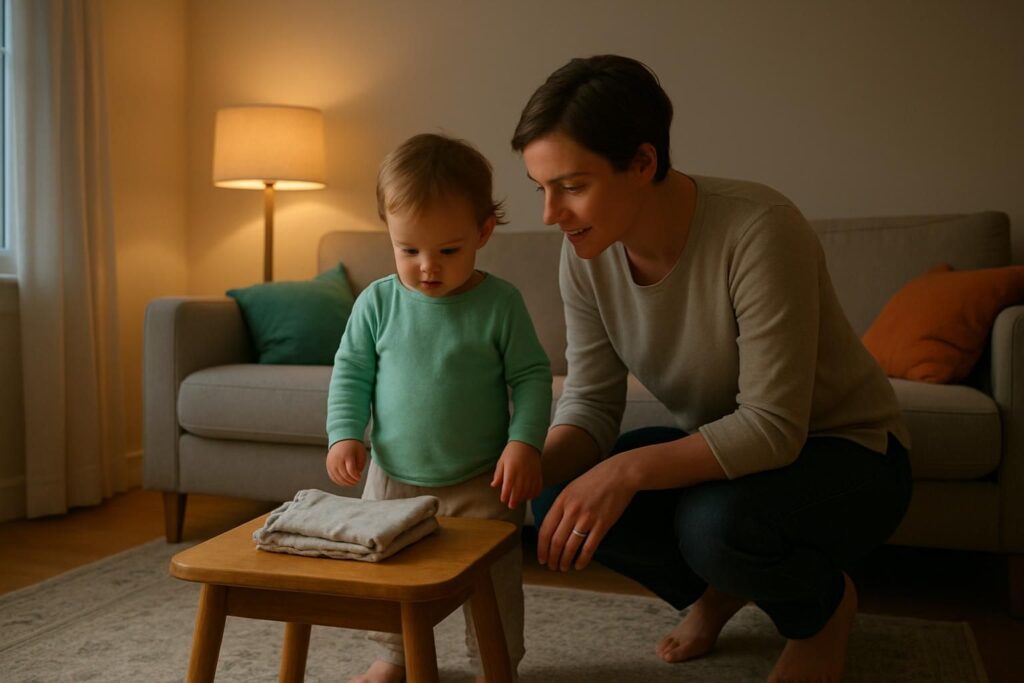
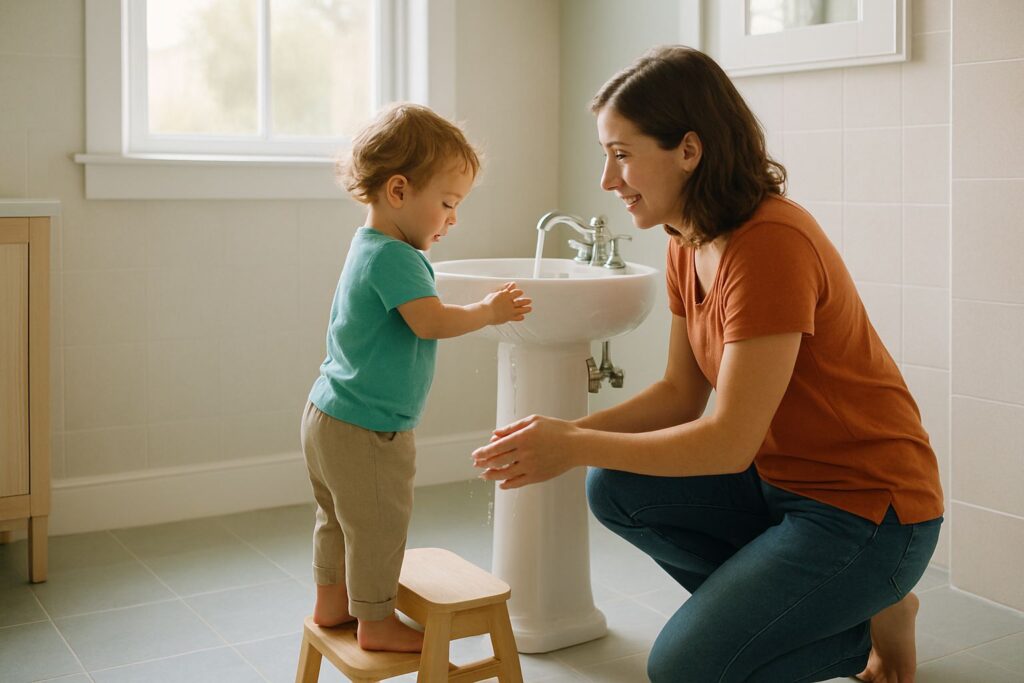
Standing comes later, once he is dry in the day and tall enough to reach comfortably, usually with a step stool. Teaching both at once splits his attention between two new physical skills, aiming and holding on, when he only needs to master one to begin with. Holding on is the harder skill and the one the whole method is built around, so it gets his full attention first.
If Dad, an older brother, or another adult in the house happens to wee standing up, showing him once he is ready can help him picture what he is working towards. It is not a requirement. Plenty of boys in single parent homes or homes with two mums learn to stand perfectly well, just from being shown by whoever ends up teaching them.
When should I start potty training my boy?
Readiness depends on the individual child, not on whether he is a boy or a girl. Most families find a workable window somewhere between roughly 18 months and 4 years, and starting a few months earlier or later than another family’s child says nothing about how it will go.
Look for these signs rather than a date on the calendar:
- He stays dry for longer stretches, an hour or two, not just minutes
- He tells you, in his own way, when his nappy is wet or dirty
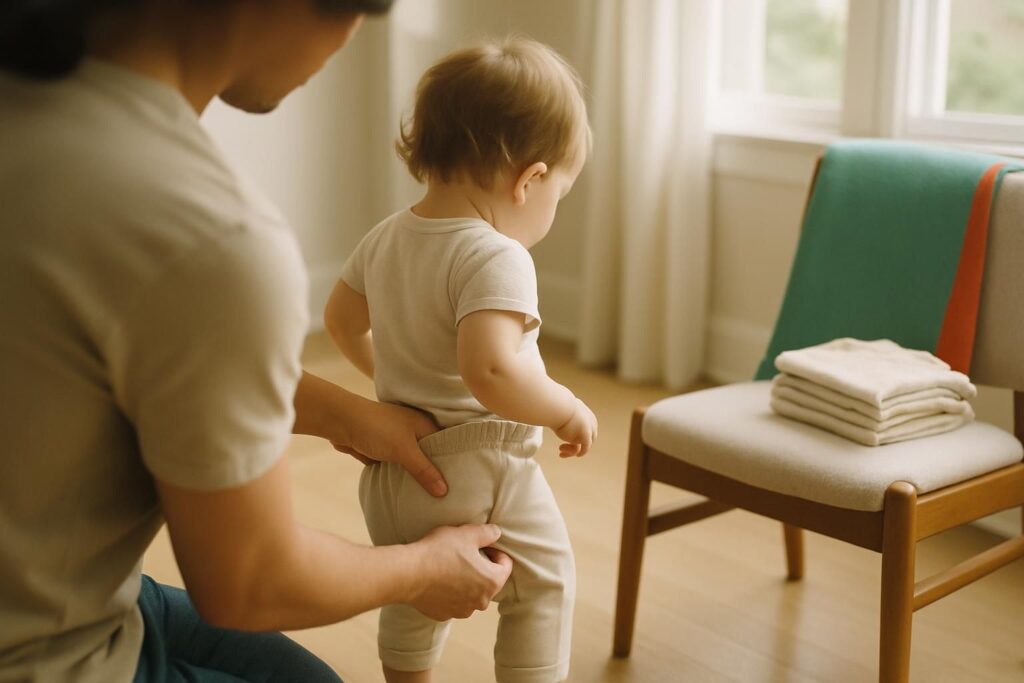
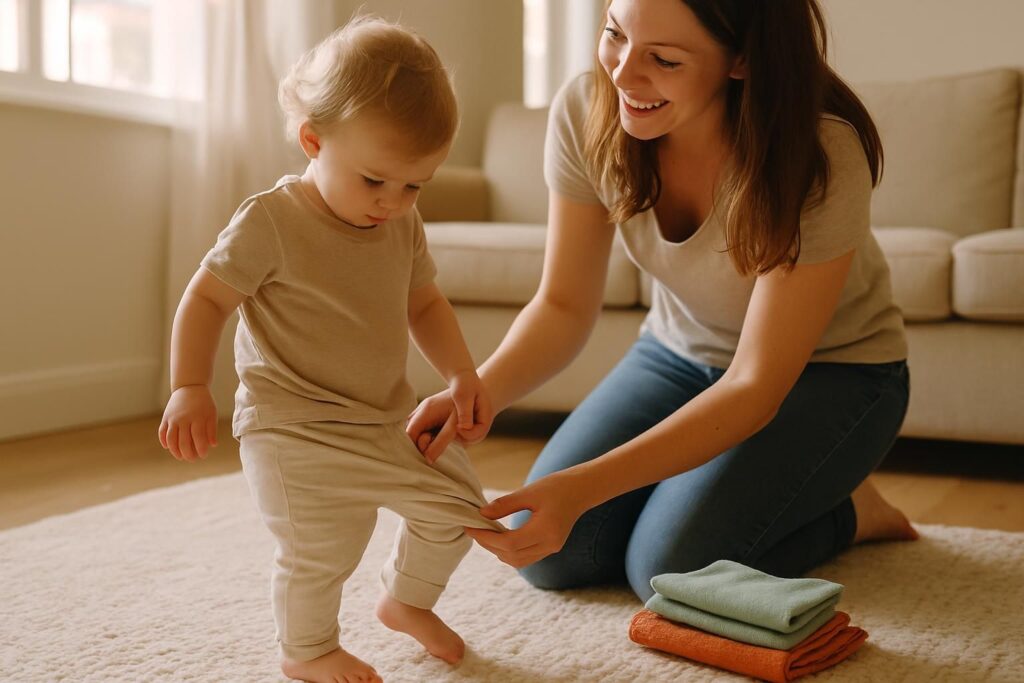
- He can pull his pants up and down mostly on his own
- He shows some interest in the toilet or potty, even just curiosity
- He can follow a simple instruction like ‘put the ball in the box’
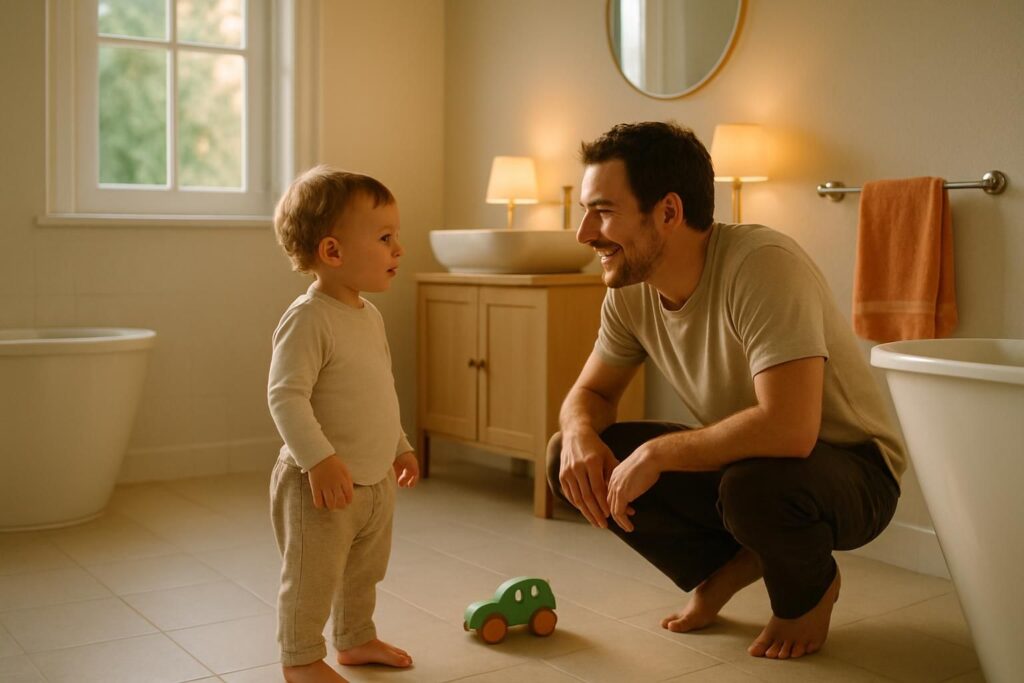
If he is genuinely frightened of the potty or the toilet, that is a sign he is not ready yet, not a sign to push through it. Spend a few weeks building familiarity, sitting on it fully clothed, reading a book nearby, letting him flush the loo, before you try again in earnest.
Not sure where he stands? A short online quiz can help you check for the signs that matter before you commit to a start date.
What does the first week actually look like for a boy?
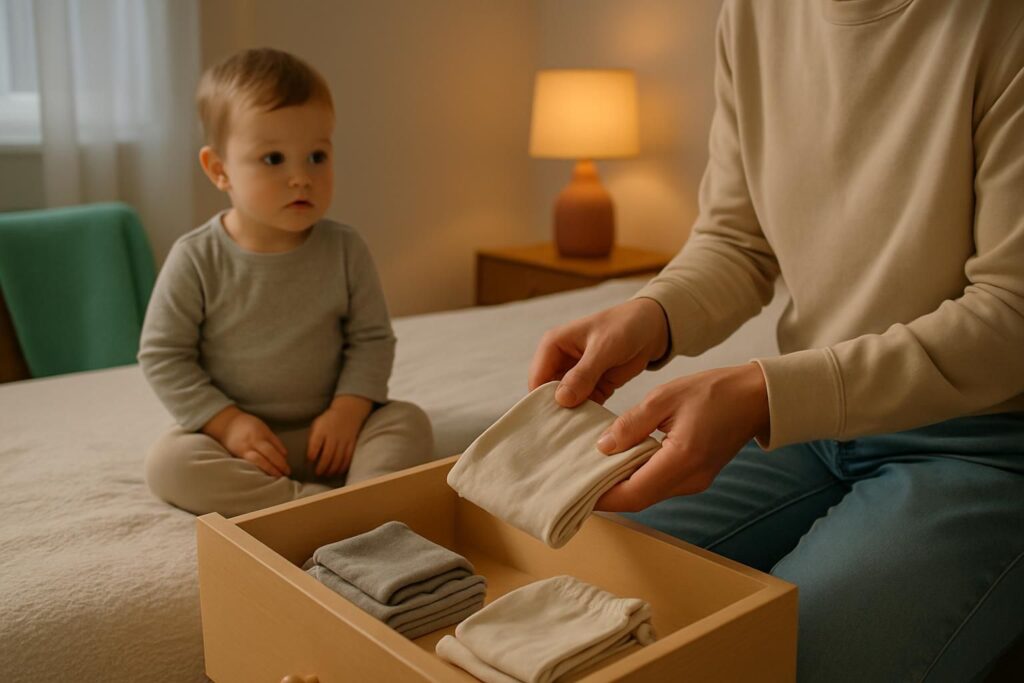
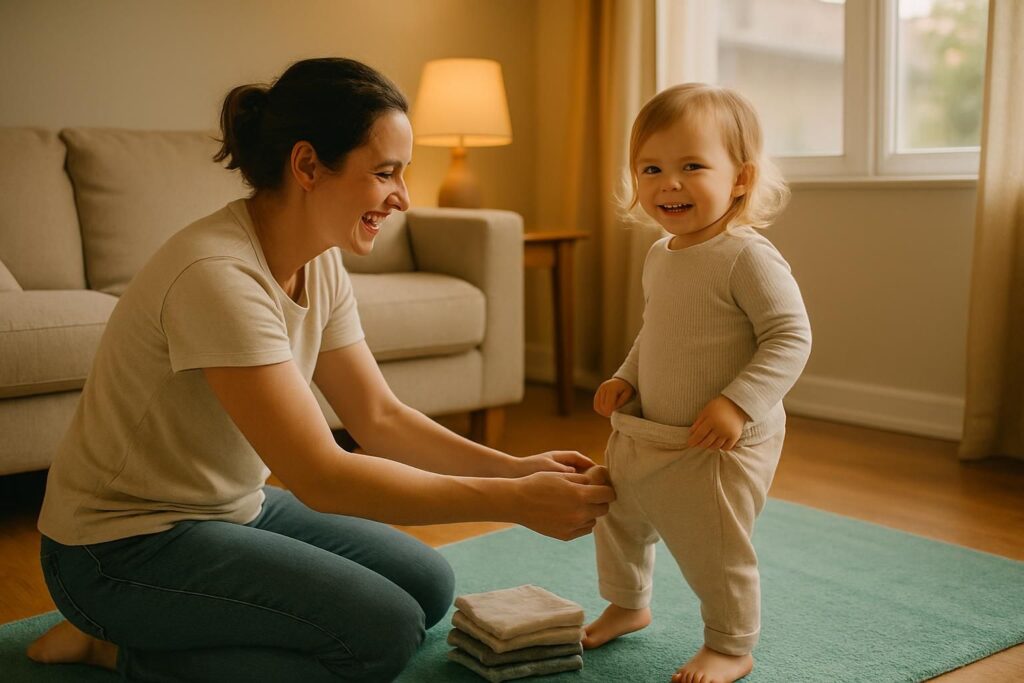
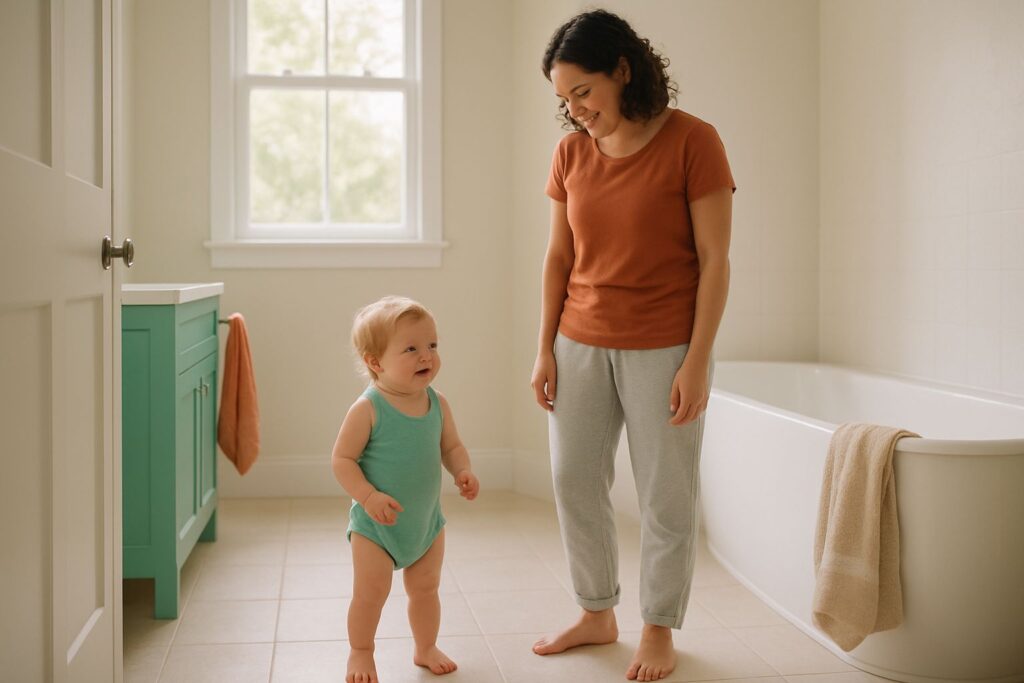
Nappy off, straight into ordinary cotton pants, from day one. Most families find at least 15 pairs makes the laundry manageable, since he will feel a wet pair immediately rather than being cushioned by absorbent material, and that feeling is exactly what teaches him to notice.
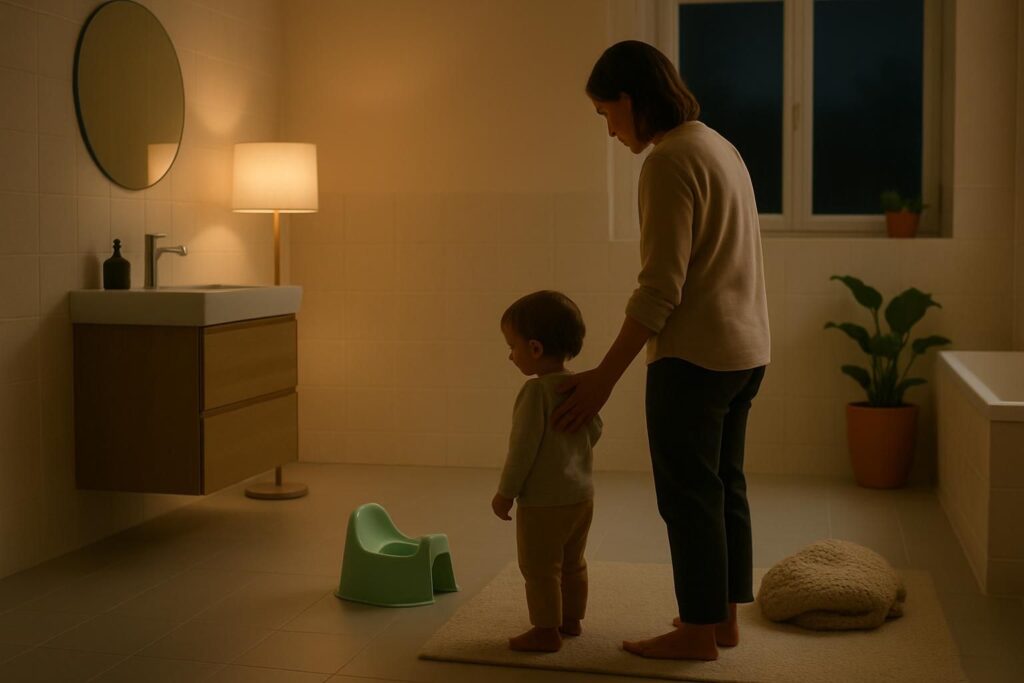
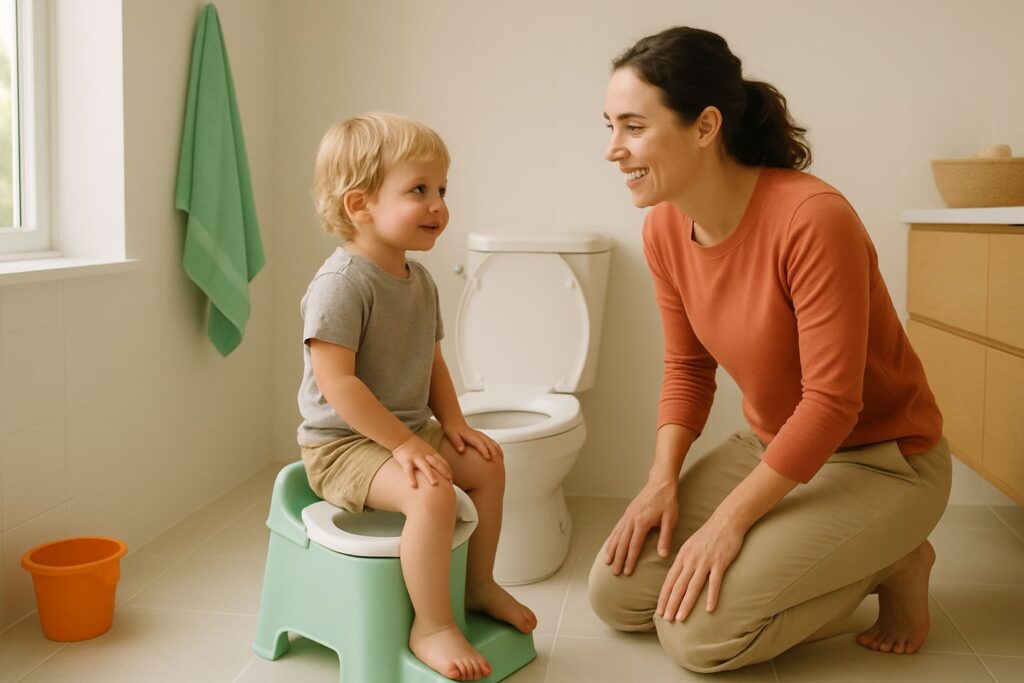
The first three days are spent at home, because this is when he learns the most and when accidents cost the least. The potty does most of the work in these early days. Short outings follow once he has had a few dry stretches, and the toilet, with a seat reducer and a step stool, gradually takes over from the potty as he settles into the habit.
The question you ask him is not ‘do you need a wee’, put to him on a schedule. It is ‘will you tell me when you need a wee’, asked so that he takes the initiative rather than you managing him by the clock. There are two fixed moments where you offer rather than ask: before and after sleep, and before you leave the house, and that stays true during the training and afterwards too.
Many parents expect the second day to be the hardest, but it is usually day four or five. By then he is often tired of being asked the same question over and over, and a bit of resistance shows up as a result. The fix is to ask less often, not more, and to hand him a little more of the responsibility for telling you himself.
| Day | What you do | What you’re watching for |
|---|---|---|
| Day 1 to 3 | Home, nappy off, potty nearby, cotton pants | Patterns in timing, first signals |
| Day 4 to 5 | Ask less often, hand him responsibility | Resistance, then it easing off |
| Day 6 to 7 | Short outings, move towards the toilet | Him telling you before you ask |
How often should I put him on the potty?
Not every half hour, and not on a timer. Fixed intervals teach a child to go when told rather than to notice his own body, which works against the whole point of the Potty Training Box Method.
What you do instead is record what actually happens on a tracking schedule, so you learn his pattern rather than imposing one. A schedule card has columns for the time he drank, the time he sat on the toilet, whether nothing happened, wee marked green for a success or red for an accident, poo marked the same way, and a notes column.
For this to tell you anything useful, give him his drink in one go rather than in sips spread across the afternoon. Only then do you know how much went in and how long afterwards he needs a wee, which is exactly the link the schedule is meant to show you. A half-finished cup sipped over an hour will not give you that pattern.
Offering the potty in the early days is scaffolding, not the method itself. As he starts telling you on his own, you offer less and ask less, until the fixed moments before and after sleep and before leaving the house are mostly what is left. A printable version of the tracking chart is available if you want to fill one in by hand: printable tracking chart.
Wee everywhere: why does he miss the potty and what stops it?
Morning erections and an upward stream in the first days are the most common reason wee ends up outside the potty rather than in it. This is entirely normal in young boys learning to sit and has nothing to do with how well the training is going overall.
Gently push the penis down when he sits, and show him how to do this himself once he is old enough to understand what you are doing and why. A potty with a proper splash guard at the front helps, though watch that the guard is not so high that it catches him awkwardly as he sits down.
Look for a potty with a splash guard at the front that sits low enough not to catch him, like this one:
Some links in this article are affiliate links, which means we earn a small commission if you buy through them. It costs you nothing extra and does not affect what we recommend.
| What to look for | Why it matters | Where to check |
|---|---|---|
| Splash guard height | Too high catches him sitting down | Compare on Amazon |
| Wide, stable base | Stops tipping mid-sit | Compare on Amazon |
As an Amazon Associate we may earn from qualifying purchases through the links above, at no extra cost to you.
When it happens, and it will, clean up without fuss or comment so it does not become a source of shame. Aiming games, the coin in the bowl or the target sticker, belong once he is dry in the day, not during the first week when the whole point is still learning to notice and hold on.
What about poo, and why is it often harder than wees?
Poo usually comes later than wees, often needing a settled, unhurried moment rather than a quick dash. Rushing him tends to make it harder, not easier, so building in a few unhurried minutes after a meal can help.
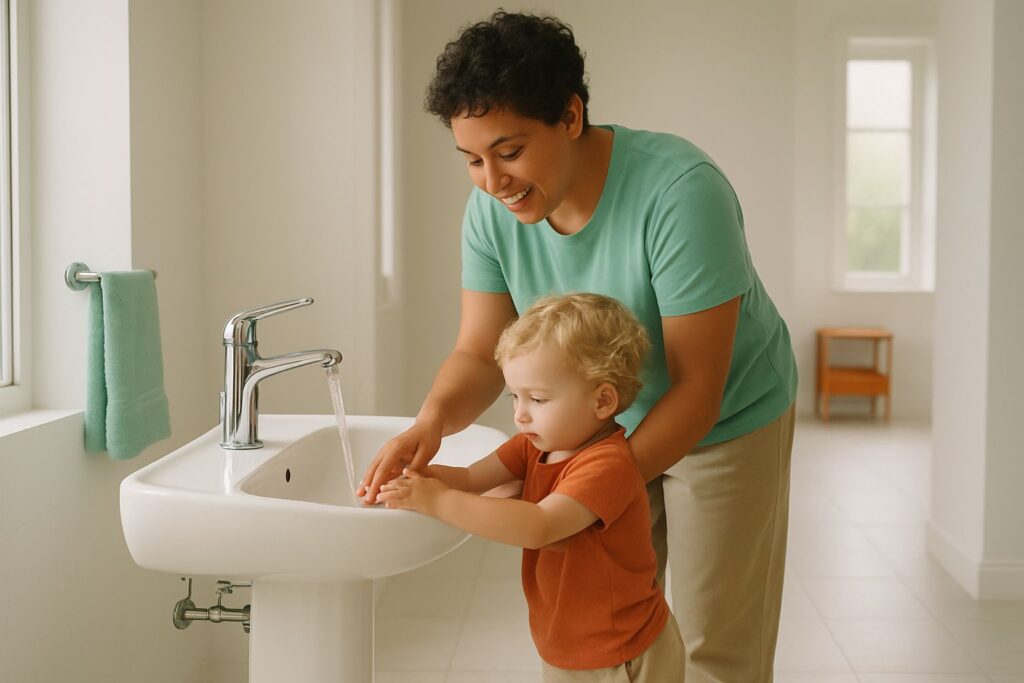
Feet supported flat on a step stool let him push properly, in a position closer to a natural squat than dangling feet allow. Give him time on the toilet or potty without hovering over him, and avoid pulling him off the moment he seems finished.
If constipation or withholding becomes the pattern, rather than an occasional reluctant day, that is a question for a GP or health visitor rather than something to solve through the training itself. For the common sticking points, there is a fuller look at when your toddler will not poo on the potty.
How do rewards keep him going after the first success?
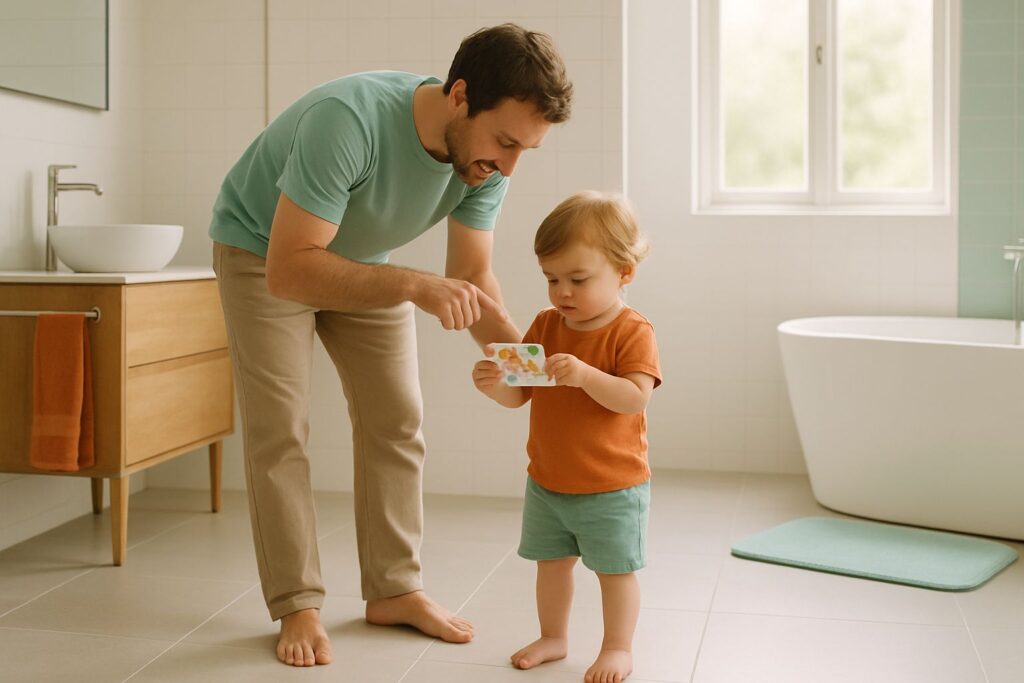
The sticker cards come in four sizes, 3, 5, 7 and 9 squares, used in that order rather than as a single fixed card. The reward comes quickly at three squares, so he sees straight away that it works, and then grows rarer as he improves, so the habit outlasts the stickers rather than stopping abruptly when they run out.
Alongside the sticker ladder there are animal stickers and poo stickers for the small daily wins, and two certificates, one for wees and one for poos, for marking the bigger milestones. Keep small rewards modest: a sticker, a few extra minutes of a favourite game, rather than anything that turns training into a transaction.
Watching a first success together can help him understand what all the fuss is about.
Potty training a 3 year old boy: is he behind?
Three is a perfectly ordinary age to start, and often goes faster than starting earlier, simply because language and understanding are further along. A three year old can usually follow what you are asking and why, which shortens the learning curve considerably.
He may also have more opinions about the whole thing, which can look like stubbornness but is often just a normal three year old asserting some control. Offering him small choices, which pants to wear, which sticker card to start on, tends to work better than insisting.
If an attempt genuinely is not working, the method’s own advice is to stop and leave it a while before trying again, rather than pushing through a bad run. That pause is part of the method, not a failure of it.
Children who are autistic, have Down syndrome, or are non-verbal are trained successfully with the same approach, usually over a longer stretch and by reading the child’s own signals closely rather than waiting to be told in words.
What we put in the box, and what you get ready yourself
The Potty Training Box is a physical box built around a day-by-day programme booklet that coaches you through the week. Inside it you get 7 instruction cards for a quick daily reminder, 6 compliment cards for the days you run out of ways to praise, 14 tracking schedules, 20 sticker cards in the 3, 5, 7 and 9 square ladder, 100 animal stickers, 20 poo stickers, two certificates for wees and poos, and a year of access to a community where the brand’s team answers questions daily.
Alongside it, you get a few things ready yourself: a potty, a toilet seat reducer, a step stool, at least 15 pairs of cotton pants, something to protect the mattress and sofa, a handful of small rewards, and pull-ups for sleeping. The box does not contain training pants, and that is deliberate: ordinary cotton pants let him actually feel a wet pair, which is part of what teaches him to notice in the first place.
If you would rather run your own version without the box, separate reward systems are available on their own, including one designed for boys, so you can put together your own sticker ladder and tracking approach.
Frequently asked questions
What is the normal age for a boy to be potty trained?
There is no fixed age. Most families begin somewhere between 18 months and 4 years, once a child shows signs such as staying dry for longer stretches and telling you when his nappy is wet. Starting later than another child is not a sign of anything being wrong.
Are boys harder to potty train than girls?
No, the same method works for both, and any perceived difference in speed usually comes down to the individual child rather than his sex. The only real differences are practical: boys sit before they stand, and learn to aim much later, well after they are dry in the day.
What is the fastest way to potty train a boy?
There is no way to guarantee speed, but most children manage daytime dryness in around a week when the child is genuinely ready, the first three days are spent at home, and the parent follows a consistent, positive, reward-based approach. Some children take three days, others need two or three weeks, and that range is entirely normal.
Should I teach my son to wee standing up from the start?
No. Start with sitting for both wees and poos, since sitting lets a poo come out comfortably and avoids the confusion of learning two new skills at once. Standing is best introduced once he is reliably dry during the day.
My son is dry in the day but still wet at night, is that normal?
Yes, this is completely normal and expected. Night-time dryness develops separately from daytime control and often comes later, so pull-ups for sleep alongside daytime cotton pants is the usual approach in the meantime.
He keeps weeing over the edge of the potty, what can I do?
Gently hold his penis pointing downwards when he sits, and show him how to do this himself once he understands. A potty with a proper splash guard at the front helps too, as long as the guard is not so high that it catches him as he sits down. When it happens, clean up without fuss or comment so it does not become a source of shame.
Ready for the next step?
The Potty Training Box holds the day-by-day programme this article is built on: tracking charts that show you when your child actually needs to go, instruction cards for each day, and a reward system that tapers off on its own.
This article was written with AI assistance and checked by Dustin van de Sande.