How Long Does Potty Training Take? A Realistic Timeline for UK Parents

Most children are dry in the daytime within about a week once they start, though some manage it in three days and others need two to three weeks. Night-time dryness is separate and comes later. A child who is not showing readiness signs yet should wait rather than start, so there is no fixed guarantee for every child.
The honest answer is that the timeline depends far more on readiness than on your child’s age in months. Children typically start potty training somewhere between 18 months and 3 years old, but that is a wide window, and where your child sits in it says little about how the week itself will go. A child who shows real signs of readiness, staying dry for longer stretches, telling you after an accident, showing curiosity about the toilet, will usually move through the week faster than one started before they are ready.
What each day of the week looks like, day one to day seven
The first three days are spent at home with the nappy off and plain cotton pants on, because that is when a child learns fastest with nothing to interrupt the lesson. Short outings follow once those first days are behind you, starting small: the front garden, then a quick trip to a friend’s house, then further afield.
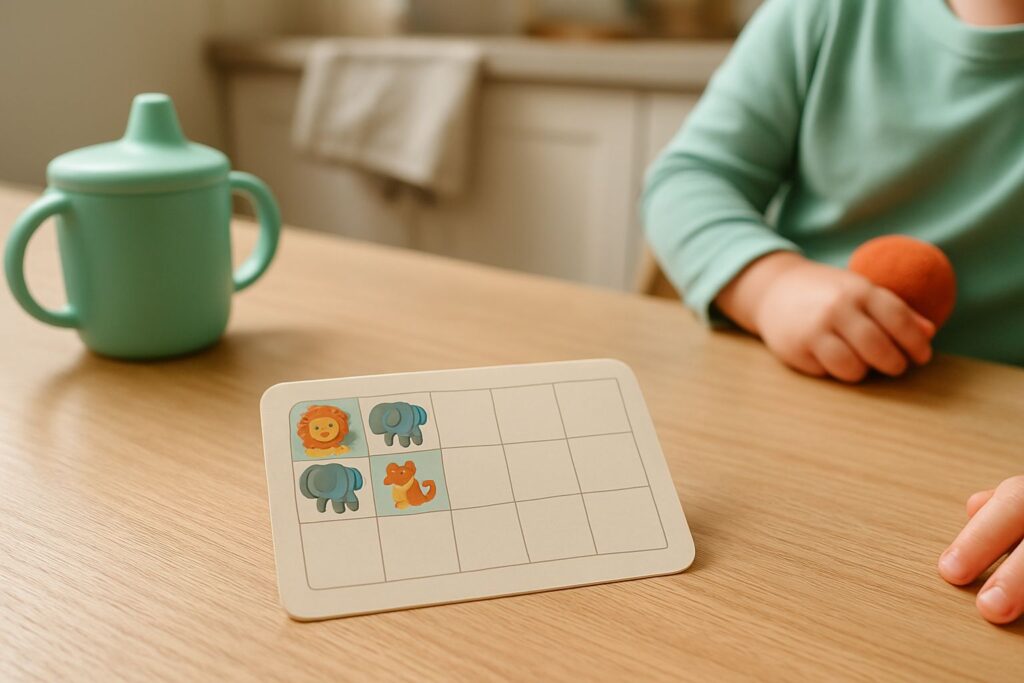
Throughout this stretch, a tracking schedule records what time your child drank, what time they sat on the toilet or potty, whether anything happened, and whether a wee or poo was a success or an accident. It works best if your child drinks a cupful in one go rather than in sips spread through the hour, because that is the only way to see the link between how much went in and how long it takes before they need a wee. That record is what teaches you your own child’s timing, not a generic schedule: how long after drinking a toddler needs a wee varies from child to child, and the notes column is where you work that out for yours. The same chart can also be printed out separately as a potty training tracking chart, if you want a copy to hand to a grandparent or nursery.
Rather than placing your child on the potty by the clock, the approach that works asks the child directly: will you tell me when you need a wee? The exception is a handful of fixed moments, before and after sleep and before you leave the house, which stay in place during training and afterwards too. This is the core of what is called the Potty Training Box Method: three intensive days at home, a written record of this child’s own timing, a question put to the child rather than a schedule imposed on them, and a gradual move from potty to toilet with a seat reducer and step stool as the child gets steadier. If you want the fuller detail, the day-by-day plan for the week and what to do on day one both go through it hour by hour.
| Day | What usually happens | What you do |
|---|---|---|
| Day 1 to 3 | Lots of accidents, child learning the sensation of needing to go | Stay home, nappy off, ask ‘will you tell me when you need a wee?’, fill in the tracking schedule |
| Day 4 to 5 | Resistance and boredom with being asked repeatedly | Ask less often, let the child take more responsibility |
| Day 6 to 7 | Fewer accidents, child starts to signal first | Move toward the toilet, try a short outing |
| Day 8 onward | Daytime dryness mostly established for many children | Keep pull-ups for sleep, carry on with outings as normal |
Why day 4 or 5 is usually the hardest, not day 2
The middle of the week, day four or five, is typically the hardest stretch, not day two as is sometimes claimed. By this point many children are bored of being asked constantly whether they need a wee, and that boredom shows up as resistance or a run of accidents just when things seemed to be going well.
The fix is usually to ask less, not more. Dropping back from asking every ten minutes to checking in less often and letting your child carry more of the responsibility themselves tends to settle the resistance within a day or two. Accidents at this stage are part of learning, never a sign of failure, and a dip here does not mean the week has gone wrong. Why day 4 or 5 is usually the hardest covers this in more depth if you are in the middle of it right now.
If you have just had an accident and want something to watch together to reset the mood, this short video is made for exactly that moment.
How long does potty training take for a 2 year old?
For a two year old, readiness matters far more than the number on the calendar. Most children start potty training somewhere between 18 months and 3 years old, which puts most two year olds well within range, but a two year old who is ready can move through the week in much the same time as an older child, while one who is not ready will struggle regardless of age.
Younger twos within that range often need more hands-on support for longer, more reminders, more help getting clothes off in time, simply because the physical coordination is still developing. That is normal and tends to resolve with another few weeks of practice rather than signalling anything is wrong.
Common signs your child might be ready include staying dry for an hour or two at a time, showing interest in the toilet or potty, telling you after they have been rather than during, and being able to pull pants up and down themselves. If you are not sure where your own child stands, our readiness quiz walks through this in a few minutes.
What makes the week faster, and what drags it out
Starting before your child shows readiness is the single biggest reason a week turns into a month. The second is inconsistency: if nursery, grandparents and home are each doing something different, a child gets confused signals about what is expected, and progress stalls.
Switching back to nappies or pull-ups during the day, even just for a nap or an outing, undoes a lot of the learning the week was building. The same goes for training pants, which feel similar enough to a nappy that many children do not notice when they are wet. Plain cotton pants work better than training pants precisely because the child feels the wetness straight away and makes the connection. A holiday, an illness, or simply stopping and starting a few times in the first fortnight also stretches the timeline out.
What shortens the week more than anything else is having a clear plan for the bad days before they happen, so a wobble on day four does not turn into giving up altogether. The Potty Training Box is built around exactly that: a day-by-day plan with a short card for each day, tracking schedules to learn this child’s own timing, and sticker cards that start small and grow rarer as your child improves, so the habit outlasts the stickers. A year of community access comes with it too, for the questions that come up along the way.
What about poos? They often take longer than wees
Poos commonly lag behind wees by several days, sometimes a couple of weeks, even once daytime wee accidents have mostly stopped. This is ordinary and does not mean anything has gone wrong with the rest of the training.
If your child is withholding stool, straining, or seems constipated, that is a question for a GP or health visitor rather than something to work through with a training plan, since ongoing withholding and constipation make the whole process harder and sometimes need separate attention. Once that is ruled out or managed, the poo stickers and the poo certificate tend to matter a great deal to children who have been proud of their wee progress but are more nervous about poos, giving them something specific to work towards rather than lumping the two together.
How long until night-time dryness?
Night-time dryness is a separate milestone from daytime training and usually arrives weeks or months later, because it depends on a child’s bladder maturing enough to hold urine overnight rather than on anything you teach directly. The NHS is clear that night dryness follows its own timeline, separate from daytime training (NHS, bedwetting).
During the daytime week, pull-ups for sleeping are the sensible option rather than a sign of a step backwards, and there is no need to attempt night training alongside the daytime plan. Bedwetting that continues past around five or six years old is worth raising with a GP or health visitor rather than managing alone, since it can sometimes have a cause worth checking (NHS, bedwetting). The Potty Training Box does not promise night-time dryness, because that is not what it is designed to do.
What the 3 day potty training method gets right and wrong
Three intensive days at home genuinely is how most structured approaches start, and for some children it is close to the whole job: dry days within three days is realistic for a child who was already clearly ready. For others, three days is the start of a longer week or two, not a deadline to hit.
Where some three-day frameworks go wrong is in treating a fixed toilet schedule, every twenty minutes, every half hour by the clock, as the method itself. The goal throughout is for the child to signal their own need, with the early, frequent offering acting as scaffolding that comes down once the child starts to tell you themselves. What the 3-day method really involves goes into this distinction in more detail. Parents sometimes come across this idea through a specific book, such as Oh Crap! Potty Training, which many have found useful alongside a structured plan rather than as a replacement for one.
What to have ready before you start
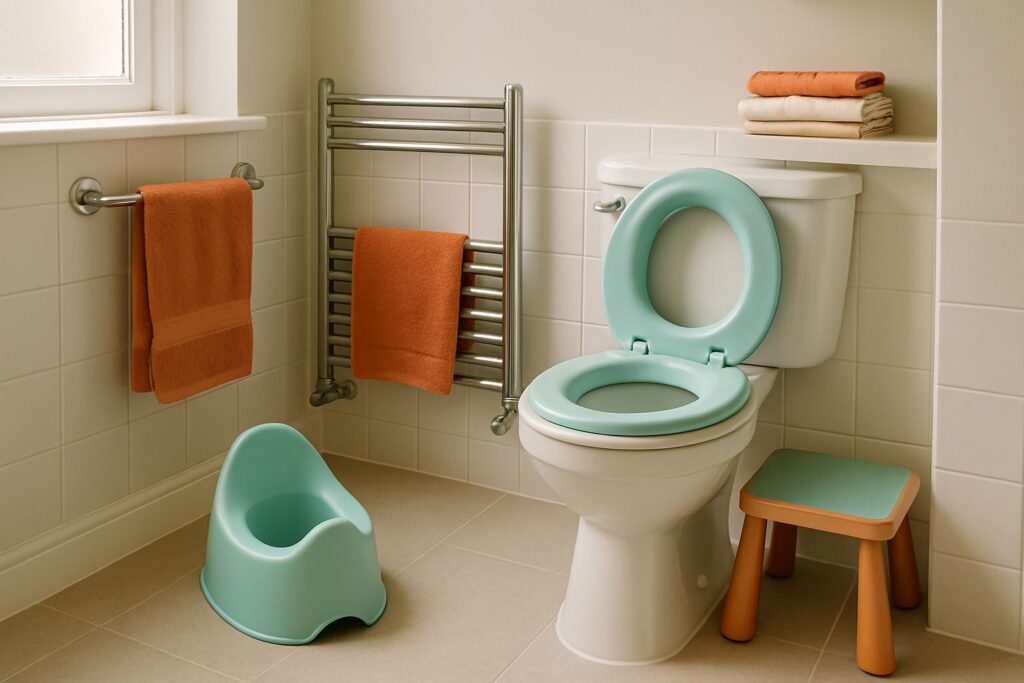
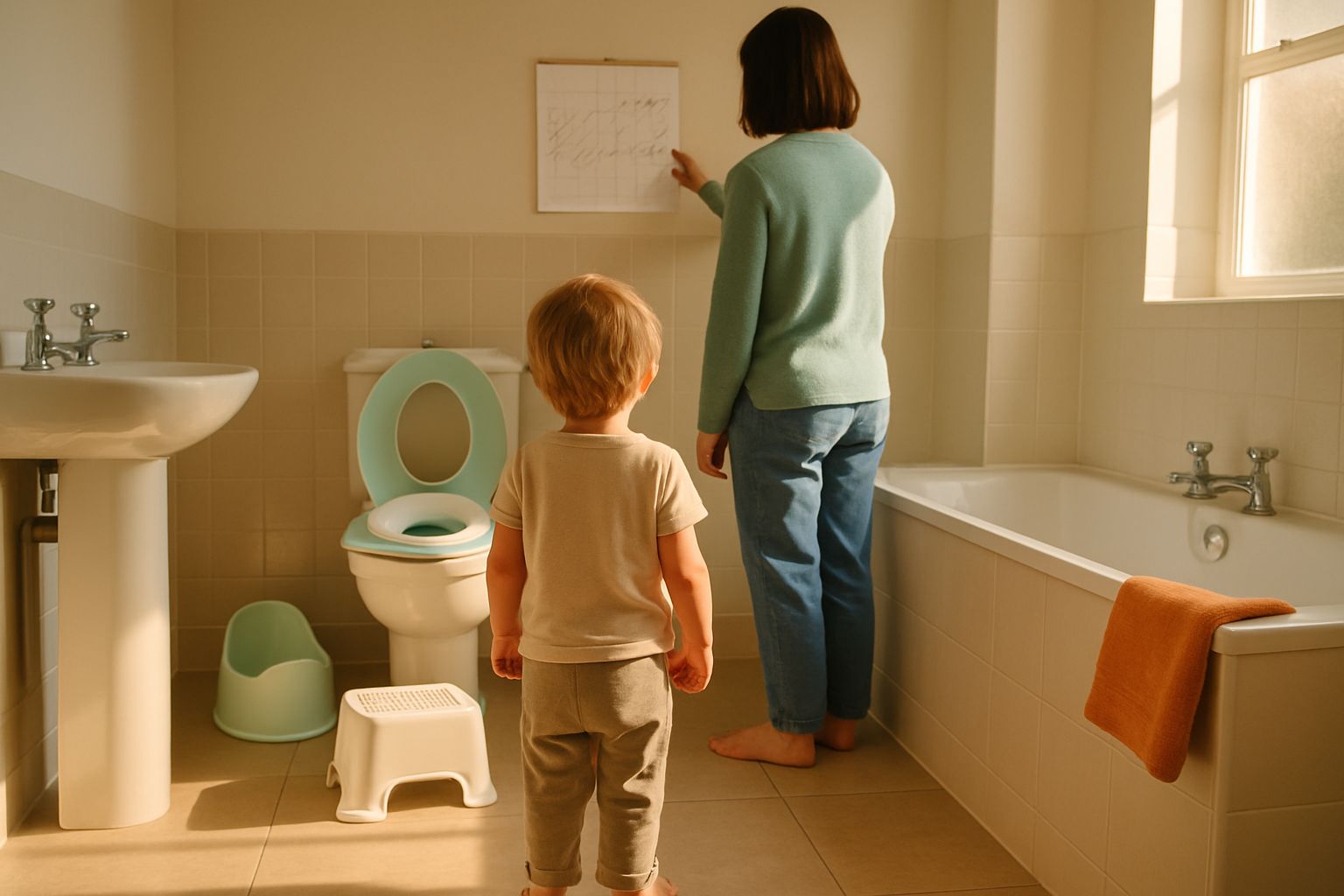
Set three clear days aside where you can stay home, since the first stretch is where most of the learning happens and outings only get added afterwards. Beyond that, have ready a potty, a toilet seat reducer, a step stool, at least fifteen pairs of cotton pants, something to protect the mattress and sofa, a handful of small rewards, and pull-ups for sleeping.
Some links in this article are affiliate links, which means we earn a small commission if you buy through them. It costs you nothing extra and does not affect what we recommend. If you would rather pick a reducer with a comfortable fit for a toddler, the Nuby Beginner’s Potty Training Seat is a straightforward option, and a simple potty for the early days is the My Carry Potty, with a Dreambaby 2-Up Step Stool for the move to the toilet.
If you would rather run the week your own way, a separate reward system is available on its own for the sticker side of it.
What if it is not working after a week?
If a week in there is no progress at all, or your child is distressed rather than mildly resistant, the method’s own advice is to stop and leave it a few weeks before trying again, rather than pushing through. That pause is a normal part of the process, not an admission of defeat.
Signs it is worth pausing include a child who is frightened of the potty or toilet, constant tears at the idea of sitting on it, or a total absence of any dryness stretch even after several days. If the potty or toilet itself is the problem, building familiarity first with no pressure to perform is the better route, and starting again later once that fear has eased tends to go far more smoothly.
The approach is also used successfully with children who are autistic, have Down syndrome, or are non-verbal, usually over a longer stretch and built around reading the child’s own signals rather than waiting for them to say so in words. A year of community access, included with the box, is there for exactly these questions, answered by the Potty Training Box experts seven days a week.
Frequently asked questions
How long does potty training take for a 2 year old?
It depends more on readiness than age, but most two year olds who show clear signs of readiness are dry in the daytime within about a week. Some take three days, others two to three weeks, and a two year old still developing the coordination to manage clothing may need extra support for a bit longer. Age alone does not predict the timeline.
Is it normal for a 2 year old to not be potty trained?
Yes, this is entirely normal. Most children start potty training somewhere between 18 months and 3 years old, so plenty of two year olds have not started yet or are only partway through. Starting when a child shows genuine readiness signs usually goes better than starting earlier simply because of age.
Can you really potty train in 3 days?
Some children are dry in the daytime within three days, particularly if they were already showing strong readiness signs before starting. For many others, three days is the intensive start of a week or two rather than the whole job. It is a realistic outcome for some children, not a deadline every child should hit.
How long does it take to potty train for poos?
Poos commonly take longer than wees, often lagging by several days to a couple of weeks even after wee accidents have mostly stopped. This is ordinary and not a sign anything has gone wrong. If there are signs of withholding or constipation, that is worth raising with a GP or health visitor rather than managing through training alone.
How long after starting should my child be dry at night?
There is no fixed timeline, because night-time dryness depends on a child's bladder maturing enough to hold urine overnight, which usually happens weeks or months after daytime dryness. Pull-ups for sleeping are the sensible choice during daytime training. Bedwetting that continues past around five or six is worth discussing with a GP or health visitor.
What is the 10-10-10 rule for potty training?
The 10-10-10 rule refers to sitting a child on the potty for ten minutes, ten times a day, at fixed intervals. It is a clock-based framework rather than the child-led approach this brand teaches, where the early offering is scaffolding that is meant to fall away as soon as the child starts signalling their own need, rather than continuing as a routine. The aim throughout remains getting the child to tell you themselves, not keeping them on a timetable.
Ready for the next step?
The Potty Training Box holds the day-by-day programme this article is built on: tracking charts that show you when your child actually needs to go, instruction cards for each day, and a reward system that tapers off on its own.
Sources
This article was written with AI assistance and checked by Dustin van de Sande.