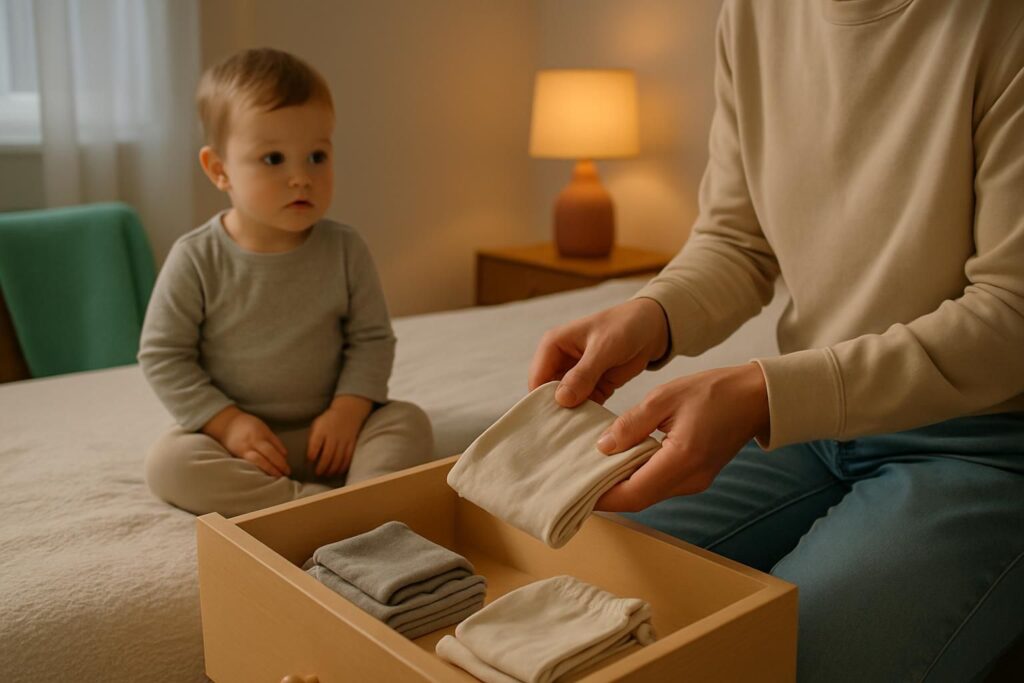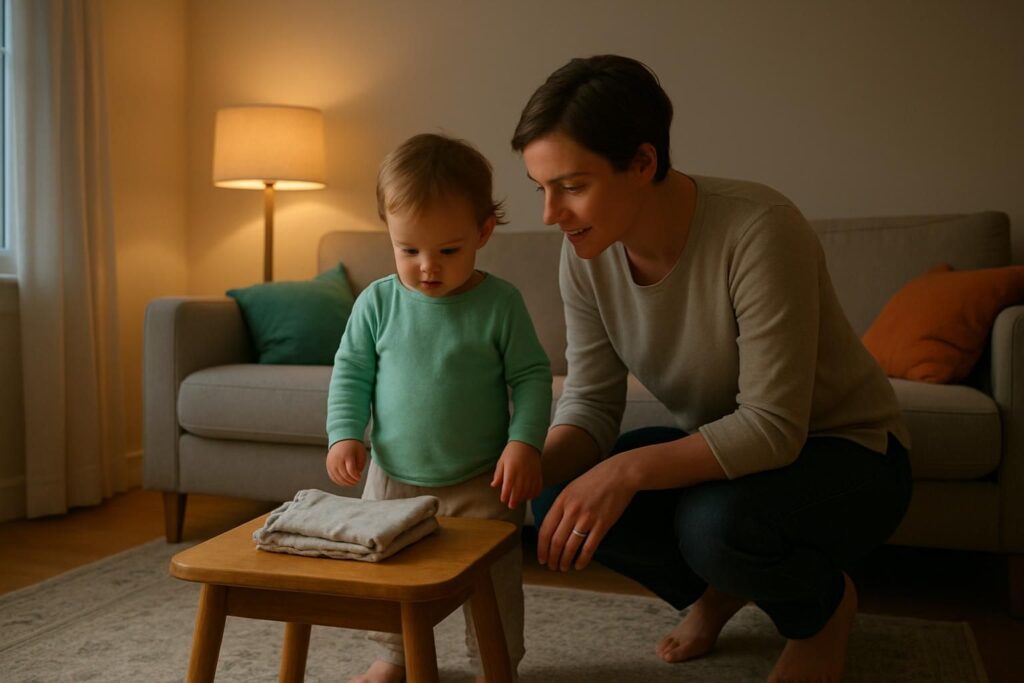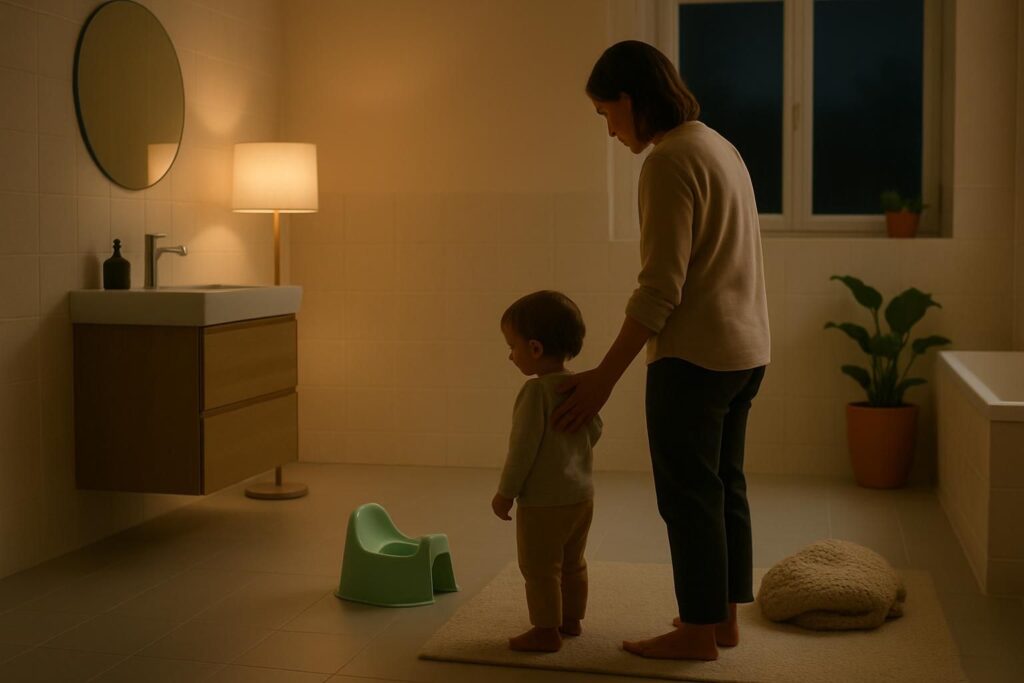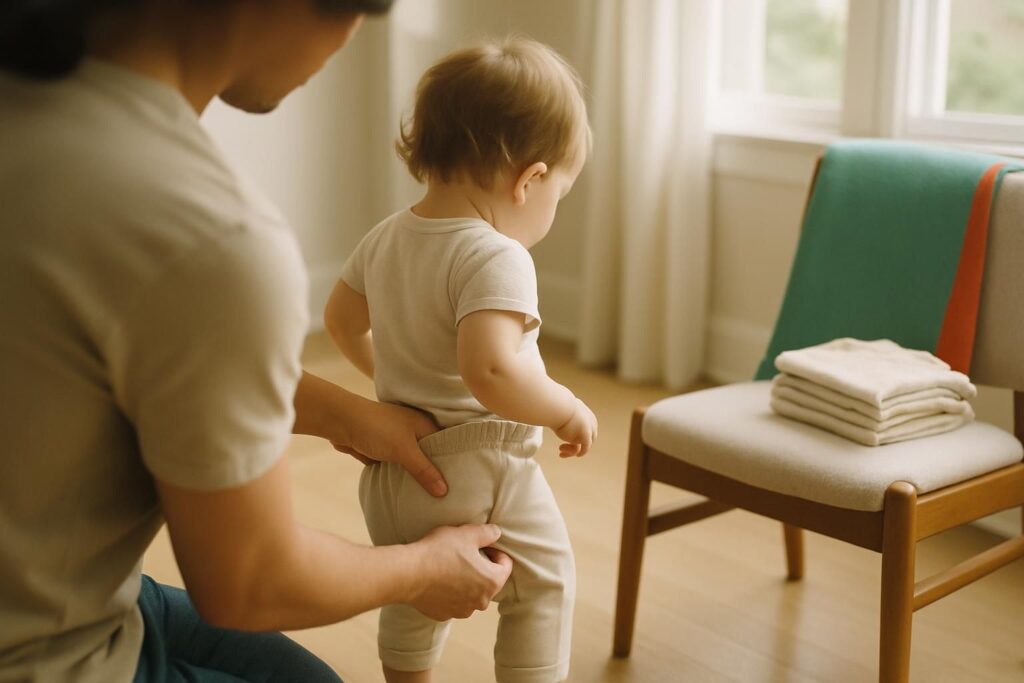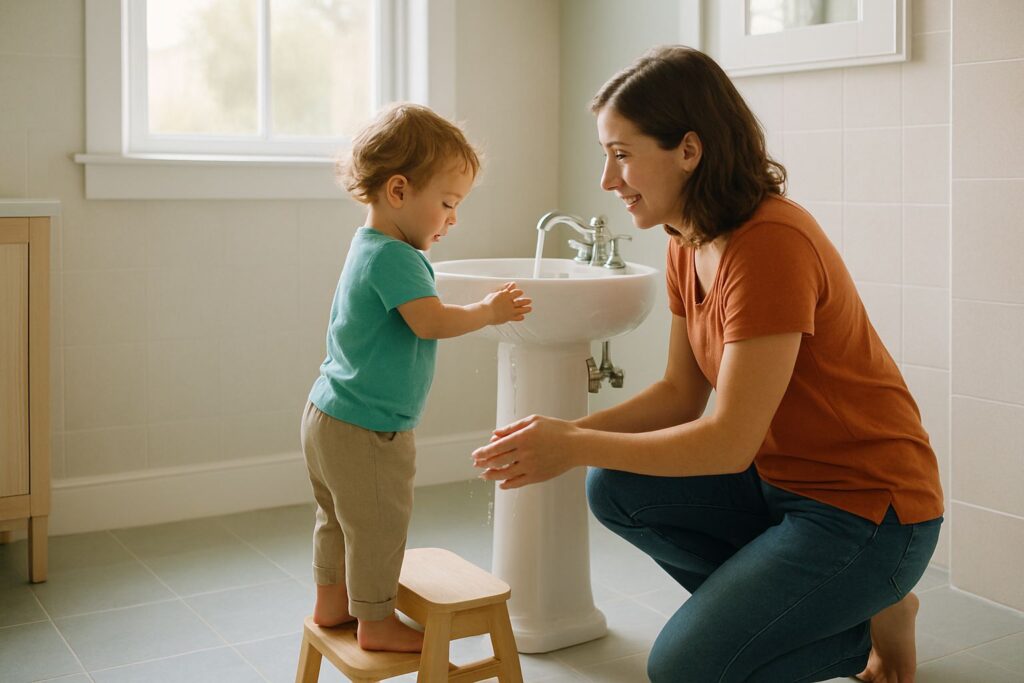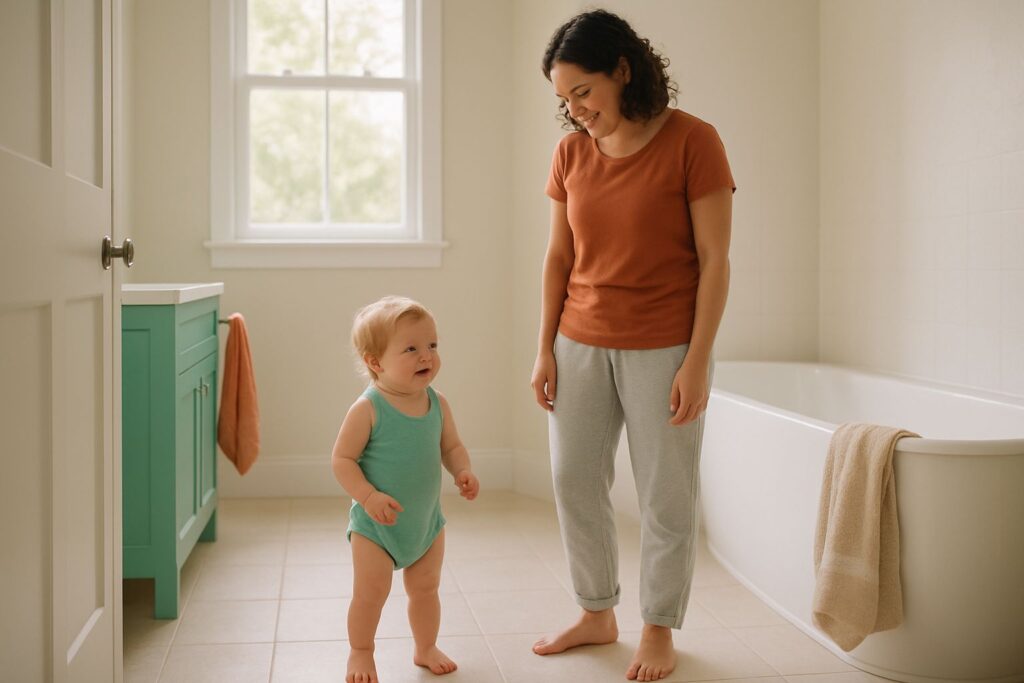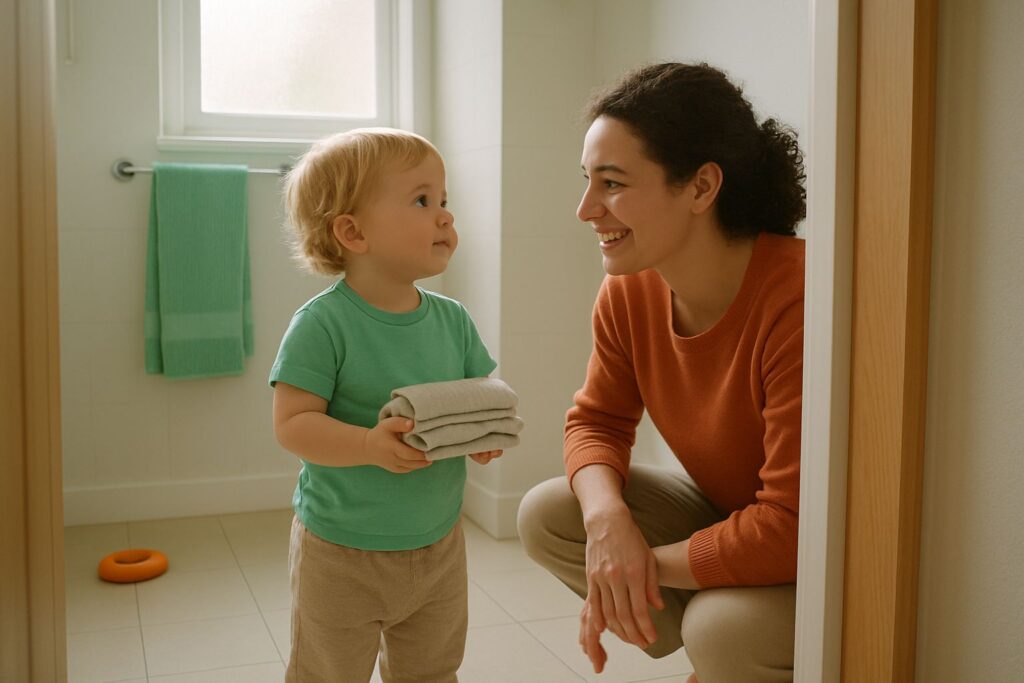

The best potty is a simple, low, stable one-piece potty with a wide base and a splash guard, not a musical or novelty model. Most UK parents need a potty first, then a toilet seat reducer and step stool as the child moves from potty to toilet. Skip anything that lights up or sings.
Comfort and stability matter far more than the brand on the box. What actually helps a toddler is a potty they can sit on and get up from by themselves, with both feet flat on the floor and knees a little above hip height. A potty that wobbles when a child leans forward, or one so deep they cannot climb off unaided, works against them rather than for them.
Most families end up owning all three things eventually: a potty, a toilet seat reducer and a step stool, used in that order as the method moves from potty to toilet over the course of a week or so. None of them need to be expensive or elaborate. The gimmicky end of the market, potties that play a tune when they detect wee, potties shaped like cartoon characters with a dozen moving parts, mostly get in the way of a child noticing their own achievement.
Potty or toilet seat reducer: which do you start with?
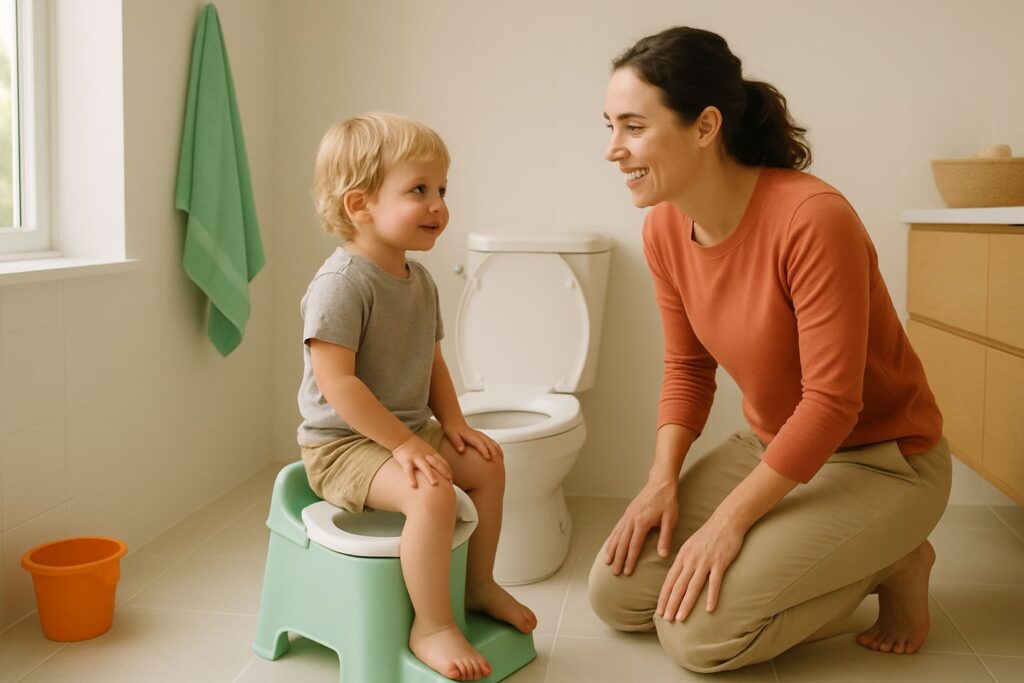
Start with the potty. In the first three days at home, which is when most of the learning happens, the potty needs to be quick to reach, need no lifting onto anything, and require no waiting for a parent to get a stool in place. A toddler who has to ask an adult to lift them onto a big toilet loses the moment.
From around day four, once short outings begin, the toilet seat reducer and step stool typically take over, because this is what the child will keep using long after the potty has been put away. A taller or older child, already confident on furniture, sometimes skips the potty stage altogether and goes straight to the toilet with a reducer and stool from day one. That is fine, and so is the reverse: a child who is nervous of the toilet’s height, noise or flush should never be pushed onto it first. Build confidence with the potty, then move across when they are ready, not on a schedule set by anyone else.
The point of any of this equipment is the same regardless of which piece is in use: the aim is for the child to say they need to go, not for a parent to decide where they should be sitting at a given moment.
What makes a good potty: the seven things to check before you buy
A good potty scores well on function, not looks. Check these before buying anything:
- Height: low enough that knees sit slightly above hips and feet rest flat on the floor.
- Base: wide and non-slip, so it does not tip when a child stands up quickly.
- Splash guard: a raised front guard for boys, and a low front for girls wearing trousers or tights, so clothes come off easily.
- Removable inner bowl: makes emptying and cleaning far less unpleasant, whatever time of day the accident happens.
- No seams or crevices: a smooth single moulding is easier to keep hygienic than one with joins that trap wee.
- Quiet and boring: no music, lights or sound effects competing with the child’s own sense of having done it.
- Weight: light enough to carry from room to room in the first few days, but not so light it slides on tiles.
Getting the height and posture right matters more than most parents expect, and it is worth reading the best sitting position on the potty or toilet before you buy, since the wrong angle can make a child tense up rather than relax.
Which potties, seat reducers and step stools do UK parents actually buy?
Naming actual products helps more than describing categories in the abstract, since these are the potties and seat reducers UK parents are most likely to come across on Amazon.co.uk or in Argos. None of these are ranked against each other here, since the right one depends on your bathroom, your child’s height and how you plan to use it. Some of the links below are affiliate links, which means this site may earn a small commission if you buy through them, at no extra cost to you.
| Product | Type | Best for |
|---|---|---|
| BabyBjorn Potty Chair | One-piece potty with a backrest | The first three days at home, especially for a child who likes to sit and take their time |
| BabyBjorn Smart Potty | Lightweight, low one-piece potty | Carrying from room to room, or a smaller bathroom |
| BabyBjorn Toilet Trainer | Toilet seat reducer | Moving onto the toilet from roughly day four |
| My Carry Potty | Sealed carry potty | Car journeys and days out with no toilet nearby |
| Potette Plus | Folding travel potty with liners | Doubling as a seat reducer on public toilets |
| Summer Infant My Size Potty | Toilet-shaped design that mimics a real toilet | A child who wants their potty to look like the grown-up version |
| A sturdy plastic or wooden step stool | Step stool | Any child using the toilet or a seat reducer |
Whichever type you choose, the checklist above still applies: stability, a comfortable height, an easy-clean surface and nothing that sings. If you would rather buy everything as a single set rather than piecing it together, it is worth looking at a best potty training kit UK comparison, which covers ready-made bundles alongside the method itself.
Do you need a travel potty, and which one works in a UK car boot?
A travel potty earns its place from around day four, once short outings begin, and it comes in useful on car journeys and days out where a toilet is not always nearby. There are two common types. A sealed carry potty holds the contents until you can tip it out later, which suits a longer car trip. A folding frame with disposable liners packs flatter and often doubles as a seat reducer over a public toilet, which suits stops at cafes and motorway services.
In practice, whichever type you pick, pack liners, a pack of wipes, a spare carrier bag for wet clothes, a full change of clothes, and a towel to sit on the car seat just in case. None of this is needed for the first three days at home, when the child barely leaves the house and the ordinary potty does the job.
What else do you need ready before day one?
Beyond the potty and its successors, most parents get a handful of things ready in general: a potty, a toilet seat reducer, a step stool, at least 15 pairs of ordinary cotton pants, something to protect the mattress and sofa, a handful of small rewards, and pull-ups for sleeping only.
Plain cotton pants work better than padded training pants for daytime, because the child actually feels it when they are wet, and that feeling is a large part of how they learn to notice the need before it happens. Pull-ups have their place at night, since night-time dryness is a separate skill that tends to develop later than daytime control, according to ERIC, the Children’s Bowel and Bladder Charity. If bedwetting is still happening regularly past around six years old, that is worth raising with a GP or health visitor rather than something to try to fix with equipment.
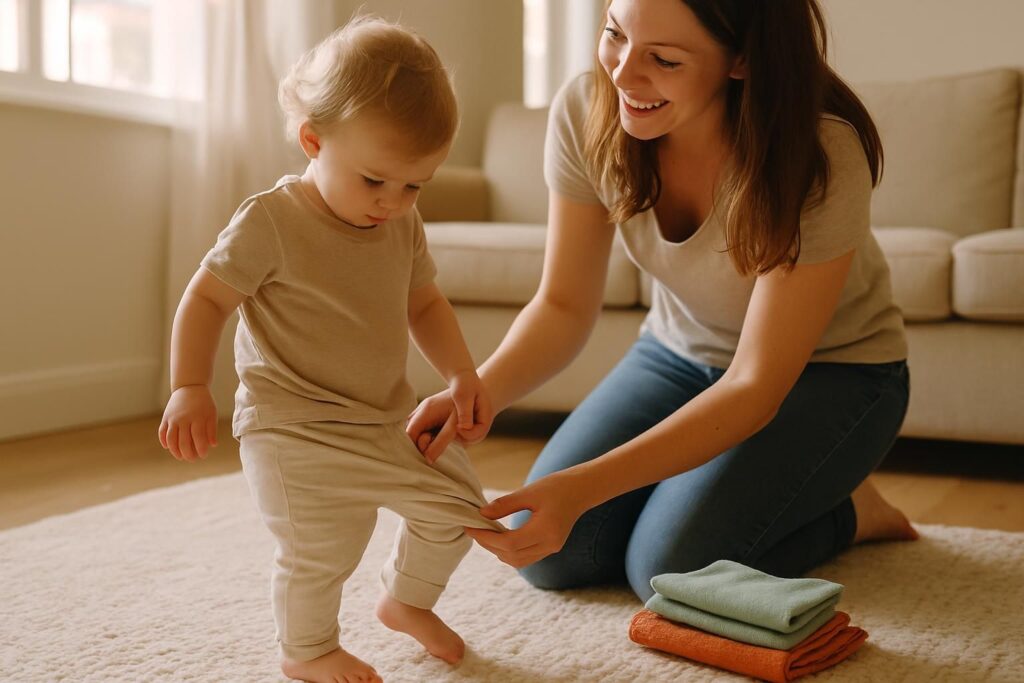
Easy clothing helps too: leggings and joggers a toddler can pull down themselves, rather than dungarees, belts or fiddly buttons that slow them down at exactly the wrong moment. A small reward system, marked straight away when something goes right, gives quick, visible feedback in the early days.
What can you skip without regretting it?
Skip musical potties, wearable potty training watches that beep on a timer, dissolving wee-target stickers, and a potty in every room of the house. None of these change how quickly a child learns to notice their own body; most just add noise the child has to filter out.
Training pants as a halfway step between nappies and pants are also usually unnecessary and can slow things down, since they feel similar enough to a nappy that the child does not notice wetness the way they do in ordinary cotton pants.
What actually drives progress is far less glamorous: a parent learning this particular child’s rhythm, quick and specific praise the moment something goes right, and a reward that comes often at first and then deliberately less often as the child improves, so the habit outlasts the reward rather than stopping the day the stickers run out. For a fuller look at what is actually worth buying and what you can skip, it is worth reading before you spend anything.
How do you know when to offer the potty, if not every half hour?
Offering the potty on a fixed interval, every twenty or thirty minutes regardless of the child, is not the approach the Potty Training Box Method uses. Instead, a tracking schedule records when this particular child actually goes, so a parent learns that child’s own timing rather than imposing one from outside.
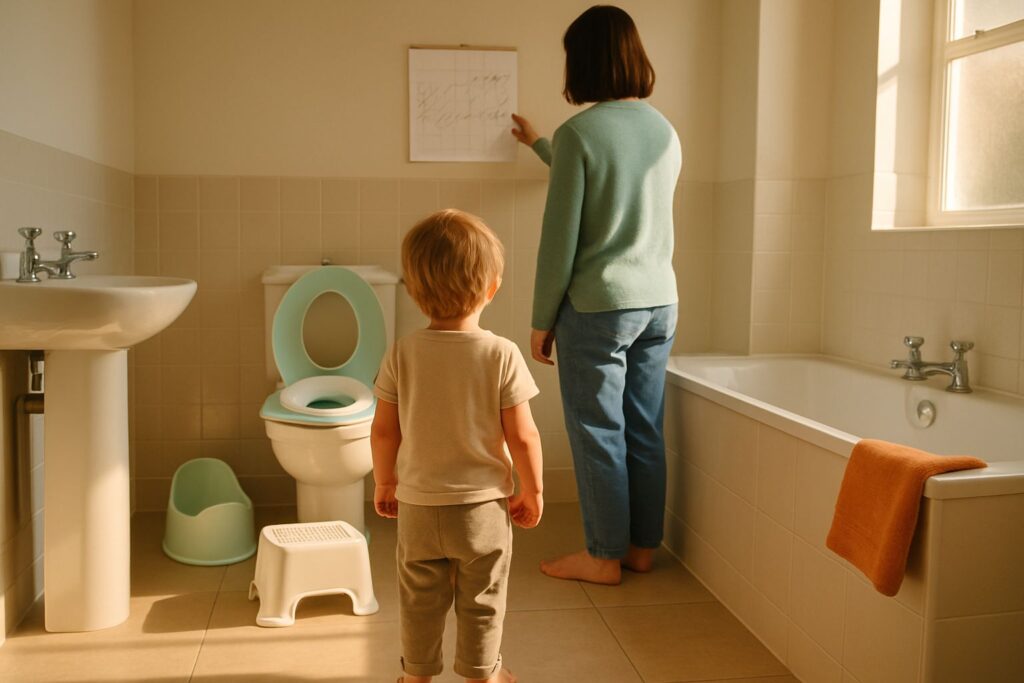
A tracking card typically has these columns: time of drinking, time on the toilet, whether nothing happened (yes or no), wee marked green for a success or red for an accident, poo marked the same way, and a notes column. Filled in over a few days, this shows a parent roughly how long after a drink this child needs to go, which is far more useful than a generic clock.
It works best when the child drinks a cupful in one go rather than sipping it across the afternoon, since that is the only way to see a clear link between how much went in and how long it took before they needed the toilet. A free printable tracking chart is available if you want to try recording this yourself. For the reward side, rather than putting together your own system, the (Extra) Reward system Potty Training gives you a ready-made set of small, increasing rewards to use alongside it.
The method’s actual prompt is not the potty itself but a question: rather than offering the potty over and over, you ask the child directly, ‘will you tell me when you need a wee?’ That question, repeated gently through the day, is what teaches a child to notice the need and say so, rather than being sat down on a schedule someone else decided. The exceptions are a small number of fixed moments that stay in place during training and afterwards: before and after sleep, and before leaving the house.
Many parents find day four or five the hardest, not day two as is sometimes assumed. By then the child is often simply fed up with being asked ‘will you tell me when you need a wee?’ so often, and this shows up as resistance or refusal rather than lack of progress. The practical fix is to ask less often at that point, not more, and to hand more of the responsibility back to the child: a short pause in the prompting is often what gets things moving again.
What if your child is scared of the potty or the toilet?
A child who is genuinely frightened of the potty or the toilet, rather than simply uninterested, is not ready to start yet. The honest approach is to build familiarity first, with no pressure to perform on it, and try training again later; nothing about the equipment or the timing needs to be rushed.
Practical familiarity steps help more than persuasion: leave the potty out in the living room where it is just part of the furniture, let the child sit on it fully clothed while watching television, and let them help empty it or flush the toilet so the process feels ordinary rather than alarming. None of this needs to happen on any particular day.
Watching something together can also take the pressure off a face-to-face conversation about it.
Some links in this article are affiliate links, which means we earn a small commission if you buy through them. It costs you nothing extra and does not affect what we recommend.
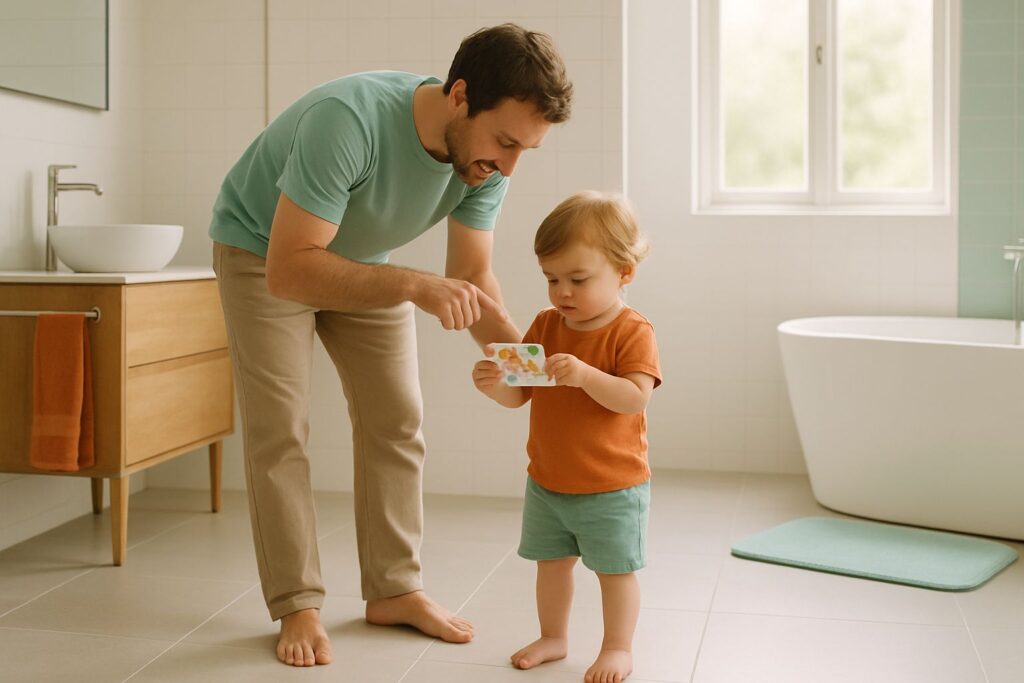
A calm picture book read together at bedtime, well before any pressure to actually use the potty, can also help a nervous child get used to the idea. I Want My Potty! is a well-known choice for exactly this. There is more on choosing one well in potty training books and videos.
Where the gear stops and the plan starts
Buying the right equipment is the easy part. The harder part, for most parents, is knowing exactly what to do on day one, what to do on day two, and what to do on the day it goes badly, which it usually does at least once. This is what the Potty Training Box is actually for: a day-by-day training programme booklet, alongside instruction cards, compliment cards and tracking schedules to fill in as you go, plus sticker cards that increase in size as the week goes on, so the reward comes fast at first and then grows rarer.
It is worth being honest about what to expect. Most children are dry in the daytime in about a week, some manage it in as little as three days, others take two or three weeks, and a child who is genuinely not ready should wait rather than be pushed through it. If an attempt does not work, the method’s own advice is simply to pause and try again later, rather than reaching for something new in the meantime.
If you would rather run this your own way, the (Extra) Reward system Potty Training is available separately for the structure of small, increasing rewards, alongside the free printable chart above for tracking. For the fuller picture from first signs of readiness through to dry days, it is worth reading the complete guide from first signs to dry days.
Frequently asked questions
What is the best travel potty in the UK?
There is no single best model, but the two types worth choosing between are a sealed carry potty that holds the contents until you can empty it, and a folding potty with liners that often doubles as a toilet seat cover on public loos. Pick based on whether you need it mainly for the car or mainly for public toilets on days out.
Do I need both a potty and a toilet seat reducer?
Most families use both, but not at the same time. The potty does the work in the first three days at home, and the toilet seat reducer, alongside a step stool, tends to take over from around day four as the child moves towards using the toilet.
What age should a child be potty trained in the UK?
There is no fixed age, but the NHS notes many children show signs of being ready to start somewhere between 18 months and three years, and some children are simply not ready until later. Signs of readiness matter more than the number on a birthday cake, so it is worth waiting for those rather than a target age.
How many potties do I need, and should I have one in every room?
One potty is usually enough. Having several around the house is not necessary and does not speed anything up, though some parents keep a second cheap one downstairs if the house has more than one floor and the stairs are a genuine obstacle.
Are training pants worth buying for potty training?
Generally no. Ordinary cotton pants let a child feel wetness clearly, which is part of how they learn to notice the need in advance, whereas training pants feel closer to a nappy and can blur that signal.
What is a red flag that my child is not ready for potty training?
A child who is frightened of the potty or the toilet, rather than simply uninterested, is usually not ready yet. The honest approach is to build familiarity first with no pressure to perform, and try again later; nothing about the equipment or the timing needs to be rushed.
Ready for the next step?
The Potty Training Box holds the day-by-day programme this article is built on: tracking charts that show you when your child actually needs to go, instruction cards for each day, and a reward system that tapers off on its own.
Sources
This article was written with AI assistance and checked by Dustin van de Sande.