Potty Training: The Complete UK Guide, From First Signs to Dry Days

To potty train a toddler, check for signs of readiness, get your kit ready, then take nappies off and stay home for three days in cotton pants rather than pull-ups, recording what happens and rewarding small wins before moving to short outings. Most children are dry in the daytime in about a week; night dryness comes later.
Some children get there in three days, others need two or three weeks, and a child who isn’t quite ready yet is better off waiting a little longer than being pushed through it. Night-time dryness is a separate skill that tends to come later, on its own timescale, and no honest method promises it as part of daytime training. The whole aim, throughout, is to reach the point where your child tells you they need to go, rather than you asking them.
Is your child ready? The signs that actually matter
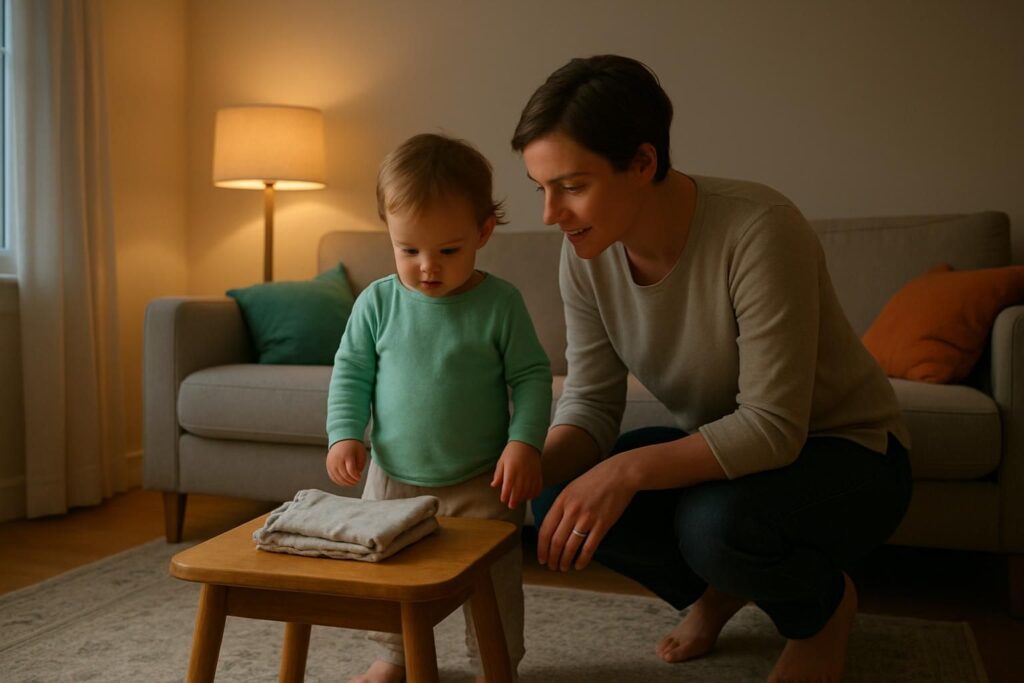
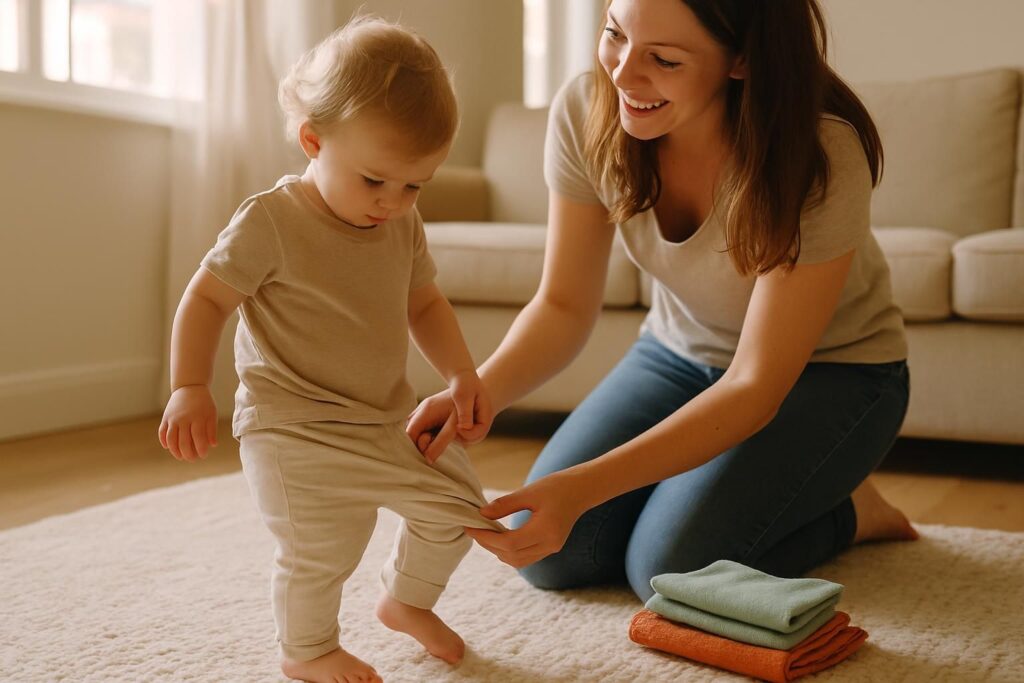
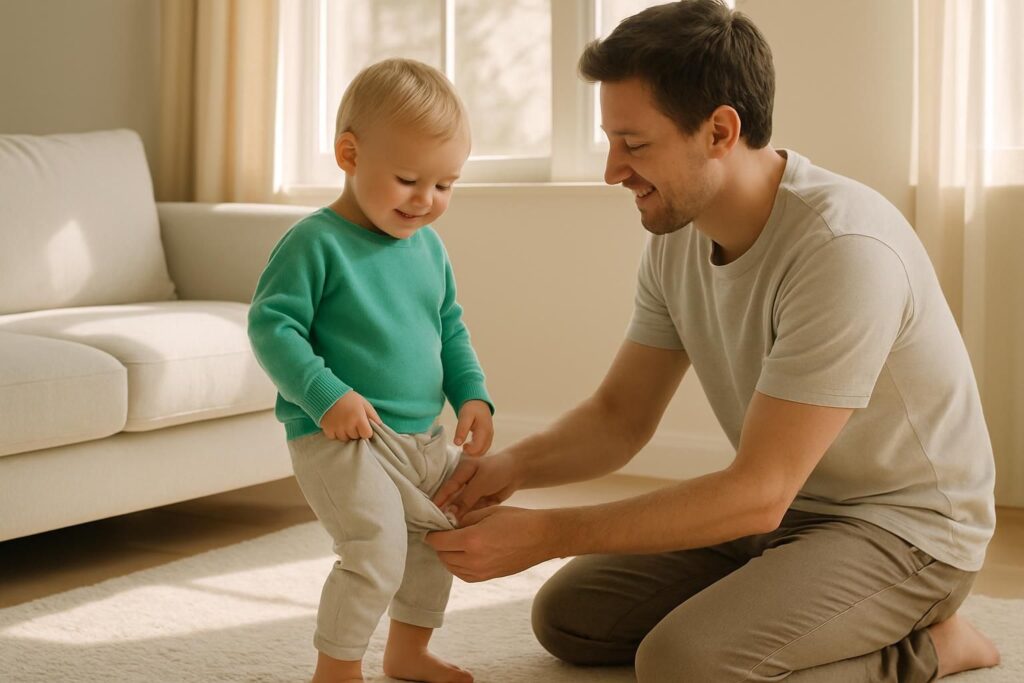
A child is usually ready when they can stay dry for an hour or two, notice and dislike a wet nappy, can pull their own pants up and down, and can follow a simple two-step instruction like ‘get your shoes and come here’. Watch too for interest in the toilet or potty, and for a child who goes quiet or hides somewhere when they need a poo.
Most children show these signs somewhere between 18 months and two and a half years old, though it genuinely varies from one child to the next and there’s no exact date to aim for. The NHS Best Start in Life potty training guidance notes that almost all children can be potty trained somewhere in that window, with plenty of children starting a bit later than that too.
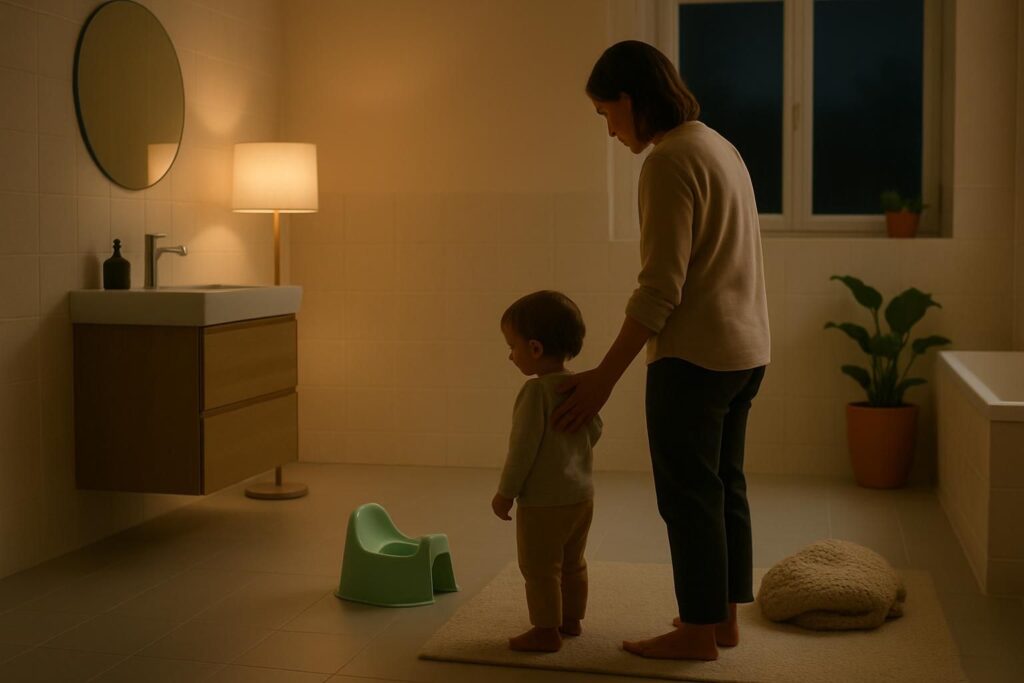
If your child is genuinely frightened of the potty or the toilet, that’s a sign to wait, not push on. Spend a week or two just building familiarity, no pressure to sit or perform, and try again once the fear has worn off. You’ll find a longer readiness signs checklist useful if you want to go through this properly before you commit to a start date.
If you’re still not sure, a short quiz can help you see the pattern more clearly than a list on its own.
What you need for potty training: the kit to have ready
Before day one you’ll want a potty, a toilet seat reducer and a step stool, at least 15 pairs of plain cotton pants, something to protect the mattress and sofa, a handful of small rewards, and pull-ups for sleeping only. Have all of it in the house before you start, not ordered and arriving on day two.
Cotton pants matter more than they sound like they should. A child in training pants or a nappy-style pull-up barely feels the wet, so there’s nothing to connect the sensation to the need. Plain cotton pants feel wet straight away, which is exactly the discomfort that teaches a child to notice and, eventually, to get there first.
| Item | What it’s for | Where to look |
|---|---|---|
| Potty | Mostly used in the first three days, before moving to the toilet | search potties on Amazon |
| Toilet seat reducer | Makes the toilet feel safe once you move on from the potty | search seat reducers |
| Step stool | So your child can climb up and brace their feet | search step stools |
| Cotton pants | At least 15 pairs, worn instead of pull-ups in the day | Any children’s clothing shop |
| Mattress and sofa protection | Peace of mind for accidents indoors | Any bedding shop |
Those Amazon links earn the site a small commission if you buy through them, at no extra cost to you. For a fuller shopping list including quantities, the complete potty training kit checklist walks through it item by item, and which potty is best compares the shapes and features worth paying attention to.
The Potty Training Box is a physical box that sits alongside that kit rather than replacing it. Inside is a day-by-day programme booklet, seven instruction cards, six compliment cards, 14 tracking schedules, 20 sticker cards in four sizes, 100 animal stickers, 20 poo stickers, two certificates for your child, and a year of access to a community where our experts answer questions seven days a week.
The week before: setting your child up so day one isn’t a shock
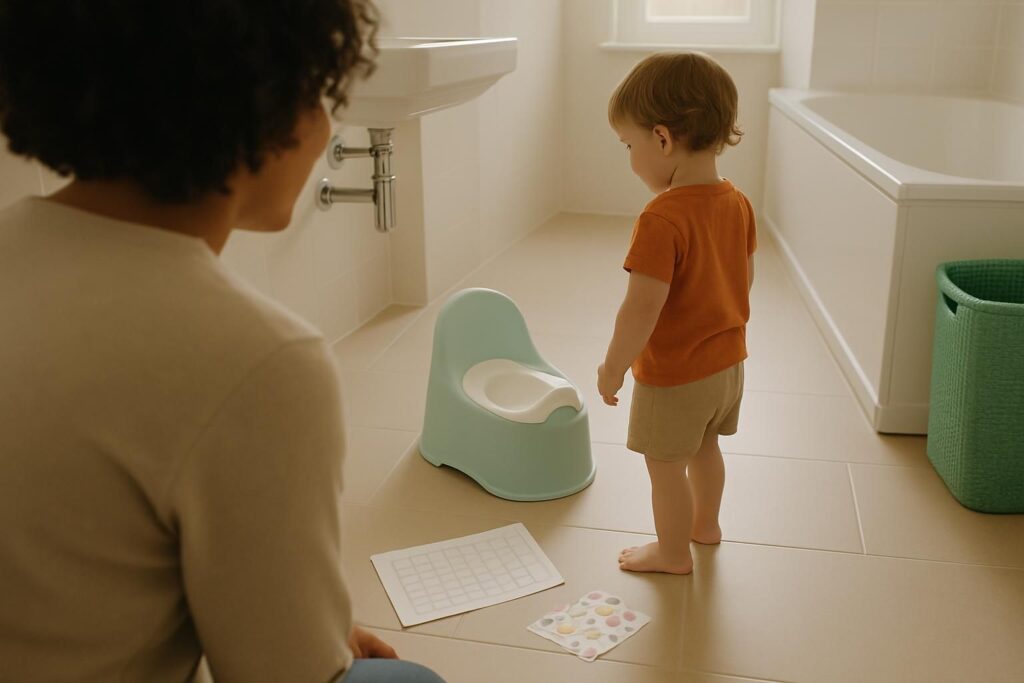
In the week before you start, talk about wees and poos plainly, using whatever words your family is comfortable with, and let your child see the potty sitting in the bathroom without any pressure to use it. If an older sibling is happy to be watched going to the toilet, that’s often worth more than any amount of explaining.
Picture books and short videos aimed at toddlers can do a lot of the groundwork for you, since children pick things up from a character going through it as readily as from a parent. The potty training books and videos roundup is a good place to pick one out.
Choose a week with nothing much in the diary, ideally with both parents or carers on the same page about what’s happening. Avoid starting during a nursery-heavy week, a house move, or in the weeks around a new baby arriving: children cope better with one big change at a time.
Potty training day one: what actually happens
Day one starts with the nappy off in the morning, cotton pants on, and staying home for the whole day. Rather than sitting your child on the potty every 20 minutes, the Potty Training Box Method asks a simple question through the day: ‘you tell me when you need a wee’. The two fixed exceptions are before and after sleep, and before you leave the house, which stay in place during training and afterwards too.
Give drinks as a full cup drunk in one go rather than sips spread over the afternoon. That’s what lets you see how much went in and how long it takes before your child needs the toilet, which is the whole point of the timing you’re about to start recording.
Expect accidents on day one, several of them. Clean up without any telling off, since accidents are how a child learns what the feeling means, not a sign anything has gone wrong. The first sticker, on the three-square card, usually comes after the first success, however small.
Days two and three: staying home while it clicks
The first three days are spent at home because that’s when a child learns the most, without the distraction and disruption of being out and about. By day two most children are moving from the potty towards the toilet itself, helped along by the seat reducer and step stool so they can climb up and feel steady.
Poo on the toilet often takes longer to master than wee, and that’s completely normal rather than a sign of a problem. Plenty of children manage dry days for wees well before they’re comfortable doing a poo anywhere but a nappy or in private, and that gap can run for weeks.
By day three, a tracking schedule filled in honestly starts to show you a pattern: roughly how long after a full drink your child needs the toilet, and roughly what time of day accidents cluster around. That pattern is what the rest of the week runs on.
Why day four or five is usually the hardest, and what to do about it
The hardest day of the week is usually day four or five, not day two as is sometimes claimed. By then a child is often bored of being asked ‘you tell me when you need a wee’ over and over, and that boredom shows up as resistance, ignoring the question, or a run of accidents that feels like backwards progress.
The fix is to ask less, not more: hand more of the responsibility back to your child and let longer stretches pass without prompting, leaning on the fixed moments (before and after sleep, before going out) rather than constant checking in between. Keep the rewards going, just as they’ve been growing rarer through the sticker cards, since that’s exactly the stage the system is built for.
A rough patch on day four or five is usually just that: a rough patch. It’s worth pausing rather than pushing through if your child is genuinely distressed, holding on for long stretches, or seems frightened rather than simply fed up, in which case leaving it a few weeks and starting again is the better call.
Days six and seven: first outings and dry days
By days six and seven, most children are ready for short outings: a walk, a trip to the shops, twenty minutes rather than a whole afternoon. Always use the toilet before you leave the house, a habit worth keeping long after the training week itself is over.
Pack spare pants and wipes rather than reaching for a pull-up as a daytime fallback, since a pull-up undoes the very sensation you’ve spent a week building. Ask nursery, grandparents and childminders to keep the same approach, the same phrasing and the same fixed moments, so your child isn’t relearning the rules in different places.
The wee certificate and poo certificate that come with the box are worth handing over around now, as a marker of the week rather than a prize for perfection. For a sense of how a real week can unfold, how the week went for one family is worth a read.
| Day | What you do | What to expect |
|---|---|---|
| 1 | Nappy off, cotton pants on, stay home, ask ‘you tell me’ | Several accidents, first sticker |
| 2 | Move from potty towards toilet, keep recording | Fewer accidents with wees, poo still tricky |
| 3 | Same at home, pattern starts to show in the schedule | Clearer sense of your child’s timing |
| 4 | Ask less often, hand back responsibility | Often the hardest day, some resistance |
| 5 | Keep rewards steady, ride out the wobble | Improvement usually returns |
| 6 | First short outing, toilet before leaving | Confidence in public settings |
| 7 | Second outing, keep the fixed moments | Most children largely dry in the day |
How often should you put your child on the potty? (and why that’s the wrong question)
You shouldn’t put your child on the potty every 15 or 30 minutes by the clock: that treats potty training as something you do to a schedule rather than something your child leads. Instead, watch for wriggling, going quiet, crossing legs, or wandering off to hide, and when you see those signs, ask your child if they can tell you themselves rather than simply sitting them down, so the habit of saying it moves to them as quickly as possible.
The only fixed moments that stay in place throughout, and afterwards too, are before and after sleep and before you leave the house. Everywhere else, the aim is for offering to give way to your child telling you, usually within the first few days as they start to connect the feeling with the words.
A tracking schedule is what lets you learn a particular child’s own timing instead of guessing, which is the difference between reading a child and running a timetable at them.
How to use a tracking chart so you learn your child’s own timing
A tracking chart records, in columns, the time of drinking, the time on the toilet, whether nothing happened, wee marked green for a success or red for an accident, poo marked the same way, and a notes column for anything worth remembering. Green marks success, red marks an accident, and neither is a mark against your child.
- Time of drinking
- Time on the toilet
- Nothing happened (yes or no)
- Wee: green for success, red for an accident
- Poo: green for success, red for an accident
- Notes
Fill it in properly by giving a full cup drunk in one go rather than sips through the day, since that’s what lets amount and timing line up into something you can actually read. A printable version is available as the potty training tracking chart, and the 14 tracking schedules in the box cover a full week without you needing to print anything extra.
Rewards that keep working after the stickers stop
The sticker cards in the box come in four sizes, three, five, seven and nine squares, used in that order rather than as one fixed card. The reward comes quickly at three squares so your child sees straight away that it works, then grows rarer as the squares increase, so the habit outlasts the stickers rather than stopping the moment they do.
Keep rewards small throughout: a sticker, a favourite song, a genuine bit of praise, rather than anything big enough to become the point of the exercise. If you’d rather run your own version without the box, separate reward systems are sold on their own for exactly that.
This short video is worth watching together with your child around the time of a first real success, since it’s made for children rather than parents.
What if it doesn’t work? Accidents, regression and pausing
Accidents are part of learning, not a sign anything has failed, and they carry on happening in smaller numbers well past the first week. If a whole attempt genuinely isn’t working, the method’s own advice is to stop, leave it a few weeks, and try again later rather than pushing through a child who plainly isn’t ready.
Regression after an illness, a new baby, or starting nursery is common and doesn’t mean starting from zero: go back to the fixed moments and a bit more prompting for a few days, then ease off again as things settle. If it’s genuinely not the right time yet, the 7 signs to wait a little longer are worth checking against.
The method has also been used successfully with children who are autistic, have Down syndrome, or are non-verbal, usually over a longer stretch and built around reading the child’s own signals rather than waiting to be told in words.
Constipation, a child holding in poo, repeated urinary infections, or bedwetting that continues past age six aren’t things to work through alone: they belong with a GP, health visitor, or a body such as ERIC, the children’s bowel and bladder charity, who can advise properly.
What the Potty Training Box adds over a free guide
The Potty Training Box is a physical box built around a day-by-day plan, not a potty, an ebook or an online course. It tells you specifically what to do on the days that go well and, just as usefully, on the days that don’t, backed by a year of community access where you can ask real questions and get real answers seven days a week.
It’s reusable for a younger sibling later on, and refill sticker sets are sold separately if you use up the ones that came with it.
Frequently asked questions
What age is best to potty train?
Most children show the physical and behavioural signs of readiness somewhere between 18 months and two and a half years old, though it varies genuinely from child to child. The NHS Best Start in Life guidance notes that almost all children can be potty trained within that window, with some starting a little later without any issue. Age alone isn't the deciding factor: readiness signs matter more than the number on the calendar.
What is the 3 day potty training rule?
The idea behind three-day methods is that the first three days are spent entirely at home, nappy off, in cotton pants, because that's when a child learns the most without the distraction of being out and about. Short outings follow afterwards, usually from day four or five onwards. Most children are dry in the daytime within about a week overall, with the first three days doing the heaviest lifting.
What is the fastest way to potty train a toddler?
There's no single fastest route, but children who are genuinely ready, who wear cotton pants rather than pull-ups in the day, and whose parent tracks their timing rather than guessing tend to get there quickest. Staying home for the first three days and keeping to a small number of fixed toilet moments, rather than constant prompting, also speeds things up. Pushing a child who isn't ready tends to slow things down, not speed them up.
Should I use pull-ups or cotton pants during the day?
Plain cotton pants are better during the day because a child feels wet straight away, which is what teaches them to notice the sensation and eventually beat it. Pull-ups feel similar to a nappy and blunt that feedback, which is useful for sleep but works against you during daytime training. Pull-ups are best kept for sleeping only once daytime training is under way.
How long does it take for a child to be dry at night?
Night-time dryness is a separate skill from daytime training and tends to develop later, on its own timescale. It isn't something a daytime potty training method promises or controls. If bedwetting continues well past age six, that's worth discussing with a GP or health visitor rather than working on alone.
What do I do if my child refuses to poo on the toilet?
This is common and usually just takes longer than learning to wee there, so treat it as expected rather than a setback. Keep the same calm, low-pressure approach, avoid any telling off around accidents, and let it settle in its own time alongside everything else. If it comes with straining, pain, or a child who seems to be actively holding poo in, that's worth raising with a GP or health visitor rather than pushing through it.
Ready for the next step?
The Potty Training Box holds the day-by-day programme this article is built on: tracking charts that show you when your child actually needs to go, instruction cards for each day, and a reward system that tapers off on its own.
Sources
- NHS Best Start in Life (Almost all children can be potty trained somewhere between 18 months and two and a half…)
- ERIC, the Children's Bowel and Bladder Charity (Constipation, withholding poo and ongoing continence issues are best raised with a spec…)
This article was written with AI assistance and checked by Dustin van de Sande.