Potty Training Gifts: What Actually Helps a Toddler (and What Just Sits in the Cupboard)

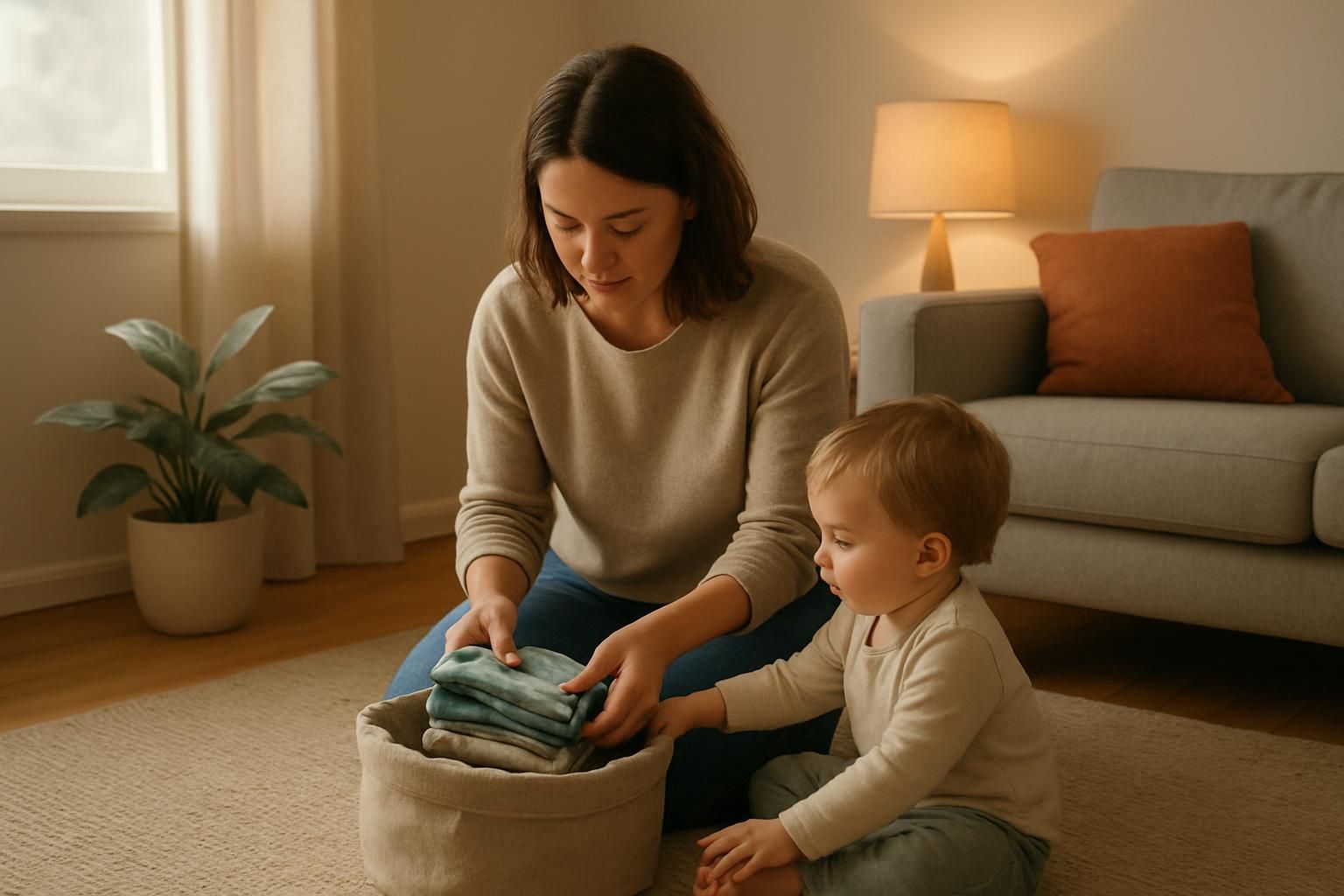
The best potty training gift for a toddler is one that gives the parent a plan and the child a reason to keep going, not a novelty gadget. A complete kit, the basic kit a parent needs anyway (a potty, step stool and seat reducer), or a picture book about the potty tend to get used. Most children are dry in the daytime in about a week when there is a plan behind it.
Singing potties, musical flush gadgets and character pants bought before a child is ready are the ones that end up at the back of the cupboard. They are fun to unwrap but they do not help a parent get through the actual week, and a child who is not ready will not use them any more happily because they play a tune.
Why most potty training presents end up unused
A gift bought before a child is ready quietly becomes a reminder of pressure rather than a help. The parent feels they ought to start because the present is sitting there, and the child picks up on that tension long before they understand why.
A frightened child is not ready, and no gift changes that. The honest move is to build familiarity with the potty or toilet first and start properly later, not to push on because a box arrived. If this sounds like your situation already, when your toddler refuses to sit on the potty covers what to do instead of pushing through.
Novelty items that entertain rather than teach can work against the point entirely. The goal is for the child to notice their own body’s signal and act on it, not to be distracted by lights and sound effects at the exact moment that matters.
Gifts that leave the parent to invent a system from nothing also tend to stall around day two. A potty on its own, with no plan for what to do when the child refuses it or has three accidents in a row, asks a tired parent to improvise a method under pressure.
Gifts for the child, gifts for the parent: which is which
Some gifts are for the child to open and enjoy: a picture book about the potty, their own pants in a print they chose, small rewards, or a potty they picked out themselves in the shop. These make the idea feel exciting rather than imposed.
Other gifts are really for the parent, even when they are wrapped for the child: a day-by-day plan, a way to track when this particular toddler actually needs to go, and somewhere to ask a question on a bad day. These are usually the ones that change how the week actually goes, because they remove the guesswork at 7am on day three when nothing is working.
If you are shopping for a toddler’s own family rather than a gift, what is actually worth buying sets out the full kit a parent needs to have ready, separate from the fun extras. For gifts that lean more playful, which potty training toys actually help is worth a look before buying anything with a tune attached.
A second birthday, a baby shower for a second child, or grandparents wanting to help in a concrete way are all good occasions for this kind of gift. It works especially well when the parent is clearly thinking about starting soon but has not yet got round to buying the basics.
What to buy, what to skip: a quick comparison
Here is how the common options compare, kept short because most of this gets read on a phone in a shop queue.
Some links in this article are affiliate links, which means we earn a small commission if you buy through them. It costs you nothing extra and does not affect what we recommend.
| Gift | What it does | Worth it as a gift? |
|---|---|---|
| Potty Training Box | Day-by-day plan, tracking schedules, reward cards and a year of community support | Yes, best for a parent who is about to start |
| A potty, such as the My Carry Potty | Somewhere to sit for the first few days | Yes, almost always needed |
| A step stool, such as the Dreambaby 2-Up Step Stool | Helps a toddler reach the toilet and sink unaided | Yes, useful well beyond the training week |
| A toilet seat reducer, such as the Nuby Beginner’s Potty Training Seat | Makes the adult toilet feel safe once the potty stage ends | Yes, once the move to the toilet starts |
| A picture book about the potty | Gets the idea familiar before training begins | Yes, especially given early |
| A separate reward system | Sticker cards and small prizes for a parent running their own plan | Yes, if they already have a method in mind |
| Singing or novelty potty | Entertains but does not teach the signal | No, usually sits unused |
Choosing between the first three rows often comes down to the toilet itself. If you are unsure whether a potty or the adult toilet with a reducer suits the family better, potty or a toilet seat reducer walks through the decision.
Is a potty training kit a good gift?
A potty training kit is a good gift when the family is actually close to starting, because it gives the parent a plan rather than another object to find space for. The Potty Training Box, for example, contains a training programme booklet that coaches the parent through each day, 7 instruction cards as a daily reminder, 6 compliment cards, 14 tracking schedules, 20 sticker cards, 100 animal stickers, 20 poo stickers, and two certificates, one for wees and one for poos, plus a year of access to a community where questions get answered daily.
This follows what is called the Potty Training Box Method: three days spent mostly at home, because that is when a child learns the most, followed by short outings, moving the child from potty to toilet while they learn to say themselves when they need to go.
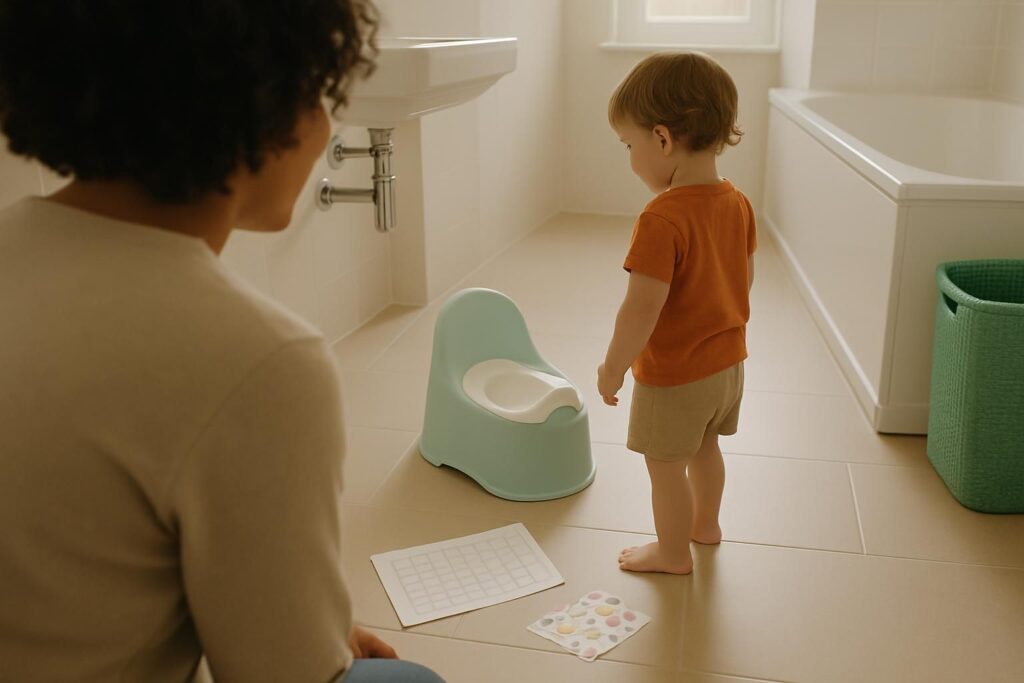
The sticker cards are not a single fixed card but a set of four sizes used in order, starting at three squares, then five, seven and nine. The reward comes quickly at three squares so the child sees that it works, then becomes rarer as they improve, so the habit outlasts the stickers rather than stopping the moment they do.
It is reusable for a younger sibling later on, and refill sticker sets can be bought separately as a reward system rather than buying the whole box again. Be honest with whoever you are buying for: some children manage daytime dryness in three days, others take two or three weeks, and night-time dryness is separate and comes later on its own. For the fuller picture of what a week like this actually involves, how the full week actually goes and do potty training kits actually work are both worth reading before you decide.
Rewards that actually motivate a toddler (and what to avoid)
Small, immediate rewards that can be repeated often beat one big prize promised at the end. A toddler’s sense of time is short, so the gap between going on the potty and the praise or sticker needs to be short too.
Stickers work well because a child can see the progress building in front of them on the card, square by square. That visible, growing record is more motivating than a reward they cannot track themselves.
Praise the child for telling you they need to go, not only for the wee or poo itself. The point of the whole approach is the child taking the initiative, so the moment worth celebrating loudly is the one where they said something before being asked.
Watching that together is a nice way to mark a first success, especially if your own child has just managed one.
A parent who wants to run their own version rather than follow a full programme can still use a separate reward system with small, rising rewards, bought on its own. The warning worth keeping in mind either way is that a reward which stays the same size forever can become the only reason the child goes at all. A rising sticker card, where the prize gets rarer as the child improves, avoids that by design.
Books about the potty that children actually ask for again
A picture book works as a gift because the child sees a character go through it before anyone asks them to try it themselves. That takes the pressure off the actual moment, since the idea already feels familiar and a bit exciting rather than new and strange.
Pirate Pete’s Potty, Ready for My Potty and All Aboard the Toilet Train! are all titles that get asked for again at bedtime, which is exactly the point: little and often, well before the training week itself, rather than pulled out mid-standoff when the child is already upset.
For a story written specifically to sit alongside a training week, Noa’s Potty Training Journey (Ebook) follows a child through the same stages a toddler will go through themselves, and works well read once or twice before starting.
Buying for someone else’s child: how to not get it wrong
Ask the parent first whether they are actually planning to start, because timing matters far more than which gift you choose. A beautifully chosen potty handed over before the family has decided to begin can land as pressure rather than help.
Avoid anything that implies the child should already be out of nappies, especially around a birthday where other children their age might already be dry. Most families begin somewhere between two and three years old, within a wider window of roughly 18 months to 4 years, and there is no useful comparison to be made between toddlers on this.
A gift that keeps until the family is ready is almost always the safer choice: a book, a potty, or a kit will still be useful in six months, whereas a gift that assumes a timeline the parent has not chosen rarely helps. The same approach is used successfully with children who are autistic, have Down syndrome, or are non-verbal, usually over a longer stretch and by reading the child’s own signals rather than waiting to be told, so there is no reason to hold off buying something thoughtful just because a child’s pace looks different.
Not sure whether they are ready yet? Check first
Common signs a toddler is ready include staying dry for longer stretches, telling you after they have gone (and later, before), showing interest in the toilet or potty, being able to pull their own pants up and down, and following a simple one-step instruction.
If you are weighing up whether now is the right time for a gift like this, the readiness quiz gives a quick, honest answer based on what the child is actually doing, not their age alone.
A child who is not showing these signs yet should simply wait rather than start, and that is true whatever gift is sitting in the cupboard waiting for them.
Frequently asked questions
What is a good potty training gift for a 2 year old?
A picture book about the potty, a potty the child helps choose, or a complete kit that gives the parent a day-by-day plan are the gifts most likely to get used at this age. Avoid anything with lights, sounds or a single big prize at the end, since these tend to distract from the point rather than support it.
Is a potty a good birthday present for a toddler?
Yes, provided the family is close to starting potty training, since a potty bought well before anyone is ready often just sits unused. It works best alongside something that gives the parent a plan, rather than as a stand-alone object with no system behind it.
What rewards work best for potty training?
Small, immediate rewards that can be repeated often, such as stickers, work better than one large prize saved for the end. A sticker card that grows from a small number of squares to a larger one as the child improves keeps the reward meaningful without becoming the only reason the child goes.
Should I give sweets for using the potty?
Small food rewards are something many parents choose to use, but they are not required and stickers or praise work just as well for most toddlers. Whatever reward is chosen, it helps to praise the child for telling you they need to go, not only for the result itself.
What can grandparents buy to help with potty training?
A picture book about the potty, a set of cotton pants, or a complete kit such as the Potty Training Box are all practical gifts that genuinely help rather than just adding to a cupboard of unused items. It is worth asking the parent first whether the family is actually planning to start soon, since timing matters more than the gift itself.
Is a potty training kit worth it as a gift?
A potty training kit is worth it when the family is genuinely close to starting, because it gives the parent a day-by-day plan and the child a visible reward system rather than another single object to figure out alone. It is less useful as a gift given well before a family has decided to begin, since the value comes from using it during an actual training week.
Ready for the next step?
The Potty Training Box holds the day-by-day programme this article is built on: tracking charts that show you when your child actually needs to go, instruction cards for each day, and a reward system that tapers off on its own.
This article was written with AI assistance and checked by Dustin van de Sande.