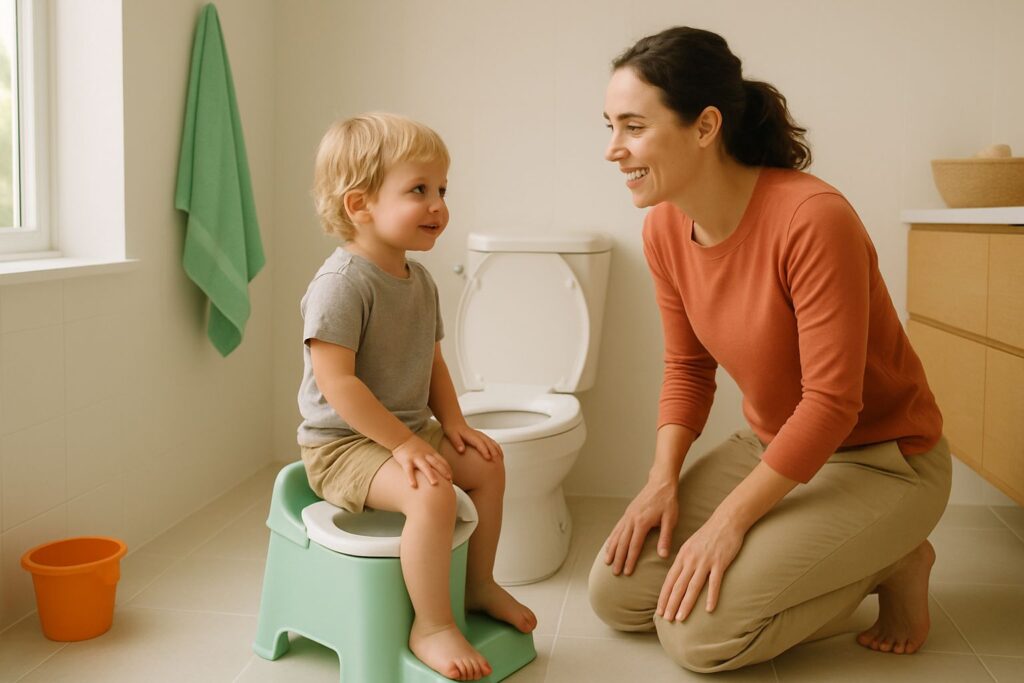

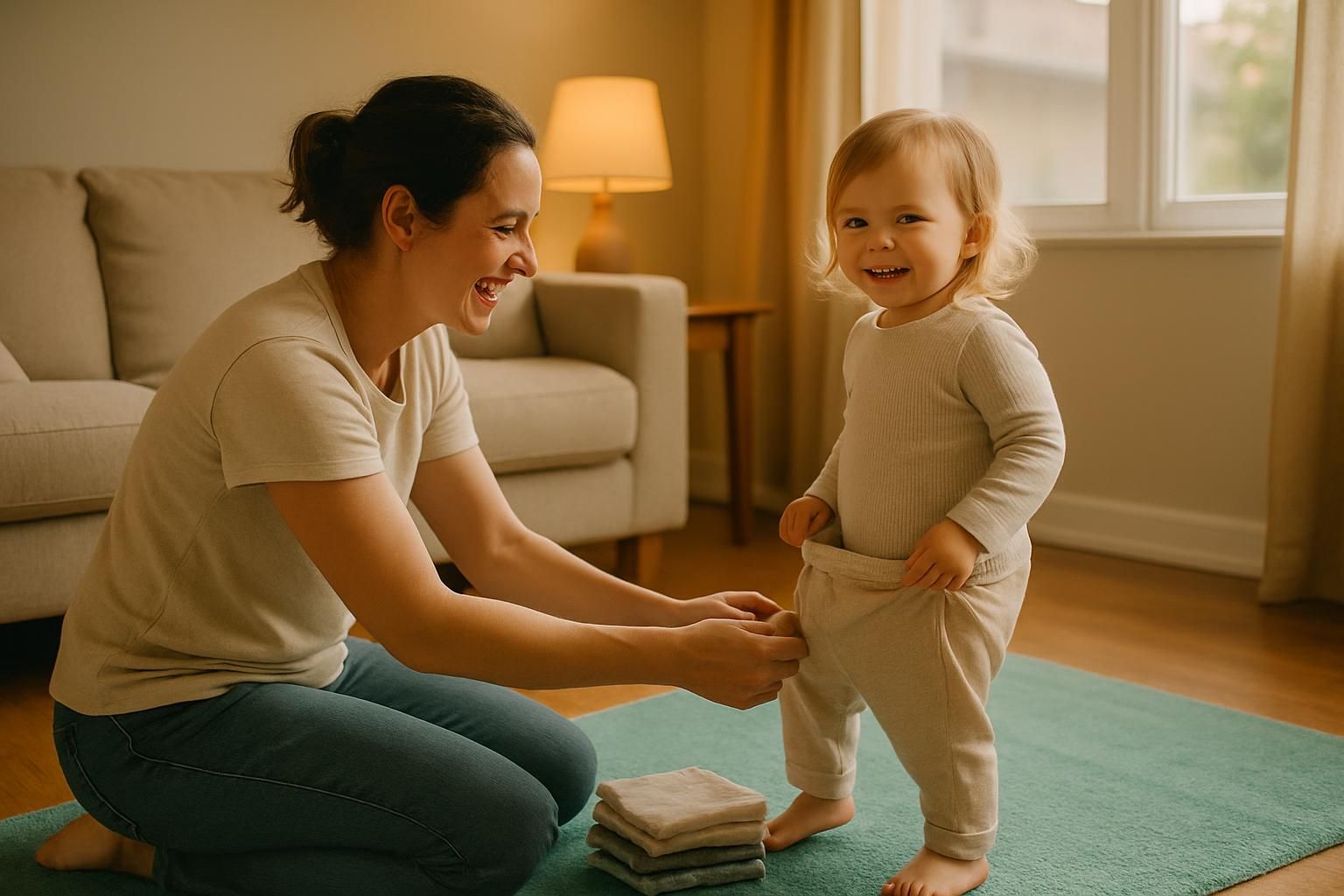
Potty training a girl follows the same plan as for a boy: readiness signs decide when you start, not age or sex. The only girl-specific differences are sitting from day one, wiping front to back, and dressing her in something she can pull down herself. Many parents notice readiness signs a little earlier in girls, but the spread between individual children is far bigger than any average.
One genuine practical difference is that a girl does not need standing practice the way some boys do later on, so there is one less step to teach. Beyond that, the plan, the pace and the reasoning behind it are identical whichever child you are training.
What age do most girls start potty training?
Most children, girls and boys alike, begin somewhere between 18 months and 3 years old, with many parents starting around 2 to 2 and a half. It is a wide window because children reach readiness at very different paces, and that spread is normal rather than a sign of anything being wrong.
Age is a clue, not a trigger. A child who is genuinely frightened of the potty or the toilet is not ready yet, whatever her age says. The honest move is to build familiarity gently, let her watch you or an older sibling, and start properly a few weeks or months later.
The signs your daughter is ready
Readiness shows up as a cluster of small behaviours rather than one big moment. Look for a longer dry spell between nappy changes, interest in the toilet or in watching others use it, telling you after a wee (and eventually before), managing to pull pants up and down herself, following a simple two-step instruction, and disliking the feel of a wet or dirty nappy.
A child who is not especially chatty yet can still show you she is ready. Watch for a particular posture before a wee, going quiet or still, or wandering off to hide somewhere to do a poo. These are just as reliable as words, you just have to watch for them rather than listen.
If you are not sure whether what you are seeing adds up to readiness, a short online check can help you decide before you commit to a week at home.
For the fuller list, with more detail on each sign, the readiness signs checklist goes through each one in turn.
What to have ready before day one
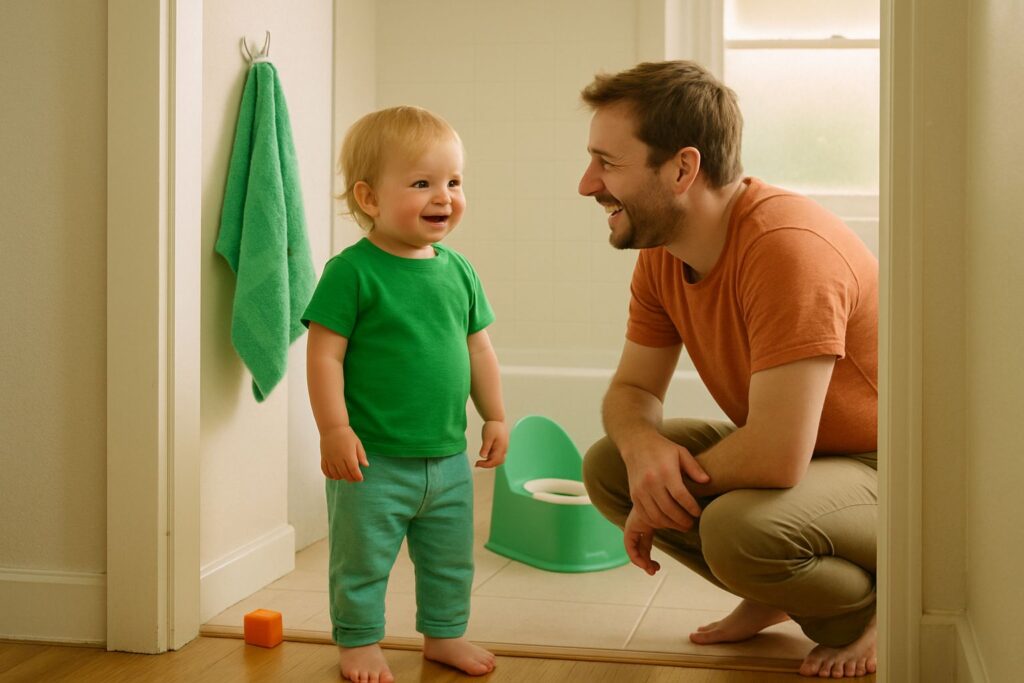
Before you start, it helps to have a potty ready for the first few days, a toilet seat reducer and step stool for when she moves to the big toilet, at least 15 pairs of cotton pants, something to protect the mattress and sofa, a few small rewards, and pull-ups for sleeping. None of this needs to be elaborate, just within reach.
Cotton pants matter more than they sound like they should. Ordinary cotton pants let her feel wetness properly, which is exactly the point, while padded training pants dull that feeling and slow down what she is learning to notice.
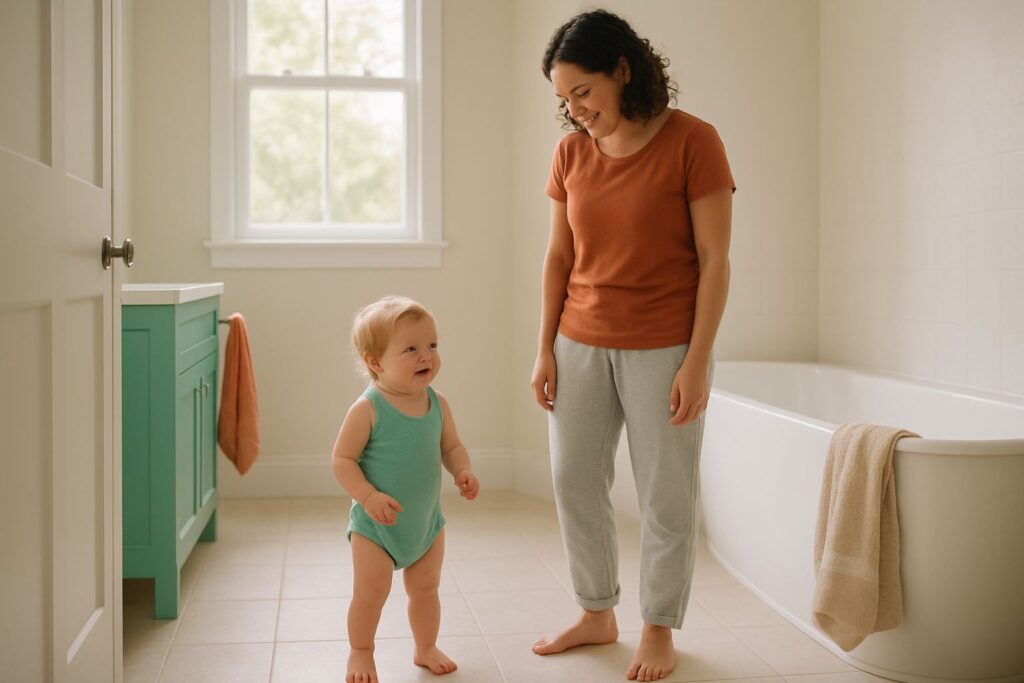
Dress her in things she can manage herself: a dress, a skirt, or leggings she can pull down in one go, rather than dungarees, tights or anything fiddly with buttons. Speed matters more than style for this particular week.
Some links in this article are affiliate links, which means we earn a small commission if you buy through them. It costs you nothing extra and does not affect what we recommend. A simple travel potty, a sturdy toilet seat reducer and a two-step stool cover what most families need to get set up.
How the week actually runs, day by day
The first three days are spent at home, because that is when she will learn the most, with short outings following once things settle. The Potty Training Box Method runs this as a day-by-day programme over about a week, moving from potty to toilet and working towards the moment your daughter tells you herself that she needs to go, rather than you asking her on a schedule.
Instead of offering the potty at fixed intervals, you ask her directly: will you tell me when you need a wee? There are a few sensible exceptions where you still prompt her yourself: before and after sleep, and before you leave the house, both during the training week and long after it is finished.
Day 4 or 5 is usually the hardest day, not day 2. By then she is often bored of being asked the same question over and over, and some resistance creeps in. The fix is to ask less often and hand her more of the responsibility for noticing herself, which is exactly what the Potty Training Box Method is working towards anyway.
Be honest with yourself about timeframes. Most children are dry in the daytime in about a week, some manage it in three days, and others need two or three weeks. Both ends of that range are completely normal.
| Day | What you do | What to expect |
|---|---|---|
| 1 to 3 | Stay home, nappy off, ask her to tell you when she needs a wee, with the usual exceptions around sleep and leaving the house | Lots of accidents, some success, she is working it out |
| 4 to 5 | Ask less, give her more responsibility, keep exceptions around sleep and outings | Often the wobbliest days, some pushing back |
| 6 to 7 and beyond | Short outings, toilet instead of potty, fewer prompts | More self-initiated trips, fewer accidents |
For the whole plan laid out start to finish, the complete UK potty training guide covers every stage in more depth.
How to read her timing instead of watching the clock
A tracking schedule records when your daughter actually goes, so you learn her pattern rather than imposing one on her. It is not a timetable you follow, it is a record you build from watching her.
A proper tracking schedule has these columns: time of drinking, time on the toilet, a nothing-happened yes or no, wee marked green for success or red for an accident, poo marked the same way, and a notes column for anything else.
When you fill it in, let her drink her cup in one go rather than in sips spread over the morning. That is the only way you will actually see the link between how much she drank and how long it took before she needed a wee, which is the whole point of the column.
You can also keep the schedule by hand if you would rather not buy anything to get started: there is a free printable tracking chart you can print at home and fill in yourself.
Teaching her to wipe front to back (and when she can do it herself)
Wiping front to back keeps bacteria from the bottom away from the urethra and vulva, which is why it is worth teaching properly rather than leaving her to work it out alone. Say the direction out loud every single time to begin with, so the words become part of the habit.
Teach it in three stages: you wipe and narrate what you are doing, then you wipe hand-over-hand together, then she tries it herself while you check. Most children need an adult’s help to wipe thoroughly well past the end of potty training, often right into the early school years, so do not expect this one to be finished quickly.
Make sure she is sitting back far enough on the toilet seat with her feet properly supported on a step stool. A child whose feet are dangling tenses up rather than relaxing, which makes both weeing and wiping harder.
If she complains of stinging, burning, or needing to wee very frequently, that is a question for your GP or health visitor rather than something to work through on your own.
Poo, holding on and the wobbly days
It is completely normal for poos to lag behind wees by days or weeks. Weeing is a quick thing to get used to; sitting still long enough for a poo asks more of a toddler, physically and emotionally.
Keep her feet supported and do not rush her. Pressure and hovering tend to make a child hold on harder, which is the opposite of what you want. A simple picture book read together on the toilet can take the pressure off, such as Pirate Pete’s Potty, which some families use to make the whole business feel ordinary rather than a performance.
If she seems to be regularly withholding stool, straining, or you notice hard or infrequent poos, that is worth raising with your GP or health visitor rather than managing alone, since ongoing constipation needs proper attention.
Accidents are part of learning, not a setback. A short, matter-of-fact response works best: name what happened, help her change, and move on without making her feel she has done something wrong. If it happened right after she sat for ages without a wee, a notes column on the tracking schedule is a better place for that detail than a telling-off.
If an accident has just happened and you want something gentle to watch together straight after, this can help settle things back down.
Rewards that keep working after the stickers stop
The sticker cards in the box come in four sizes: 3, 5, 7 and 9 squares, used in that order. The first reward comes quickly at three squares so she sees straight away that it works, and then gets rarer as she improves, so the habit is what lasts rather than the stickers themselves.
Alongside the sticker cards there are 100 animal stickers and 20 poo stickers to fill them with, compliment cards for the days you have run out of ways to say well done, and a wee certificate and a poo certificate for her to keep once she has got the hang of each.
Praise the trying as much as the result. A child who sat on the toilet and tried, even if nothing happened, deserves the same warmth as one who succeeded, because that is what keeps her willing to try again tomorrow.
If you would rather put together your own reward system instead of using the cards that come with the box, the Reward System Girl is a separate option built around the same idea of small rewards that grow rarer over time.
What is in the Potty Training Box, and what it adds
The Potty Training Box is a physical box built around a training programme booklet that coaches you through the week step by step, alongside instruction cards, compliment cards, 14 tracking schedules and the sticker system already described, a wee certificate and a poo certificate, plus a year of access to a community where experts answer your questions seven days a week.
What it adds over a free article is a plan that spells out what to do on day one, day two and day three, including the days that go badly, plus people to ask when they do. It is reusable for a younger sibling later on, and refill sticker sets can be bought separately when you need more.
When to stop and try again later
If an attempt genuinely is not working, stopping and leaving it a few weeks before trying again is part of the method itself, not a failure on your part or hers. Pushing on through distress tends to make the next attempt harder, not easier.
Signs it is too soon include real fear or distress around the potty or toilet, constant resistance that does not ease after the first day or two, or a child who seems to be holding on rather than learning. The signs to wait a little longer goes through this in more detail if you are weighing up whether to pause.
The same approach works successfully with girls who are autistic, have Down’s syndrome, or are not yet talking. It usually takes longer and relies more on reading her signals than on waiting to be told, but the underlying plan does not change.
Night-time dryness is a separate matter that comes later on its own, often well after daytime training is settled, and the box does not promise a timeline for it.
Frequently asked questions
What age should I start potty training my daughter?
Most children, girls included, are ready somewhere between 18 months and 3 years old, with many parents starting around 2 to 2 and a half. Age is only a rough guide though: what matters more is whether she's showing the actual signs of readiness, such as staying dry for longer and telling you after a wee. If she's frightened of the potty or toilet, it's worth waiting a little longer even past this age range.
Is it easier to potty train a girl than a boy?
Not really easier, just slightly different. Many parents notice readiness signs a little earlier in girls, but the spread between individual children is far bigger than any average, so it tells you little about your own daughter. The practical differences are small: she sits from day one rather than needing to learn standing too, and you'll be teaching her to wipe front to back.
How do I teach my toddler to wipe front to back?
Say the direction out loud every time you wipe her yourself at first, so the words and the action link up in her mind. Move to doing it hand-over-hand together, then let her try herself while you check the result. Most children need an adult's help to do this properly well into the early school years, so keep checking even once she seems confident.
How often should I put my little girl on the potty?
Rather than a fixed interval, ask her directly whether she'll tell you when she needs a wee, with a few sensible exceptions around sleep times and before you leave the house. A tracking schedule helps you learn her actual pattern by recording when she goes, which you then use to understand her signals rather than to impose a timetable on her.
My daughter will wee on the potty but not poo, what do I do?
This is very common and usually just means poo takes longer to get comfortable with than wee does. Keep her feet supported, avoid rushing or hovering, and let her take her time without pressure. If she seems to be holding poos in regularly or straining, mention it to your GP or health visitor rather than managing it alone.
How long does potty training a girl usually take?
Most children are dry in the daytime in about a week, though some manage it in as little as three days and others need two or three weeks. Night-time dryness is separate and usually comes later on its own. If an attempt isn't working after a few days, stopping and trying again a few weeks later is a perfectly normal part of the process.
Ready for the next step?
The Potty Training Box holds the day-by-day programme this article is built on: tracking charts that show you when your child actually needs to go, instruction cards for each day, and a reward system that tapers off on its own.
This article was written with AI assistance and checked by Dustin van de Sande.