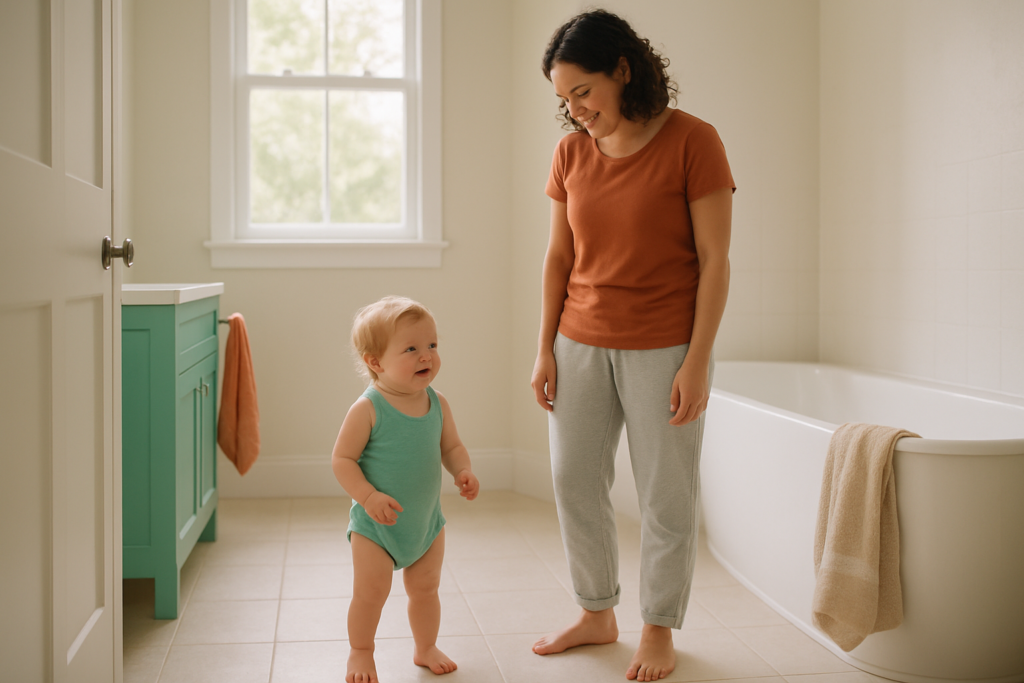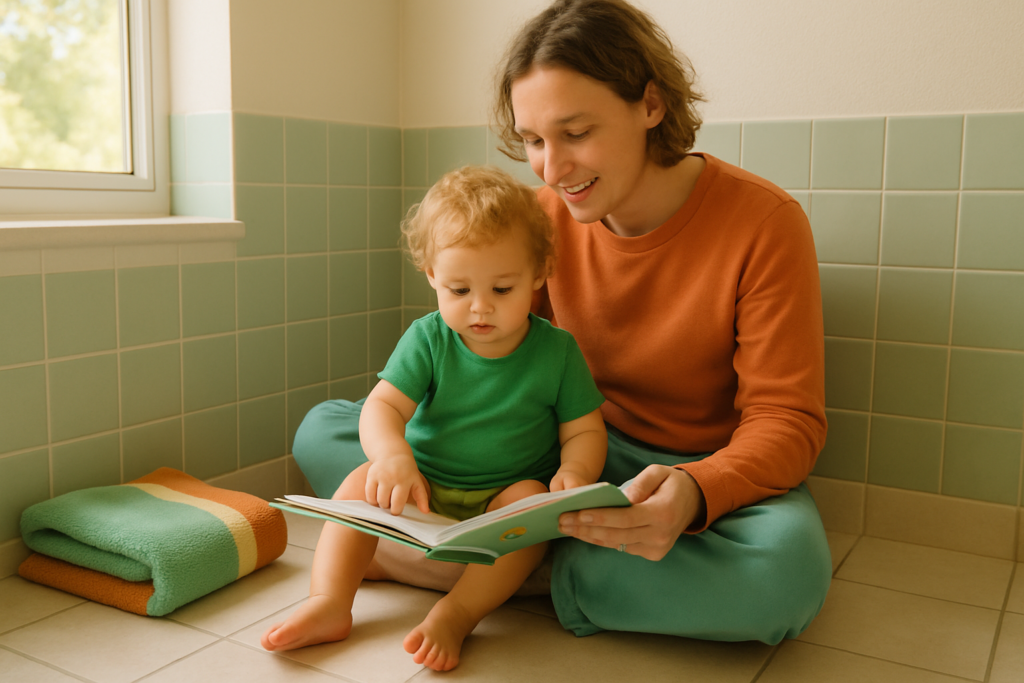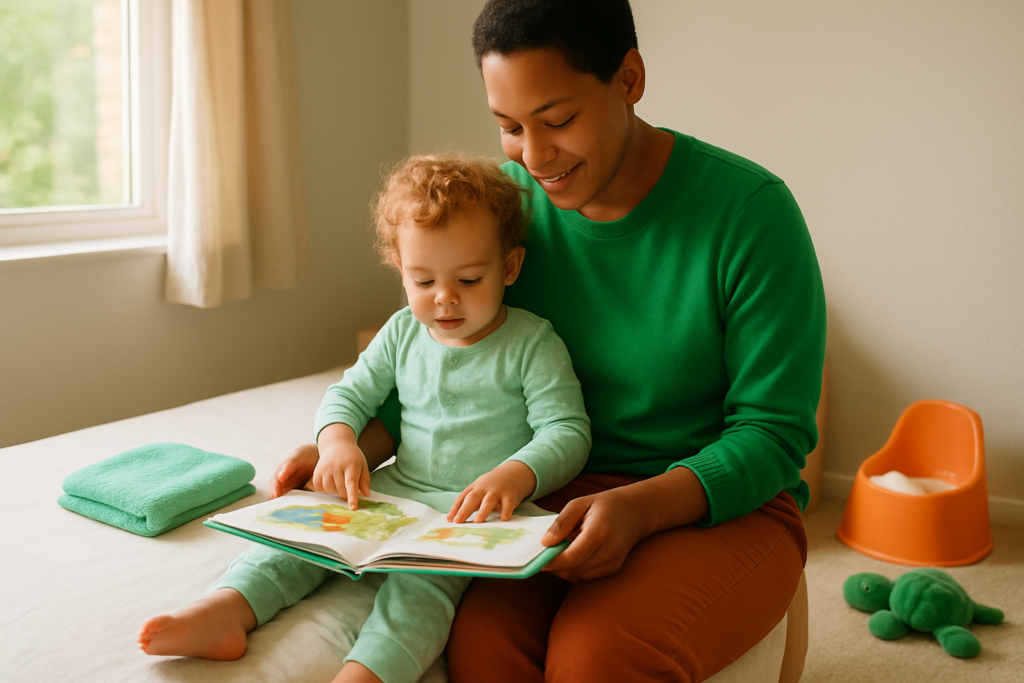

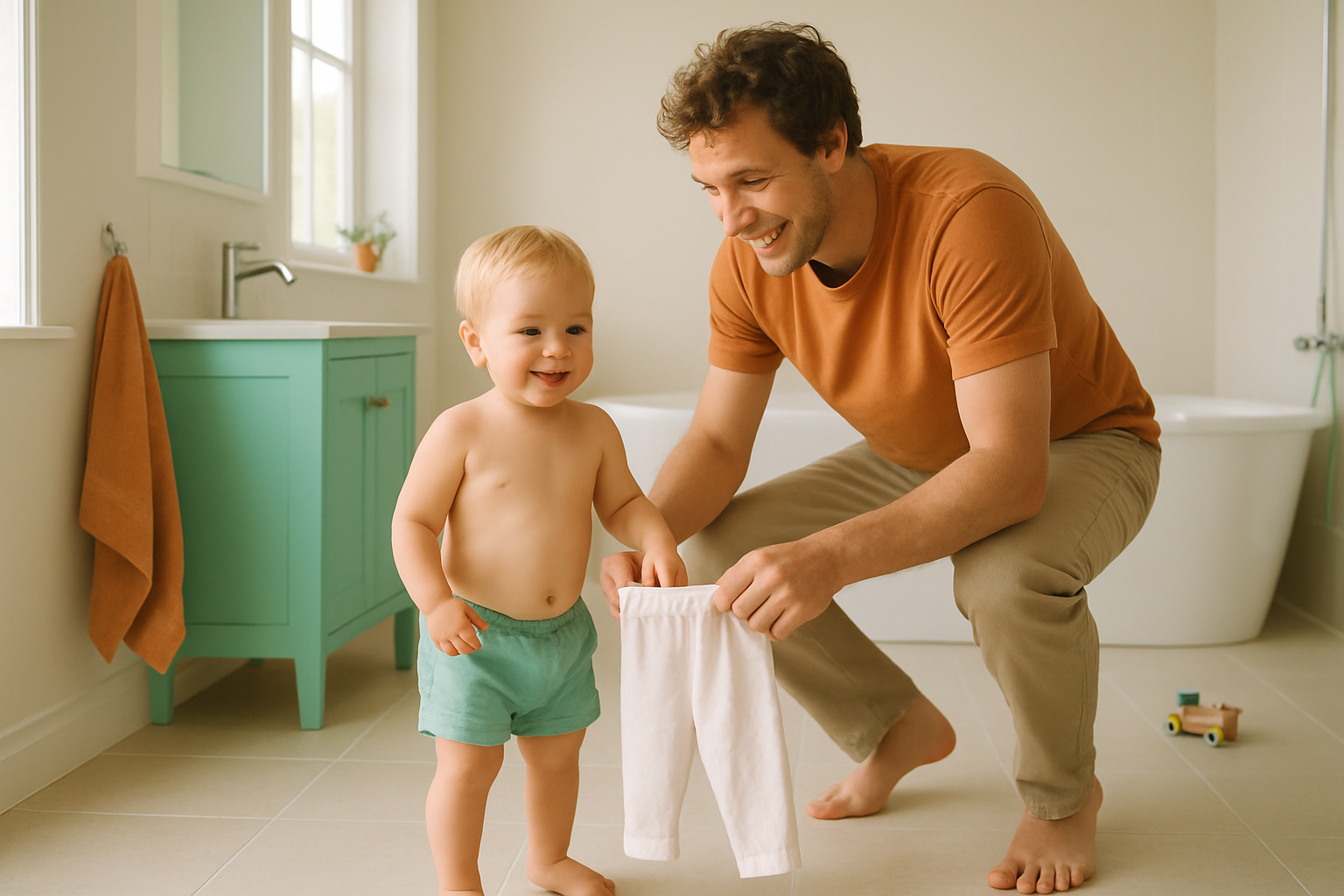
Skip potty training pants and daytime pull-ups. Take the nappy off and put your child straight into ordinary cotton pants from day one, keeping pull-ups only for sleep. Padded pants absorb wee away from the skin, so your child feels less and learns to notice the signal more slowly than in plain cotton underwear.
This is the approach the Potty Training Box is built around: nappy off, cotton pants on, and the first three days spent at home where a few accidents cost nothing but a wash. The method works towards one moment: your child telling you they need to go, rather than you guessing on a timetable. Cotton pants are what makes that moment possible, because your child can actually feel it happening.
What are potty training pants, and what do they actually do?
There are really three options on the market, and it helps to be honest about what each one is for. Disposable pull-ups, the type sold under brand names and supermarket own labels, work exactly like a nappy: they pull up like pants but absorb wee the same way, so your child stays dry to the touch whatever happens underneath.
Reusable padded training pants, the sort sold by cloth nappy brands, do the same job with washable fabric instead of a disposable core. They cut down on landfill waste, but from your child’s point of view they still soak the wee away from the skin, in exactly the way that slows down learning.
Plain cotton pants, the ordinary kind you’d buy in a multipack, do the opposite. They let the wee through and your child feels it straight away, wet and uncomfortable, for as long as it takes you to notice and change them. That discomfort is not a flaw. It is the entire feedback loop that potty training runs on.
| Type | What your child feels | When to use it |
|---|---|---|
| Disposable pull-ups | Dry, same as a nappy | Sleeping only, or an unavoidable long journey |
| Reusable padded training pants | Mostly dry | Rarely, for the same exceptions as pull-ups |
| Plain cotton pants | Wet, straight away | From day one, all daytime |
Why does your child learn faster in cotton pants?
Your child learns to use the toilet by connecting a physical urge with a physical consequence, and cotton pants are what makes that connection immediate. Wet fabric against the skin tells them straight away that something just happened, and over a few days that feeling starts to arrive earlier, as a warning rather than an announcement.
Padded pants blunt that signal on purpose, which is exactly what they’re designed to do at other times in a child’s life. During training, though, a child who barely notices they’ve had an accident has nothing to link back to the urge that came a moment before. The lesson gets muddier, and it tends to take longer to land.
The whole aim of potty training, done this way, is your child telling you they need to go before it happens, not you catching every accident quickly. That only starts once your child is tuned in to their own body, and cotton pants are what keeps that tuning switched on.
This is also why the first three days are spent at home. You’re not trying to avoid every accident, you’re creating a low-stakes place for them to happen so your child can learn from them without an audience. Accidents in week one are part of how this works, not a sign it isn’t working, and the day-by-day plan for the week is built around exactly that rhythm.
If an accident has just happened and you want a calm way to talk your child through it together, this is worth watching straight after.
When are pull-ups genuinely useful?
Pull-ups earn their place at two moments: sleep, and the odd unavoidable exception. For naps and overnight, keep your child in a pull-up, because night-time dryness is a separate physical skill that develops later and isn’t something any daytime training method promises on a set timeline.
A long car journey in the first few days, or a trip you genuinely cannot postpone, is a fair reason to use one too. When you do, say so to your child in plain terms, something like ‘we’re using nappy pants for the car today, and then we’re back to your pants at home.’ Naming it as an exception, rather than quietly slipping back into them, keeps the daytime rule clear in your child’s mind rather than blurred.
What doesn’t earn pull-ups a place is a difficult afternoon. It’s tempting to reach for one the moment things go wrong twice in a row, but keeping pull-ups on in the daytime tends to stretch the whole process out, because it puts the padding back between your child and the feedback they’re trying to learn from. A few wet pairs of pants in one day is not a setback, it’s the method working.
How many pairs of pants do you actually need?
Have at least fifteen pairs ready before you start, more if you can manage it. Accidents cluster heavily in the first day or two of training, and the last thing you want on day one is to be standing over the washing machine at four in the afternoon wondering whether to just put a nappy back on.
Let your child pick them out themselves where you can, ideally with a print or colour they’re excited about. Pants your child chose are pants they don’t want to get wet, which gives you a small extra nudge towards noticing the urge in time.
Go for plain cotton, not anything lined or padded, and make sure they’re roomy enough for your child to pull up and down without help. Part of what you’re teaching this week is independence around the toilet, and pants that fight a toddler’s hands work against that.
Alongside the pants, it helps to have a few other things ready before day one: a potty, a toilet seat reducer, a step stool, something waterproof for the mattress and sofa, a handful of small rewards, and pull-ups for sleeping. None of it needs to be elaborate, just within reach so you’re not searching for it mid-accident.
What about the mess? Protecting your floors and sofa without padding your child
A waterproof cover on the mattress and sofa, and a towel folded into the car seat and pushchair, deal with almost everything that matters. These take five minutes to put in place once and then you can stop thinking about them for the rest of the week.
For the first three days, many parents let their child go bare bottomed or in pants only around the house, which makes the sensation of weeing even more obvious and gives you one less layer to worry about laundering. Keep a cloth and a spare pair of pants within reach in every room your child spends time in, so a mess is a thirty second job rather than a production.
None of this needs a stern face. A puddle on the kitchen floor in week one is not a crisis, it’s information: it tells you roughly how long after a drink this happens, which is exactly what the tracking schedule is there to capture. Wipe it up, change the pants, and carry on.
When do you stop using pull-ups altogether?
Stop using them in the daytime from day one of training, not gradually. There’s no version of this method where you ease off pull-ups over a week, because the padding and the learning work against each other for as long as it’s there.
Naps come next, once your child is consistently waking up dry from them, which usually follows daytime dryness by some weeks rather than days. Night-time is separate again, and is generally led by your child waking up with a dry nappy on their own rather than by anything you actively train. It’s common for this to take considerably longer than daytime dryness, sometimes months, sometimes longer, and that’s normal rather than a sign anything has gone wrong.
If bedwetting is still happening regularly past around six years old, that’s a conversation for a GP or health visitor rather than something to keep waiting out at home.
How do you know your child is ready to lose the nappy?
Common signs include staying dry for a couple of hours at a stretch, showing an interest in the toilet or potty, being able to pull pants up and down, and telling you, in words or gestures, that a nappy is wet or dirty. None of these need to be present perfectly or all at once, but a child with none of them yet is usually one to wait a little longer with.
A child who is frightened of the potty or the toilet is not ready, whatever else is ticked off the list above. The honest move there is to build familiarity gently, perhaps letting them sit on it clothed, or watching you use the toilet, and to start the actual training later once the fear has eased.
If you’d rather answer this with something more specific than a general list, there’s a short readiness test built for exactly this question.
Most children are dry in the daytime within about a week of starting, some in as little as three days, others taking two or three weeks. A child who shows none of the readiness signs yet is usually better off waiting than being pushed through a week that isn’t going to stick.
What to do on the day the pants stop working
The hardest day of potty training is usually day four or five, not day two. By then your child is often tired of being asked ‘do you need a wee?’ every twenty minutes, and that repeated asking can trigger genuine resistance, refusals, and accidents that feel like a step backwards.
The fix is usually to ask less, not more. Instead of prompting constantly, hand more of the responsibility back with something like ‘will you tell me when you need a wee?’ and see what your child does with the space. The exceptions worth keeping are before and after sleep, and before you leave the house, since those are the moments it still makes sense to check in rather than wait and hope. For a fuller look at why this particular day trips people up and what to do differently, why day 4 or 5 is usually the hardest goes through it in more detail, and potty training tips that actually work covers practical ways through a rough patch generally.
Whatever you do, don’t put the daytime pull-ups back on as a fix for a bad afternoon. It undoes the exact feedback loop you’ve spent four days building. If you’re wondering whether fixed times on the potty might make this easier, it’s worth reading about the 10-10-10 rule and how it compares with reading your own child’s signals instead of a clock.
If, after a genuine attempt, it truly isn’t working, the method’s own advice is to stop and leave it a few weeks before trying again, rather than grinding on through daily battles. That pause is a normal part of the process, not a failure of it, and most children get there on the next attempt without any drama.
What the Potty Training Box gives you that a packet of pants does not
Pants alone tell you nothing about what to actually do on a Tuesday afternoon when your toddler has had three accidents and you’re out of ideas. The Potty Training Box is a day-by-day booklet that walks you through the week, alongside seven instruction cards for a quick daily reminder and six compliment cards for when you’ve run out of ways to say well done.
It also includes fourteen tracking schedules, which record the time your child drinks, the time they’re on the toilet, whether nothing happened, and wees and poos marked green for a success or red for an accident, with a notes column alongside. It works best when your child drinks a whole cup in one go rather than in sips through the day, because that’s what lets you actually see the gap between drinking and needing the toilet, which is the whole point of the schedule. If you want to try this part before deciding on anything else, there’s a free tracking chart you can print and use straight away.
The box uses twenty sticker cards in four sizes, three, five, seven and nine squares, used in that order, so the reward comes quickly at the start and then gets rarer as your child improves, which is what makes the habit outlast the stickers rather than stop dead when they run out. There are a hundred animal stickers and twenty poo stickers alongside them, plus a wee certificate and a poo certificate for your child at the end, and a year of access to a community where the brand’s experts answer questions seven days a week.
What the box does not contain is training pants of any kind, and that’s deliberate rather than an oversight. The training works with the nappy off and ordinary cotton underwear, because that’s what lets your child feel what’s happening, so training pants would work against the exact thing the box is built to teach.
The method can also be followed without the box, and if you’d like a ready-made reward system without the full week’s programme, there are separate reward systems sold on their own. For the fuller picture of what’s in the box and how the week is structured day by day, what is in the Potty Training Box and how it works day by day covers it in full.
Frequently asked questions
Is it worth getting potty training pants?
For daytime training, no, plain cotton pants work better because your child feels wet straight away and learns from it faster. Padded training pants, disposable or reusable, absorb the wee away from the skin, which slows down the very feedback your child needs to notice the urge next time.
Should a toddler wear pants when potty training, or go bare-bottomed?
Either works for the first day or two at home, since bare skin makes the sensation even clearer, but most parents move to cotton pants quickly because it's more practical for the rest of the week. What matters is avoiding padded pants during the day, not whether pants are worn at all.
Can you use pull-ups at night if your child wears pants in the day?
Yes, and this is exactly how the method is meant to work. Daytime dryness and night-time dryness are two separate skills that develop at different times, so pull-ups for sleep alongside cotton pants in the day is the normal setup, not a compromise.
How many pairs of pants do you need for potty training?
At least fifteen pairs, ready before you start. Accidents cluster heavily in the first day or two, and having enough pants means you're never stuck waiting on the washing machine or reaching for a nappy out of convenience.
When should you stop using pull-ups?
Stop using them in the daytime from day one of training, not gradually. Keep them for naps until your child is consistently waking up dry, and for night-time separately, which is often led by dry mornings rather than by the training itself and can take considerably longer.
Do reusable training pants work better than disposable pull-ups?
Not for daytime training, no. Reusable padded training pants cut down on waste compared with disposables, but they still absorb wee away from the skin in the same way, so they slow down learning during the day just as disposable pull-ups do.
Ready for the next step?
The Potty Training Box holds the day-by-day programme this article is built on: tracking charts that show you when your child actually needs to go, instruction cards for each day, and a reward system that tapers off on its own.
This article was written with AI assistance and checked by Dustin van de Sande.