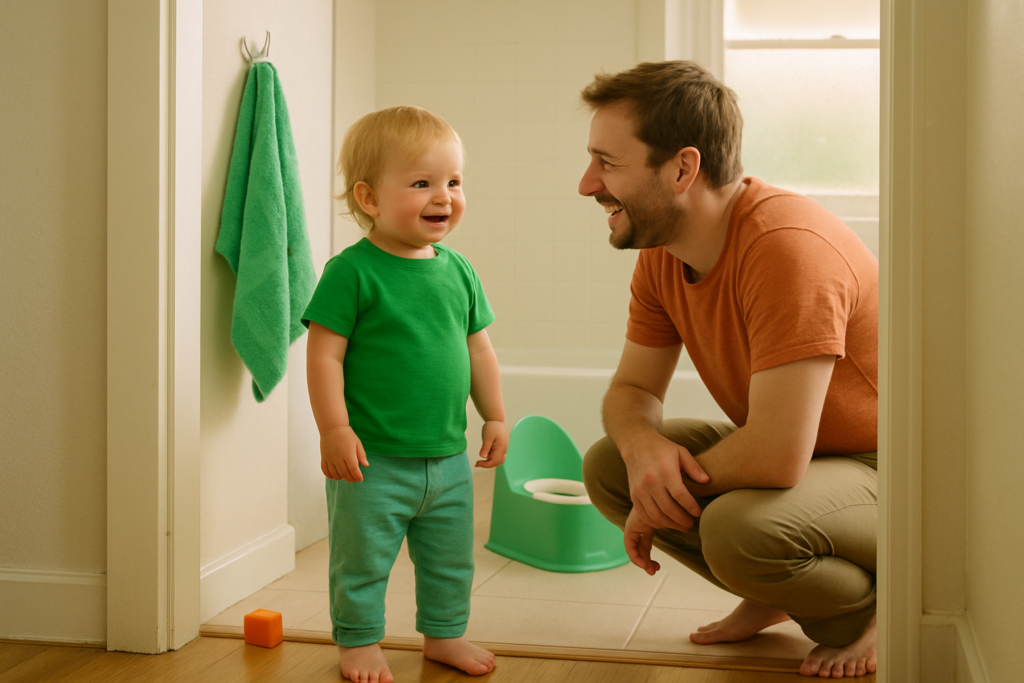


A kit of gear alone does not train a child: a potty, seat reducer and step stool help, but only a method with a day-by-day plan and a way to read the child’s signals does the actual work. Most children are dry in the daytime within about a week, some in three days, others two or three weeks, and a child who is not ready should simply wait.
It helps to split the word ‘kit’ in two before you buy anything. Gear is what you get ready around the house: a potty, a toilet seat reducer, a step stool, cotton pants, something to protect the mattress and sofa, and a few small rewards. A method is the part that tells you what to actually do with all of that, on day one, on the day it goes wrong, and on the day after that. Plenty of bundles sell you only the first half and call it a system.
What is usually in a potty training kit, and what does the gear actually do?
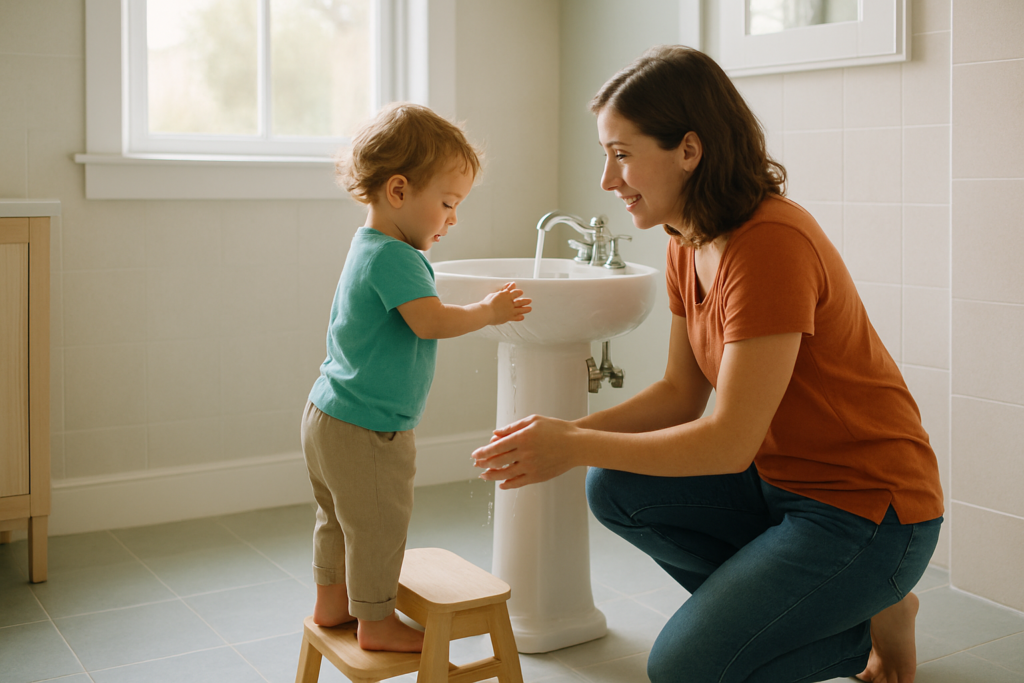
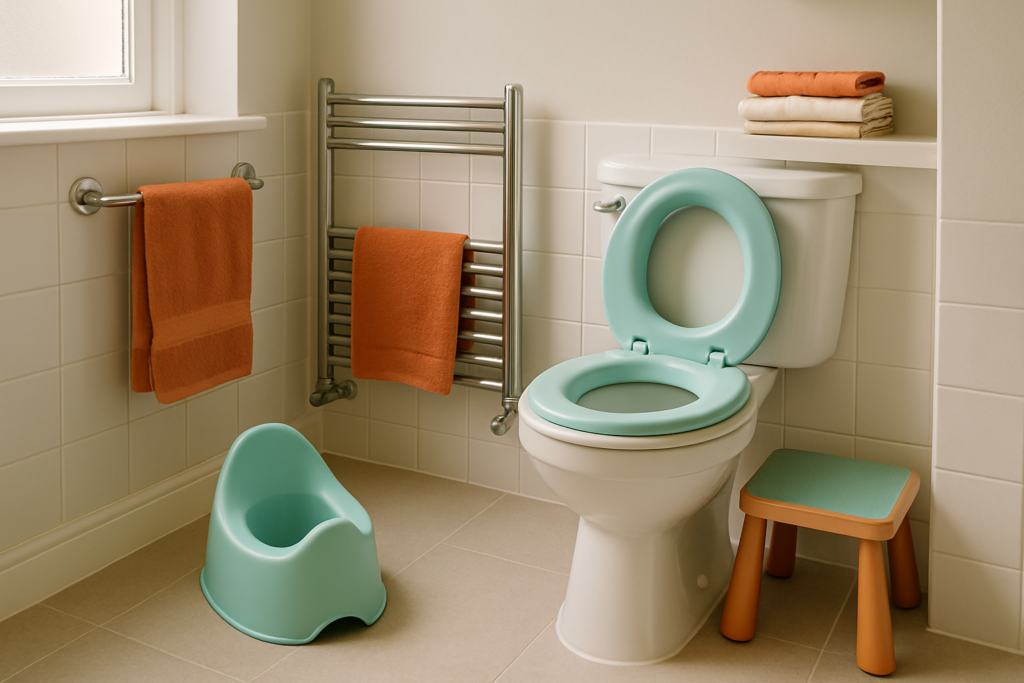
Most gear-only kits contain a potty, a seat reducer for the big toilet, a step stool, some flushable wipes, a printed reward chart, and occasionally a picture book. Each item genuinely earns its place: a low potty is less frightening than a full-size toilet, a seat reducer stops a small child feeling like they might fall in, and a step stool gives them the independence to climb up and wash their hands afterwards.
None of that tells a parent what to do differently on day two than day one. A potty does not know when your child last drank a full cup of water, and a laminated chart does not tell you what to say when your three-year-old refuses to sit down on day four. That is the part gear cannot do on its own.
Whatever method a family follows, a parent generally needs to get a few things ready beforehand: a potty, a toilet seat reducer, a step stool, at least fifteen pairs of cotton pants, something to protect furniture and the mattress, a handful of small rewards, and pull-ups for sleeping. If you are working out what is actually worth buying before you start, that list is the sensible place to begin. Training itself works best with the nappy off and ordinary cotton pants rather than padded training pants, because a child needs to actually feel wet to learn from it.
Gear bundle or method-led box: what is the actual difference?
A gear-only bundle is one-off plastic with instructions that amount to ‘sit them on it’. A method-led box gives you a programme booklet that coaches you through the week, daily instruction and compliment cards, tracking schedules to learn this child’s own timing, a set of rising sticker cards, and a year of access to a community where questions get answered seven days a week.
That is what the Potty Training Box actually contains. It is a box, not a potty and not an app: the plan and the way of reading your child’s signals is what it supplies. It is also reusable for a second child later, and refill sticker sets are sold separately if you use up the ones that came with it.
| What you get | Gear-only bundle | Method-led box |
|---|---|---|
| Day-by-day plan | None | Booklet plus daily instruction cards |
| Way to spot this child’s timing | None | Fourteen tracking schedules |
| Reward structure | One fixed chart | Sticker cards that grow from 3 to 9 squares |
| Help on a bad day | None | Year of community access |
| Reusable later | Usually not | Yes, refills sold separately |
What are you really paying for when you buy a method, not a potty?
You are paying for a plan that names what to do on day one, day two and day three, including the days that go badly, and for someone to ask on the evening it falls apart rather than scrolling forums at nine o’clock. That structure is often the difference between a parent giving up on day four and pushing through to the end of the week.
It is worth being honest about the limit here too. A method helps a family stay consistent and notice patterns they would otherwise miss, but it does not promise a result. A child who genuinely is not ready will not be trained by any kit, however good the plan inside it.
How do the tracking schedules work, and why are they not a toilet timetable?
The tracking schedule is not a fixed toilet timetable: it is a record of when this particular child actually goes, so a parent learns that child’s own timing and signals rather than imposing a schedule on them. Each card has columns for the time of drinking, the time on the toilet, a ‘nothing happened’ yes or no, wee marked green for success or red for an accident, poo marked the same way, and a notes column.
Filling it in works best if the child drinks a cup in one go rather than sipping it across the afternoon. That way you can actually see the link between how much went in and how long it takes before they need to go, which is the whole point of the card.
The aim is to reach the point where your child tells you themselves. Rather than repeatedly offering the potty, the question the method uses is simply ‘will you tell me when you need a wee?’, asked less and less often as the days go on. Two moments stay fixed for good, both during training and afterwards: before and after sleep, and before you leave the house. A free printable version of this tracking schedule is available at the potty training tracking chart page, for parents who want to try it before deciding on anything else.
Why do the sticker cards go 3, 5, 7 then 9 squares?
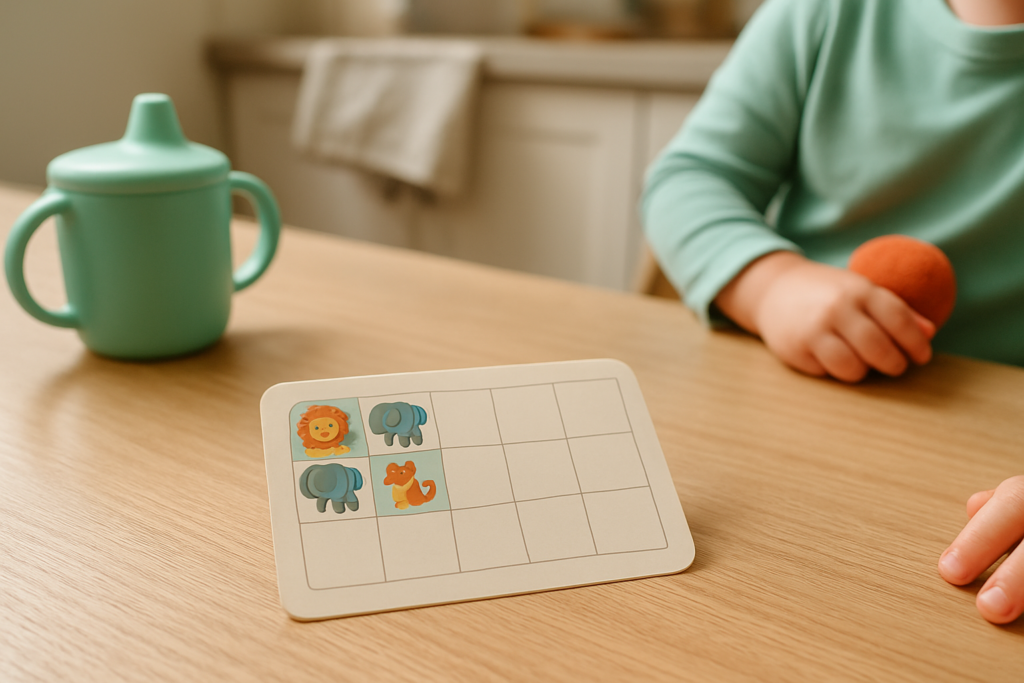
The sticker cards use four sizes in that order because the reward needs to come quickly at first, at three squares, so a small child sees straight away that the new habit works. As they improve, the cards grow to five, then seven, then nine squares, so the same amount of praise gets rarer over time and the habit outlasts the stickers instead of stopping dead the day the chart runs out.
A single fixed reward chart can and does work for some children, and plenty of parents report success with exactly that on forums and in parenting groups. Where it tends to fall down is later in the week, once the novelty has worn off and the reward stops feeling special. If your child is not particularly motivated by presents or praise at all, it is worth reading my child is not bothered about rewards before assuming the method will not suit them. Parents who want to build their own version of a rising reward system, rather than follow a set plan, can also buy an extra reward system on its own.
What does a week with a method-led kit actually look like?
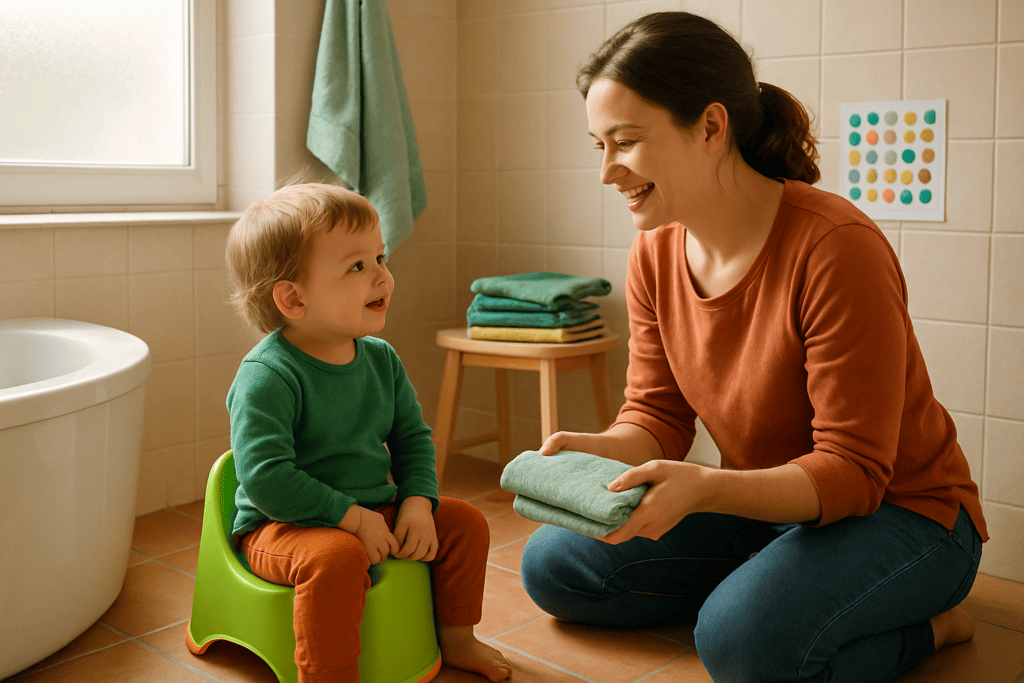
The first three days are spent at home, because that is when a child learns the most, with short outings introduced once things are going reasonably well. The potty is mainly used for these first three days, after which most families move on to the toilet with a seat reducer and step stool.
Day four or five is usually the hardest day, not day two. By then the novelty has worn off and children commonly get bored of being asked ‘will you tell me when you need a wee?’ over and over, and push back against it. The fix is to ask less often and hand more of the responsibility to the child themselves, rather than repeating the question more.
Accidents through the week are treated as part of learning, never as failure, and poo on the potty is often the last piece to click into place; if that is where your family is stuck, when your toddler will not poo on the potty covers it directly. Night-time dryness is a separate skill that tends to come later on its own, and no responsible method promises it as part of a week of daytime training. NHS guidance notes that bedwetting overnight remains common well into the primary school years, which is one reason it is treated as a separate matter from daytime training rather than something a week-long method sets out to fix.
When is a potty training kit not the answer?
A child who is genuinely frightened of the potty or the toilet is not ready to start. The sensible response is to build familiarity first, through books, toys or simply sitting near it clothed, and try the actual training later; a box or kit will keep perfectly well until then.
If an attempt does not work, the method’s own advice is to stop and leave it a while before trying again, rather than pushing through a week that clearly is not landing. A later regression, once a child has been dry for a while, is worth talking through calmly, but it is not a reason to start a fresh training programme from scratch.
Some things are outside what any kit or article should try to solve. Constipation, stool withholding, recurring urinary infections, developmental concerns, or bedwetting that continues past around age six all belong with a GP or health visitor rather than a training plan. NHS guidance describes signs of readiness appearing from around eighteen months onwards, with most children gaining full control of their bladder and bowel somewhere between three and four years old, which is exactly why bedwetting overnight is treated as a separate matter from daytime training.
Structured, signal-reading methods like this one are also used successfully with autistic children, children with Down syndrome, and non-verbal children, usually over a longer stretch than a week and by watching the child’s own cues closely rather than waiting to be told in words.
Is a kit worth it, or can you do this yourself?
What a child genuinely needs is consistency, a few clear days to focus on it, and a parent who is noticing patterns rather than guessing. A free printable version of the tracking schedule is available at the potty training tracking chart page for any parent who wants to start recording their own child’s timing straight away.
What a method-led kit adds on top is the day-by-day plan for the days that go badly and people to ask when they do, which is the part that is hardest to build for yourself on a difficult evening. If you want to understand the reasoning behind the structure in more depth before buying anything, why the Potty Training Box works goes into that. For a lighter option than the full box, the Potty Training Box Digital Handbook covers the same method in a shorter, downloadable form. Parents who want to run the rewards their own way, rather than follow a set plan, can also buy an extra reward system on its own. Whichever route a family takes, a few well-chosen potty training toys can make the whole week feel less like a chore for a toddler and more like something they want to join in with.
Frequently asked questions
Does the 3 day potty training method really work?
Most children take closer to a week to become dry in the daytime, though some especially ready toddlers manage it in three days. Results depend heavily on the child's readiness rather than the exact number of days, so a slower pace is not a sign of failure.
Is a potty training kit worth the money, or can I just buy a potty?
A potty on its own is just equipment; it does not tell you what to do on a hard day or how to read your child's signals. A kit is worth it if it contains an actual day-by-day method and a way to track your child's own timing, rather than just plastic and a printed chart.
What is a red flag for potty training?
A child who seems frightened of the potty or toilet, or who is showing no interest in the process at all, is generally not ready yet. Pushing ahead anyway tends to create more anxiety than progress, so building familiarity first and starting later is usually the better route.
Is age 3 too late to potty train?
No. Many children are trained around age three, and readiness varies widely from child to child rather than following a strict deadline. What matters more than the exact age is whether the child is showing the usual signs of being ready to start.
How often should I put my child on the potty during training?
Rather than sitting a child down on a fixed schedule, the more effective approach is to record when they actually go using a tracking schedule, then gradually let them tell you themselves. Offering the potty a lot in the first days gathers useful information, but it is scaffolding that comes down as the child starts signalling on their own, aside from fixed moments like before and after sleep and before leaving the house.
Do potty training kits work for autistic or non-verbal children?
Structured, signal-based methods have been used successfully with autistic children, children with Down syndrome and non-verbal children, though the process usually takes longer than a single week. Progress in these cases tends to come from carefully reading the child's own cues rather than waiting for them to say it in words.
Ready for the next step?
The Potty Training Box holds the day-by-day programme this article is built on: tracking charts that show you when your child actually needs to go, instruction cards for each day, and a reward system that tapers off on its own.
Sources
This article was written with AI assistance and checked by Dustin van de Sande.