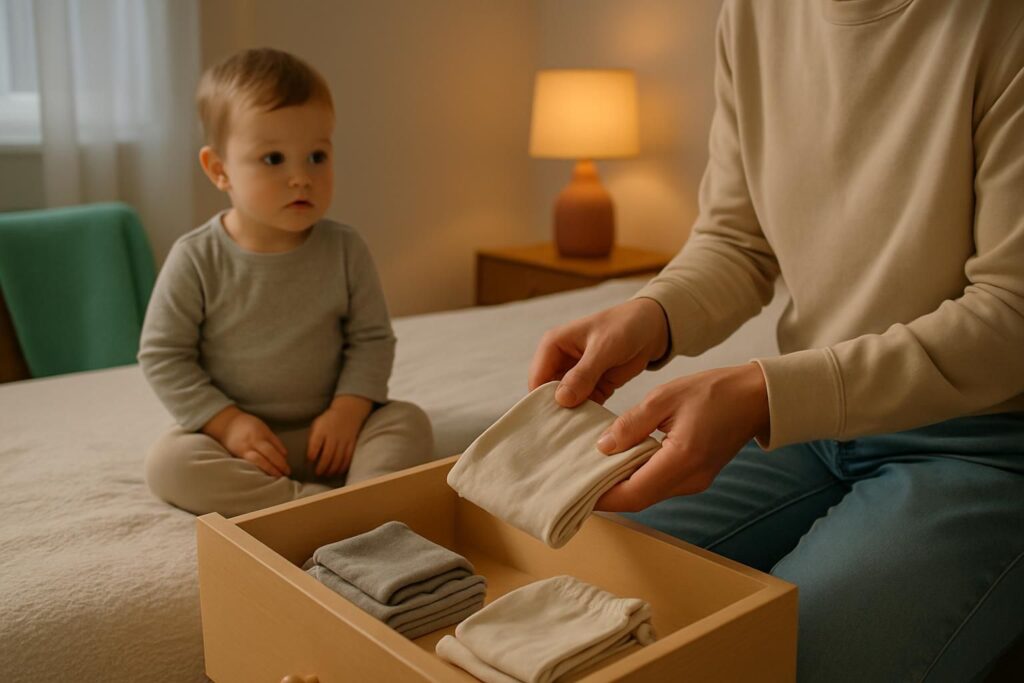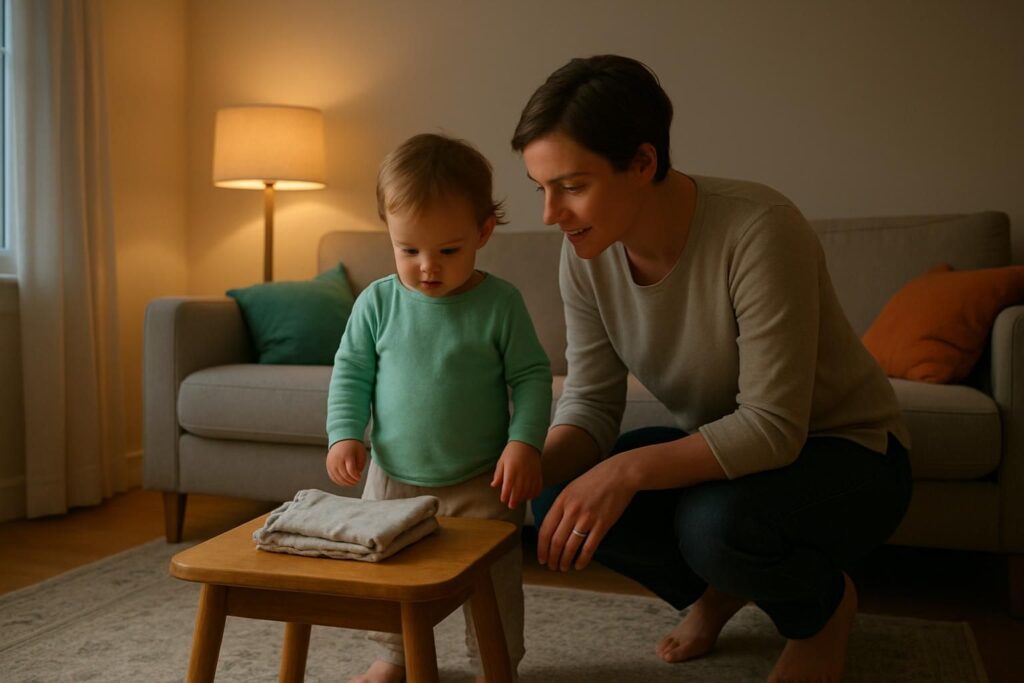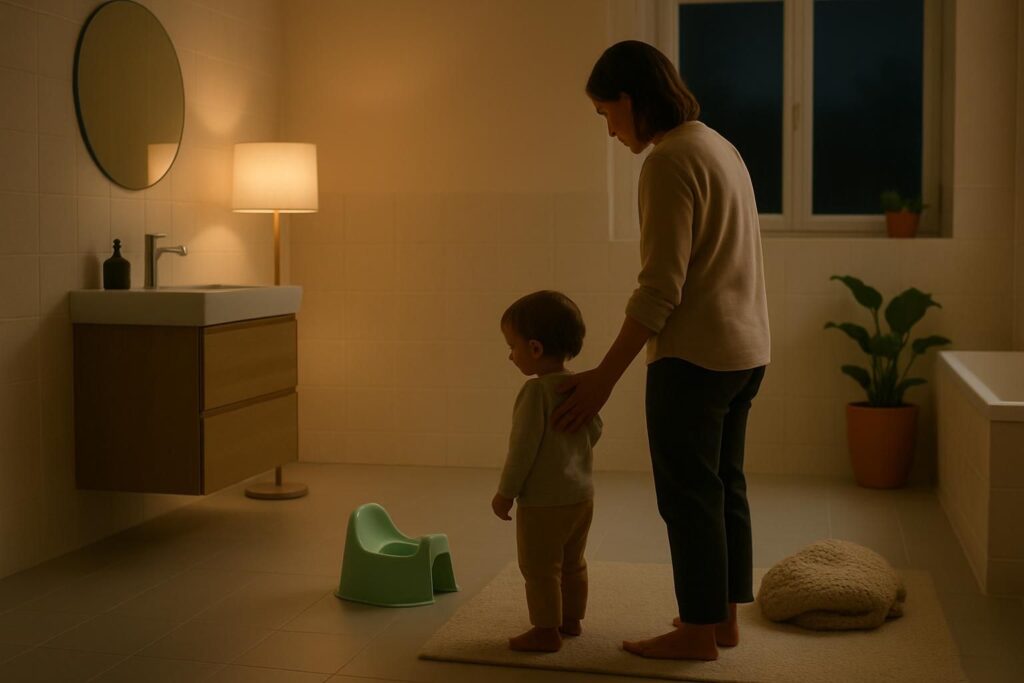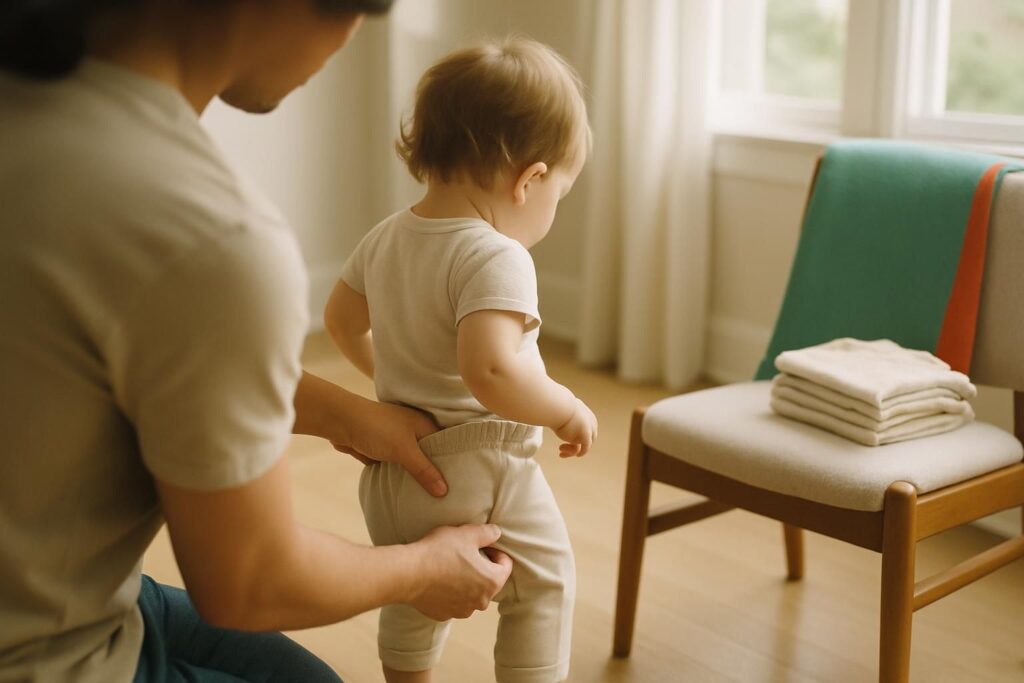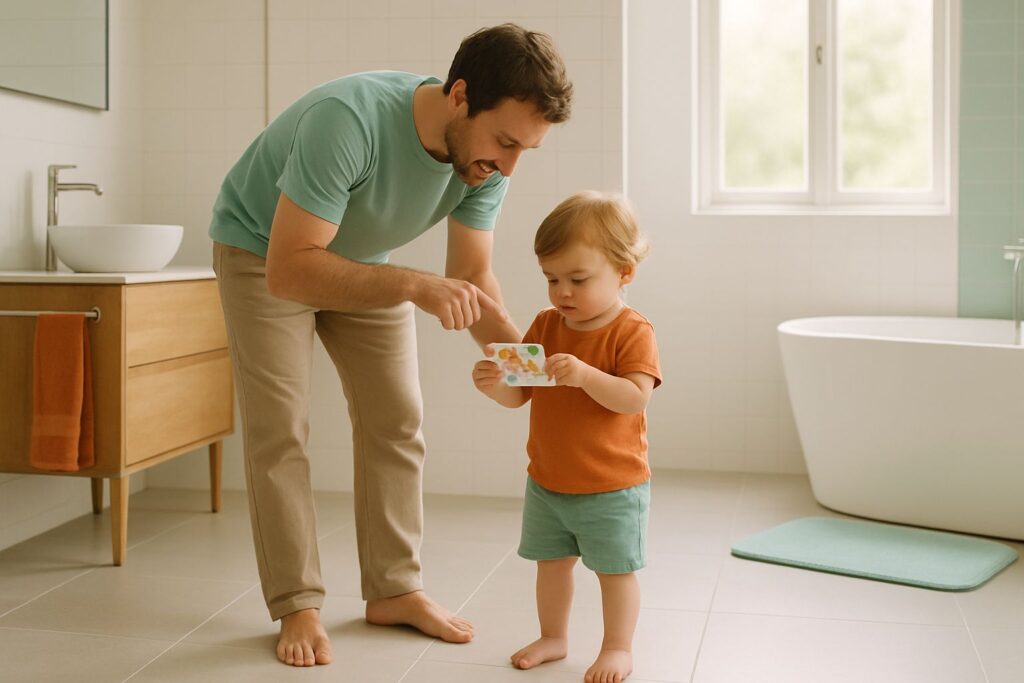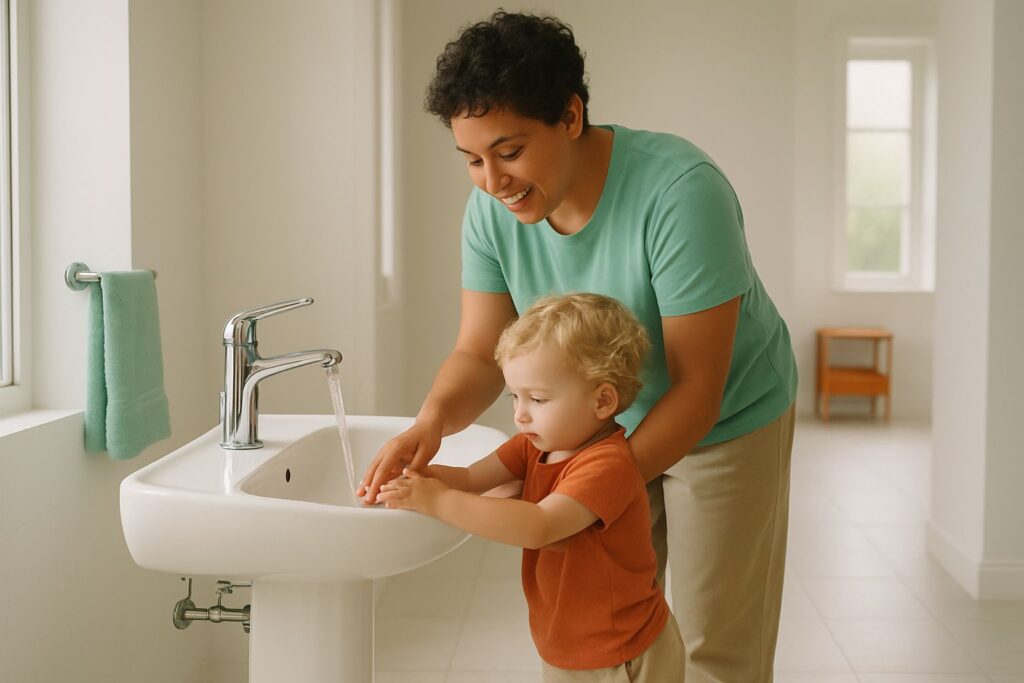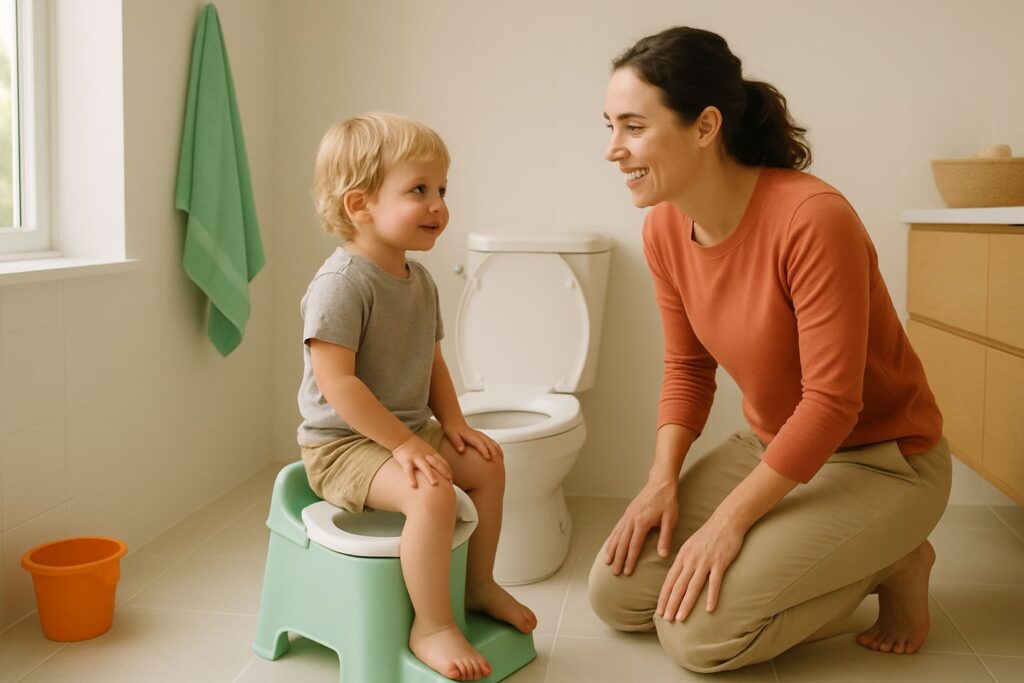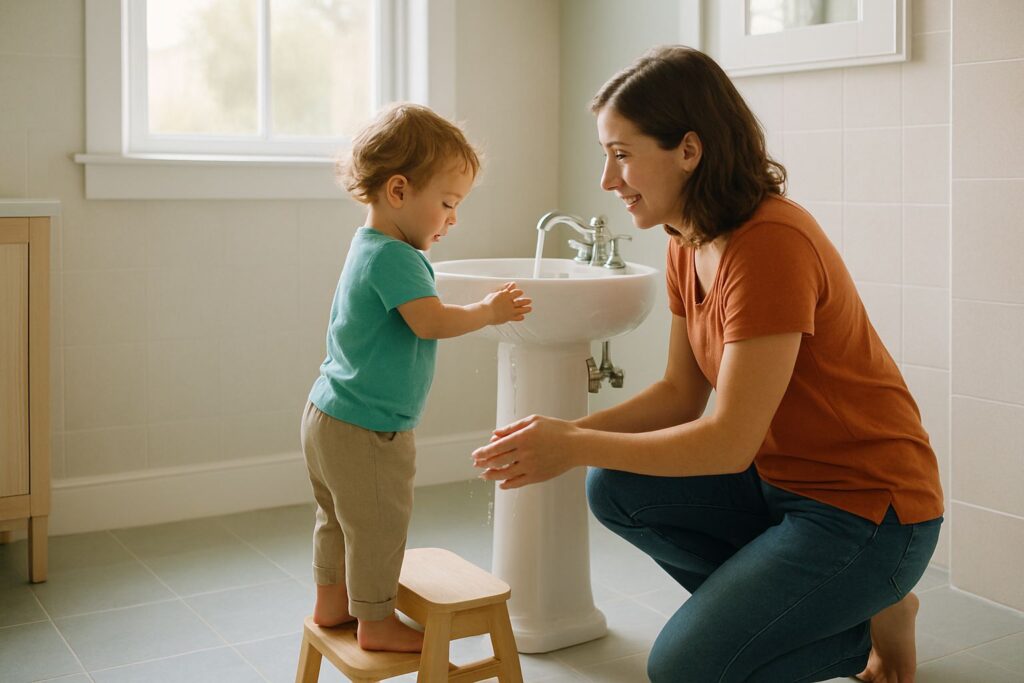


A week of potty training starts with three days at home: nappies off, potty out, with every wee and poo recorded so you learn this child’s pattern. Days four to seven move to short outings and from potty to toilet. Most children are dry in the daytime by the end of the week, though some take two to three weeks, and night-time dryness comes separately and later.
What does potty training in a week actually involve?
The first three days are spent at home, because that is when a child learns the most, with no nappies during waking hours and pants worn instead. Short outings follow from around day four, and by the end of the week many children are asking to use the potty or toilet themselves rather than being asked.
Most children are dry in the daytime in about a week. Some manage it in three days, others need two to three weeks, and that is a normal spread rather than a sign anything has gone wrong. Night-time dryness is a separate skill that develops later, often much later, and no honest method promises it as part of a week’s daytime plan.
The goal of the week is not a parent watching the clock. It is a child who says they need to go. Everything in a positive, reward-based approach, moving from potty to toilet as confidence grows, works towards that moment rather than replacing it with a routine imposed from outside. You can read more on why a week of potty training is positive parenting if the pace feels like it might mean pressure on the child. It does not have to.
Is my child ready to start this week?
The NHS notes that almost all children can be potty trained somewhere between 18 months and two and a half years old, though the right age varies from child to child. There is no single correct week to start, only a right one for the child in front of you.
ERIC, the children’s bowel and bladder charity, describes potty training as part of a child’s overall learning and development rather than a switch that flips on a birthday. Practical signs worth watching for include staying dry for an hour or two at a stretch, telling you after a wee or poo has happened, showing interest in the potty or toilet, pulling their own pants up and down, and following a simple two-step instruction.
A child who is frightened of the potty or the toilet is not ready yet. The honest response is to build familiarity first, perhaps by sitting on the potty fully clothed or reading together nearby, and to start the week properly once that fear has eased. It is also worth avoiding the middle of a house move, a new baby’s arrival, or the first weeks of a new nursery, since a child managing one big change rarely has room for another.
Potty training is used successfully with children who are autistic, have Down syndrome, or are non-verbal, though it commonly takes place over a longer stretch and relies more heavily on reading the child’s own signals than on them telling you in words.
What do I need to have in the house before day one?
Before day one, it helps to have a potty (mostly useful for the first three days), a toilet seat reducer, and a step stool so the child can climb up and reach the sink afterwards, all ready in the house before you begin.
You will also need at least 15 pairs of pants, since laundry runs faster than expected in the early days, something to protect the mattress and sofa, a handful of small rewards, and pull-ups kept aside for sleep only. The NHS advises stopping nappies, including pull-ups, during the day once you begin, which is why pull-ups are worth keeping strictly for bedtime rather than as a daytime backup. Simple food and plenty to drink help too, since more fluid in means more chances to notice and celebrate a wee.
What a plan on paper cannot give you is a script for the moment things go wrong, or someone to ask when they do. The Potty Training Box is built around the same seven-day shape described here, but adds a day-by-day booklet that says exactly what to do on a bad day as well as a good one, tracking schedules for learning this particular child’s timing, and a year of access to a community where the brand’s experts answer questions seven days a week. The shopping list above still applies whether or not you use it. The method itself can also be followed without the box, using a plan like the one in this article and a notebook for tracking.
Clearing three days in the diary matters more than any single item on the list. This is not a week to combine with visitors, house guests, or a heavy work schedule.
| Day | What you do | What the child is learning |
|---|---|---|
| Day 1 | Nappy off, pants on, potty visible, drinks often, everything recorded | That the potty is where wee and poo go now |
| Day 2 | Watch for the child’s own signals, offer around the times you noticed the day before | To notice the feeling before it happens |
| Day 3 | Praise the signal, not just the result | To signal first, before being asked |
| Days 4 to 5 | Short outings, toilet introduced with seat reducer and step stool | That the routine holds outside the house too |
| Days 6 to 7 | Longer gaps between prompts, same approach at nursery or grandparents | To hold on and ask, rather than wait to be asked |
Days 1 to 3: what happens while you stay at home?
Day one means the nappy comes off, pants go on, and the potty stays visible in whichever room the child spends most time in. Offer drinks often and record every wee and poo, and every accident, on a tracking schedule so a pattern starts to emerge.
Day two is when the parent usually starts to recognise the child’s own timing: the gap after a big drink, the quiet ten minutes after breakfast, the point in the afternoon accidents cluster around. Offering the potty becomes better timed because it is based on what was actually recorded the day before, not on a guess, and it stays an offer rather than an instruction.
Day three is often when the child begins to signal first, even if the signal is small: going still, tugging at clothing, heading towards the potty on their own. Praise shifts at this point towards the signalling itself rather than only the result in the potty, because that is the behaviour you actually want to see more of.
Accidents through all three days are part of learning, not a failure of the plan or the child. Changing calmly, without telling off or asking a string of questions about what happened, keeps the child’s confidence intact for the next attempt. Sticker cards ranging from three to nine squares are designed so the reward frequency tapers off gradually as the child improves, rather than stopping suddenly once the novelty of stickers wears thin, and compliment cards exist for the afternoon you have said “well done” so many times you have run out of fresh ways to say it again.
The tracking schedule is worth pausing on, because it is the part most easily misread. It exists to record what this particular child does and when, so a parent can learn their pattern, not to fix a timetable that the child must then sit to. The schedule looks backwards at what happened, and the offering that follows is built on that evidence rather than on the clock.
Days 4 to 7: how do you get out of the house and onto the toilet?
The first outings from around day four are best kept short and close to home: a trip to the local shop or a nearby park rather than a long day out. A potty or a spare pair of pants in the bag, along with a plan for where the nearest loo is, takes most of the worry out of leaving the house.
Moving from potty to toilet usually happens over these days too, helped by a toilet seat reducer so the child feels secure rather than as if they might fall in, and a step stool so they can climb up and reach the sink afterwards without help. Some children make the switch in a single sitting, others prefer the potty for a few more days before moving across, and both are normal.
Locating the loos before you need them, in the shop, the café, the soft play, and letting the child ask to go rather than announcing it for them, keeps the pattern from days one to three going once you are out and about. Nursery, a childminder or grandparents looking after the child for a few hours should be told the same language and the same approach used at home, so the child is not learning two different systems at once.
The wee and poo diploma marks the end of the week for many families, a small but genuine milestone after a demanding few days. Week two typically looks like fewer prompts from the parent, longer stretches where the child holds on unprompted, and the odd accident when the child is tired, overexcited or absorbed in play rather than a sign that the earlier progress has been lost.
How often should I offer the potty, and what do I watch for instead of the clock?
Offering the potty on a fixed timetable, such as every twenty minutes or on a strict three-day rule, is not the approach here. Offering early on is scaffolding: it creates opportunities and gathers information about this child’s pattern, and it is meant to come down as the child starts to signal for themselves, usually within the first week.
The signals worth watching for are physical rather than verbal at first: going quiet mid-play, crossing the legs, wriggling, hiding behind furniture or a curtain, holding themselves, or simply standing still for a moment. Noticing these and writing them down on the tracking schedule, alongside the times wees and poos actually happen, is what turns a guess into a genuine understanding of this particular child.
Sitting a child down every half hour regardless of any signal teaches them to wait to be told it is time, rather than to notice the feeling and hold on until they can get there themselves. That is the opposite of what a week like this is trying to build. There is no forcing onto the potty, no long sits waiting for something to happen, and no arguing about it: an offer that is refused is simply tried again a little later, informed by what the tracking schedule shows.
What if the week does not go to plan?
Common wobbles include a child holding back a poo even after wees are going well, refusing the toilet after happily using the potty, a good day followed by three wet ones, or what looks like regression after real progress. None of these mean the plan has failed or that the child cannot do this.
The method’s own advice, if a week is clearly not working, is to stop, put the potty and the pants away, and leave it a few weeks before trying again. That pause is part of the plan rather than an admission of defeat, and a fresh attempt a few weeks later often goes far more smoothly than pushing through a week that has stalled. You can read more about why a slower route still counts as success in the piece on why the seven day approach holds up long term.
A question that comes up mid-week, whether that is about a stubborn refusal or simply what to try next, is exactly what the community that comes with the Potty Training Box is for, with the brand’s experts answering seven days a week for a year. A parent training a second child, or one who has used up the sticker cards that came in the original box, can top up with the extra reward system rather than starting from scratch.
Some things genuinely belong with a doctor rather than in this article. Constipation, a child withholding poo, a suspected urine infection, developmental concerns, or bedwetting that continues past the age of six are all reasons to speak to a GP or health visitor, and ERIC also offers dedicated UK support and a helpline for exactly these situations. None of this reflects badly on the parent or the child, and the method described here can be picked up again, with or without the box, once any medical question has been dealt with.
Frequently asked questions
What age is best to start potty training?
The NHS notes that almost all children can be potty trained somewhere between 18 months and two and a half years old, but there is no single correct age. Readiness signs, such as staying dry for an hour or two and showing interest in the potty, matter more than the number on a birthday cake.
What is the 3 day potty training rule, and does it work?
The 3 day rule refers to an intensive home-based start, staying in with no nappies for three days while a child learns the basics. Many children make real progress in that time, but some need two to three weeks in total, and the three days are the beginning of the process rather than the whole of it.
What is the 10-10-10 rule for potty training?
The 10-10-10 rule usually means offering the potty every ten minutes for ten days, or a similar fixed interval. This site's method does not use a fixed interval, because sitting a child down on a clock teaches them to wait for the adult rather than to notice their own body's signals and hold on.
What is the fastest way to potty train a toddler?
There is no reliably fastest method, and any claim of a guaranteed number of days should be treated with caution. Most children who are genuinely ready are dry in the daytime in about a week using a positive, reward-based approach that responds to their own timing and signals.
Should I use pull-ups during the day while potty training?
The NHS advises stopping nappies, including pull-ups, during the day once potty training starts, since pull-ups can feel enough like a nappy to blur the message. Pull-ups are best kept for sleep only, as night-time dryness is a separate skill that develops later.
When will my child be dry at night?
Night-time dryness happens separately from daytime training and usually takes longer, sometimes considerably longer, to develop. It is not something a week-long daytime plan promises, and bedwetting that continues past the age of six is worth discussing with a GP, health visitor or ERIC.
Sources
This article was written with AI assistance and checked by Dustin van de Sande.
Ready for the next step?
The Potty Training Box holds the day-by-day programme this article is built on: tracking charts that show you when your child actually needs to go, instruction cards for each day, and a reward system that tapers off on its own.