Potty Training and Nursery: Keeping Everyone on the Same Page


Yes, you can potty train while your child attends nursery, but you start it, not the setting. Spend the first three days at home with you, where most of the learning happens, then hand nursery or your childminder the same wording and the same pants from day four. Most children are dry in the daytime in about a week, some in three days, others two or three weeks.
Starting on a Thursday or Friday works well for most families, because a weekend plus one or two days off gives you three full days together without a nursery run in the middle. That stretch is where you watch your child closely, ask them to tell you when they need a wee, and start to notice their own pattern. Nursery or your childminder joins from day four or five, using the same wording you have been using and the same cotton pants, so the child is not learning two different versions of the same thing.
Who should potty train my child, you or the nursery?
You lead, and nursery or your childminder follows your line, because you are the one who sees mornings, evenings, weekends and night-time, while a setting only ever sees one slice of the day. A good setting continues the approach you set up, writes down what happened during their hours, and hands that back to you at pick-up.
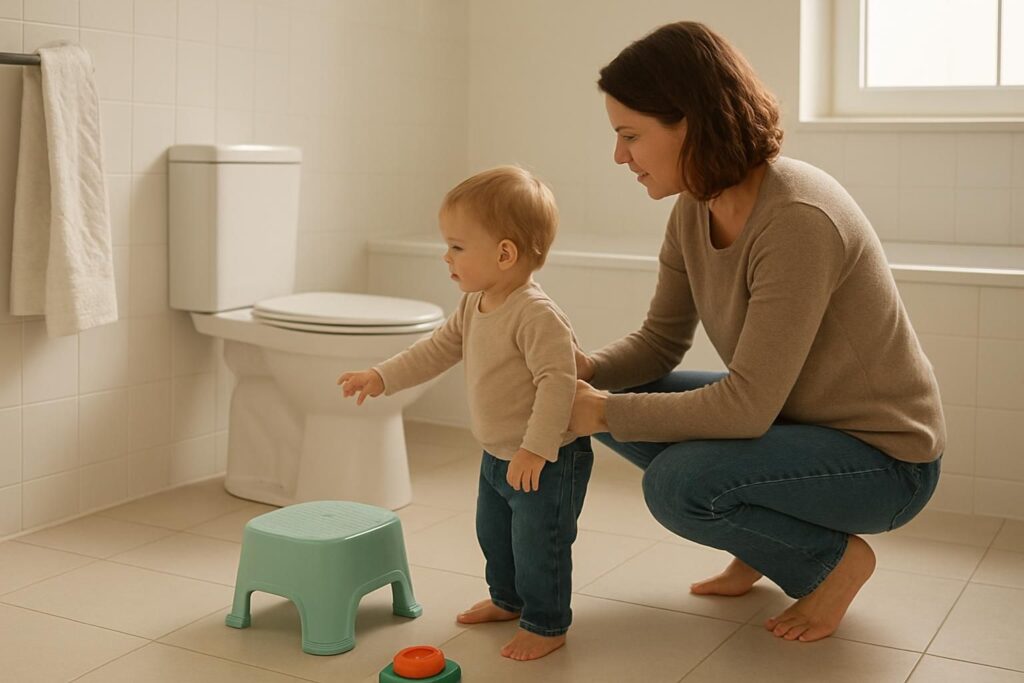
If you cannot take days off, you do not have to give up on the idea. Grandparents, a partner working from home, or a childminder who is willing to run the home days with you can all stand in, or you can simply wait for a bank holiday weekend a few weeks out. A nursery that is not able to run intensive one-to-one toilet training during the day is not being difficult: staff ratios are real, and a room with eight toddlers cannot give your child the attention three days at home can.
What does a nursery potty training policy usually say?
Most nurseries and childminders have a written toilet training or intimate care policy, and it is worth asking for it in writing before you start rather than discovering it mid-week. Common requirements include named spare clothes, bags for wet clothes, pants rather than pull-ups during the day, and a short note from you about the approach you are using at home.
Some settings ask for an agreed start date so your child’s key person is working that week and is not away on the days that matter most. Rooms and age groups come into it too: a move to an older room, or the term before Reception, can feel like a deadline. If your setting says it only starts toilet training after a certain age or in a certain term, ask what they actually do with your child in the meantime rather than assuming you have to wait for them.
The one sentence everyone needs to say the same way
The sentence is simple: you tell me when you need a wee, said by every adult who looks after your child, worded exactly the same way each time. This teaches the child to notice and signal their own need, rather than training them to sit on a schedule set by an adult’s watch.
The only fixed moments, kept by everyone looking after your child during training and afterwards, are before and after sleep and before leaving the house. Outside those moments, the point is to wait for the child to say something, not to offer the potty every twenty minutes.
Day four or five is often the hardest day of the week, not day two, because this is when children get fed up with being asked so often and start pushing back. The fix is to ask less, not more, and to hand a bit more responsibility to the child at exactly the point they start resisting it. Give nursery or your childminder that same wording in writing, because left to their own judgement a tired key person will quietly turn it into a reminder every twenty minutes, which undoes the point.
How to share your tracking chart with nursery or your childminder
A tracking chart records what your child actually does, not what you want them to do: the time they drank, the time they were on the toilet, whether nothing happened, a wee marked green for a success or red for an accident, a poo marked the same way, and a notes column. It works best when your child drinks their cup in one go rather than in sips spread across the morning, because that is the only way to see how long it actually takes between a drink and a wee.
This chart is a record of your own child’s pattern, never a timetable to impose on a different child at a different setting. Ask your child’s key person to fill in the same columns for their hours and send you a photo of it at pick-up. Within a few days you are both reading the same signals, at home and at nursery, from the same piece of paper. A printable tracking chart is the easiest way to get everyone filling in the same columns from day one.
| Column | What you write | Green or red |
|---|---|---|
| Time of drinking | The time the full cup went down | Neither, just the time |
| Time on toilet | When your child sat down | Neither, just the time |
| Nothing happened | Yes or no | Neither |
| Wee | Did it happen on the potty or toilet, or in pants | Green for success, red for an accident |
| Poo | Same as above | Green for success, red for an accident |
| Notes | Anything unusual: mood, a new place, tiredness | Neither |
What to pack in the nursery bag, and what to agree before day one
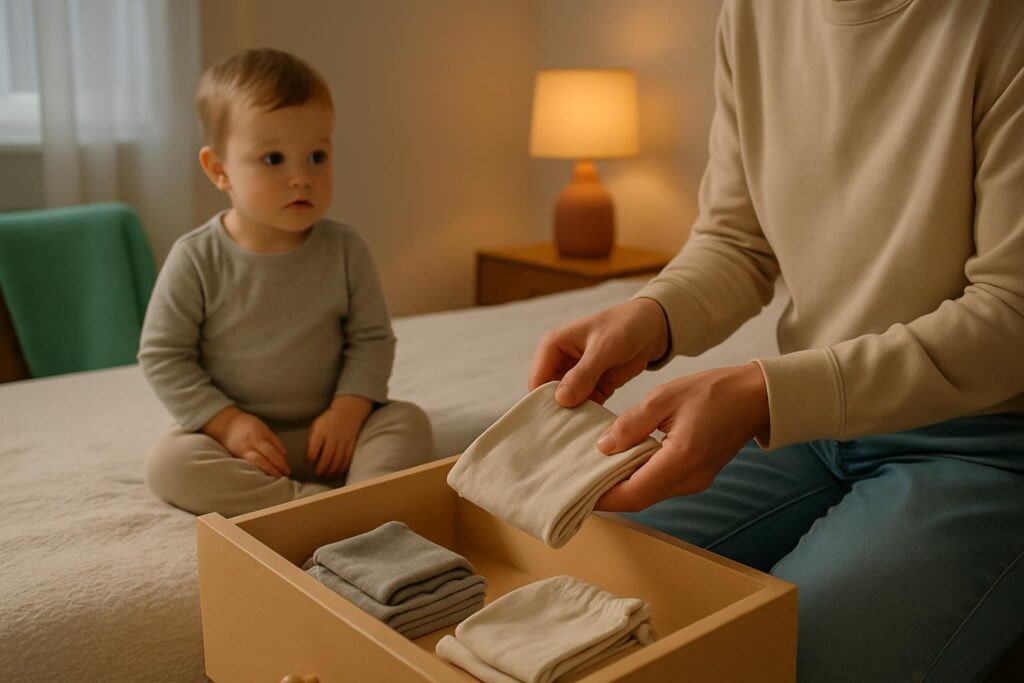
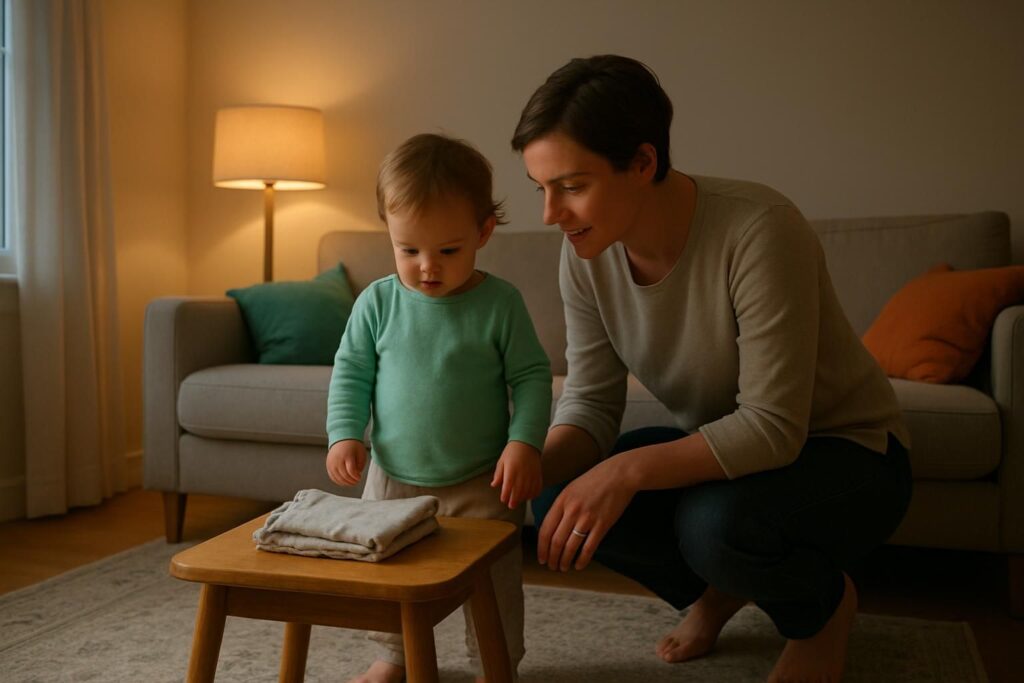
Keep at least fifteen pairs of cotton pants at home, with plenty more in the nursery bag, because cotton lets a child feel wet in a way a padded training pant does not, and feeling it is the entire point. Pull-ups are for sleep only, and it is worth agreeing this with the setting directly so a nap in a pull-up does not undo the morning’s progress.
Some links in this article are affiliate links, which means we earn a small commission if you buy through them. It costs you nothing extra and does not affect what we recommend.
Pack spare trousers, socks, wet bags and shoes, and ask what the setting’s toilets are like: many nursery bathrooms are already child height, but some only have adult-sized toilets, in which case a seat reducer and step stool combination like the Dreambaby Toilet Seat and Step Stool Set is worth having at home and asking whether the setting has something similar. Keep small rewards and stickers at home for the end-of-day moment, so your child is not trying to track two separate reward systems at once. Write the key person a short brief, no more than five lines: the sentence to use, the fixed moments, what to do after an accident, and how you reward success.
What to do when nursery and home get different results
Dry at home but wet at nursery is extremely common, and it is almost always a signal problem rather than a skill problem. The usual culprits are a toilet that feels different in height or noise, a louder flush, a queue for the bathroom, or a child who simply will not ask an adult they see less often than you.
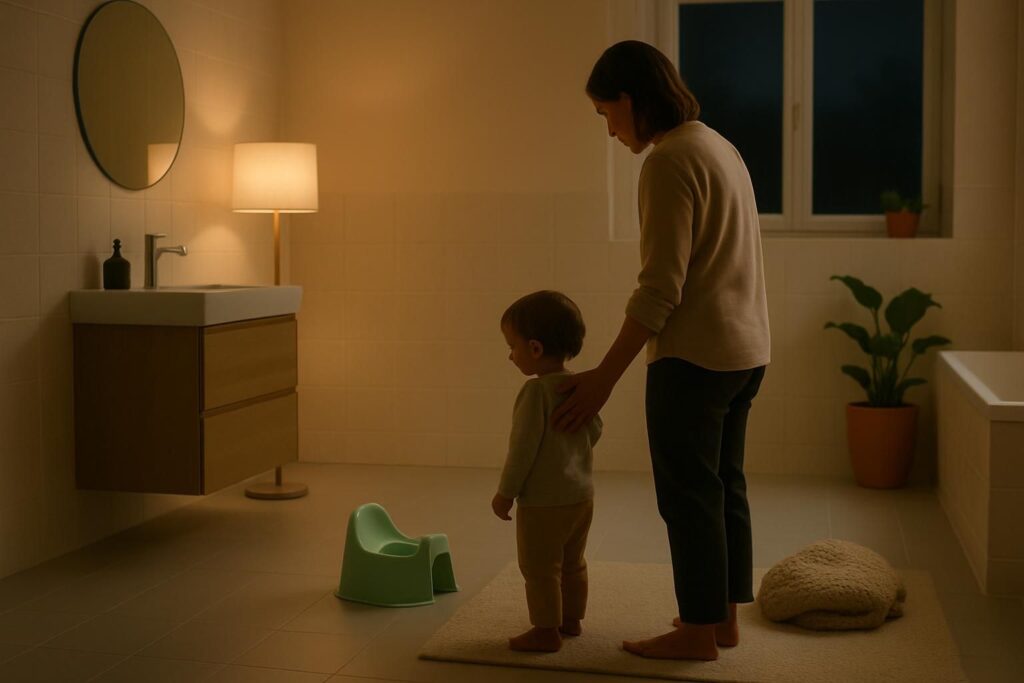
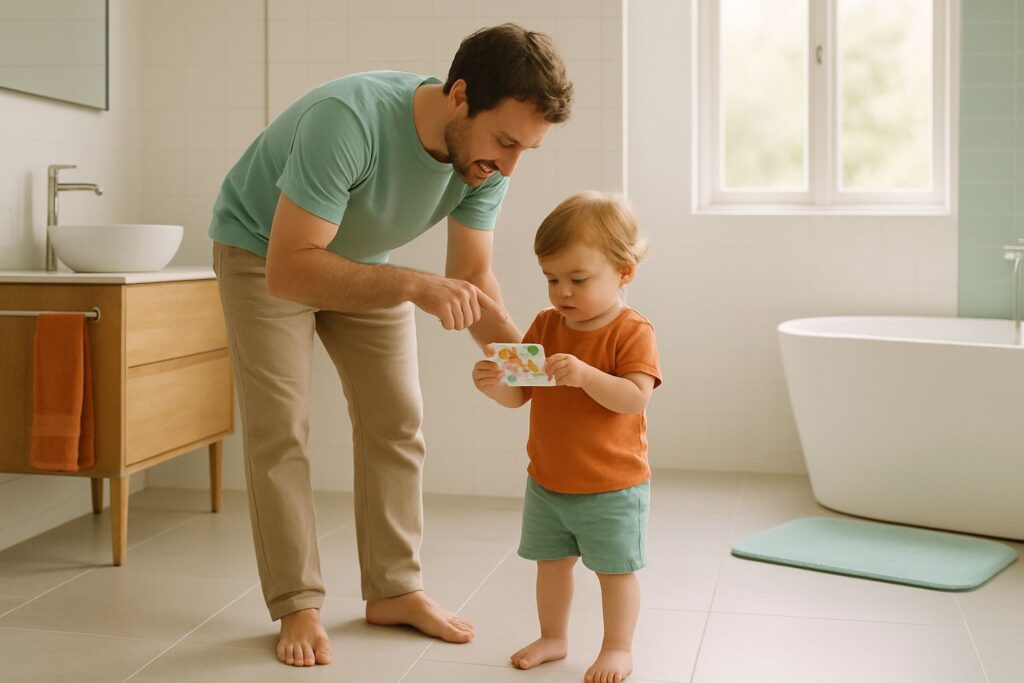
Start by having your child show you around the nursery toilets at drop-off so the space feels familiar, and ask the key person to check in at the same few moments your child already recognises from home, rather than inventing new ones. If the nursery toilet itself is the thing unsettling your child, a picture book that walks through a child using an unfamiliar toilet can help build familiarity before you push further, such as I Want My Potty!, read together a few times before drop-off. Treat every accident, at either end, as part of learning rather than a failure on anyone’s part.
If it genuinely is not working after a couple of weeks, the method’s own advice is to stop, leave it a while, and try again later rather than pushing through. A child who is not ready yet is not failing, and the gap tends to close on its own once they are.
Grandparents, nannies and anyone else who has your child for a day
The same brief that works for nursery works for a grandparent, a nanny, or an after-school carer: one sentence, the same fixed moments, the same reward at the end of the day. It is tempting to hand the first three days over to someone else if your own diary is full, but whoever runs those days is the one who learns your child’s pattern, so it is worth protecting that time for yourself if you possibly can.
If a nanny or grandparent is going to run the home days instead of you, give them the tracking chart and the booklet, not just a verbal instruction, because the detail is what keeps everyone consistent. Where opinions differ between adults, settle it plainly: one wording, one reward system, no second method running alongside the first. And whoever is doing the asking, a child who is frightened of the potty or the toilet is not ready, whatever the calendar says.
Is your child ready to start?
Readiness shows up as staying dry for longer stretches between changes, telling you after they have gone (and sometimes before), showing interest in the toilet or potty, and being able to pull trousers and pants up and down largely unaided. A child who is frightened of the potty or toilet is not ready yet, and the honest move is to build familiarity with it first and start the full training later.
Pressure from a nursery, or an age mentioned in a setting’s policy, is not a readiness sign in itself: it is a date on someone else’s calendar, not a signal from your child.
Not sure if your child is ready? The readiness quiz walks through the actual signs.
The week, day by day, with nursery in it
The Potty Training Box uses what is called the Potty Training Box Method: a day-by-day programme that starts with three days at home, uses tracking schedules to learn this particular child’s own pattern, moves reward stickers through rising sizes from three squares up to nine as the child improves, and moves the child from potty to toilet over the course of the week. Night-time dryness is a separate matter that comes later and is not part of what the week aims to achieve.
| Day | At home with you | At nursery or childminder |
|---|---|---|
| 1 | Nappy off, cotton pants, chart filled in all day | Not attending |
| 2 | Same as day 1, watching for the pattern | Not attending |
| 3 | Pattern becoming clearer, fewer accidents | Not attending |
| 4 | Short outing, same sentence, often the hardest day | First half day back, key person uses the same wording |
| 5 | Another short outing | Full day, chart filled in by key person and sent as a photo |
| 6 | Reviewing the chart together | Holding the same line, fewer prompts |
| 7 | Reviewing progress, pull-ups only for sleep | Holding the same line |
What a written plan from a box adds over one you sketch yourself is what to do on the days that go badly, not just the days that go well, plus a community of people to ask when something does not match the plan. It is also reusable for a younger sibling later, and separate sticker sets such as the extra reward system can be bought on their own if you want to run the sticker mechanic your own way, without the rest of the box.
Frequently asked questions
How do you potty train when your child is at nursery?
Start with three full days at home with you, usually over a long weekend, so you can watch your child closely and learn their pattern. From day four, hand nursery or your childminder the same sentence and the same pants you used at home, so the child hears one consistent approach rather than two different ones.
Should nursery or parents do the potty training?
The parent leads and the setting follows, because you see mornings, evenings, weekends and night-time while a nursery only sees a slice of the day. A good setting continues your approach during their hours and reports back what happened, rather than running its own separate method.
Can nursery refuse to potty train my child?
A nursery can decline to lead intensive one-to-one toilet training during the day because staff ratios make that genuinely difficult, but most settings will support a child who is already partway through, following the wording and pants the parent sends in. It is worth asking for the setting's written toilet training policy so you know exactly what they will and will not do.
Why is my child dry at home but has accidents at nursery?
This is extremely common and is usually a signal problem rather than a skill problem: a different toilet height, a louder flush, a queue, or a child who is less willing to ask an adult they see less often. Showing your child the nursery toilets at drop-off and having the key person check in at the same moments your child already recognises from home usually closes the gap.
Does my child need to be potty trained before they start Reception?
Many parents feel pressure to have this sorted before Reception, and some schools do ask about it, but how a child is doing with the toilet varies a lot at that age. If you are worried about timing, it is worth asking your child's school directly what support they offer rather than assuming there is a hard deadline.
How many pairs of pants should I send to nursery?
Keep at least fifteen pairs of cotton pants in rotation at home during training, and send several spare pairs in the nursery bag alongside spare trousers, socks and a wet bag. Cotton pants, rather than padded training pants, let your child actually feel when they are wet, which is part of what helps them learn.
Ready for the next step?
The Potty Training Box holds the day-by-day programme this article is built on: tracking charts that show you when your child actually needs to go, instruction cards for each day, and a reward system that tapers off on its own.
Sources
This article was written with AI assistance and checked by Dustin van de Sande.