Potty Training a 2.5 Year Old: What to Expect and How the Week Actually Goes


To potty train a 2.5 year old, remove the nappy, put on cotton pants, and spend the first three days at home letting your child lead while you record what happens. Most children are dry in the daytime within about a week, some in three days, others two to three weeks. Night-time dryness comes later, separately.
The Potty Training Box Method is built around exactly this: a day-by-day plan covering the week, a tracking schedule for learning your own child’s timing, and a stepped reward ladder that starts generous and gets quieter as the habit settles in. It is a daytime method. Staying dry overnight is a separate skill that usually arrives months later and is not something any one-week plan promises.
Is 2.5 too late to start potty training?
No. Two and a half sits comfortably inside the range most parents and nurseries think of as the usual starting age, somewhere between about 18 months and the third birthday, so your child is right in the middle of that window rather than behind it.
What usually drives the worry at this age is not the child, it is the comparing: a nursery form asking about pants, a sibling who was dry sooner, or a first attempt a few months ago that fizzled out. None of that changes what matters now, which is whether your child is ready today. A child who is genuinely frightened of the potty or the toilet is not ready yet, and pushing through fear rarely ends well.
Some links in this article are affiliate links, which means we earn a small commission if you buy through them. It costs you nothing extra and does not affect what we recommend.
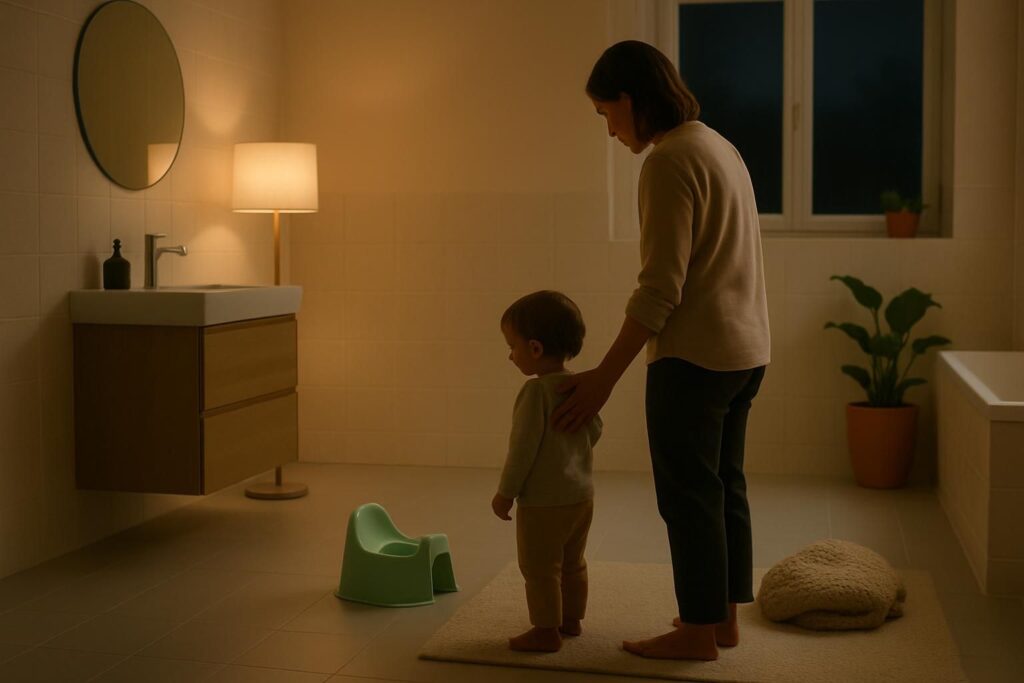
Building familiarity first works better than forcing day one on a bad day: let your child watch you use the toilet without pressure, talk about it plainly, and leave a little time before trying properly. A picture book read together a few times beforehand can help too, something like I Want My Potty, which puts the whole idea into a story rather than a task.
What can a 2.5 year old do that an 18 month old cannot?
The gap between 18 months and two and a half is large in exactly the skills potty training needs, which is why the week tends to go more smoothly at this age. A typical 2.5 year old can usually manage several things an 18 month old physically cannot yet.
- Tell you in words or a clear gesture that they need to go, rather than you guessing
- Hold on for a short stretch once they notice the feeling, instead of going the instant they feel it
- Follow a two-step instruction such as “pull your pants down, then sit”
- Pull clothing up and down with a bit of help, and walk to the potty on their own
- Follow a sticker ladder and understand an idea like “three more and you get the reward”
None of this means an 18 month old cannot start. It means a 2.5 year old generally has more of the tools the week relies on already in place, which is part of why this age is such a common starting point rather than a late one.
How do you know your 2.5 year old is actually ready?
Readiness shows up as a handful of concrete, checkable signs rather than a date on a calendar. Look for these together rather than any single one on its own.
- Stays dry for an hour or two at a stretch, rather than wetting constantly through the day
- Goes quiet or hides somewhere to do a poo
- Tells you, or shows you, that their nappy is wet or dirty
- Shows curiosity about the toilet or potty, or wants to copy you
- Can follow a simple two-step instruction
If you want a quick way to check where your child actually stands against these, the readiness quiz walks through it in a few minutes.
A child who is not showing most of these yet is better off waiting a few weeks. Starting before a child is ready tends to make the week longer and harder than it needs to be, not shorter.
What to have ready before day one
Before you start, it helps to have a few things set up in advance rather than hunting for them mid-week: a potty, mostly used for the first three days, a toilet seat reducer and step stool for the move to the big toilet afterwards, at least fifteen pairs of cotton pants, something to protect the mattress and sofa, a small pot of modest rewards, and pull-ups for sleep only.
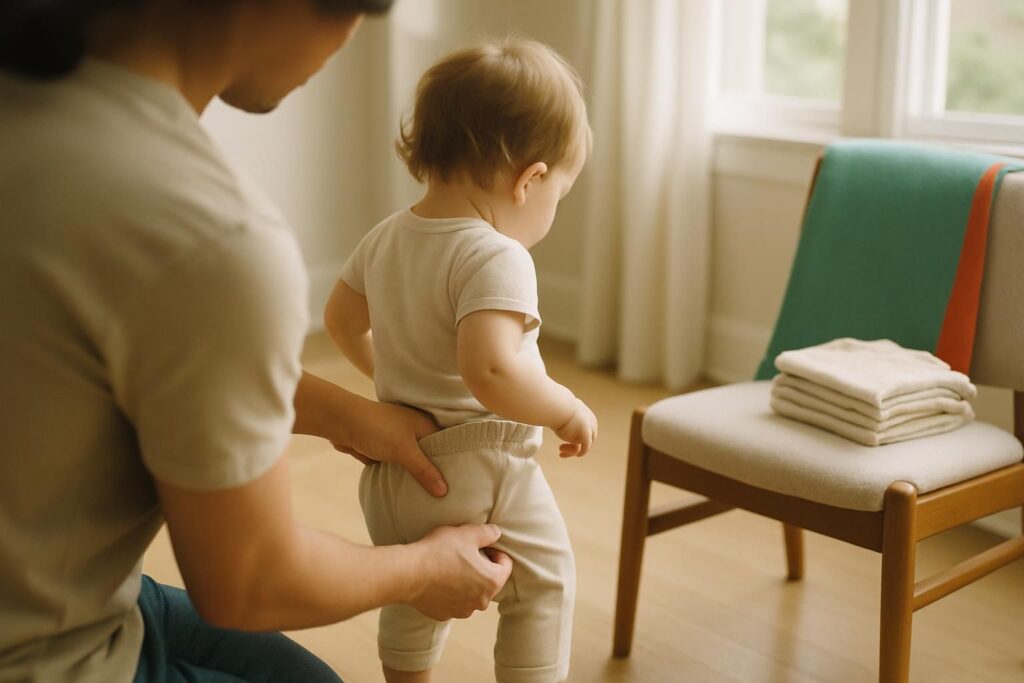
Cotton pants matter more than they sound like they should. A child feels wetness properly in cotton, and that feeling is part of what teaches the connection between the sensation and the result. Training pants and pull-ups feel too close to a nappy for that lesson to land in the same way, which is why the week works around ordinary cotton pants rather than a halfway product.
It also helps to clear the diary. The first three days are spent entirely at home, so this is not the week to plan a visit, a long outing, or a house move. For a fuller walkthrough of what to sort out in the days before you begin, what to do in the week before day one covers it in more detail.
What the week actually looks like, day by day
The first three days happen entirely at home, nappy off from the moment your child wakes up. This is when the bulk of the learning happens, because there is no nappy to fall back on and no outing to interrupt it.
Instead of sitting your child down on a timer, you ask: “will you tell me when you need a wee?” That question, repeated gently through the day, is what teaches your child to notice and signal the feeling themselves, rather than waiting for you to decide when it is time. The exceptions are a few fixed moments: before and after sleep, and before you leave the house, both during the training week and afterwards.
Day four or five is usually the hardest, not day two. By then many children are simply fed up with being asked so often, and some push back quite firmly. The fix is not to ask more, it is to ask less and hand a bit more responsibility back to your child for noticing the feeling on their own.
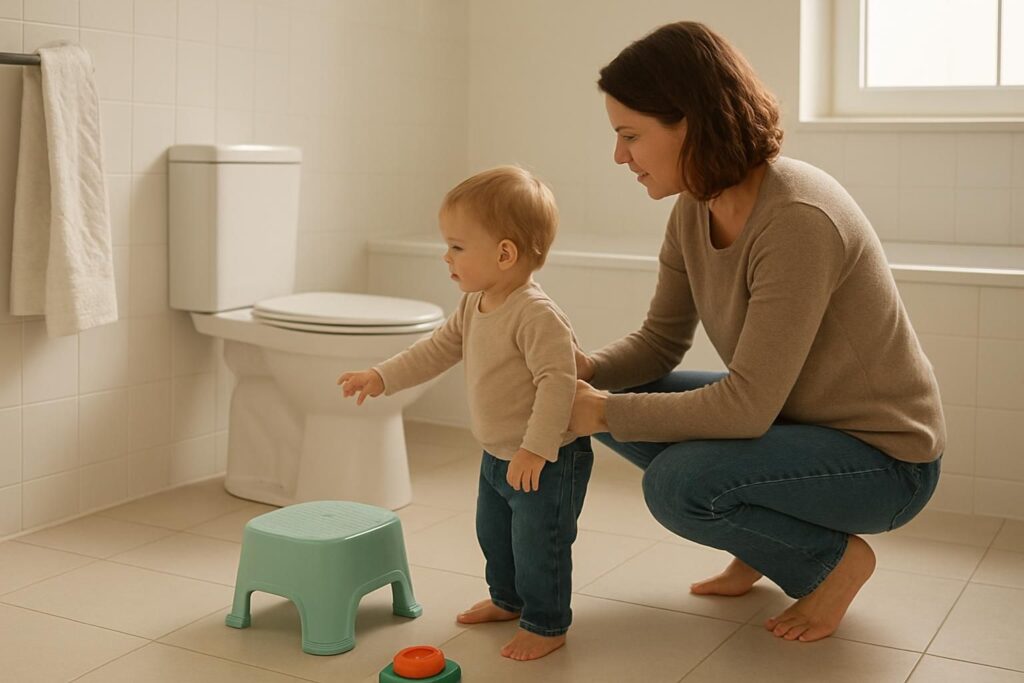
Short outings usually start late in the week, once things are settling down at home. Bring a travel potty and a spare set of pants, and keep the first trip short. The move from potty to toilet, using the seat reducer and step stool so your child can climb up and sit independently, tends to happen around the same time.
| Day | What you do | What is normal to see |
|---|---|---|
| 1 to 3 | Stay home, nappy off, ask rather than time it | Frequent accidents, some real successes, a tired parent |
| 4 to 5 | Ask less often, hand over more responsibility | Pushback, boredom with the question, a wobble |
| 6 to 7 | Short outings, move towards the toilet | Fewer accidents, more self-initiated trips |
For the full version of this plan with more detail on each day, the day-by-day plan for the week walks through exactly what to do and say.
How often should you put a 2.5 year old on the potty?
The honest answer is that it is not about a fixed interval at all. The goal is your child telling you, and a clock works against that rather than towards it, because a child who is sat down every thirty minutes never gets the chance to notice and signal the feeling themselves.
This is exactly what a tracking schedule is for. A typical schedule records the time your child drank, the time they were on the toilet, whether nothing happened, whether a wee was a success or an accident, whether a poo was a success or an accident, and a notes column for anything else worth remembering.
| Column | What it records |
|---|---|
| Time of drinking | When the cup was finished |
| Time on toilet | When your child sat down |
| Nothing / wee / poo | Whether anything happened, and whether it was a success or an accident |
| Notes | Anything else worth remembering |
It works best if your child drinks the cup in one go rather than in sips spread through the afternoon. That is the only way to know how much actually went in and how long it took after that for your child to need a wee, and that link between quantity and timing is precisely what the schedule is designed to show you. A half-finished cup sipped over an hour does not give you that picture.
Once a pattern emerges, the prompting falls away quickly, usually within a matter of days, because you and your child both start relying on the signal rather than the guess. A printable version of this schedule is available on the tracking chart page if you want to start recording straight away.
How rewards keep working past day three
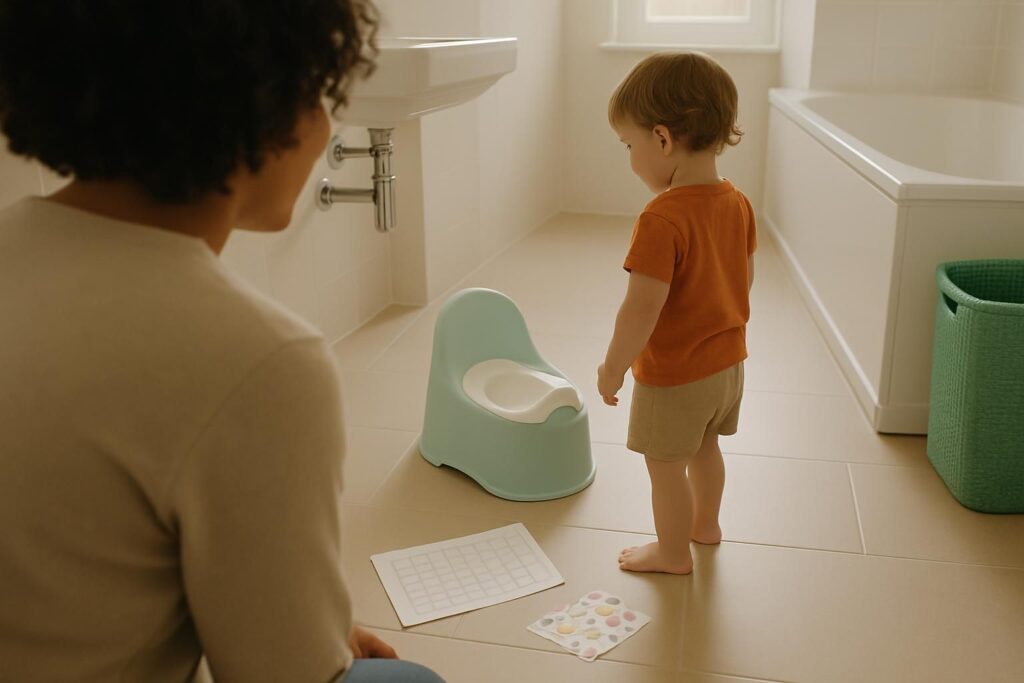
A single sticker chart tends to stop working after a few days, because the novelty wears off before the habit is set. The sticker cards used in this method come in four sizes, used in that order: three squares, then five, then seven, then nine.
The reward comes quickly at three squares, so your child sees straight away that the idea works. From there it gets steadily rarer as the card grows, which is the point: the habit is meant to outlast the stickers, rather than stop the moment they do. Alongside the cards there are animal stickers and poo stickers to fill them with, and a separate wee certificate and poo certificate for the end of the week.
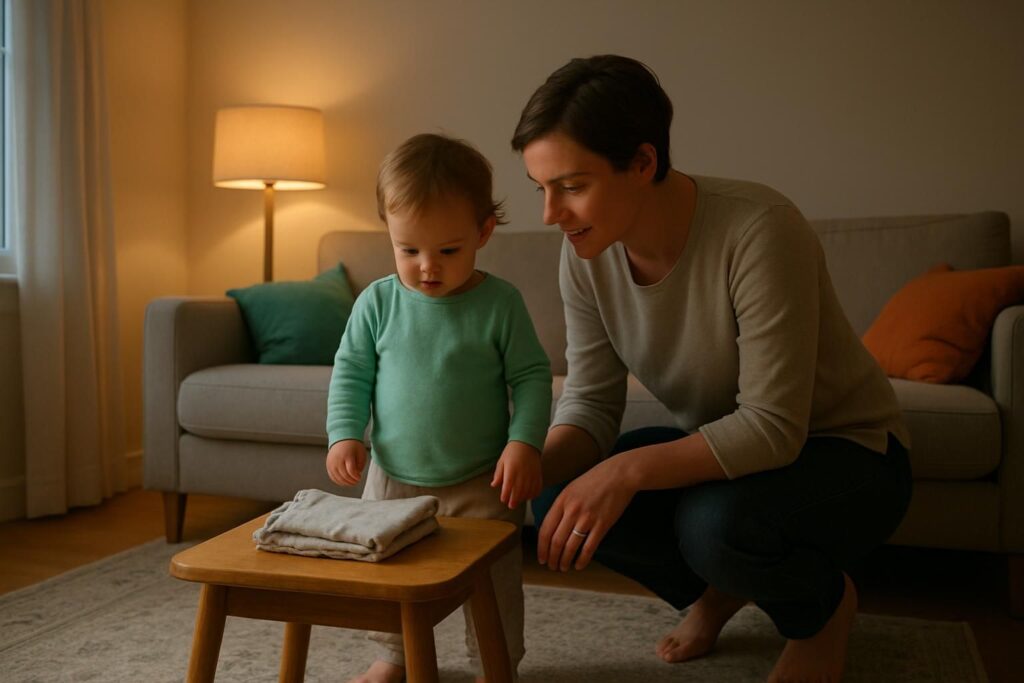
It can help to show your child what success looks like before asking them to try it themselves.
If you would rather build your own version of this instead of using the cards as they come, separate reward systems are sold on their own for exactly that.
Potty training a 2.5 year old boy: what is actually different
At the start, boys and girls are trained the same way: sitting down for both wees and poos, with standing up to wee introduced later once sitting is well established. There is no reason to teach standing first, and doing so tends to make aim and mess worse rather than better in week one.
Boys are sometimes said to start a little later than girls on average, though how true that is for any one child varies a great deal, and it says nothing about how the week itself goes once you begin. The method runs exactly the same regardless. For more detail on where boys genuinely need a different approach, such as aiming and bathroom setup, potty training boys covers it specifically.
What to do if it is not working
If a week in is not going anywhere, the method’s own advice is to stop and leave it for a few weeks rather than pushing through. That pause is part of the approach, not a failure of it, and trying again later after a break tends to go better than grinding on through constant accidents.
Accidents themselves, at any point in the week, are part of learning rather than a sign anything has gone wrong. A child who has three accidents on day two and none on day six has had a completely ordinary week.
A few things sit outside what any potty training approach can help with, and are worth a conversation with a GP or health visitor instead: constipation, a child holding onto poo rather than passing it, repeated urinary infections, or bedwetting that continues well past the age of six. None of those are things to work through with a reward chart.
Regression also happens, sometimes weeks or months after a child seemed fully trained. Talking about it openly with your child, without treating it as a setback worth punishing, is the right response. If you want more on why it happens and what tends to help, accidents and regression goes into the common causes. If you decide now simply is not the right time, there is no harm in waiting a few months, and still in nappies at three covers starting a little later instead.
What the Potty Training Box gives you that a free article does not
An article like this one can explain the approach, but a plan for exactly what to do on day one, two and three, including what to do on the days that go badly, is what the Potty Training Box actually contains.
Inside the box is a day-by-day training booklet, seven instruction cards as a short daily reminder of what to do, six compliment cards for when you have run out of ways to praise, and fourteen tracking schedules for learning your own child’s timing. There are twenty sticker cards in the four sizes described above, a hundred animal stickers and twenty poo stickers to fill them, a wee certificate and a poo certificate for the end of the week, and a year of access to a community where the brand’s own team answers questions seven days a week.
It is reusable for a later child, and refill sticker sets can be bought separately once the originals run out. None of this changes what you do yourself: the box is the plan and the materials, your child still does the actual learning.
Frequently asked questions
Is 2.5 too late to start potty training?
No. Two and a half sits in the middle of the age range most parents and nurseries treat as typical for starting, usually somewhere between about 18 months and the third birthday. Readiness matters more than the exact age, so a child showing the usual signs at this age is a good candidate to begin.
How long does potty training take at 2.5?
Most children are dry in the daytime within about a week once they start. Some manage it in as little as three days, while others take two to three weeks, and that spread is entirely normal rather than a sign anything has gone wrong. Night-time dryness is separate and typically comes later.
How often should I take my 2.5 year old to the toilet?
The aim is not a fixed interval, it is getting your child to tell you themselves. In the early days you offer the potty around key moments such as before and after sleep and before leaving the house, while a tracking schedule records when accidents and successes actually happen so the prompting can drop away within days.
When do you start potty training in the UK?
There is no single official start age. Most parents begin somewhere between about 18 months and the third birthday, but the better signal is readiness: dry spells, interest in the toilet, and the ability to follow simple instructions, rather than a date on a calendar.
Should I use pull-ups or pants during the day?
Cotton pants during the day, not pull-ups or training pants. A child feels wetness properly in cotton, which is what teaches the connection between the feeling and the result, whereas pull-ups feel too similar to a nappy. Pull-ups are for sleep, where a different and later process applies.
What do I do if my 2.5 year old refuses to sit on the potty?
Stop for now rather than pushing through refusal, and spend a few days building familiarity without any pressure to actually use it. If refusal continues after a genuine pause, it usually means the timing is wrong rather than the child being difficult, and trying again in a few weeks tends to go better than persisting.
Ready for the next step?
The Potty Training Box holds the day-by-day programme this article is built on: tracking charts that show you when your child actually needs to go, instruction cards for each day, and a reward system that tapers off on its own.
This article was written with AI assistance and checked by Dustin van de Sande.