Potty Training Underwear: What to Buy and How Many Pairs You Need

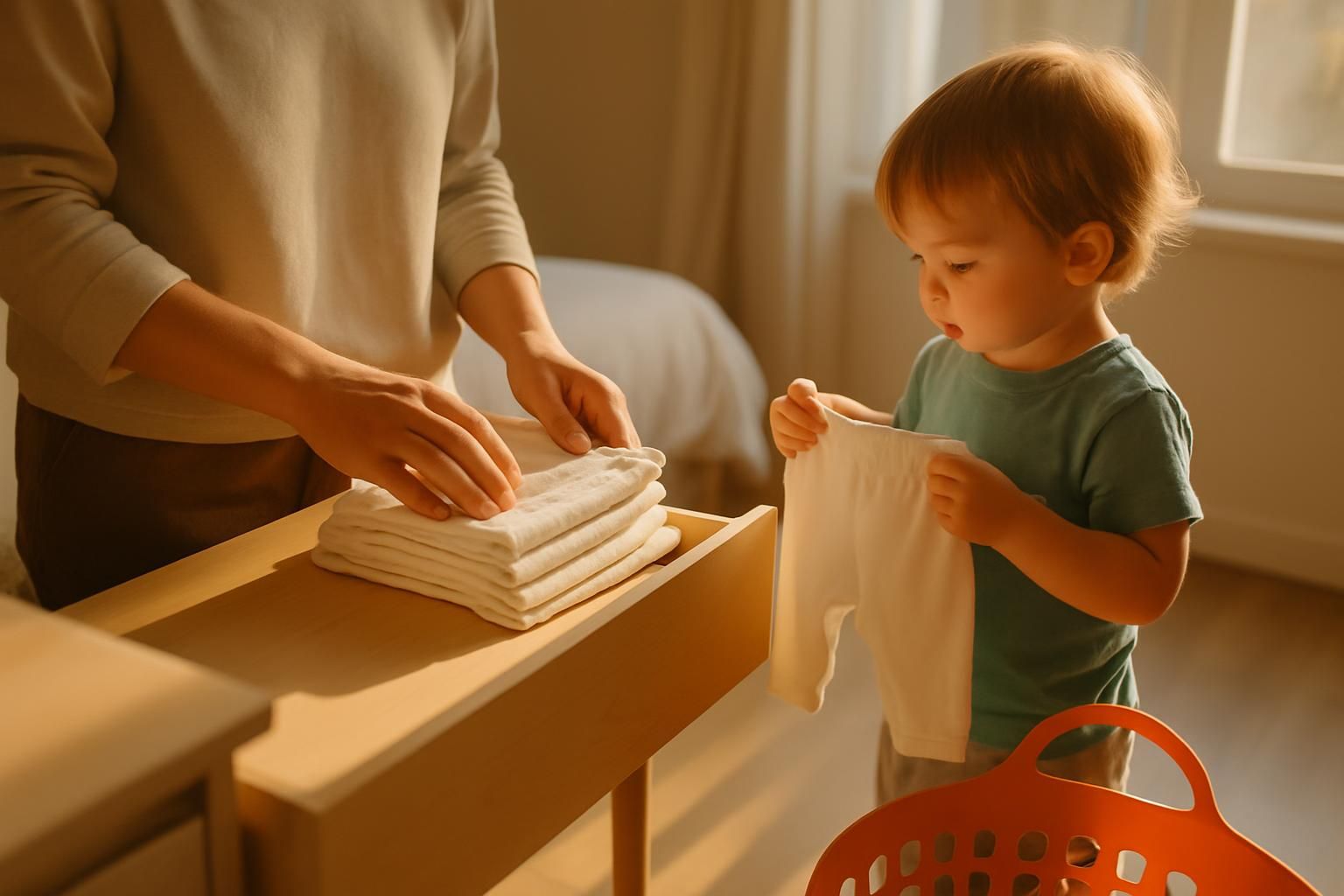
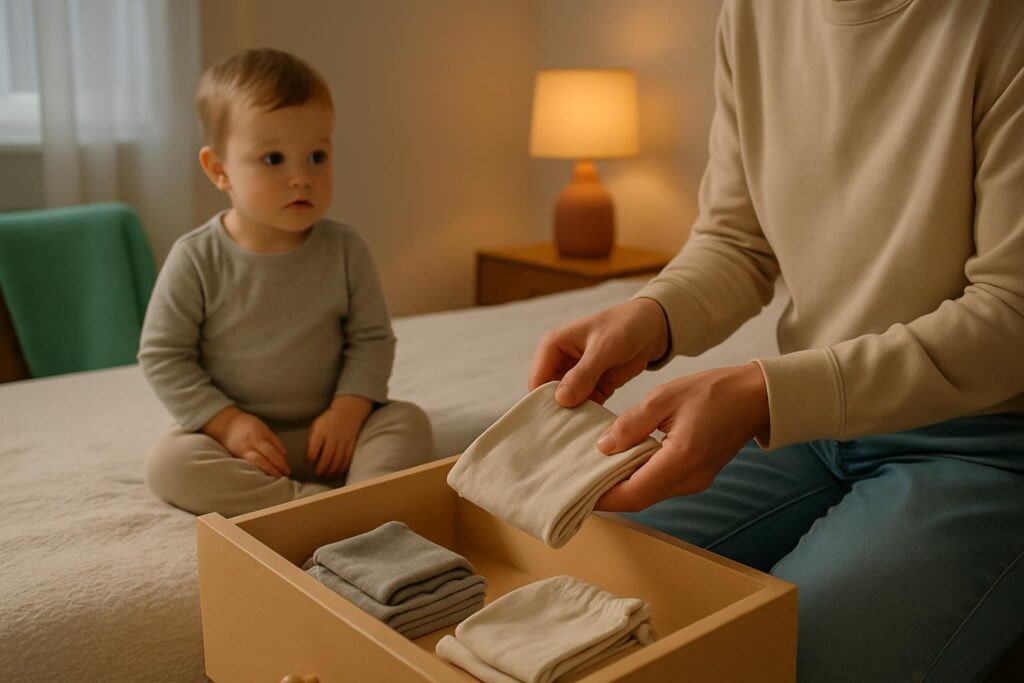
Put your toddler straight into plain, thin cotton pants from the first morning, with no nappy and no pull-ups during the day. Buy at least 15 pairs so washing never runs short mid-week. Plain cotton is thin enough that your child feels wet immediately, which is exactly what helps them notice the sensation and eventually tell you.
There is no nappy phase to ease out of. On the morning you start, the nappy comes off and stays off during waking hours, and ordinary cotton pants go on instead. Pull-ups still have a job to do, just not this one: keep them for sleep, when you are not expecting your child to notice and respond to a wet feeling.
How many pairs of pants do you actually need?
Fifteen pairs is the practical minimum for the first few days of potty training, and more if your washing machine only runs once in the evening. Accidents are common and expected in the early days at home, and several a day is entirely normal rather than a sign anything has gone wrong.
What derails a morning is not the accidents themselves, it is running out of clean pants by eleven o’clock and reaching for a nappy out of sheer necessity. That one substitution undoes the message your child has been getting all morning, which is why buying enough pants before you start matters more than almost anything else on the shopping list.
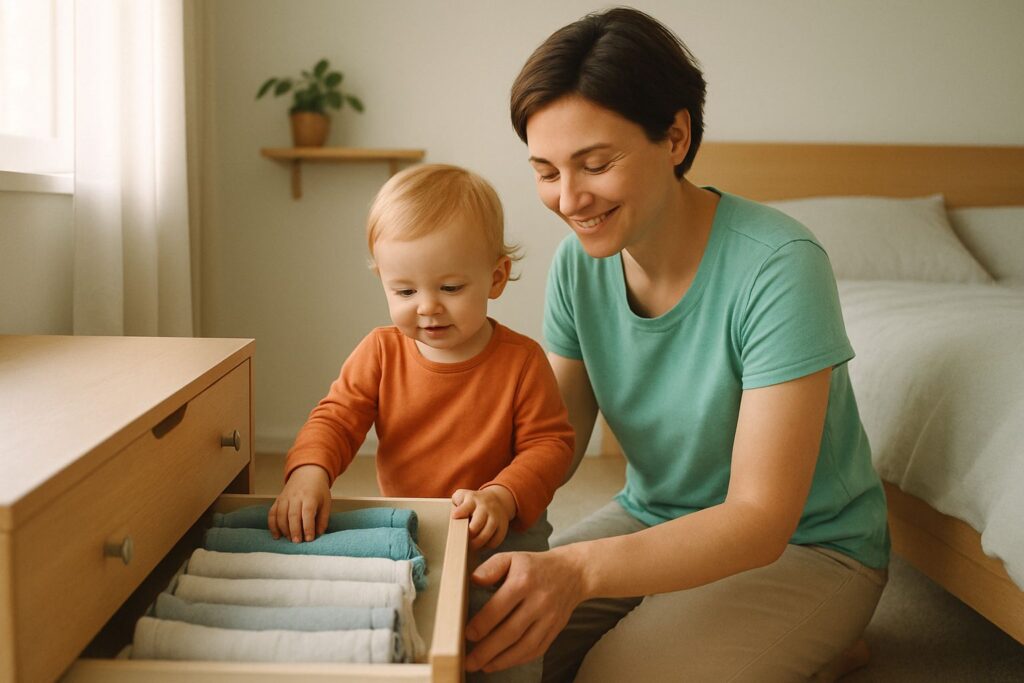
Buy the pants before the first morning, not on day two when the drawer is already empty. A quick supermarket or online order the week before means you are never choosing between a wet floor and a nappy.
Why plain cotton beats training pants and pull-ups
Padded training pants and pull-ups are built to absorb, which is precisely what makes them unhelpful for learning. A child in a padded pant can wee without feeling much change at all, so there is nothing prompting them to notice, mention it, or try to hold on next time.
Pull-ups go a step further: they look and feel enough like a nappy that many children treat them exactly like one, and going in them stops registering as an accident at all. The Potty Training Box is built around the nappy being off and ordinary cotton underwear being on, precisely because that combination is what makes a wet feeling impossible to ignore. You can read why plain cotton works better than training pants from day one if you want the full reasoning.
Some links in this article are affiliate links, which means we earn a small commission if you buy through them. It costs you nothing extra and does not affect what we recommend.
Reusable, padded training pants do have a sensible place, just not during the learning days themselves: for naps, for a long car journey, or for the first few outings when you want a backup without going back to a nappy. Reusable training pants like these work well for that narrower purpose.
| Option | Does your child feel it wet? | Best used for |
|---|---|---|
| Plain cotton pants | Yes, almost immediately | Learning days at home |
| Padded reusable training pants | Barely | Naps and long journeys |
| Disposable pull-ups | No | Sleeping only |
What size and style to look for
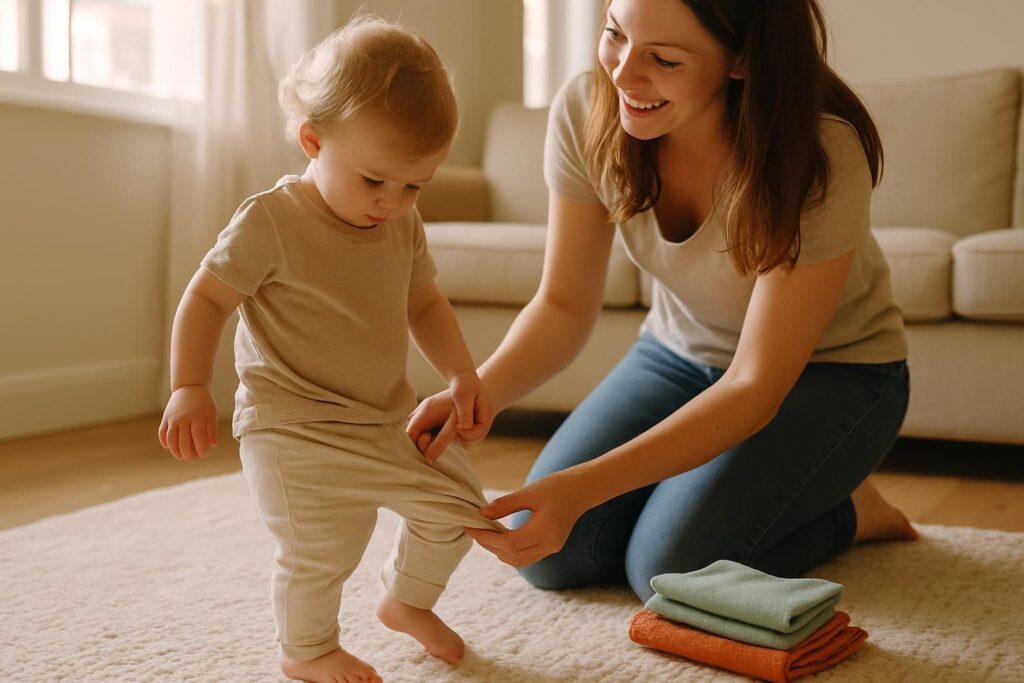
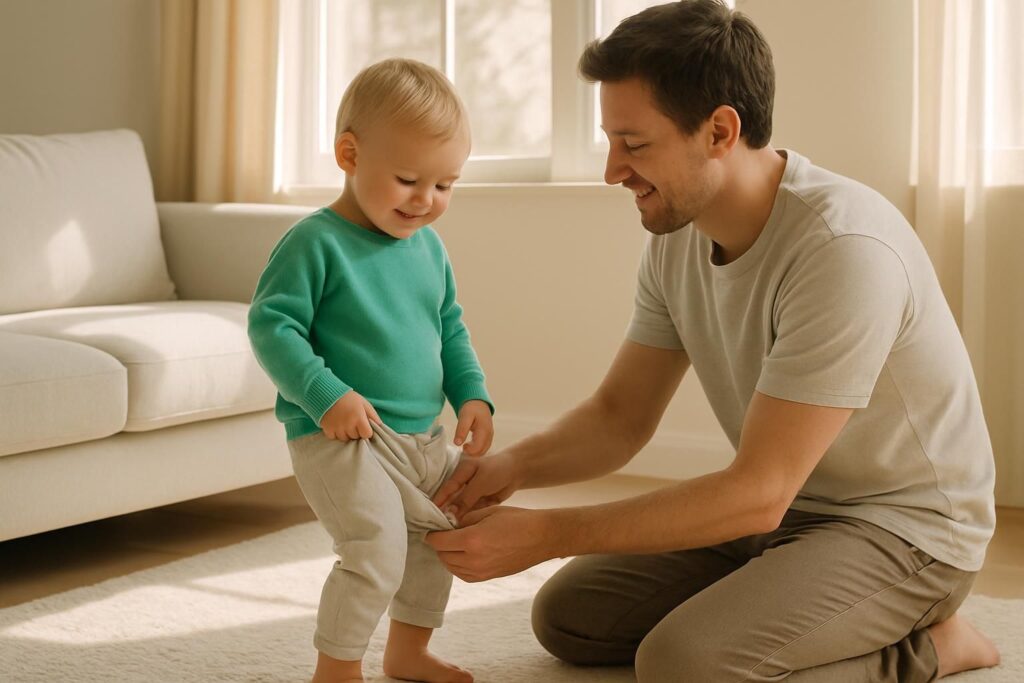
Buy a size up rather than the exact current size, so your toddler can get the pants up and down without help. A toddler who has to call you every time slows the whole process down and loses some of the independence the training is meant to build.
Avoid tight elastic waistbands, fiddly buttons or ties, and thick seams, all of which make a quick solo change harder than it needs to be. Simple and stretchy beats decorative and fitted every time at this stage.
Let your child choose the designs, characters or colours they care about, whether that means picking a pack off the shelf themselves or pointing at the ones with their favourite animal on. A toddler who is proud of their new pants is often more motivated to keep them dry, and it costs nothing to let them pick.
There is no meaningful difference between what boys and girls need here: fit, ease of pulling up and down, and a waistband that does not pinch matter far more than any gendered design. Whatever the style, avoid anything that needs two hands and a parent to get off, because speed genuinely matters in the moment your child realises they need to go.
Is bare-bottomed better than pants for the first days?
Some approaches start nappy-free and bare-bottomed at home for the first day or two, on the theory that it makes the sensation of weeing even more obvious. The Potty Training Box Method puts cotton pants on from the very first morning instead, because learning to notice wetness inside pants is what transfers to wearing pants outside the house a few days later.
A child who has only ever practised bare-bottomed has an extra step to learn once pants go back on, right at the point you are trying to leave the house for the first short outing. Starting in pants from day one skips that extra transition.
At home, keep trousers off or loose and easy to pull down so your child can manage the whole sequence themselves, pants included. The goal is a toddler who can get to the potty and deal with their own clothing without your hands on them every time.
What to do with the wet pairs (the laundry bit)
Rinse wet pants in cold water and keep them in a bucket or a wet bag until you do one wash a day, rather than running the machine after every accident. Cold water first stops any stain setting before the wash itself finishes the job.
For soiled pants, scrape what you can into the toilet, give them a cold rinse, then wash them hot along with the rest of the laundry. It is unpleasant for exactly the first few times and then becomes routine, like any other part of looking after a small child.
Protect the mattress and the sofa while you are training, since accidents happen in both places as readily as on the floor. It is worth having something ready before you start rather than scrambling for it after the first wet bed.
Keep a spare pair of pants and a spare pair of trousers in a bag whenever you leave the house, even for a short trip, so a change does not mean going home. And whatever happens with the laundry, keep the changing moment itself neutral and unhurried: a toddler who senses irritation over a wet pair of pants learns to hide accidents rather than mention them, which works against everything the training is trying to achieve.
How to handle the moment your child wets their pants
An accident is part of learning, not a setback and never a failure, however many happen in a day. The tone you use in that moment matters more than the accident itself, because a calm, matter-of-fact response teaches your child that mentioning it is safe.
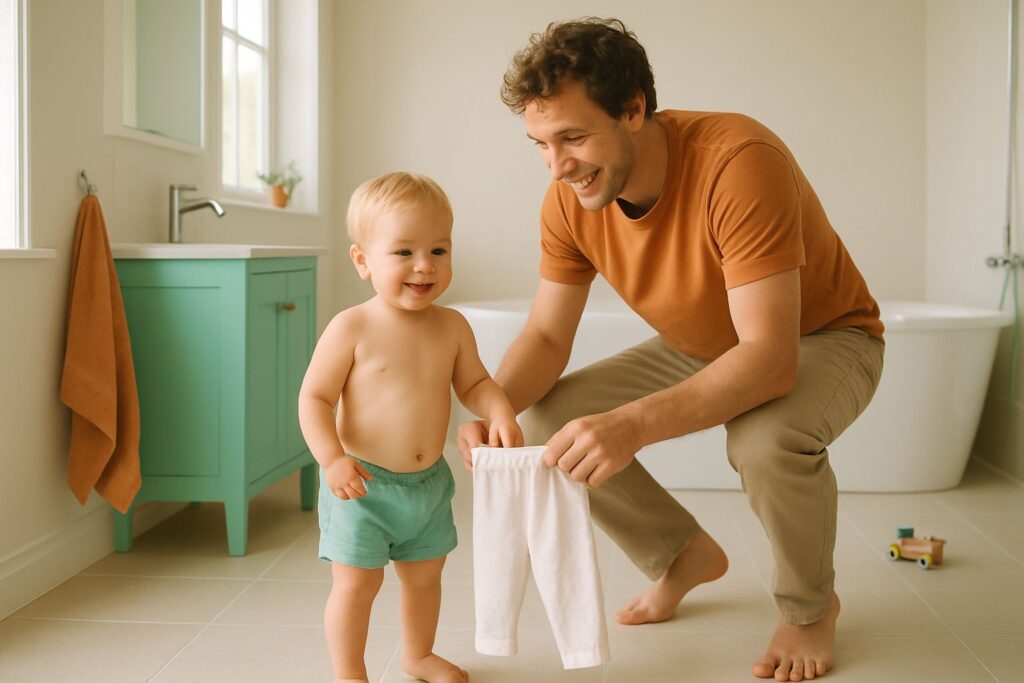
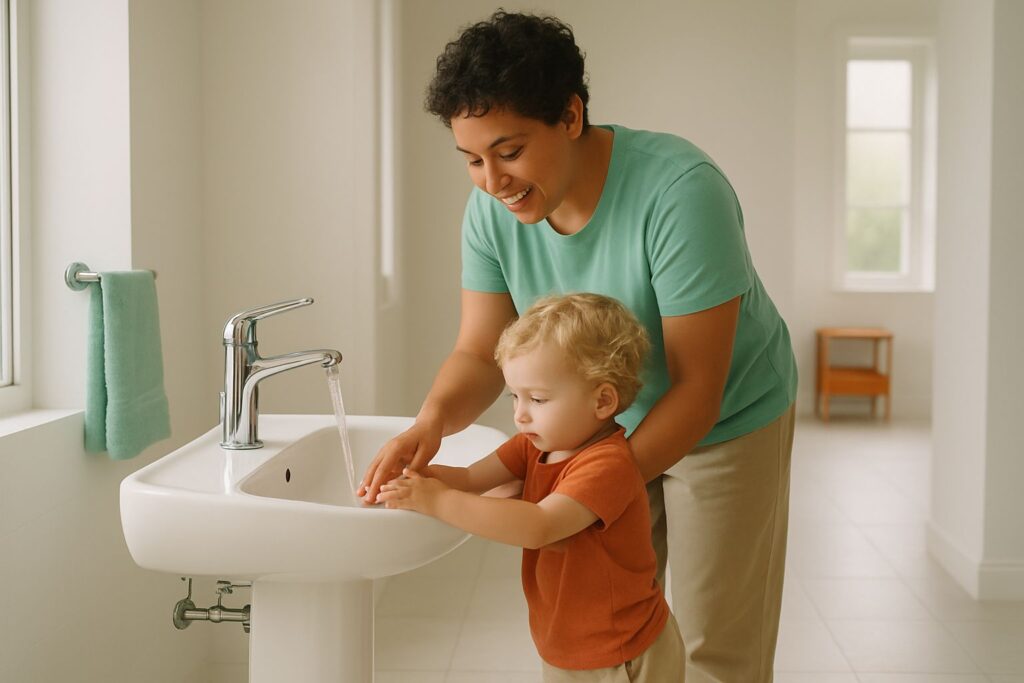
Change your child in a neutral tone and let them help with the change where they can, handing you the wet pants or fetching a clean pair themselves. This keeps them involved rather than passive, and it is a small, repeatable routine that becomes familiar fast.
This is where watching one of these together, right after it happens, can help more than another explanation from you.
The Potty Training Box Method works from your child’s own initiative rather than a clock. Instead of sitting them on the potty at fixed intervals, you ask something like ‘will you tell me when you need a wee?’ and let them come to you. Over the week, the offering you did in the first days gives way to your child doing the asking themselves.
There are a few fixed moments that stay in place even once the asking has shifted to your child, both during the training and after it: before and after sleeping, and before you leave the house. Outside of those, the aim is for your child to say it first rather than for you to keep checking.
Instead of guessing at times, the tracking chart is there to record when your particular child actually goes, so you learn their pattern rather than imposing one on them.
Everything to have ready before the first morning
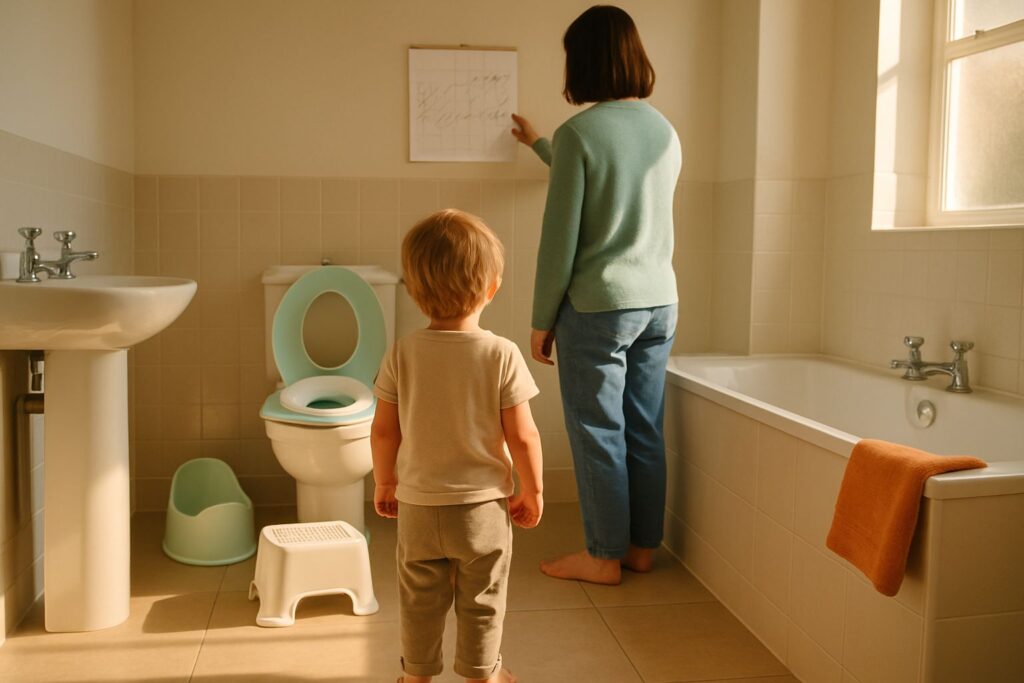
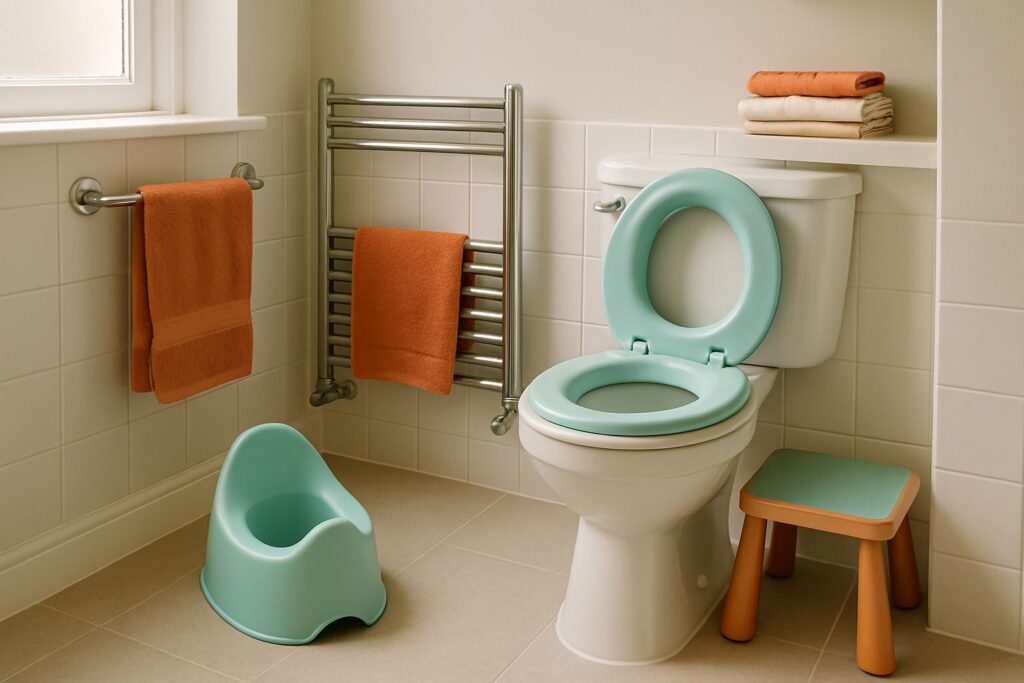
Alongside the pants, it helps to have a few things gathered the night before rather than hunted down mid-morning: a potty, mainly useful for the first few days, a toilet seat reducer and a step stool for when your child moves on to the big toilet, something to protect the mattress and sofa, a handful of small rewards, and pull-ups for sleeping.
The Potty Training Box is what tells you what to do with all of it, day by day: a booklet that coaches you through the week, short daily instruction cards, tracking schedules for recording your child’s own timing, sticker cards that start at three squares and grow to five, seven and nine as your child improves, and a certificate for wees and one for poos. It also includes a year of access to a community where questions get answered, which matters most on the days that do not go to plan.
If you would rather put a plan together yourself, small reward systems with increasing rewards exist as a standalone option too, such as this reward system, which also works as a refill if you have already used a box with an older child.
Is your child actually ready for pants yet?
Before you buy anything, it is worth checking your child is actually ready to start. Signs worth watching for include staying dry for a couple of hours at a time, showing an interest in the potty or toilet, telling you after they have been, and being able to pull pants up and down largely on their own.
A child who is frightened of the potty or the toilet is not ready yet, whatever their age. The honest answer there is to build familiarity first, with no pressure to perform on it, and start the training properly once that fear has eased. The box keeps until then.
Most children are dry in the daytime in about a week using this method. Some manage it in as little as three days, and others take two or three weeks, which is still well within the normal range rather than a sign of a problem. If an attempt genuinely is not working, the method’s own advice is to stop and leave it a while before trying again, rather than pushing through a week that is clearly going nowhere.
If you are not sure where your child stands, a short readiness quiz can help you check before you spend anything.
Frequently asked questions
Do potty training pants actually work?
Padded training pants mostly do not work well for the learning stage, because the padding absorbs the wee and your child barely notices it happened. They are more useful once your child is reliably dry, for naps or long car journeys where you want a backup without going back to a nappy.
How many pairs of pants do I need for potty training?
Buy at least 15 pairs before you start, more if your washing machine only runs in the evening. Accidents are common in the first few days, and running out of clean pants mid-morning is one of the most common reasons a first attempt stalls.
Should my toddler wear underwear or go bare-bottomed for potty training?
Plain cotton underwear from the first morning is the more reliable choice, because it lets your child feel wet straight away while also practising the clothing routine they will need once you leave the house. Bare-bottomed can work at home but adds an extra step to relearn once pants and trousers go back on.
What size underwear should I buy for a toddler who is potty training?
Buy a size up from your child's current size so they can pull pants up and down without help. Choose soft, stretchy waistbands over tight elastic or fiddly fastenings, since speed and independence matter more than a snug fit at this stage.
Should my child wear pull-ups at night if they are in pants in the day?
Yes, pull-ups are fine for sleep even while your child wears ordinary pants during the day. Night-time dryness comes later and is separate from daytime training, and the box does not aim to resolve both at once.
How do I wash soiled toddler pants?
Scrape off what you can into the toilet, rinse the pants in cold water, then wash them hot along with the rest of your laundry. Keeping a bucket or wet bag for the day's wet and soiled pants means you only need to run one wash rather than several.
Ready for the next step?
The Potty Training Box holds the day-by-day programme this article is built on: tracking charts that show you when your child actually needs to go, instruction cards for each day, and a reward system that tapers off on its own.
This article was written with AI assistance and checked by Dustin van de Sande.