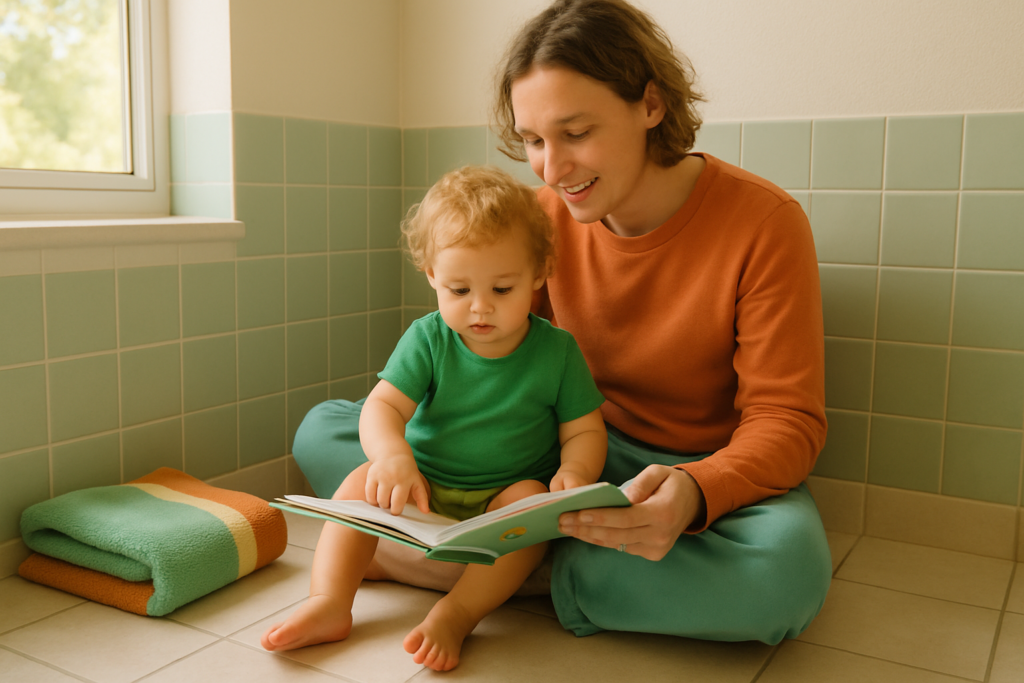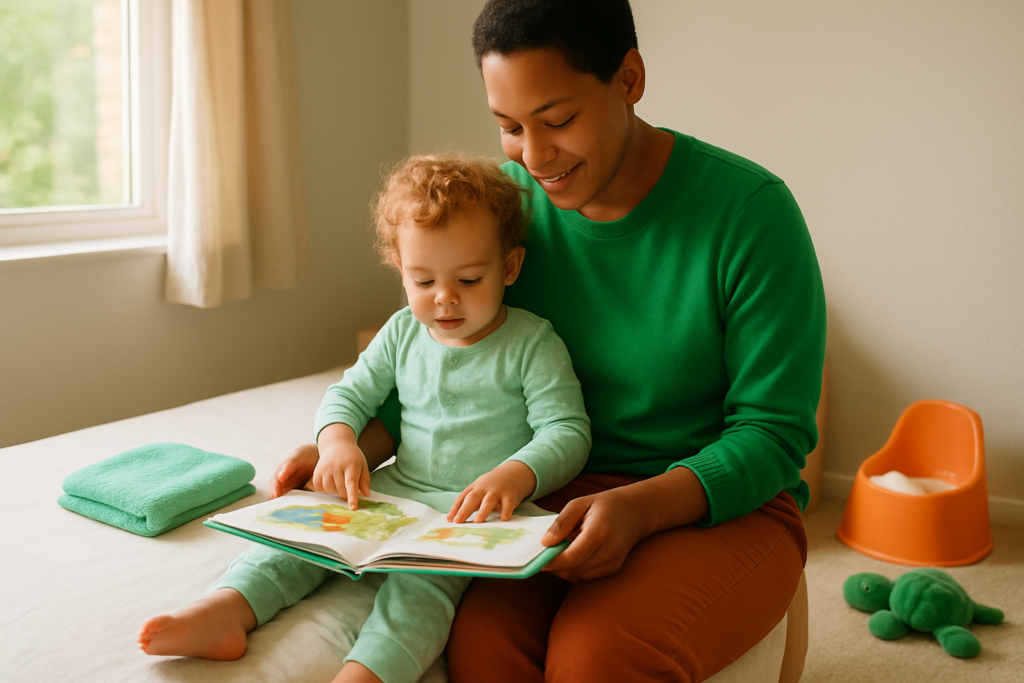

The best-known UK potty training books, including Pirate Pete’s Potty, Princess Polly’s Potty, I Want My Potty, No More Nappies (Campbell Big Steps), Potty by Leslie Patricelli, and I Really Really Need a Wee, help a toddler get curious about using the potty, and a short animated video can do a similar job for a few minutes at a time. They build familiarity, but only a structured plan teaches a child to hold on and signal, so most children are dry in the daytime in about a week once that plan begins.
These books work by putting a friendly character on the potty first, so the idea feels normal before it is asked of the child. That is genuinely useful groundwork. What a book cannot do is teach a toddler to notice the feeling of a full bladder, wait a moment, and say something about it. That skill comes from practice, repetition and a parent who knows what to do next, which is a different job from reading a story.
Parents who follow a structured, day-by-day approach commonly report their child is dry in the daytime in around a week. Some manage it in three days, others need two or three weeks, and a child who is not ready yet is usually better off waiting than being pushed through it. Books are the warm-up, not the training itself.
Best potty training books by age: a quick comparison
The table below groups the most recommended UK titles by the age they suit best and what each one is actually for, so you are not buying three books that all do the same job.
Some links in this article are affiliate links, which means we earn a small commission if you buy through them. It costs you nothing extra and does not affect what we recommend.
| Book title | Best for | What it actually does |
|---|---|---|
| Potty (Leslie Patricelli) | 18 months to 2 years | Board book, very short, repeats one simple idea |
| Pirate Pete’s Potty | 2 to 3 years | Lift-the-flap story, boy character, playful tone |
| Princess Polly’s Potty | 2 to 3 years | Lift-the-flap story, girl character, matches Pirate Pete |
| I Want My Potty (Tony Ross) | 2 to 3 years | Classic story, Little Princess character, gentle humour |
| No More Nappies (Campbell Big Steps) | 2 to 3 years | Simple, factual board book explanation of the process |
| I Really Really Need a Wee (Karl Newson) | 3 to 4 years | Funny, urgency-themed story, good for reluctant readers |
Board books suit the youngest toddlers because they survive chewing and page-tearing, while paperbacks with fuller sentences suit a three or four year old who wants an actual story rather than a flap to lift.
Which potty training books work best for 18 month to 2 year olds?
At this age, short board books with flaps, textures or a single repeated phrase work better than a book with a plot. A toddler this young is building vocabulary and familiarity, not following a story arc, so simplicity beats variety.
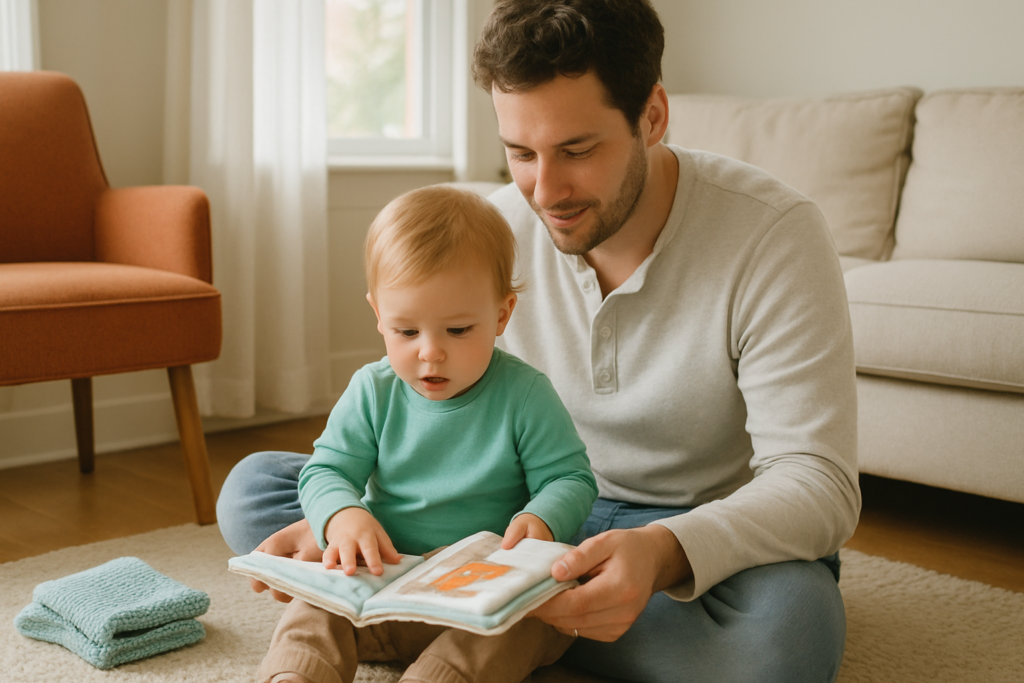
Reading the same book most nights for a fortnight does more than reading ten different books once. Repetition is how toddlers learn words and routines, and a familiar book becomes a comforting cue rather than a novelty that wears off.
It also helps to settle on one word for wee and one for poo early, and use those same words in the book and in daily life, since a toddler this age is easily confused by several words meaning the same thing. There is more detail on this in our piece on the words you use for wee and poo.
Which books suit a 2 to 3 year old who is about to start?
Character-led stories work well here because a child this age can see themselves in a small figure who goes through the same steps: nappy off, pants on, potty nearby, a bit of pride at the end. Pirate Pete’s Potty, Princess Polly’s Potty and I Want My Potty all follow that shape.
Look for books that actually show the nappy coming off and pants going on, rather than skipping straight to a triumphant ending. Seeing the whole sequence, including the slightly awkward bits, makes the real thing less of a surprise.
A good rule of thumb is to start reading these books around two weeks before the day you plan to begin properly, so the potty and the idea of pants are familiar rather than sprung on the child on day one.
What about a 3 or 4 year old who is resisting?
Older toddlers often respond better to humour than to gentle encouragement, which is why a book like I Really Really Need a Wee leans into urgency and silliness rather than sweetness. At this age, a child who thinks the whole subject is funny is often easier to work with than one who is being coaxed.
Factual books that explain, in simple terms, what wee and poo actually are and where they come from can also land well with a three or four year old who likes to understand things rather than just be told them.
Starting at three, or even later, is not late. Readiness varies a great deal between children, and a slightly older child who is genuinely ready often gets through the process faster than a younger one who is not. There is more on this in our guide to potty training a 3-year-old.
Are potty training videos for toddlers any good?
Short animated songs and CBeebies-style clips can normalise the idea of using the toilet, the same way a book does, and many toddlers enjoy them. Used sparingly, outside the bathroom, they are a reasonable supplement to a book.
What does not work well is a screen in the child’s hand while they sit on the potty. The whole point of that sitting time is for the child to notice their own body signals, and a video competes directly for that attention. A child watching cartoons on the potty is far less likely to notice the sensation that tells them they need to go.
Keep any potty training video for a separate time of day, away from the potty itself, and treat it the same way you would treat a book: as something that builds familiarity, not as something that happens during the actual sitting.
How do you actually use these books in the week before you start?
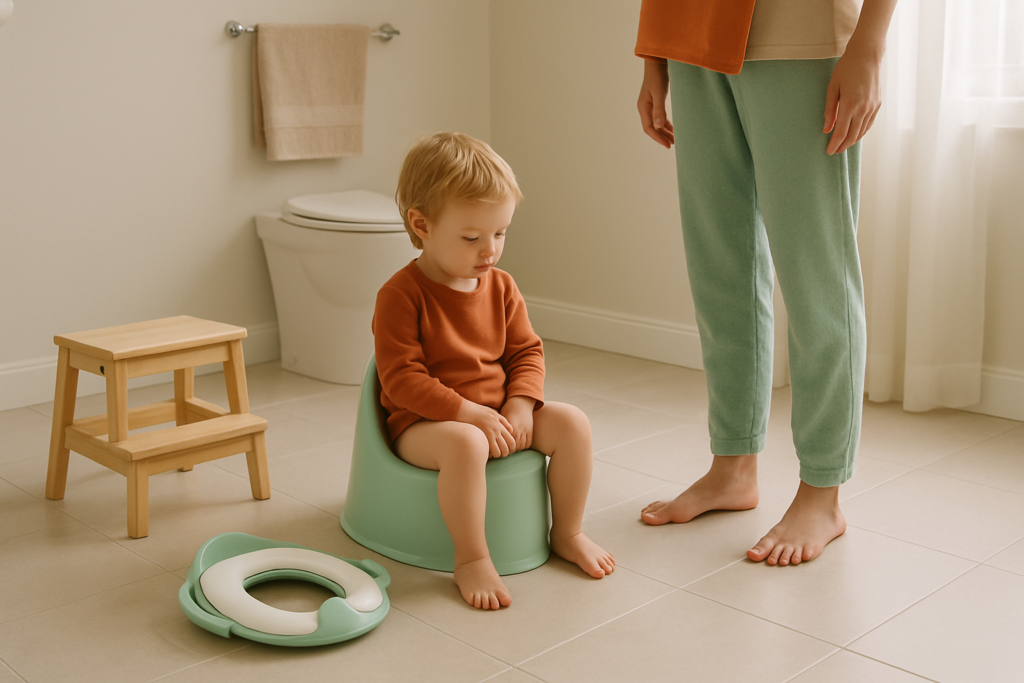
The fortnight before day one is the best time to read a chosen book most nights, with the potty sitting visibly in the room and no pressure on the child to sit on it. Let your child handle the potty, sit on it fully dressed if they want to, and get used to it being furniture rather than an event.
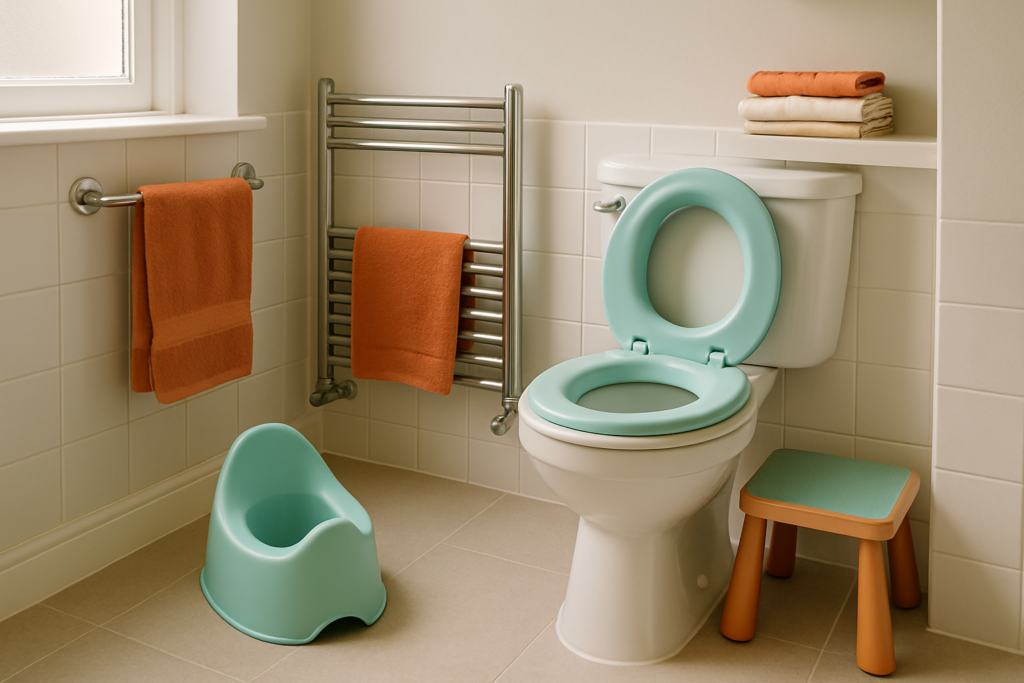
It also helps to give your child a proper look at the rest of the bathroom kit before the day itself, rather than introducing a step stool or a toilet seat reducer for the first time mid-training. Our guide to what you need in your potty training kit covers what to have ready.
Combining a familiar book with a bathroom that holds no surprises means day one is about the training itself, not about a child meeting three new objects at once.
Why books alone do not get a child out of nappies
Many parents find day four or five the hardest of the whole week, once the novelty has worn off and the child gets tired of being asked, rather than the second day as is sometimes assumed. A book cannot tell you what to do on that day, or on any day when there have been six accidents already. That is where a structured plan earns its place: it says what happens on the good days and the difficult ones, and it gives you somewhere to ask a question when things go sideways.
The Potty Training Box is built around exactly that gap. It gives you a day-by-day plan that covers the good days and the bad ones, tracking schedules that help you learn when this particular child actually needs to go, and a year of access to a community where you can ask real questions when you get stuck. When you fill in one of those tracking schedules, it helps to let your child drink a full cup in one go rather than sipping it across the morning, since that is what actually lets you see the link between how much they drank and how long it took before they needed to go. Rather than constantly offering the potty, the method has you ask your child something closer to ‘will you tell me when you need a wee’, with a few fixed exceptions such as before and after sleep and before you leave the house, both during the training week and afterwards.
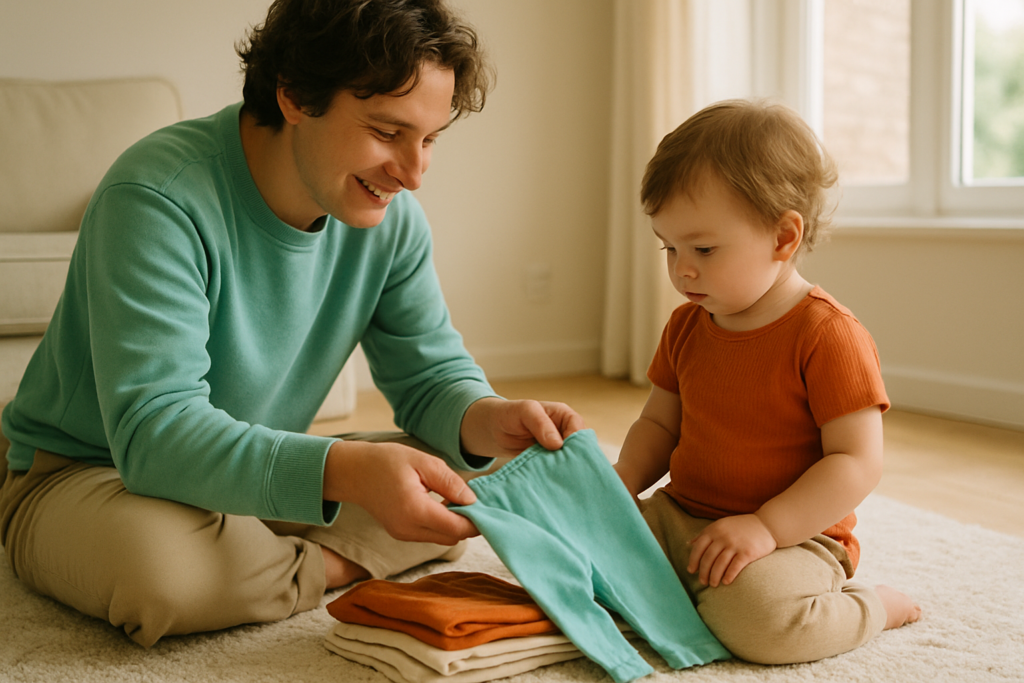
Alongside it, you supply the everyday bathroom kit you already have or pick up beforehand, plus a decent stack of ordinary cotton pants rather than any kind of training pants, since a child feels an accident in cotton in a way that helps the lesson stick.
If you would rather try the method your own way without the physical box, separate, small, increasingly-spaced reward systems are available on their own, and our complete guide to potty training and our potty training tips for toddlers are worth reading alongside whichever books you choose.
My child is frightened of the potty or the toilet. Which books help?
If your child is genuinely scared of the potty or the toilet, that is a sign they are not ready yet, and the honest answer is to build familiarity first and start properly later. Gentle, low-key stories work better here than anything that pushes towards sitting down.
If an attempt has already started and is not going well, stopping and leaving it a few weeks before trying again is part of the method itself, not a sign that anything has failed.
Leave the potty out in the living room as an ordinary object, with no expectation that your child sits on it at all. Some children need weeks of the potty simply existing in the room before they will go near it, and that is a normal pace for a cautious child, including a highly sensitive child.
If the fear seems to be about pain, or your child is regularly withholding poo, straining, or seems constipated, that is a question for your GP or health visitor rather than something to work through with a book. Ongoing bedwetting past the age of six is also worth raising with a doctor rather than managing alone.
Books and videos for autistic, non-verbal or additional-needs children
Picture sequence books and photo-based social stories, which show each step of the process in real images rather than illustration, tend to work well for children who process visual routines more easily than spoken instruction. The principle is the same as with any toddler: build familiarity before asking for the behaviour itself.
For a non-verbal or autistic child, reading their own signals matters more than waiting for them to say they need to go. That might be a certain wriggle, a pause in play, or a particular sound. Writing that pattern down, in the notes column of a tracking schedule alongside the times a child drank and the times they actually went, is often what turns a vague hunch into something a parent can actually act on.
The same underlying method used with any toddler is used successfully with autistic children, children with Down syndrome, and non-verbal children, usually over a longer stretch of time and with close attention to that child’s own patterns.
What to read yourself, and what to skip
Parent-facing potty training guides often contradict each other on timing, rewards and what to do about accidents, which is exactly why many parents find a single, consistent plan easier to follow than piecing together advice from several books. If you do read around, it helps to notice where a source is offering opinion and where it is offering something checkable.
You may come across the 10-10-10 rule, a suggestion that a parent sits a child on the potty for ten minutes, every ten or so minutes, for ten days. It is a widely circulated piece of online advice rather than guidance from the NHS or from ERIC, and it treats the clock as the thing to follow rather than the child. A more useful habit is to record when your child actually goes, using a tracking chart, and let that pattern guide when you offer the potty. Within a few days, the offering itself should give way to simply asking your child ‘will you tell me when you need a wee’, so the routine hands the responsibility back to them rather than staying on a schedule indefinitely. A printable version of that kind of chart is available at our potty training tracking chart.
Reliable guidance on readiness signs and typical age ranges also exists from the NHS and from ERIC, the Children’s Bowel and Bladder Charity, and both are worth reading before you buy anything at all. BookTrust also maintains booklists of recommended toddler titles, which is a sensible place to check before adding yet another book to the shelf.
Frequently asked questions
What is the best toddler potty training book?
There is no single best book, since the right choice depends on your child's age. For toddlers under two, a short board book like Potty by Leslie Patricelli works well, while two to three year olds tend to respond best to character-led stories such as Pirate Pete's Potty, Princess Polly's Potty or I Want My Potty.
What is the 10, 10, 10 rule for potty training?
The 10-10-10 rule is a popular shortcut that suggests sitting a child on the potty for ten minutes, roughly every ten minutes, for ten days. It is not official NHS or ERIC guidance, and it works on a fixed clock rather than on the child's own signals, which is why many parents find it exhausting to keep up and hard on the child.
Is age 3 too late to potty train?
No, age 3 is not too late, and readiness matters far more than the exact age. Some children are ready before two, others are not comfortable until closer to three or four, and a slightly older, genuinely ready child often gets through the process faster than a younger one pushed before they are ready.
Do potty training books actually work?
Books work well for building familiarity and curiosity about the potty and the toilet, and for giving a toddler the words and the concept before it is asked of them directly. They do not, on their own, teach a child to hold on or to notice their body's signals, which is why most families pair a book with a structured plan when they actually begin.
Should my toddler watch videos while sitting on the potty?
It is better avoided. Sitting time on the potty is meant to help a child notice their own body signals, and a screen competes directly for that attention, so it can make the sitting less useful rather than more relaxed.
How long before starting should I read potty training books?
Around two weeks before your planned start date is a good window. Read the chosen book most evenings, keep the potty visible in the room, and let your child handle it or sit on it dressed with no pressure to actually use it. By the time you begin properly, the potty and the idea of pants should already feel familiar rather than new.
Ready for the next step?
The Potty Training Box holds the day-by-day programme this article is built on: tracking charts that show you when your child actually needs to go, instruction cards for each day, and a reward system that tapers off on its own.
Sources
This article was written with AI assistance and checked by Dustin van de Sande.