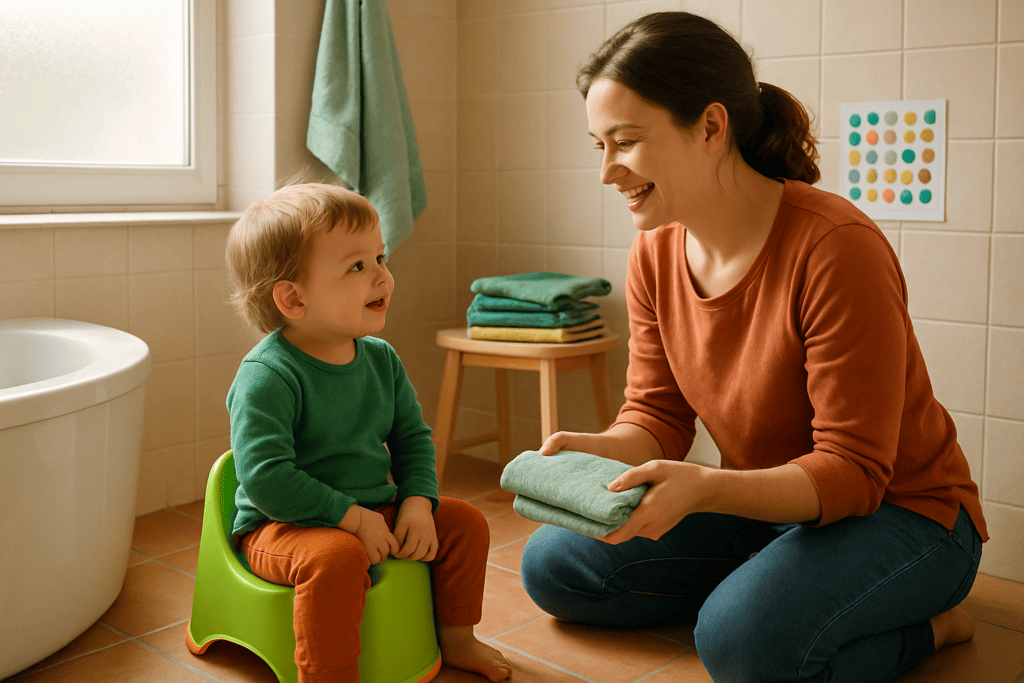

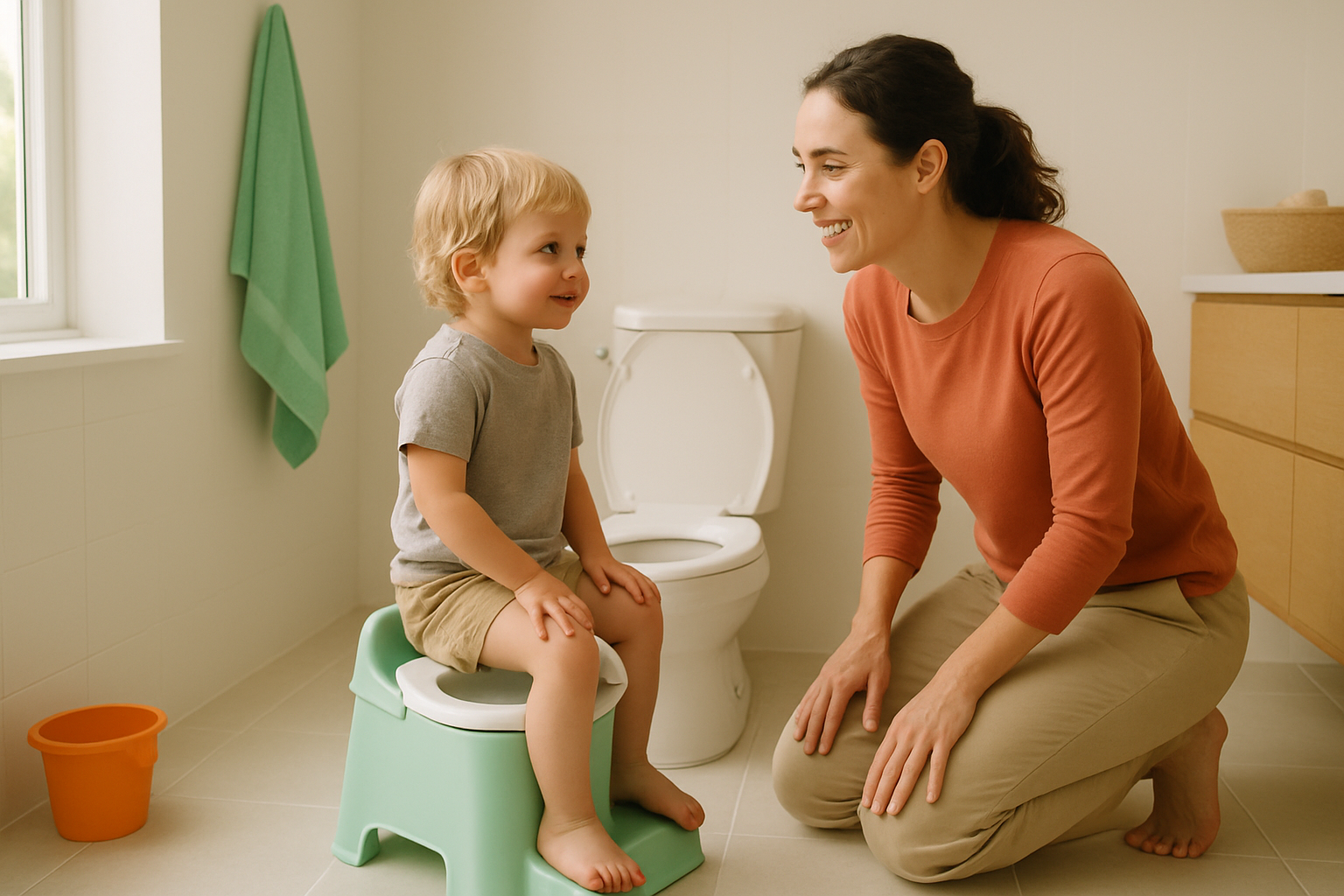
Clear three days at home, get everything ready the night before, then take the nappy off for good on day one, ask your child to tell you when they need a wee, offer the potty as a temporary support at first, record what happens on a tracking chart, and expect day four or five, not day two, to be the hardest day.
What the NHS and ERIC guidance actually tells you (and where it stops)
The NHS Best Start in Life guidance sets out five steps: talk to your child about using the potty, stop nappies (including pull-ups) during the day, help them get used to sitting on the potty, praise every attempt, and stay calm about accidents. ERIC, the children’s bowel and bladder charity, frames it as three stages: preparation, practice, and perfecting. Bladder & Bowel UK and NCT publish broadly similar advice, and none of it contradicts what follows here.
What none of these organisations set out to do is tell you what 7am on day one actually looks like, what day four feels like when your child starts refusing to sit down, or how long to persevere before deciding to stop and try again later. That is the gap this article fills. Nothing here should be read as an NHS or ERIC endorsement of any product; they are cited as sources for the guidance itself, not as recommending anything sold on this site.
Is my child ready, or should we wait a few weeks?
Most UK children start somewhere between 18 months and 3 years old, with the NHS and ERIC both noting that many begin between age 2 and 3. There is no single correct age, and starting a few weeks later than a friend’s child or a nursery’s suggested cut-off is not falling behind.
Look for staying dry for an hour or two at a stretch, showing awareness that they are doing a wee or a poo, interest in the toilet or potty, being able to pull their own pants down, and following a simple two-step instruction. Bladder & Bowel UK lists similar signs as part of readiness. A child who is frightened of the potty or the toilet is not ready yet, whatever their age: the better move is to build familiarity gently first, let the potty sit unused in the bathroom for a while, and start the actual week later. The box itself keeps perfectly well until then.
If you’re dealing with ongoing constipation, a child who withholds poo, pain on weeing, or bedwetting past the age of 6, that belongs with a GP or health visitor rather than a potty training plan, however good.
What to have ready before day one
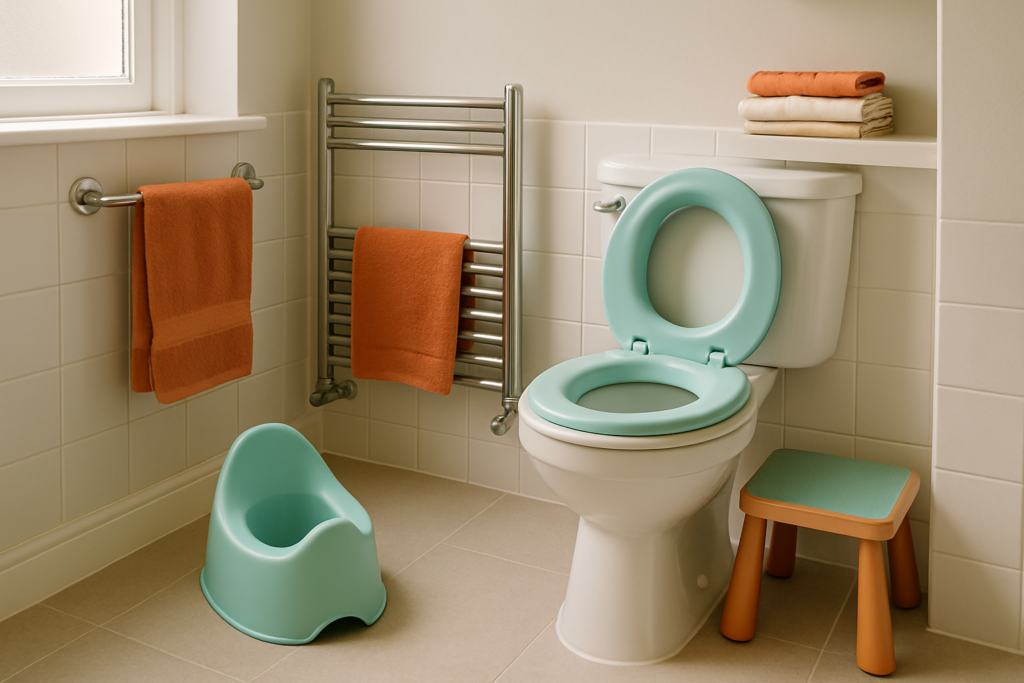
Have to hand a potty, a toilet seat reducer, a step stool, at least fifteen pairs of ordinary cotton pants, something to protect the mattress and sofa, a handful of small rewards, and pull-ups for sleeping only. Cotton pants rather than padded training pants matter here, because your child needs to actually feel a wet pair of pants to make sense of what just happened.
What tends to keep the week calm is clearing three full days at home in the diary before you start, with no nursery, no visitors, and no errands. For a practical rundown of which items are genuinely worth buying and which you can skip, see what is actually worth buying. You’ll also want a way to record when your child actually goes: the Potty Training Box includes fourteen tracking schedules for exactly this, or you can use the free printable tracking chart to note down drink and toilet times as you go. If you’d rather put your own reward system together instead of using the sticker cards, separate reward systems are sold on their own too.
What the first morning actually looks like
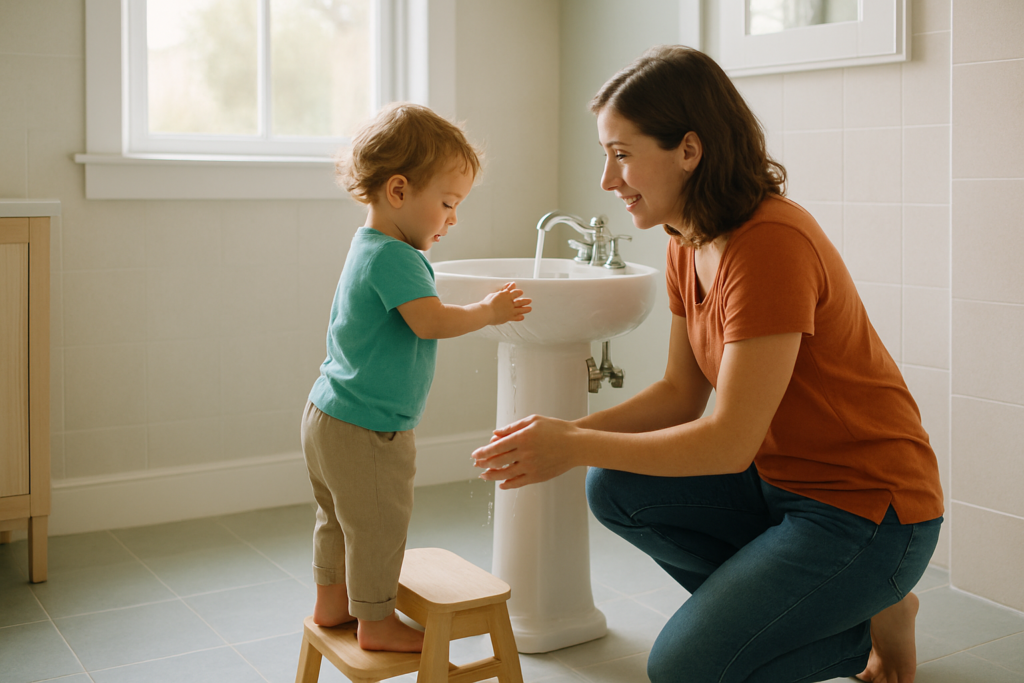
The nappy comes off first thing on day one and stays off for the whole day, with a pull-up kept only for sleep, whether that’s the afternoon nap or overnight. The training works with the nappy off and ordinary cotton pants rather than padded training pants, because a child feels a wet pair of cotton pants properly and a training pant can feel too much like the nappy it’s replacing. Rather than announcing every ten minutes that it’s time to try the potty, the more useful sentence is simply asking your child to tell you when they need a wee, which starts putting the responsibility with them from the very first hour.
Give your child a full cup to drink in one go rather than sipping it across the morning. A cup drunk all at once lets you see how long it actually takes before that particular child needs to go, which is the whole point of the tracking schedule: a column for the time they drank, the time they sat on the toilet, whether nothing happened, wee marked green for success or red for an accident, poo the same way, and a notes column for anything else worth remembering.
Keep the potty in the room with you for the first three days rather than tucked away in the bathroom. When the first accident happens, and it will, a calm, matter-of-fact response works better than a big reaction either way. Praise that names exactly what happened, such as noticing your child telling you they needed to go, works better than a generic well done, and it’s exactly what the compliment cards in the box are there to prompt when you’ve run out of ways to say it. The first sticker card has just three squares, so the first reward comes quickly and your child sees straight away that the whole thing works.
Days two and three: still at home, and why that matters
By day two, patterns usually start showing up in whatever you’ve been recording: how long after a drink your child tends to need the toilet, and whether a poo has a rough usual time of day. That pattern is the actual point of the tracking schedule, not a coincidence you happen to notice.
This is also when many families move from the potty to the toilet itself, using the seat reducer and step stool so your child can climb up and sit securely on their own. Keep staying at home through day three if you possibly can: repetition in a familiar place, without the extra pressure of somewhere new, is what tends to help this stick.
You’ll likely find yourself prompting less by day three, simply because your child has started telling you some of the time without being asked. As successes become more reliable, the sticker cards step up from three squares to five, so the reward still lands but is a little less frequent than it was on day one.
Day four or five is usually the hardest day, not day two
Resistance most often shows up on day four or five, not day two, and it usually comes from your child being bored of being asked the same question over and over. By this point they’ve heard ‘you tell me when you need a wee’ dozens of times, and some children respond by refusing to sit at all, or by ignoring the question altogether.
The fix is to ask less often, not more. Handing responsibility back to your child, rather than tightening the routine, is what actually gets things moving again. If your child flatly refuses to sit down, don’t insist or turn it into a standoff: step back for an hour, keep the potty or toilet available, and let the invitation come from you far less often for the rest of the day.
There’s a difference between an ordinary wobble and a genuine signal to stop. A wobble looks like grumbling, one refusal, or a rough half day; a genuine signal to pause looks like real distress, several days of no progress at all, or a child who seems frightened rather than just fed up. The method’s own advice, if a week genuinely isn’t working, is to stop and leave it a few weeks before trying again rather than pushing through, and that pause counts as part of doing it properly, not as having failed. For more on what a setback during or after training tends to look like, see accidents and regression.
How often should I put my child on the potty?
There is no fixed interval to aim for, and putting a child on the potty every thirty minutes by the clock is a different approach from the one described here. Early on, in the first day or two, you offer the potty fairly often simply to create chances and see what happens, and that offering is scaffolding rather than the method itself.
As your child starts telling you some of the time, you offer less and less, so that by the end of the week the asking has mostly given way to your child’s own signal. Two moments carry on as standing habits both during training and long after it: before and after sleep, and before you leave the house. Everything else follows what you’ve actually recorded, not a schedule imposed on your child.
This is exactly what the tracking schedule is for: reading this particular child’s timing from what actually happened, not deciding in advance how often they should go and sitting them down to match it.
Accidents: what to say, what to clean, when to worry
Expect several accidents a day at the start, tailing off as the week goes on. This is ordinary and expected, not a sign anything has gone wrong, and the NHS guidance is explicit that a calm response to accidents is one of the five steps, not an optional extra.
Say something short and factual, such as ‘never mind, next time you’ll tell me’, rather than anything that sounds like disappointment or telling off. Avoid making a fuss either way, since a big reaction to an accident and a huge reaction to a success both put too much weight on the moment.
Recording each attempt in green for a success and red for an accident on the tracking schedule lets you see real progress across the days, even on days that feel like they’ve gone backwards. Poo very often lags behind wee by days or sometimes a couple of weeks, which is normal rather than a sign the whole thing has stalled; if your child is consistently withholding poo or seems to be in pain, see when your toddler will not poo on the potty. Ongoing constipation, pain on weeing, or holding poo in for long stretches is worth raising with a GP or health visitor rather than working through alone.
First outings, nursery and reception: how to hand it over
Once the three days at home are behind you, a short first outing is the next step, not a full day out. Use the toilet immediately before leaving, pack spare pants, and resist the urge to put a nappy on ‘just in case’, since that undoes a lot of what the week has built.
Tell nursery plainly what stage you’re at: that your child is being asked to tell an adult when they need a wee rather than being taken on a timetable, roughly how often that’s working, and which sticker card size you’re currently on so they can keep praise consistent. Most nurseries have handled this many times before and will follow your lead.
In England, children starting reception are generally expected to be out of nappies in the daytime, though accidents at school still happen occasionally even in children who’ve been dry for months, and that’s normal rather than a sign of falling behind. Pull-ups stay for sleep only throughout this whole process; night-time dryness is a separate skill that tends to come later on its own and isn’t something any potty training week promises.
How long does it take, honestly?
Most children who are genuinely ready become dry in the daytime in about a week. Some manage it in as little as three days, others take two to three weeks, and a child who clearly isn’t ready yet is better off waiting a while than being pushed through a week that isn’t going to stick.
There are no guarantees with any method, and night-time dryness comes later and separately; the box does not promise it and neither does any of the public guidance. The table below sets out roughly what each day tends to involve.
| Day | What you do | What to expect |
|---|---|---|
| Day 1 | Ask your child to tell you when they need a wee, offer the potty as temporary support, record everything | At home; frequent accidents, first success and first sticker |
| Day 2 | Still at home; keep recording drink and toilet times | Patterns start to appear in what you’ve recorded |
| Day 3 | Still at home; move from potty to toilet if your child is ready | Fewer prompts needed, some accidents still likely |
| Day 4 or 5 | Ask less often, not more; hand responsibility back | The hardest day for most families, often with resistance or refusal |
| Day 6 | Short first outing once things have settled again | More reliable signalling, sticker cards moving up |
| Day 7 | Ordinary life resumes, with pull-ups kept for sleep | Most children reliably dry in the daytime by around now |
For the fuller, day-by-day expansion of everything above, see the full day-by-day plan for the week. If you’re still weighing up whether a structured kit is worth it at all compared with piecing your own approach together, an honest look at potty training kits covers that question directly.
Where the Potty Training Box fits alongside the NHS advice
The Potty Training Box is a physical box built around the guidance above rather than a replacement for it. Inside is a training programme booklet that walks you through the week day by day, tracking schedules to record this child’s own pattern, sticker cards that grow from three squares up to nine as success becomes more reliable, and a year of access to a community where the brand’s own experts answer questions seven days a week.
What it adds over reading the NHS and ERIC pages is specific: what to actually do on day one, day two and day three, including what to do on the days that go badly, plus people to ask when something isn’t working. It’s reusable for a younger sibling later on, and refill sticker sets can be bought separately when the originals run out.
If you’d rather follow the same principles in your own way rather than use the box itself, separate reward systems are available on their own for parents who want to build their own version of the sticker progression. The same underlying approach, reading a child’s own signals rather than training by the clock, has also been used successfully with autistic children, non-verbal children, and children with Down syndrome, usually over a longer stretch than a single week and by paying close attention to that child’s particular signals rather than waiting for them to say it out loud.
Frequently asked questions
How do I start the first day of potty training?
Clear the diary for three days at home, take the nappy off first thing and keep it off, and ask your child to tell you when they need a wee rather than asking them every few minutes. Have a potty in the room, cotton pants ready, and a way to record drink times and toilet times so you can see the pattern emerge.
What is the 10-10-10 rule for potty training?
The 10-10-10 rule is not part of this method and is not something the NHS or ERIC recommend by that name. This approach works the other way round: you record when your child actually goes rather than sitting them down on a fixed timer, because a rigid interval teaches the clock instead of teaching the child to notice their own body.
What is the correct age to start potty training?
There is no single correct age. The NHS and ERIC both note that most UK children start somewhere between 18 months and 3 years old, with many beginning between age 2 and 3, and readiness signs matter more than a birthday.
What is the fastest way to potty train?
Most children who are genuinely ready become dry in the daytime in about a week when the first three days are spent entirely at home with a consistent, positive approach. Some manage it in as little as three days, others take two to three weeks, and there is no guaranteed timeframe for any individual child.
How often should I put my child on the potty during the first week?
There is no fixed interval to aim for. You offer the potty fairly often in the first day or two to create chances and see what happens, then offer it less as your child starts signalling themselves, with before and after sleep and before leaving the house staying as standing moments throughout training and afterwards.
Should I use pull-ups during the day?
No, the NHS guidance and this method both recommend stopping nappies and pull-ups during the day once you start, because a pull-up feels too similar to a nappy for a child to notice they've gone. Pull-ups are kept for sleep only, since night dryness is a separate matter that tends to come later.
Ready for the next step?
The Potty Training Box holds the day-by-day programme this article is built on: tracking charts that show you when your child actually needs to go, instruction cards for each day, and a reward system that tapers off on its own.
Sources
- NHS Best Start in Life
- ERIC (Education and Resources for Improving Childhood Continence)
- NHS Best Start in Life
- ERIC (Education and Resources for Improving Childhood Continence)
- NHS
This article was written with AI assistance and checked by Dustin van de Sande.