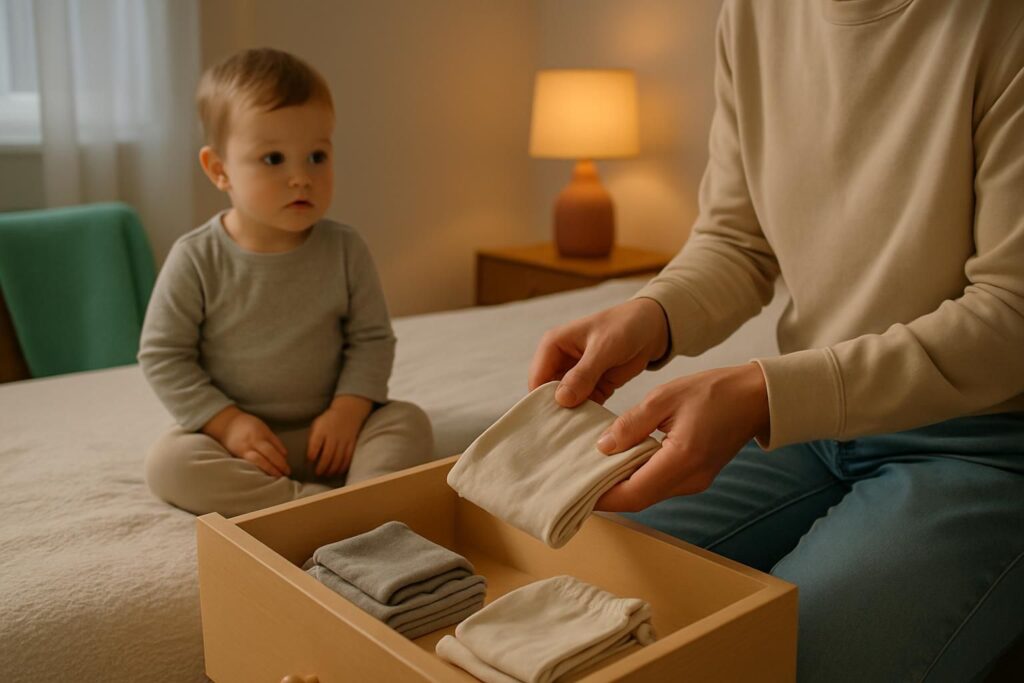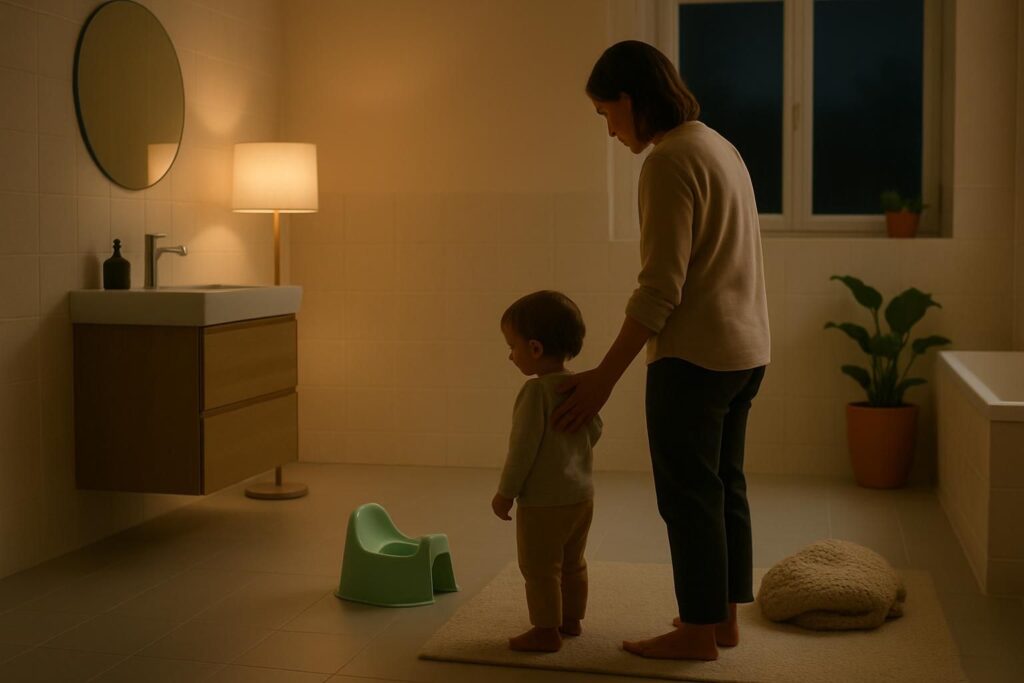

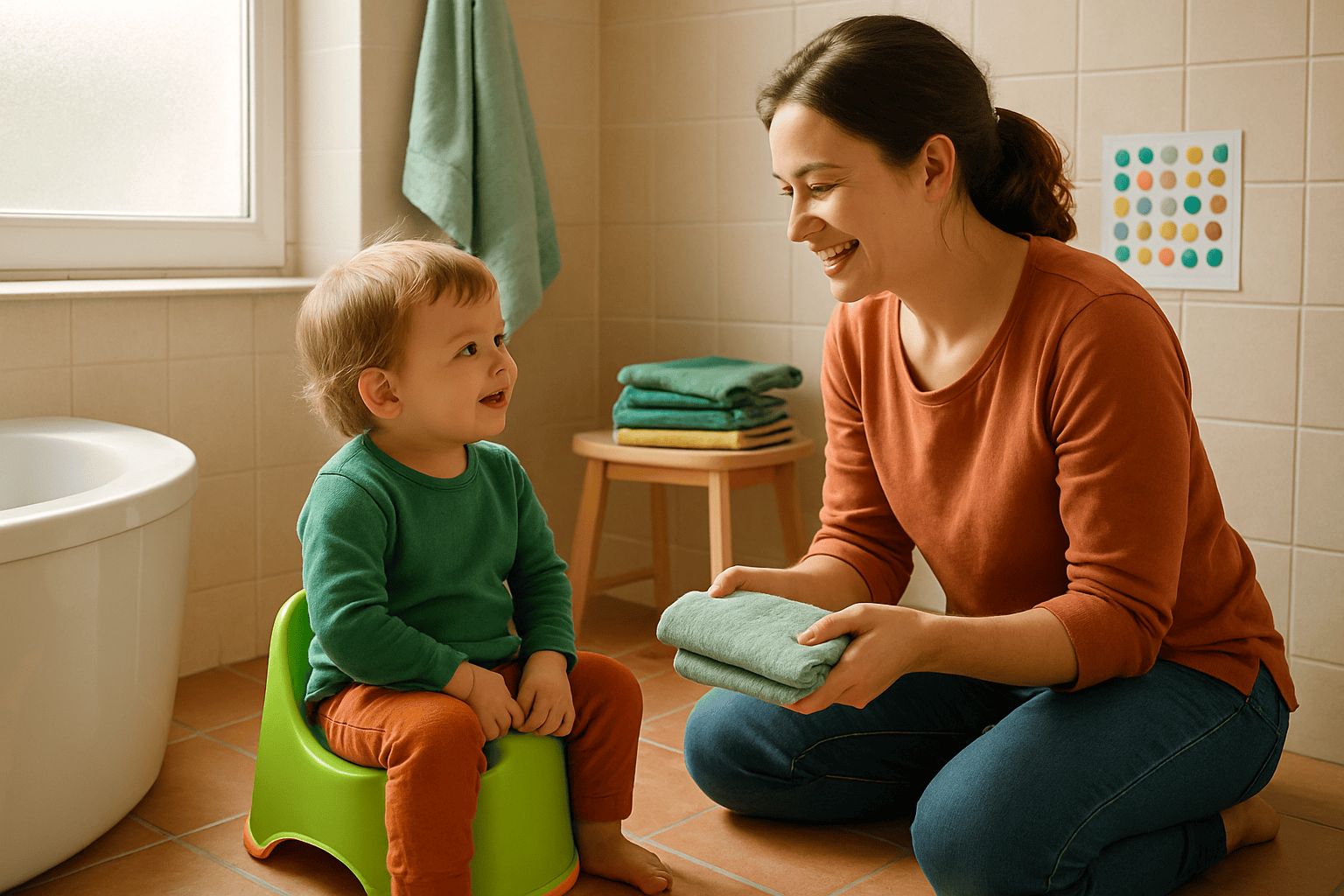
You need a potty (one or two), around 20 to 25 pairs of pants, 8 to 10 pairs of loose bottoms or joggers, floor and car seat protection, a wipeable cleaning kit, a reward system, and a written plan for the week.
Add it up and the total spend is modest. A basic potty is one of the cheaper items on the list, pants and joggers come in multipacks you may already own some of, and most of the cost sits in laundry-related items rather than anything electronic or gadget-like. The Potty Training Box adds a written, week-long plan on top of what you already have ready at home, so you are working from one clear programme rather than working it out yourself as you go. Exact contents are listed on the product page itself, since ranges change, but the idea is the same as building your own kit: the physical items plus a plan for what to do with them.
The NHS lists signs that a child may be ready to start potty training, such as staying dry for longer, telling you they need a wee, or showing an interest in the potty, and notes that children reach these signs at different times, commonly somewhere between around 18 months and 3 years old. Buying your kit once you spot a couple of these signs, rather than by a fixed age, tends to save you money on items your child is not yet ready to use.
How many pairs of pants do you need for potty training?
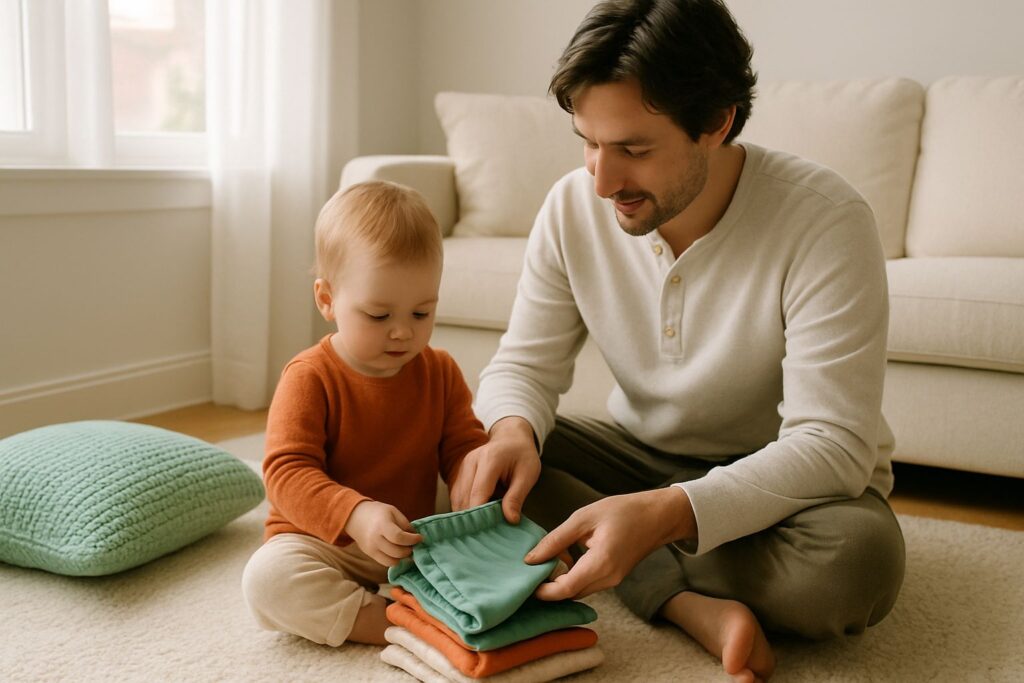
Aim for around 20 to 25 pairs so you can get through the first two or three days without a laundry emergency. That sounds like a lot the first time you read it, but pants get wet, changed, and washed in quick succession during the early days, and a single pack of five or seven will not stretch far enough.
Many parents report a run of accidents through the early days as their child learns to notice the feeling in time to act on it. Washing a full load on the evening of day one helps, so you are not down to your last clean pair by day three, but it does not replace having a proper stack to start with.
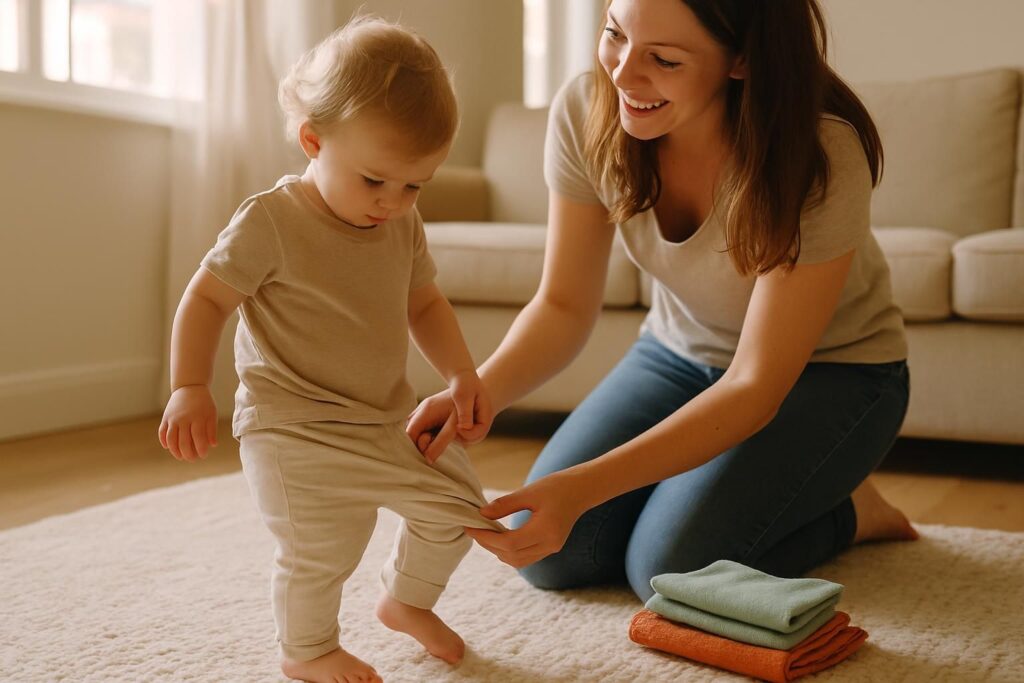
Letting your child choose their own pants, whether that is a favourite character, a colour, or simply picking them off the shelf themselves, genuinely helps with motivation. A child who chose the pants tends to care more about keeping them dry than one handed a plain pair with no say in the matter. Buy a size up from your child’s usual clothing size too, since slightly loose pants are easier for a toddler to pull up and down alone.
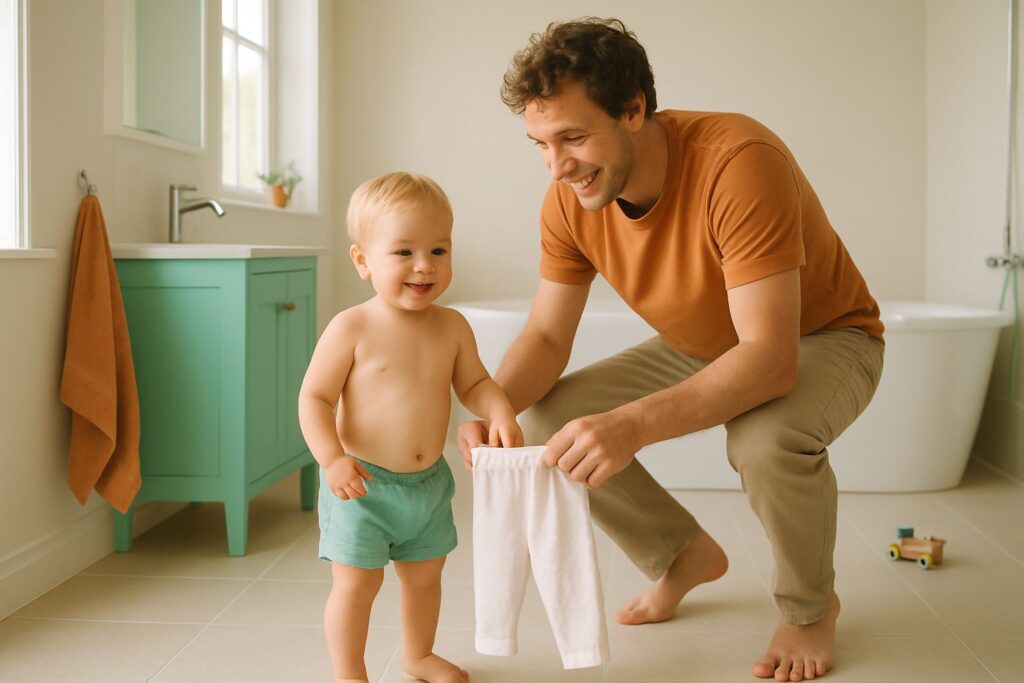
Some families skip pants altogether for the first day or two indoors and let their child go bare from the waist down. This cuts the laundry considerably, since bare skin makes the sensation of wetting obvious immediately, though it only works well if your flooring can take the odd puddle, so hard floors or a washable rug in the main room make this easier than deep-pile carpet.
Potty or toilet seat with a step: which is better for a toddler?
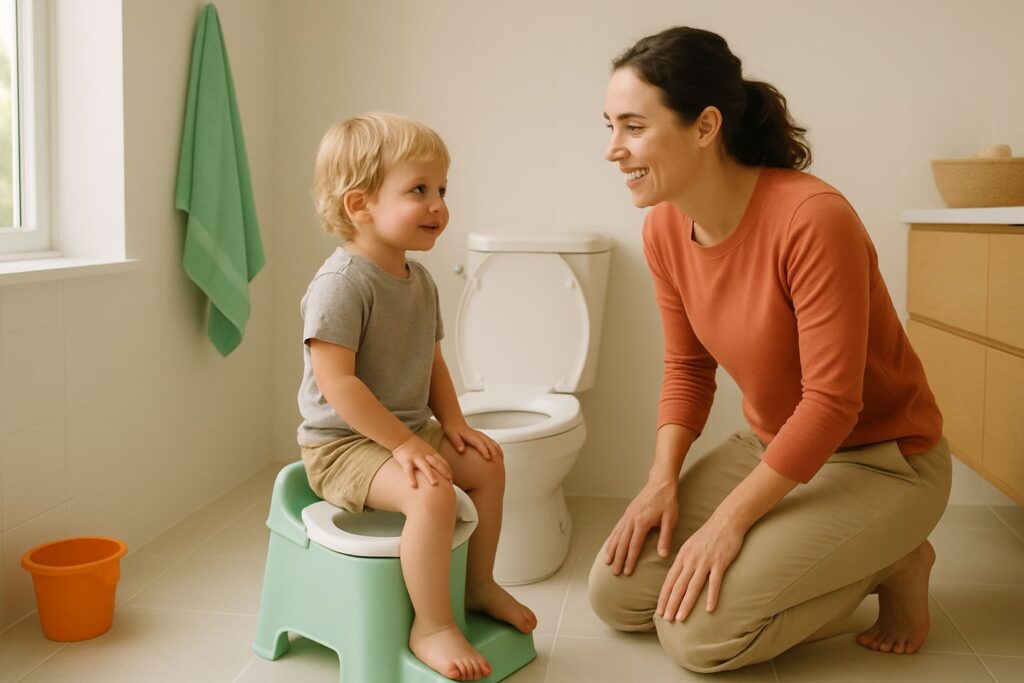
A potty suits most children under three because their feet sit flat on the floor, which makes it easier to push, with no height and no fear of falling into the loo. A toilet seat insert with a sturdy step stool tends to suit children who are taller, a little older, or already keen to copy the grown-ups in the house.
ERIC, The Children’s Bowel and Bladder Charity, highlights that having feet properly supported, whether flat on the floor with a potty or braced on a step stool with a toilet insert, helps a child feel stable enough to relax. A child whose feet are dangling in mid-air is more likely to hold on than to settle.
Plenty of families end up owning both a potty and a toilet insert within the first month. That is a common and sensible outcome, not a sign of poor planning: children often start on the potty and move to the loo a few weeks later once they are confident.
A potty with a removable inner bowl is worth the extra pound or two, since it lifts out for emptying and rinsing without you tipping and scrubbing the whole unit over the toilet. A cheap fold-flat travel potty earns its keep the moment you leave the house, fitting in a change bag and working on the back seat of the car once you have pulled over, lined with a bin liner for an easy clean-up.
| Feature | Potty | Toilet seat with step |
|---|---|---|
| Best for | Under 3s and children nervous of the big loo | Older or taller toddlers, and children already keen to copy adults |
| Feet support | Flat on the floor, fully supported | Supported on the step, but higher off the ground |
| Fear factor | Low: nothing to fall into, no flush noise | Can trigger fear of falling in or of the flush for some children |
| Emptying and portability | Portable, easy to empty and rinse, especially with a removable bowl | Not portable; needs a step stool alongside it |
How many potties do you need, and where should you put them?
Two potties is the sweet spot for most homes: one downstairs where your child plays, and one upstairs, typically the bathroom or bedroom. A toddler often has only a few seconds of warning before they need to go, and that gap is the difference between a catch and a puddle.
Keep the potty out in the open, in the room you are actually in together, rather than tidied away in the bathroom out of sight. Once your child is reliably catching wees, move the potty gradually closer to the bathroom over a week or two, a metre or so at a time.
If you live in a flat or a house over three floors, put a spare potty on whichever floor your child spends the second most time on. It is worth keeping a spare at grandparents’ houses your child visits often, and mentioning to nursery or your childminder what your child is used to, so the routine stays consistent wherever they are.
The full potty training supplies checklist (with quantities)
Here is every potty training item worth owning before day one, with quantities and whether it is essential or optional. Night-time dryness usually follows daytime dryness by some months, so treat any night items as optional until you get there.
| Item | How many | Essential or optional, and why |
|---|---|---|
| Potty | 1 to 2 | Essential. A second one shortens the distance to a catch. |
| Pants | 20 to 25 pairs | Essential. Gets you through the accident-heavy first days. |
| Loose bottoms or joggers | 8 to 10 | Essential. Quick to pull down alone and quick to change. |
| Socks or slippers | A few spare pairs | Optional. Get wet along with everything else. |
| Waterproof mattress protector | 1 to 2 | Essential for nights, optional for days only. |
| Car seat liner or old towel | 1 | Essential once you leave the house. |
| Kitchen roll and antibacterial spray | 1 of each | Essential. Keep it within reach for a week. |
| Laundry bag or bucket | 1 | Optional. Somewhere to sling wet pants. |
| Step stool | 1 | Essential if using a toilet seat insert, also useful for hand washing. |
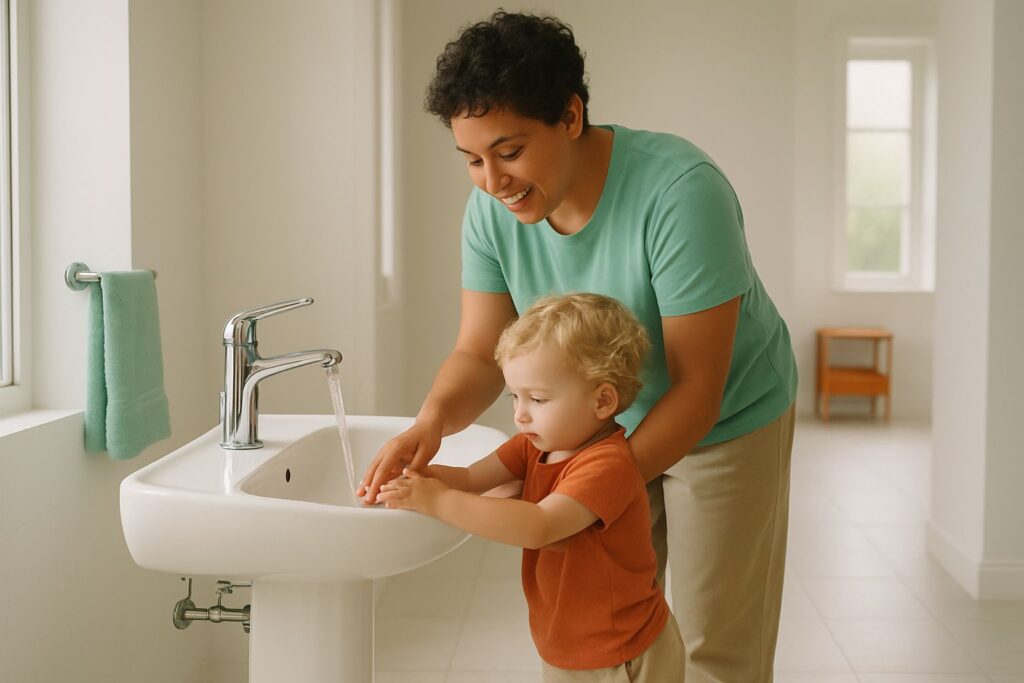
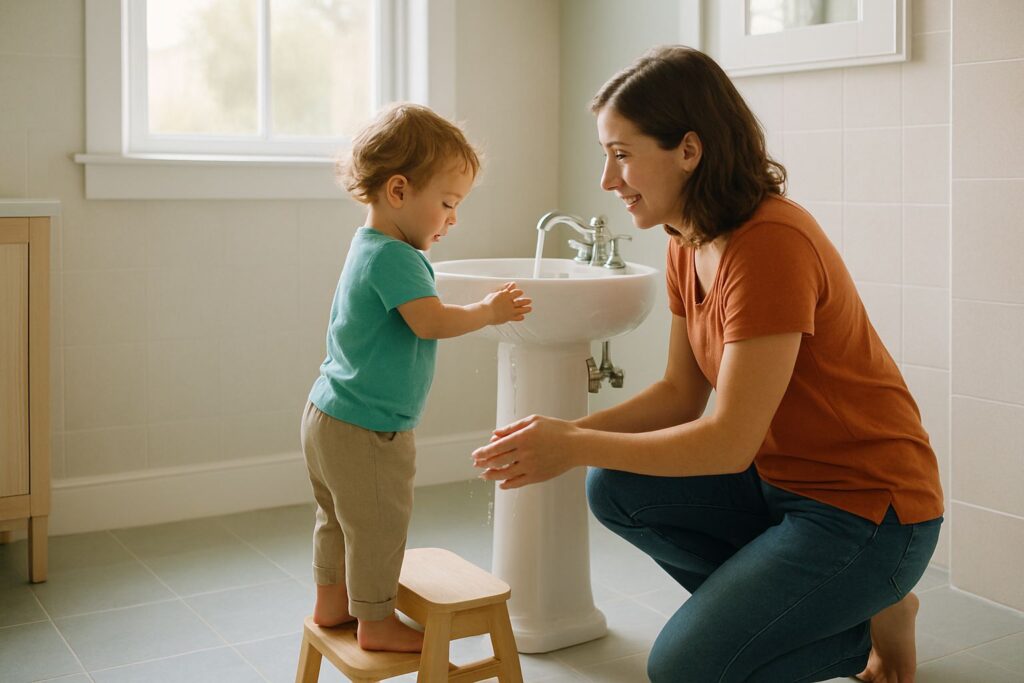
| Hand-washing step | 1 | Optional. A stool at the sink so washing hands after the potty becomes part of the routine from day one. |
| Reward system | 1 | Optional but widely used. |
| Drinks bottle | 1 | Optional. More fluids means more chances to practise. |
| Written plan | 1 | Essential. Tells you what to do with everything else, day by day. |
What is a potty training reward system and do you need one?
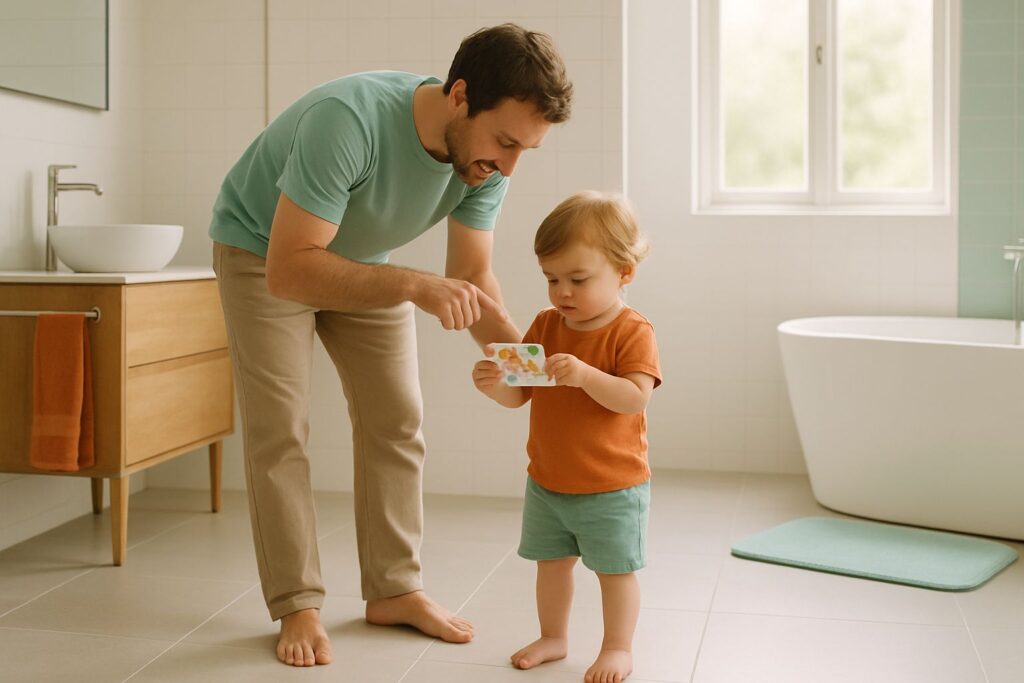
A reward system in this context is something small, immediate and visible that a child gets straight after using the potty, such as a sticker on a chart or a token in a jar. It does not need to be elaborate: a sticker handed over within seconds of success does more for a three-year-old than a promised trip to the zoo at the weekend, because immediate feedback links directly to the action that earned it.
Food rewards, particularly sweets, are worth thinking twice about before you start. They work in the moment but can quickly turn into an expectation, and unpicking a sweets-for-wees habit later is generally harder than not starting it in the first place.
Treat any reward system as scaffolding rather than a permanent fixture. Many families find it fades out naturally over a week or two, once using the potty has simply become what happens rather than something that needs celebrating every time. A ready-made reward system for potty training gives you the chart and tokens in one go, and there are versions aimed at a reward system for boys and a reward system for girls if your child responds better to a theme that feels like theirs.
Searches for a potty training toy often mean a doll or teddy that wets, sold specifically to model the routine before a child tries it themselves. You sit the doll on a toy potty, talk through what is happening, and let your child copy the steps with someone other than themselves first. A plain toy your child already owns, one they are attached to, can usually do the same job without you buying anything new: the point is rehearsal and familiarity, not the toy itself.
What can you safely skip?
Pull-ups for daytime are the most common thing parents buy and then wish they had not. For many children, a pull-up feels enough like a nappy that it blurs the message that today is different, which is a practical observation from what parents commonly report rather than a firm rule. Pull-ups still earn their keep for nights, naps and long car journeys, so nothing you have already bought is wasted.
Musical or light-up potties turn the loo into a toy in its own right, which can distract a child from the actual task at hand. A plain potty does the job just as well and costs a fraction of the price.
You do not need an expensive potty for every room in the house. A cheap plastic spare from a supermarket or pound shop does exactly the same job as a premium one costing five times as much.
Full sets of branded potty training pants with built-in padding are worth questioning if your aim is for your child to feel wet when they have an accident. Padding that absorbs moisture works against that goal in the same way a pull-up does, so plain cotton pants are usually the better choice for daytime.
Potty training watches and timers, which buzz at set intervals to prompt a toilet trip, do not suit most families starting out, since a written plan and a bit of routine cover the same ground for free. They can suit older children who are largely trained but still need occasional prompting, or families managing this alongside additional needs, where a specialist has suggested one.
A toilet seat insert bought before you know whether your child is even willing to sit on the big loo is an easy way to spend money on something that sits in a cupboard. Wait until your child shows curiosity about the toilet itself before adding this to the trolley.
None of this is a judgement on anything you have already bought. It is simply where the next pound is best spent, and where it is not.
What does a ready-made potty training kit include, and is it worth it?
The Potty Training Box is a structured kit and method aimed at getting a toddler out of nappies in around a week, giving you a day-by-day written plan to follow alongside what you already have ready at home. Buying a box of objects on its own only gets you halfway there; the plan is what tells you what to do with the potty, the pants and the reward chart on day one, day three and day six, rather than leaving you to work it out as you go.
For parents who already own most of the physical items, whether from a previous attempt or simply from having a toddler in the house, the digital handbook offers the plan on its own without duplicating things sitting in a cupboard already.
As with any potty training approach, the Potty Training Box helps and supports a structured week, it does not guarantee a particular outcome, since every child moves at their own pace. Buying the items separately from a supermarket and a written plan from a library book or a trusted website is a perfectly reasonable choice too, particularly if you already have most of the kit and simply want quantities right.
A sensible one-week shopping timeline before day one
A week before you start, order pants and a potty, and involve your child in choosing them where you can. Picking out their own pants gives them a stake in the week ahead before it has even begun.
Three days before, wash everything so it is ready to use, clear a bit of floor space in the main room you will be in together, and let nursery or your childminder know what week you have picked, so the approach stays consistent when your child is in their care.
The day before, fill the drinks bottle, set up the sticker chart or reward system where your child can see it, and block out two or three days at home with as few outings as possible.
On day one, the potty, a stack of pants, a couple of changes of loose bottoms and the reward chart should already be in the room with you before your child wakes up, so nothing needs fetching mid-morning. Avoid starting the week you are moving house, going on holiday, or expecting a new baby, since a settled routine at home matters more than any item on the list.
What if you have already bought the wrong things?
Nothing on this list is wasted, even if your first attempt did not go the way you hoped. Pull-ups still work for nights and long car journeys, an unused reward chart can be brought back out for a second attempt, and a potty your child rejected once is not necessarily a potty they will reject again.
A potty that was ignored a few weeks ago is often accepted the second time round, sometimes with no changes at all beyond your child being a little older and more ready. A failed first attempt is common and is not a reason to buy everything again from scratch, nor a reflection on anything you did.
If a week has gone badly, with lots of tears or real distress on both sides, it is usually kinder to pause, put the pants and potty away without fuss, and try again in a few weeks rather than pushing through a bad run. Children who are close to ready but not quite there often need surprisingly little extra time.
Constipation, holding in poo, pain when weeing, or a child who seems distressed rather than simply reluctant are signs that belong with a GP or health visitor, not with a shopping list. These are common, manageable things, but they need a professional’s eyes rather than a change of pants or a different potty.
Frequently asked questions
How many pairs of pants do I need for potty training?
Aim for around 20 to 25 pairs, which covers the accident-heavy first days without a laundry crisis. Wash a full load on the evening of day one regardless, and let your child choose their own pants, since picking them out tends to help with motivation.
Should I buy a potty or a toilet seat with a step?
For most children under three, start with a potty because their feet sit flat on the floor, which ERIC, The Children's Bowel and Bladder Charity, notes helps a child feel stable enough to relax, and there is no fear of falling in. A toilet seat insert with a step stool suits children who are older, taller, or already keen to use the big loo like the adults around them. Many families end up owning both within the first month, which is normal rather than a planning mistake.
Do I need two potties?
Two potties works well for most homes: one downstairs where your child plays and one upstairs near the bathroom. A toddler often only has a few seconds of warning, so cutting the distance to a potty is frequently the difference between a catch and a puddle. One potty is enough if your home is small or on a single level.
Are pull-ups worth buying for daytime potty training?
Pull-ups still have a genuine place for nights, naps and long car journeys, so nothing you already own is wasted. For daytime training, many parents find pull-ups feel too much like a nappy to their child and blur the message that today is different, which is a practical observation rather than a strict rule. If in doubt, try ordinary pants for waking hours and keep pull-ups for sleep.
What is the best age to buy a potty training kit?
There is no single correct age. The NHS lists signs that a child may be ready to start potty training, such as staying dry for longer stretches, telling you they need a wee, or showing an interest in the potty, and these commonly appear somewhere between around 18 months and 3 years old, with every child developing at their own pace. Buy your kit once you spot one or two of these signs in your own child.
Do I need a reward chart or toy to potty train?
A reward chart or small toy is optional, not essential, but many parents find it helps because it gives a toddler something immediate and visible straight after success. A sticker handed over within seconds tends to work better than a bigger reward promised for later, since young children link actions to outcomes best when the gap between them is short. It is a temporary scaffold that many families phase out within a week or two, not something you need to keep up permanently.
Sources
This article was written with AI assistance and checked by Dustin van de Sande.
Ready for the next step?
The Potty Training Box holds the day-by-day programme this article is built on: tracking charts that show you when your child actually needs to go, instruction cards for each day, and a reward system that tapers off on its own.