Nappy-Free Potty Training: What It Really Means (And Is 18 Months Too Young?)

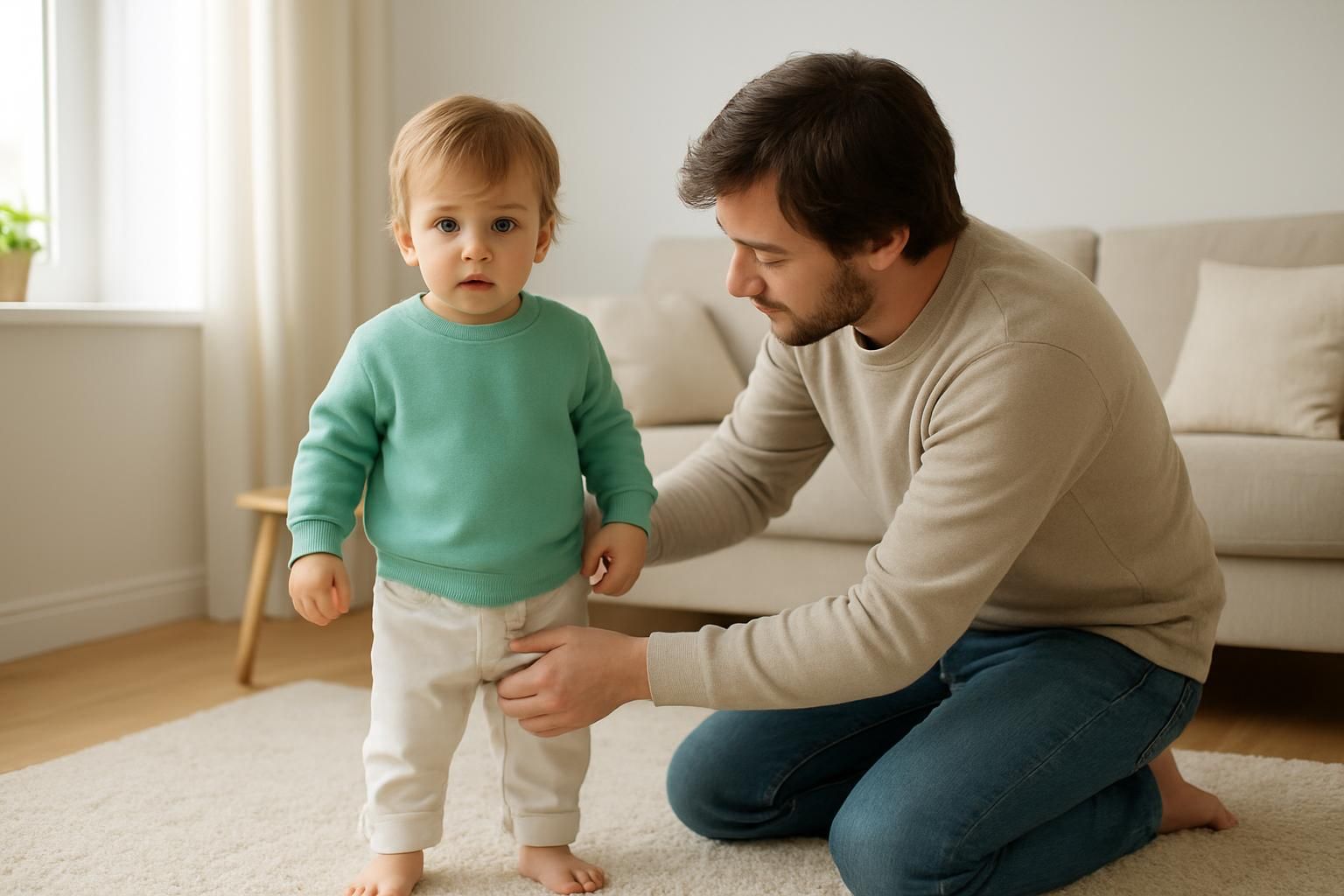
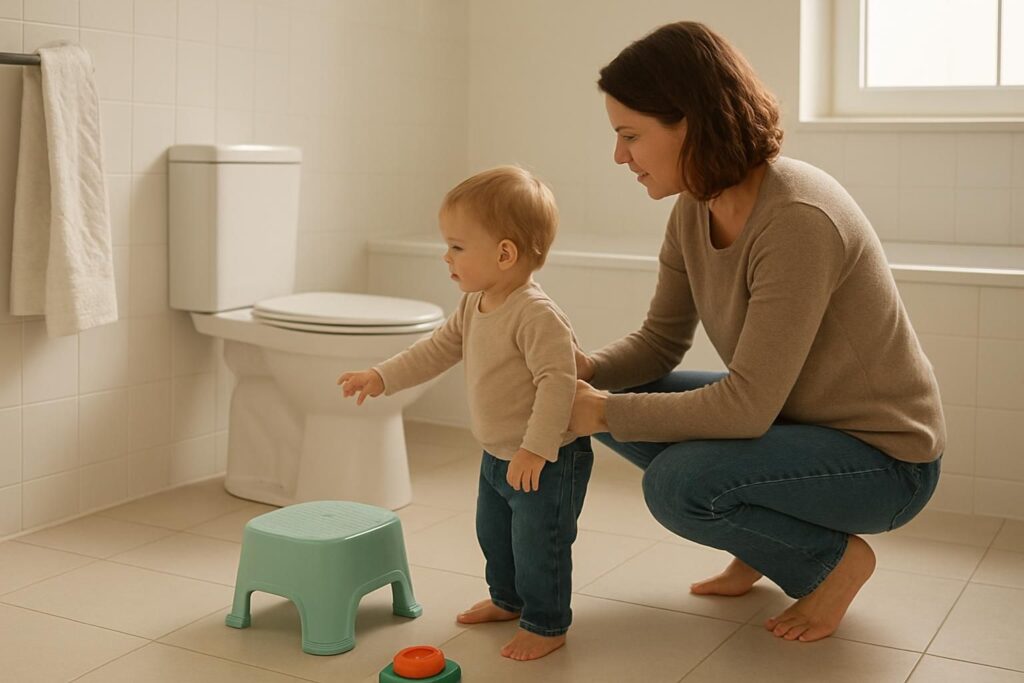
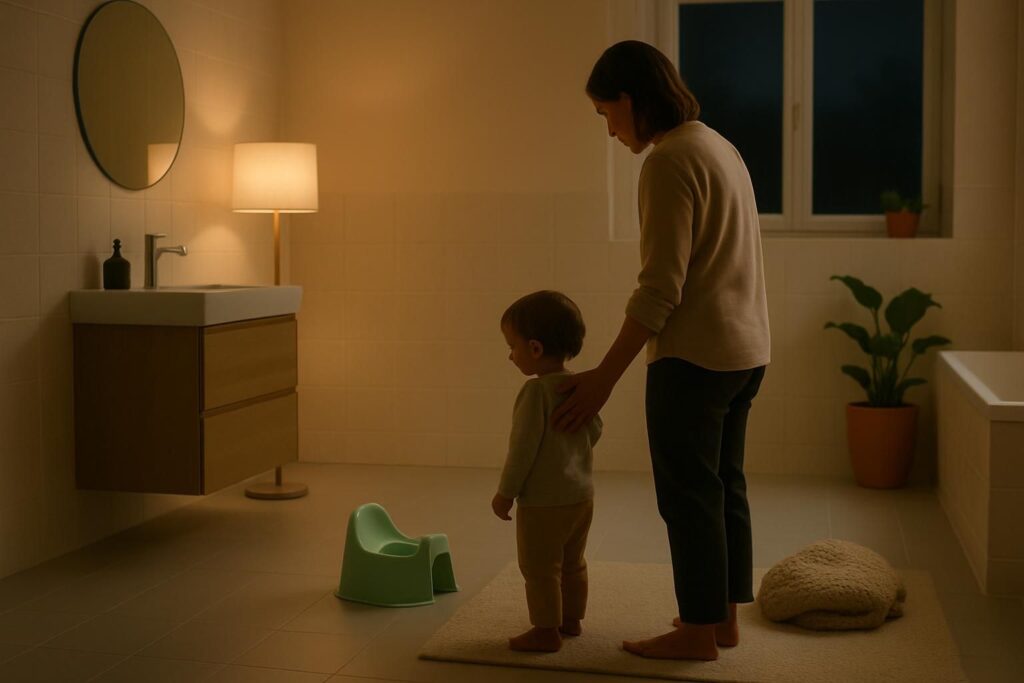
Nappy-free potty training means taking the nappy off during the day for good and putting your toddler in ordinary cotton pants from day one, so they feel wet pants straight away and learn to notice the feeling. Eighteen months is not too young if your child shows readiness signs, though many toddlers are not ready until nearer two or three.
The idea sounds simple but it is easy to get wrong. The point is not to throw your child in at the deep end. It is that cotton pants let a child feel a wet bottom immediately, which is exactly what helps them connect the sensation with the act and, eventually, with the signal to go before it happens. Pull-ups and training pants absorb too well for that learning to happen as quickly, so they stay for sleep rather than for daytime use. Nappy-free training is a toddler method, usually suited to children from around 18 months up to three or four years old, and it typically starts with three days at home before you venture out for short trips.
How is it different from elimination communication?
Elimination communication (EC) starts in babyhood, often from the first few months, and relies on a parent watching a baby’s cues and timing and holding them over a potty or sink at the right moment. Nappy-free toddler training works the other way round: the goal is for the child to say it themselves, which only becomes realistic once they have the language and body awareness to do so. Holding your baby over a potty for a wee now and then is not the same thing as taking the nappy off for good, and parents sometimes confuse the two.
If you like the idea of tuning in early, a book that comes up often is Nappy Free Baby, which leans towards the elimination communication side of things and suits a parent who wants to start that kind of awareness from babyhood. Toddler nappy-free training suits a parent whose child is already walking, talking in short phrases, and showing interest in the toilet or potty.
| Approach | Usual age | What the child learns |
|---|---|---|
| Nappy-free training, cotton pants | 18 months to 4 years | To feel wet pants and eventually signal before it happens |
| Elimination communication | From birth | Parent reads cues; timing is mostly the parent’s job early on |
| Pull-ups worn in the day | Any age | Less immediate feedback, so the signal is learned more slowly |
Is 18 months too early to potty train?
NHS guidance on potty training notes that children typically start showing signs of readiness somewhere between around 18 months and three years, and that becoming reliably dry during the day happens at different ages for different children, with no single correct moment for everyone. What matters more than the number on the calendar is whether your own child is showing the signs below. Some 18 month olds are genuinely ready. Many are not, and starting a few months later is not a failure on anyone’s part, it is just waiting for the right window.
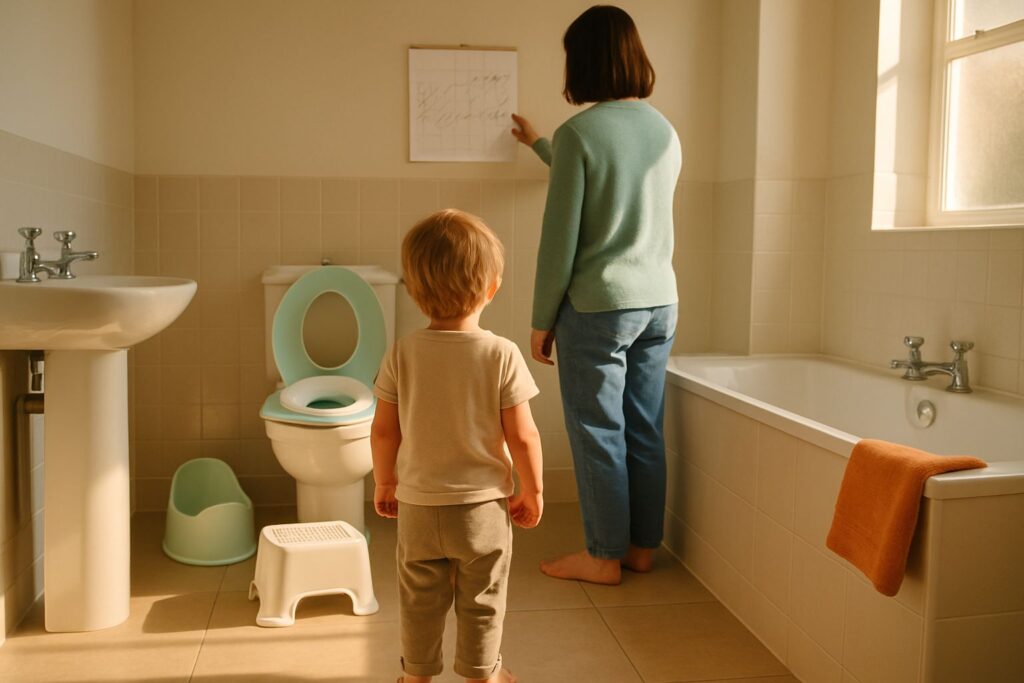
A child who is frightened of the potty or the toilet is not ready yet, whatever their age. The honest move there is to build familiarity gently first, perhaps letting them sit on the potty fully clothed or watch a sibling use the toilet, and try the real thing later.
Watching this together can take the pressure off if the potty itself feels like the sticking point.
How do you know your child is actually ready?
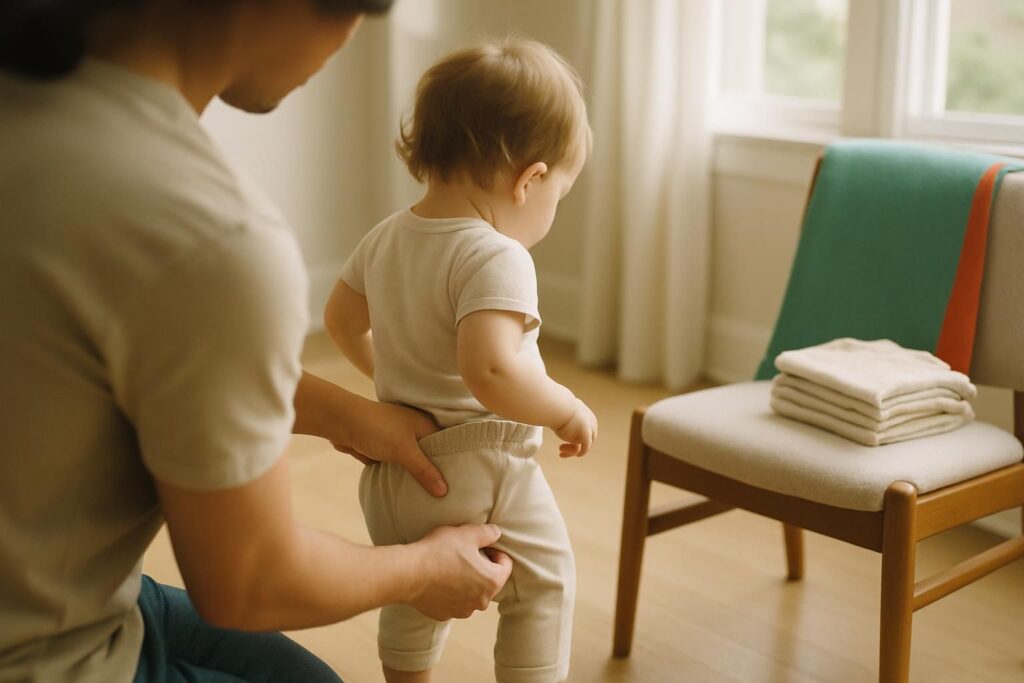
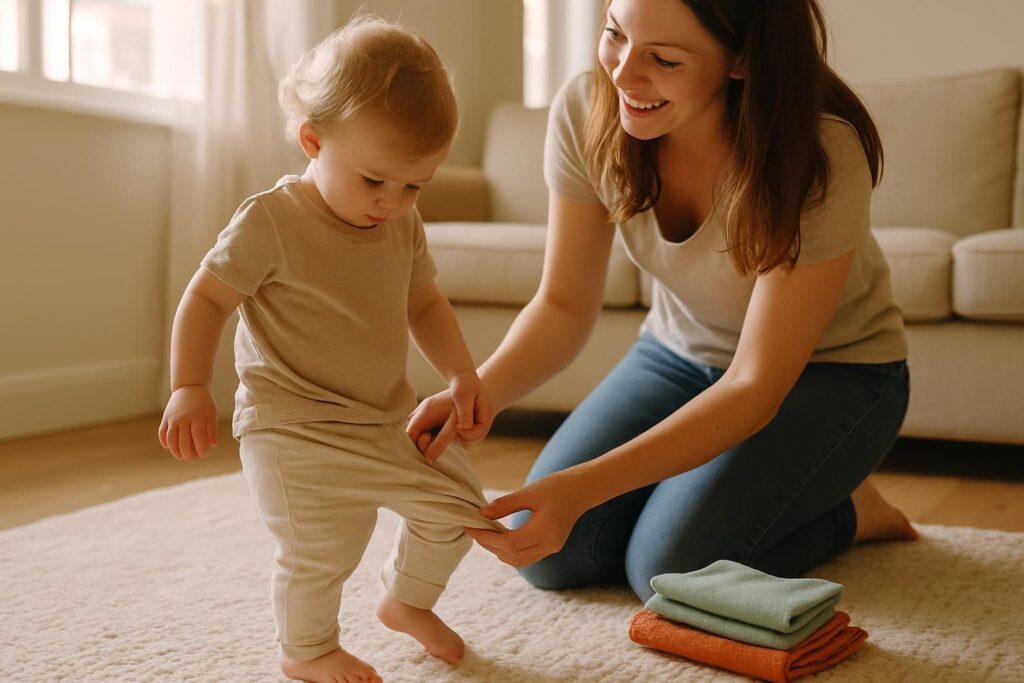
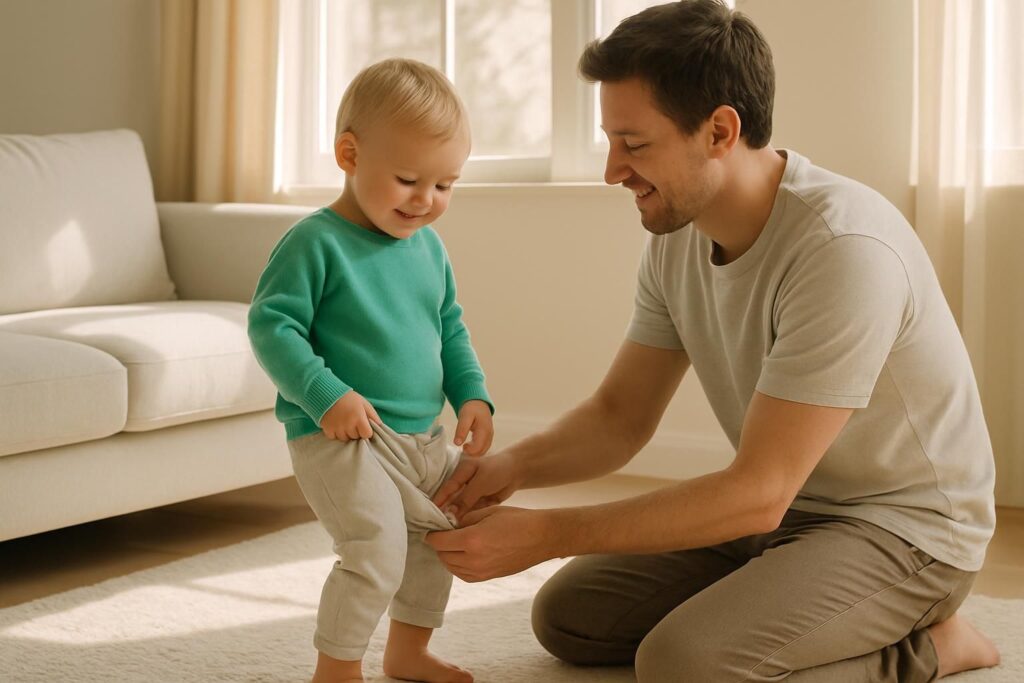
Look for a cluster of signs rather than just one. Useful ones include: staying dry for longer stretches between nappy changes, showing some awareness when their nappy is wet or dirty, following simple two-step instructions, showing curiosity about the toilet or potty, and being able to pull their own pants down and up with a bit of help.
Signs that say wait a while include a child who is upset or anxious around the bathroom, who shows no interest at all in what is happening in their nappy, or who cannot yet follow a simple instruction like ‘bring me the cup’. None of these mean your child will never be ready, just that now is not the moment and a few months can make a real difference.
If you want a quick way to check where your own child stands, this readiness quiz asks about the signs above and gives you a clearer picture than guessing on your own.
What actually happens when the nappy comes off: the first three days
The Potty Training Box Method is a day-by-day programme that spends the first three days at home, moving the child from potty to toilet over the course of the week, with tracking schedules used to learn that particular child’s timing and a sticker reward system that starts generous and becomes rarer as the child improves. You can read more about the Potty Training Box Method on its own page. If you want to weigh it against other ways of doing this, an honest comparison of the main potty training methods sets out where each one differs, and what the 3-day method really involves goes into the daily shape of it in more detail.
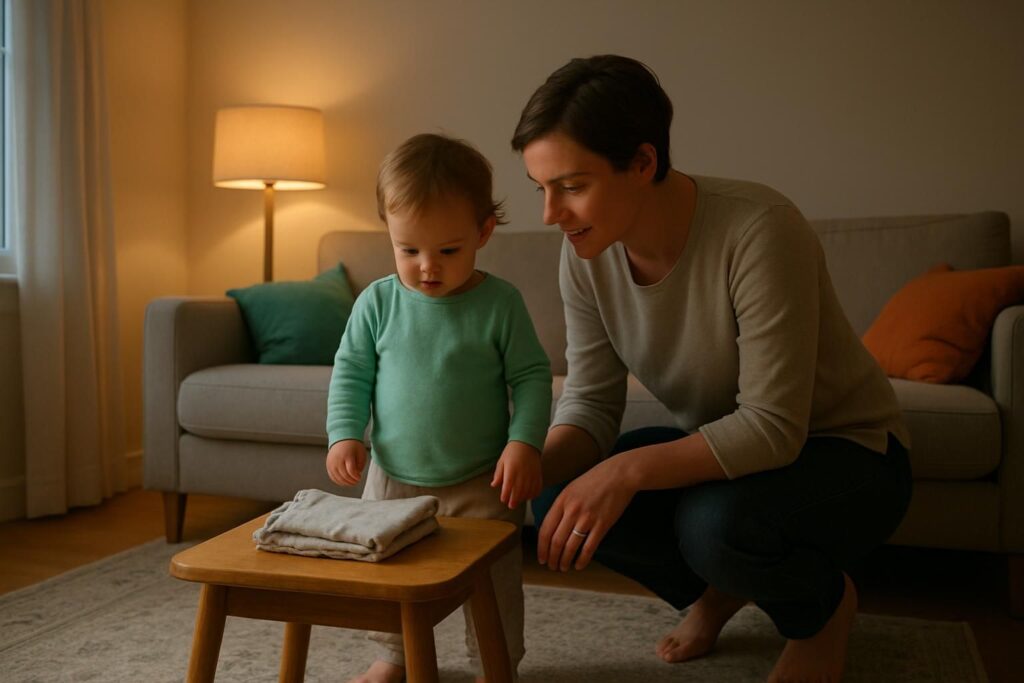
Day one usually starts with the nappy off at wake-up and cotton pants on straight away, with the whole day spent at home so accidents are low stakes and easy to clean up. Day two tends to look much the same, though most parents find they can prompt their child a little less as the child starts to notice the feeling for themselves.
Day four or five is usually the hardest day, not day two. By this point many children have had enough of being asked constantly whether they need a wee, and some push back simply out of that fatigue rather than any real setback. The fix is to ask less often and hand the child more of the responsibility for saying it themselves, which is also the direction the whole method is heading in anyway.
If you are wondering what to do from that first morning onward, what to do from the moment the nappy comes off walks through it hour by hour. Accidents through all of this are treated as part of learning rather than as failure, which matters as much for the parent’s patience as the child’s confidence. The training works with the nappy off and ordinary cotton pants on, because a child feels wet pants in a way that training pants, designed to absorb, deliberately soften.
How often should you put your child on the potty?
The honest answer is that you are not training by the clock at all, you are learning this particular child’s own timing. Rather than sitting a toddler down every half hour because a schedule says so, the method asks the child directly: ‘will you tell me when you need a wee?’ That question, repeated gently over the first days, is what teaches a child to notice and announce the need themselves rather than waiting to be put on the potty.
A few moments stay fixed, both during training and afterwards: before and after sleep, and before leaving the house. Outside of those, offering the potty in the early days is scaffolding, there to create chances to catch a wee and to gather information, and it comes down quickly as the child starts to say it first.
Using a tracking chart to learn your child’s timing
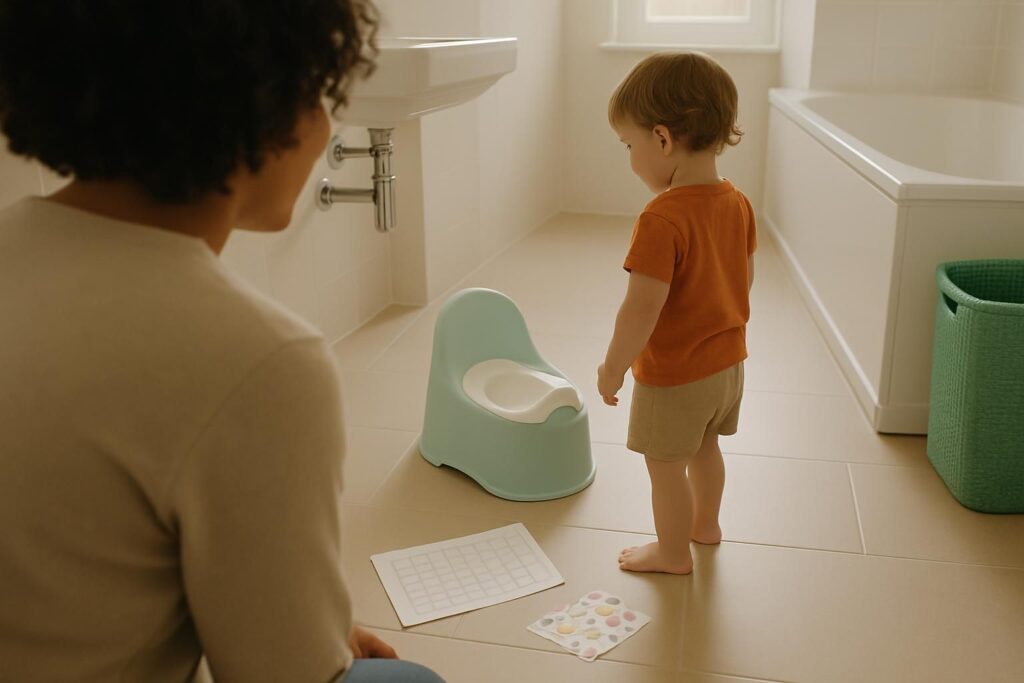
A tracking schedule records what actually happens rather than imposing a timetable on your child. A typical chart has columns for the time of drinking, the time on the toilet, whether nothing happened, wee marked green for a success or red for an accident, poo marked the same way, and a notes column for anything else worth remembering.
One detail makes the chart far more useful: let your child drink a cup in one go rather than in sips spread across the afternoon. Only then do you actually know how much went in and how long afterwards they need to go, and that gap between drinking and needing the toilet is exactly what the chart is designed to show you. The free printable tracking chart gives you a ready-made version if you want to start recording straight away.
What to have ready before the nappy comes off
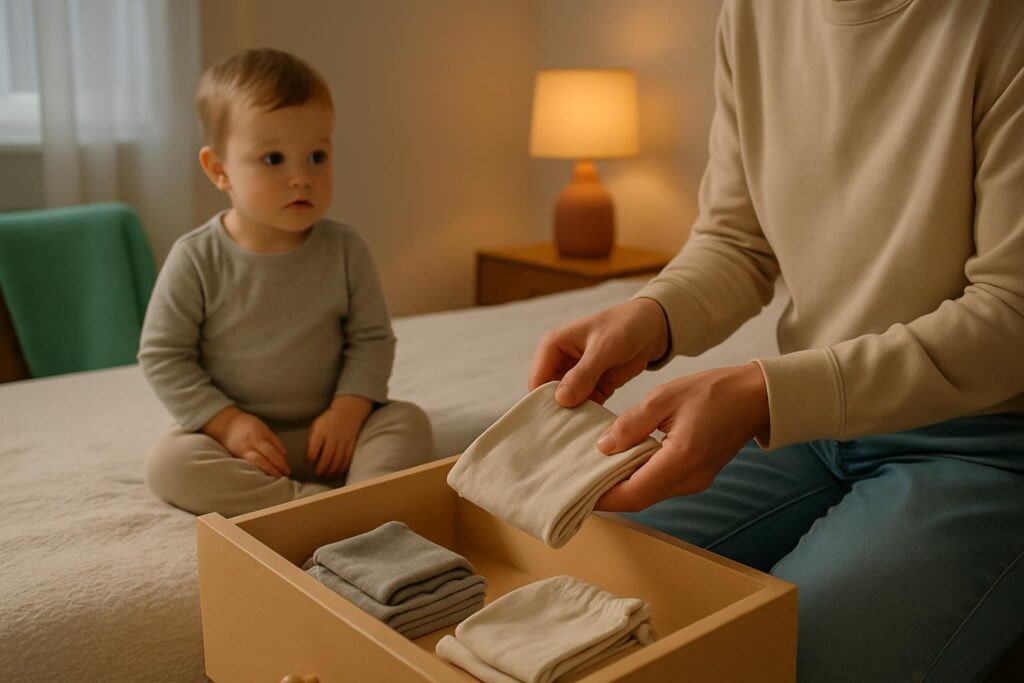
A few things make the first days easier to manage: a potty, mostly useful for the first three days, a toilet seat reducer for once you move to the big toilet, and a step stool so your child can climb up and reach the sink unaided. Alongside those, at least fifteen pairs of cotton pants, something to protect the mattress and sofa, a handful of small rewards, and pull-ups for sleeping round out what most parents have ready before starting.
Some links in this article are affiliate links, which means we earn a small commission if you buy through them. It costs you nothing extra and does not affect what we recommend.
If you need a toilet seat reducer and do not already have one, the Munchkin Sturdy Potty Seat is a straightforward option, and the Dreambaby 2-Up Step Stool works well for giving a child a reliable boost to reach the sink and toilet.
What if it does not work?
If an attempt stalls, the method’s own advice is to stop and leave it a few weeks before trying again, rather than pushing through a run of accidents that is clearly going nowhere. Most children are dry in the daytime in about a week, some manage it in as little as three days, and others take two or three weeks, all of which count as a normal outcome rather than a slow one.
The same approach is used successfully with children who are autistic, have Down syndrome, or are non-verbal, usually over a longer stretch and by reading the child’s own signals closely rather than waiting to be told in words.
Constipation, withholding poo, repeated urinary infections, or bedwetting past the age of six are matters for a GP or health visitor rather than something to work through alone with a method like this one. None of those are signs that training has gone wrong, they are simply outside what any potty training approach is meant to address.
What the box adds if you want a plan rather than a guess
The Potty Training Box is a physical box built around this plan: a training programme booklet that coaches you through the week step by step, seven instruction cards, six compliment cards for when you run out of ways to praise, fourteen tracking schedules, twenty sticker cards in four sizes of three, five, seven and nine squares used in that order, a hundred animal stickers and twenty poo stickers, a wee certificate and a poo certificate for the child, and a year of access to a community where questions get answered seven days a week.
If you would rather put something together yourself, separate reward systems are available for parents who want to build their own setup without using the box as a whole.
Frequently asked questions
How do you potty train without nappies?
You take the nappy off during the day and put your child straight into ordinary cotton pants, so they feel a wet bottom immediately rather than being cushioned by absorbent material. The first few days are usually spent at home so accidents are low stakes, with short outings added once things settle. Pull-ups generally stay for sleeping only, since the daytime point of the method is the feeling of wet pants.
Is it better to potty train without a nappy on at all?
Most nappy-free approaches keep the child in cotton pants rather than nothing at all, because pants still let them practise pulling clothing up and down and give a little dignity during accidents. Going completely bare is sometimes used for a day or two at home to make the sensation very obvious, but it is not necessary and is a personal choice rather than a requirement of the method.
Can you potty train an 18 month old in three days?
Some children, including some 18 month olds, are dry in the daytime within about three days, but this depends entirely on readiness rather than age. Others take one to three weeks, and a child who shows no readiness signs yet is better off waiting a few months than being pushed through a three day attempt that is likely to stall.
Can you pay someone to potty train your toddler?
Potty training depends on the adults who are with the child all day being present, consistent and responsive to that particular child's own signals, so no outside service can do the actual training in place of a parent or carer. What you can pay for is a structured day-by-day plan and ongoing support, which is what a programme and a community of other parents are designed to provide.
Should you use pull-ups or cotton pants during the day?
Cotton pants during the day, pull-ups for sleep, is the usual split in nappy-free training. Cotton pants let a child feel wet straight away, which is how they start to notice and eventually anticipate the need to go, whereas pull-ups are built to prevent that exact feeling.
What do you do about naps and night-time when the nappy is off in the day?
Night-time and nap dryness are usually kept separate from daytime training, since the body learns to hold on overnight on its own timeline and often months after daytime dryness is sorted. Most families keep pull-ups on for naps and overnight throughout the whole process and for a good while after, without that undoing any of the daytime progress. Treat the two as different milestones rather than expecting them to arrive together.
Ready for the next step?
The Potty Training Box holds the day-by-day programme this article is built on: tracking charts that show you when your child actually needs to go, instruction cards for each day, and a reward system that tapers off on its own.
Sources
- NHS (Children typically start showing signs of potty training readiness somewhere between ar…)
- NHS (Bedwetting past the usual age range and when to seek help.)
- NHS (Soiling and withholding stool in children should be discussed with a GP or health visitor.)
- NHS (Constipation in children and how it relates to toileting difficulties.)
This article was written with AI assistance and checked by Dustin van de Sande.