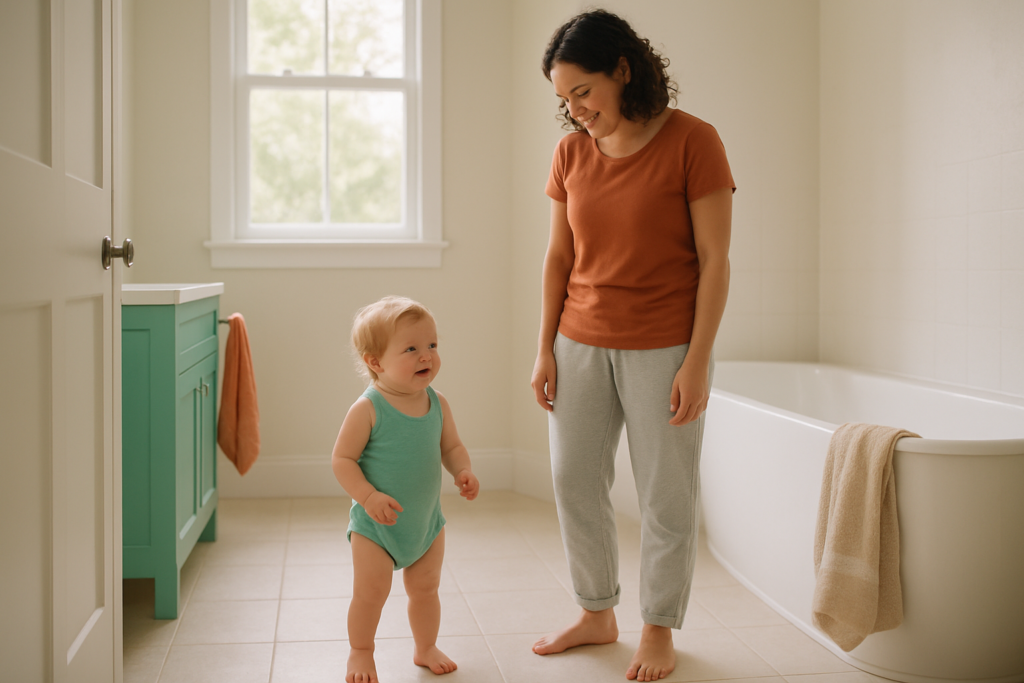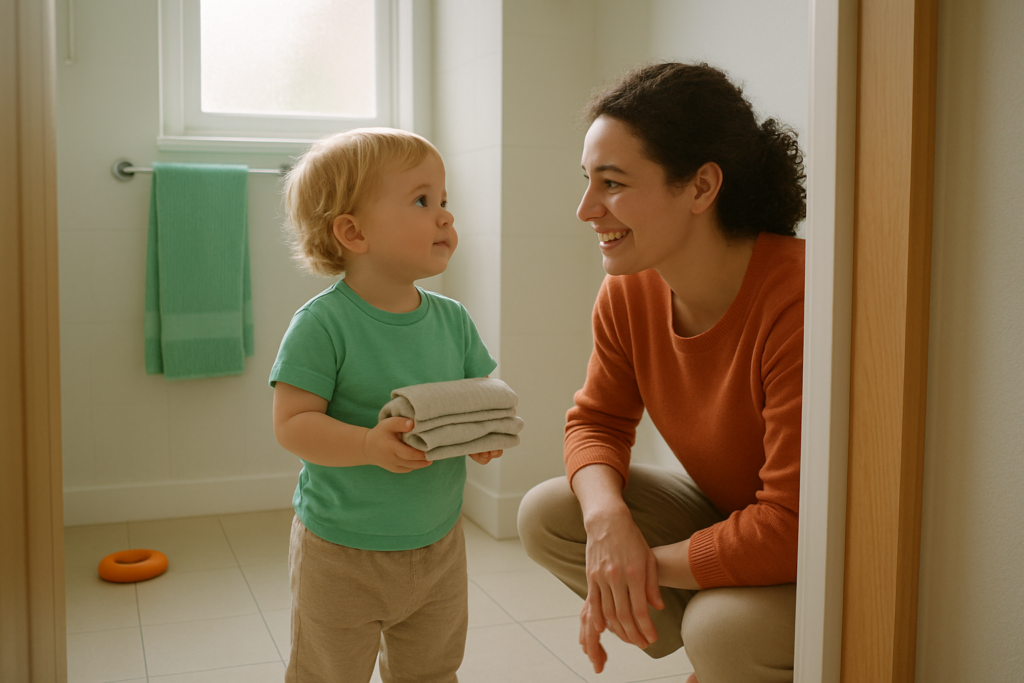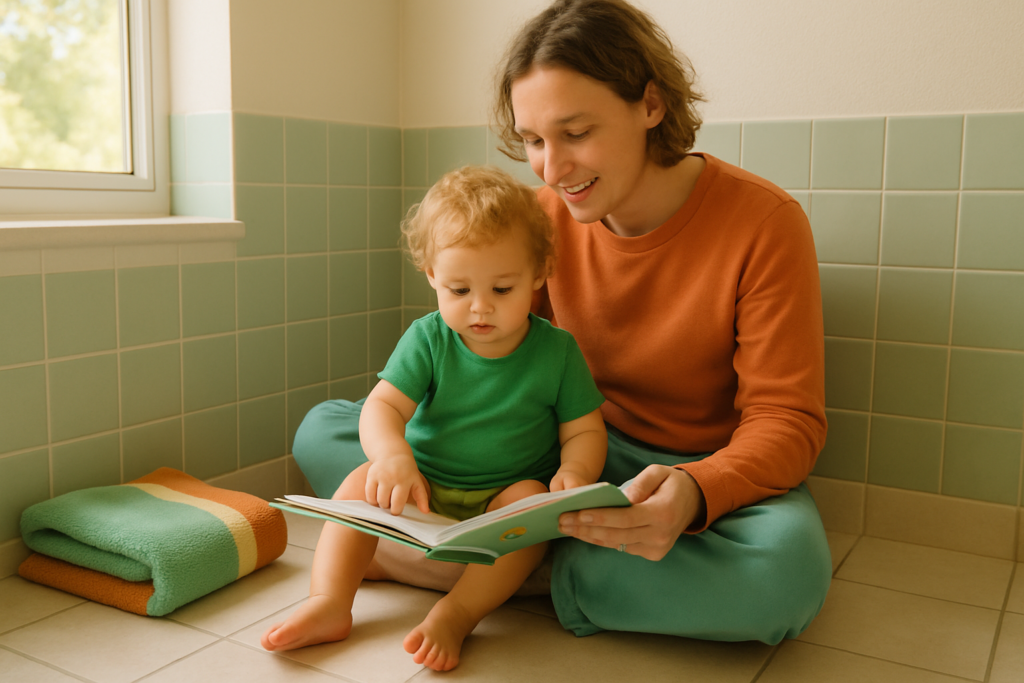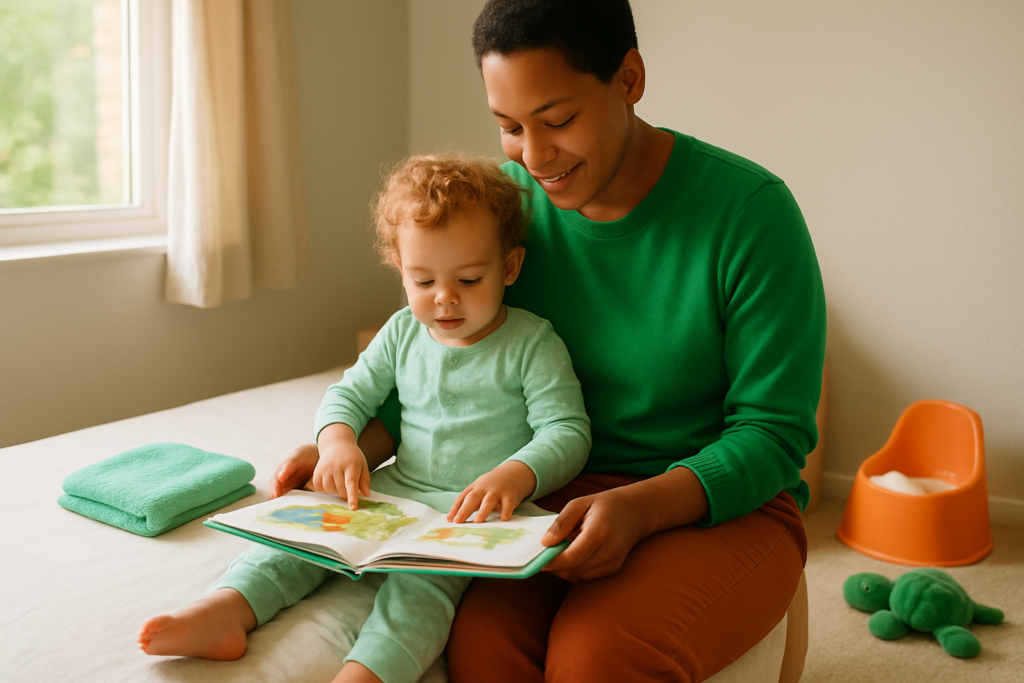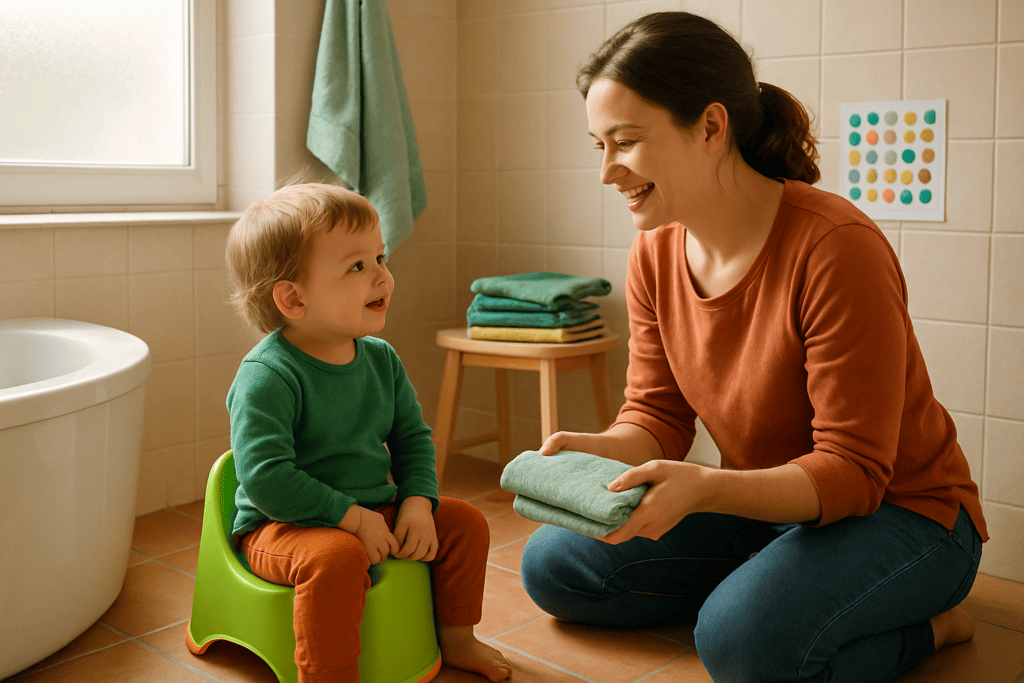

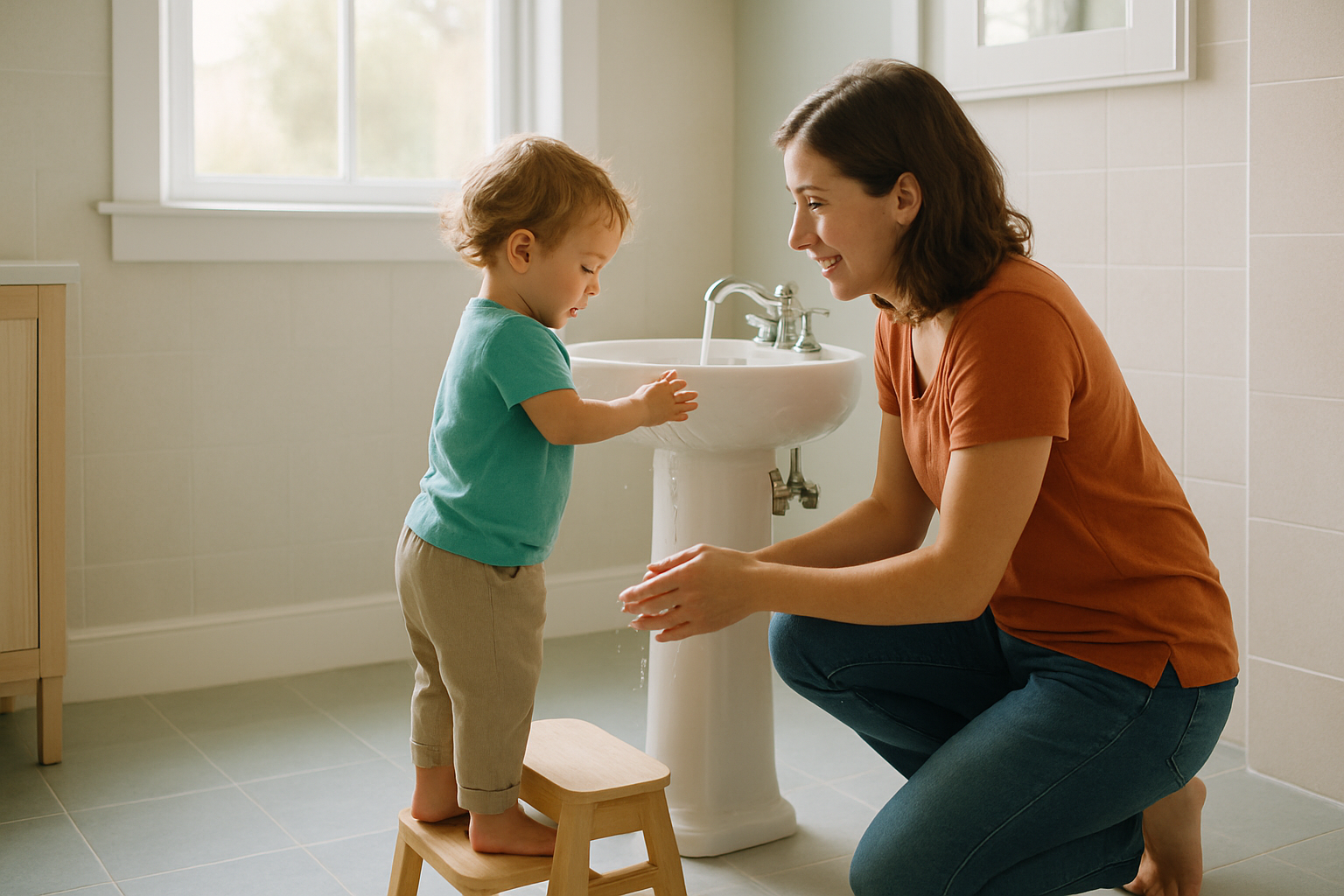
The 10-10-10 rule for potty training appears in dog house-training guidance, not toddler potty training guidance: 10 minutes of play, 10 minutes outside, then taking the puppy out again roughly 10 minutes after eating or drinking. No child health body publishes it as a toddler method, because unlike a puppy, a toddler can learn to notice the feeling and say so.
Parents come across it because search results and social posts mix dog training and toddler training under near-identical phrases. Type ’10-10-10 rule’ into a search bar and dog training guidance sits right alongside toddler advice, so it is an easy rule to pick up without realising where it started. A puppy cannot tell you it needs to go outside, so the rule works entirely from the human’s side, on a clock, repeated until the habit forms by repetition alone.
A toddler is different in one important way: they can learn to notice the feeling in their own body and say something about it. That is the whole aim of potty training a child, and it is also exactly what a fixed ten-minute interval does not teach, because the child never has to notice anything. The clock does the noticing instead.
Why parents end up searching for a rule like this
Day one of potty training can feel chaotic, and a number to follow is genuinely appealing when nothing else feels solid. A rule with a name and three digits looks like a plan, and when you are standing in the kitchen with a toddler who has just had an accident, that feels better than no plan at all.
Often this is not even the first attempt. A parent trying again after an earlier go that fizzled out wants something more reliable this time, and a fixed rule feels like it removes the guesswork. The trouble is that a fixed interval measures the clock, not the child, so it can end up training the parent to watch the time rather than training the child to notice the feeling.
Wanting a plan is entirely sensible. The plan just needs to be built around this particular child’s body and signals, not around a number that was never about children in the first place.
Is it better to potty train every 15 or 30 minutes?
Neither interval is the answer, because sitting a child on the potty every 15 or 30 minutes on a timer is a fixed-interval method, and it is a different, competing approach to child-led potty training. It teaches a child to wait for the cue rather than to notice the feeling and say something, which works against the actual goal.
The difference is worth spelling out plainly. Clock-based sitting puts a child on the potty because the watch says so, regardless of whether they need to go. Child-initiated signalling works the other way round: the parent learns when this child tends to go, and gradually hands the noticing back to the child.
The Potty Training Box method uses a simple question instead of a timer: ‘will you tell me when you need a wee?’ rather than sitting the child down every so often because a schedule says to. Offering the potty early in the process is scaffolding, there to create chances and gather information about this child, and it comes down fairly quickly as the child starts to signal on their own.
A handful of moments stay fixed throughout, both during training and afterwards: before and after sleep, and before leaving the house. Those are practical checkpoints, not a timetable, and they sit alongside the child’s own signals rather than replacing them.
| Approach | What it measures | What the child learns |
|---|---|---|
| 10-10-10 puppy rule | Minutes on a clock | Little: built for a puppy |
| Fixed interval (every 15-30 mins) | The parent’s watch | To wait for the cue instead of noticing the feeling |
| Tracking schedule approach | This child’s own pattern | To notice the feeling and say so |
How do you work out your own child’s timing instead?
The way to learn a child’s own timing is to record it, not guess it, which is what the box’s 14 tracking schedules are for. Each schedule card is filled in over a session and shows this particular child’s pattern, so a parent stops guessing and starts reading actual signals.
For the record to mean anything, the child drinks a full cup in one go rather than in sips spread over an hour. That is the only way to see how much went in and how long it then takes before the child needs a wee, and that link between amount and timing is exactly what the schedule is built to show. A half-drunk cup sipped over time does not give you that information.
A single tracking card has these columns: time of drinking, time on the toilet, whether nothing happened (yes or no), wee marked green for a success or red for an accident, poo marked the same way, and a notes column for anything else worth remembering.
| Column | What it records |
|---|---|
| Time of drinking | When the child had a full drink |
| Time on the toilet | When they were offered or used it |
| Nothing happened | Yes or no |
| Wee | Green for success, red for accident |
| Poo | Green for success, red for accident |
| Notes | Anything else worth remembering |
A printable version of the tracking schedule is available on the potty training tracking chart page, for anyone who wants to see the layout before starting. Within a couple of days most parents can see a rough pattern forming, and can start prompting around that pattern instead of offering the potty every half hour regardless of need.
It is worth saying plainly what these schedules are not. They are a record of what this child actually does, never a timetable imposed on the child from outside, and that distinction is the whole difference between this approach and a fixed-interval method.
How long should a toddler sit on the potty?
A few minutes at most, and never as a battle of wills. If a sit turns into a standoff, it stops being useful and starts teaching the child that the potty is somewhere they get stuck rather than somewhere good things happen.
It works better to let the child get up, do something else for a bit, and try again shortly after, rather than insisting they stay put until something happens. A child who comes back to the potty of their own accord is learning something real; a child kept there against their will generally is not.
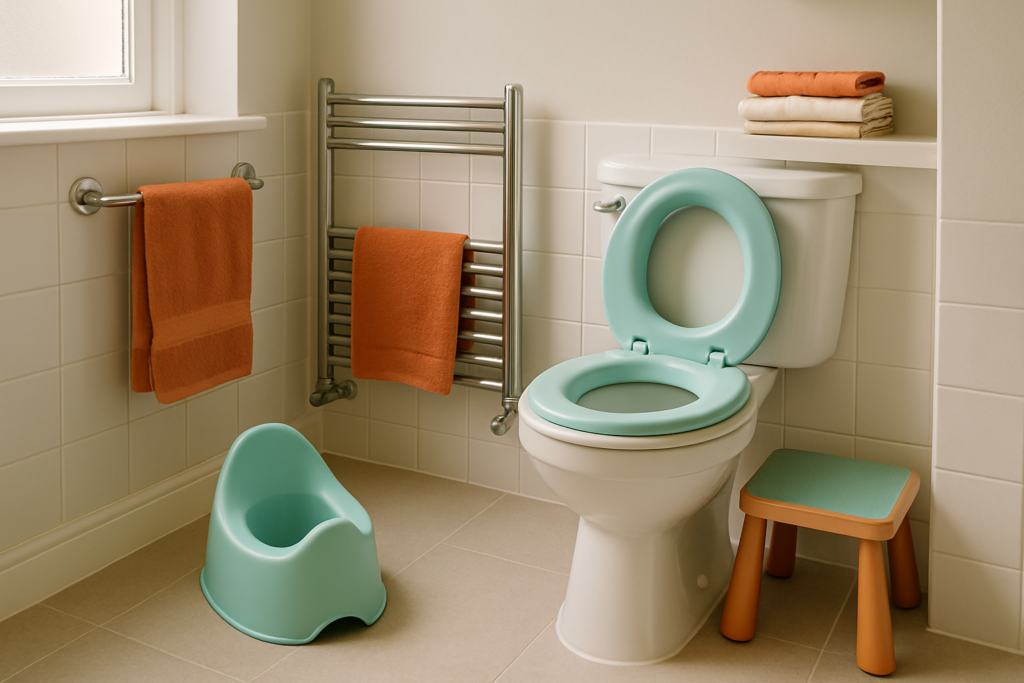
Comfort matters here too. When the move to the toilet happens, a toilet seat reducer and a step stool so the child’s feet are properly supported make a real difference to how willing they are to sit at all, let alone stay a minute or two.
What is a red flag for potty training?
Fear of the potty or the toilet is the clearest sign that a child is not ready yet, and the honest response is to build familiarity first and start properly later. There is no benefit to pushing through fear, and the box keeps perfectly well until the child is ready to try again.
Real distress, a child holding on out of fear rather than simply not needing to go, or a hard battle every single time, are all reasons to pause. Stopping and leaving it a few weeks before trying again is not giving up, it is part of the method itself, and a pause simply gives the child more time to get ready before another attempt.
Some things sit outside what any potty training method can address, and deserve a GP or health visitor rather than a training plan. Pain when weeing, suspected urinary infection, ongoing constipation or a child withholding poo, and bedwetting that continues well past the age most children grow out of it, are all worth raising with a professional. The NHS and ERIC, The Children’s Bowel and Bladder Charity, both publish guidance on when these issues need medical attention, and this article is not the place to diagnose or rule anything out.
What actually works: the day-by-day plan behind the Potty Training Box
The method behind the Potty Training Box spends the first three days at home, because that is when a child learns the most, before moving on to short outings once the basics are holding up. The nappy comes off and stays off during the day, replaced with ordinary cotton pants rather than training pants, because a child feels wetness properly in cotton underwear in a way they do not in a padded pull-up style pant, and that feeling is part of what teaches them.
The box uses a potty for roughly the first three days before moving on to the toilet with a seat reducer and step stool. Rewards build gradually rather than all at once: the box’s 20 sticker cards come in four sizes, 3, 5, 7 and 9 squares, used in that order, so the first reward comes quickly and the child sees straight away that the system works, and then rewards get rarer as the child improves, so the habit outlasts the stickers rather than stopping the moment they do. Once a set is used up, a separate reward system refill set can be bought on its own, which is handy for a later child or a second run through the stickers.
Alongside the schedules and sticker cards, the box includes a day-by-day training booklet, instruction cards, compliment cards, animal and poo stickers, a wee and poo diploma for the child, and a year of community access with the brand’s experts answering questions seven days a week.
Alongside the box, it helps to have a potty, a toilet seat reducer, a step stool, at least 15 pairs of cotton pants, something to protect the mattress and sofa, a handful of small rewards, and pull-ups for sleeping ready to go. Having these to hand before day one makes the whole week easier to plan around.
Results vary and are worth stating honestly. Most children are dry in the daytime in about a week, some manage it in three days, and others take two or three weeks, with a child who is not ready yet generally better off waiting than starting. Night-time dryness is a separate matter that tends to come later, and the box does not promise it. The same approach is also used successfully with autistic children, children with Down syndrome, and non-verbal children, usually over a longer stretch, by reading the child’s own signals rather than waiting to be told in words.
What the 10-10-10 rule gets right, even for toddlers
There is a small kernel of truth in the 10-10-10 rule worth keeping: drinking is reliably followed by weeing, and the gap between the two is learnable. Where the rule goes wrong for toddlers is assuming that gap is always ten minutes and always the same for every child, rather than something worth actually finding out.
The real difference is that a toddler’s own interval is recorded rather than assumed. Once a parent has watched their own child’s pattern for a couple of days on a tracking schedule, they know the real gap for this child, rather than borrowing a rule written for a different species entirely.
None of this requires a box to attempt; the same principles, recording rather than assuming, offering rather than forcing, can be followed with a notebook and patience. For parents who want the plan written out day by day, including what to do on the days that go badly, the Potty Training Box Digital Handbook sets out that plan without the physical materials, and the full box adds the schedules, sticker cards and community access alongside it.
Frequently asked questions
What is the 10-10-10 rule for potty training?
It appears in dog house-training guidance: 10 minutes of play, 10 minutes outside, and taking the puppy out again 10 minutes after eating or drinking. It is not a recognised method for toddlers, because a toddler can be taught to notice the feeling and say something rather than being taken out on a fixed timer.
Is it better to potty train every 15 or 30 minutes?
Neither is necessary. Sitting a child down every 15 or 30 minutes on a fixed timer measures the clock rather than the child, and it can teach a child to wait for the cue instead of noticing the feeling themselves. It works better to record when your own child actually goes and prompt around that pattern, keeping only a few fixed moments such as before and after sleep and before leaving the house.
What is a red flag for potty training?
Fear of the potty or toilet, real distress, or a hard battle every single time are all signs to stop and try again in a few weeks rather than push through. If there is pain when weeing, ongoing constipation, withholding poo, or bedwetting past around age six, that belongs with a GP or health visitor rather than being managed with a training method. This article does not diagnose and cannot rule out a medical cause.
How long should a toddler sit on the potty?
A few minutes at most, and never as a stand off. Long sits can teach a child that the potty is somewhere they get stuck rather than somewhere good things happen, so it works better to get up, do something else, and offer it again shortly after.
What is the hardest day of potty training?
Day four or five often turns out harder than the earlier days, once the child gets bored of being asked 'will you tell me when you need a wee?' and starts pushing back. A useful adjustment at that point is to ask it less often and let the child take more of the responsibility themselves, which is the kind of day-by-day guidance the Potty Training Box booklet sets out in advance.
What is the 3 day potty training trick?
There is no single trick, but the common approach behind most modern methods, including this one, is spending the first three days at home with the nappy off, in ordinary cotton pants, before moving to short outings. Some children are dry in the daytime within those three days, others take longer, and readiness matters more than the calendar.
Ready for the next step?
The Potty Training Box holds the day-by-day programme this article is built on: tracking charts that show you when your child actually needs to go, instruction cards for each day, and a reward system that tapers off on its own.
Sources
This article was written with AI assistance and checked by Dustin van de Sande.