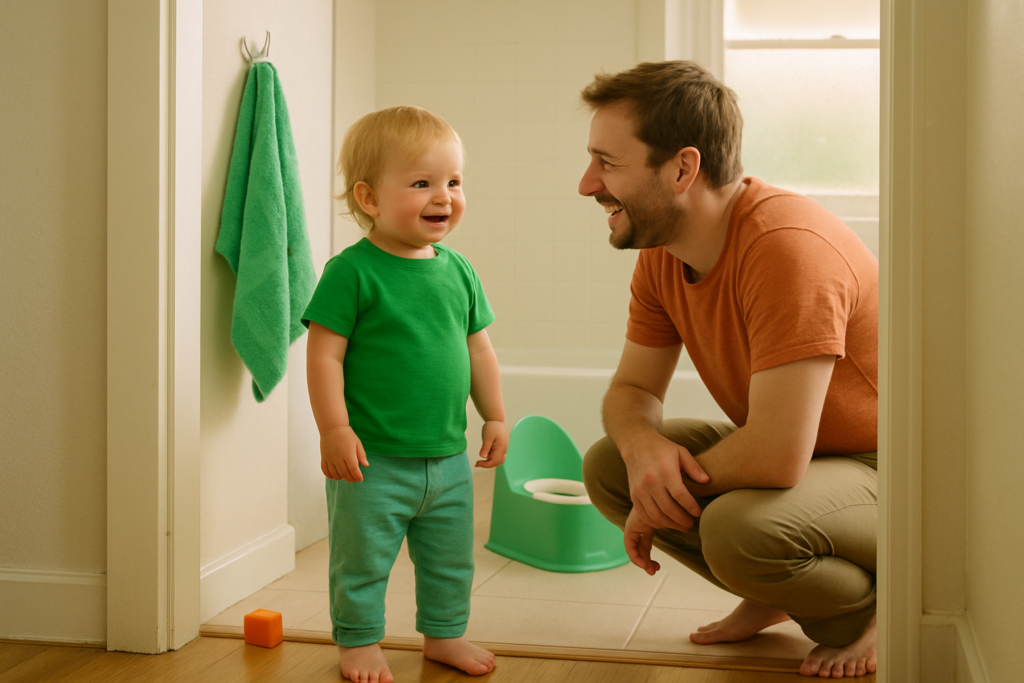


Wait for signs of readiness, then stop daytime nappies altogether. Spend the first three days at home, follow with short outings, and reward every attempt. Most children are dry in the daytime within about a week, some in three days, others take two to three weeks. Night-time dryness comes later and separately, and the goal is your child telling you they need to go rather than you watching the clock.
How do you potty train a toddler? The short answer
Potty training works best when it follows a plan: wait for genuine signs of readiness, then commit to stopping daytime nappies completely rather than easing off gradually. The first three days are spent at home, where a child learns fastest, before short outings begin. Every attempt gets praised, accidents are treated as ordinary and expected, and the whole approach builds towards the moment your child tells you they need to go, rather than you offering the potty on a fixed schedule.
What age is best to start potty training?
The NHS says almost all children can be potty trained between 18 months and two and a half years, though some are ready earlier and some later. Age is only a guide. Readiness is what actually decides when to start, and two children of the same age can be months apart in how ready they are.
Signs worth checking today include: staying dry for an hour or two at a time, noticing and disliking a wet or dirty nappy, being able to pull pants up and down, understanding simple instructions like ‘let’s go to the potty’, and showing curiosity about the toilet or wanting to copy a parent or sibling. A child who ticks most of these is usually ready to begin.
If your child has already tried and is not ready, that is fine: Potty Training Box and the method behind it keep until the timing is right. Second and third children often start a little earlier simply because they copy an older sibling using the toilet.
How can I tell if my child is actually ready (and when to wait)?
Readiness shows up in three areas: physical, cognitive and emotional. Physically, a child needs enough bladder control to stay dry for a stretch, and the coordination to get to the potty and manage clothing with some help. Cognitively, they need to understand cause and effect and follow a short instruction. Emotionally, they need to want to try, or at least not be frightened of it.
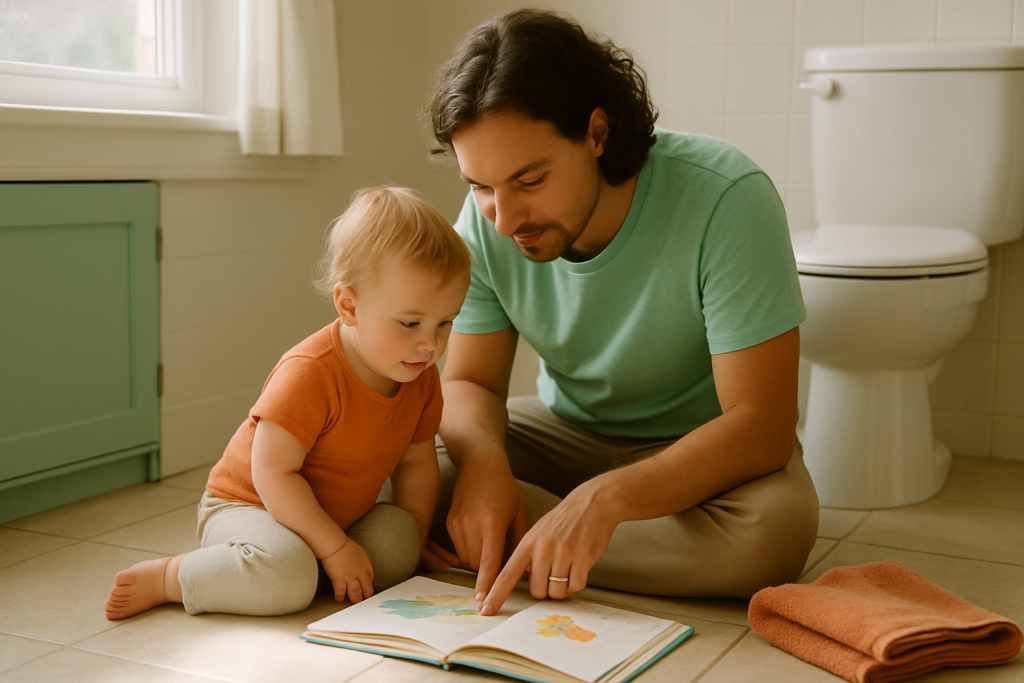
A child who is scared of the potty or the toilet is not ready yet, and pushing through fear rarely works. The better move is to build familiarity first: let them sit on the potty fully clothed, read about it, watch a sibling, and try again in a few weeks.
Timing matters too. Starting during a house move, a new sibling’s arrival, a new nursery, or while a child is unwell tends to set training up to fail before it begins. If the nappy is still soaked solid every single hour with no dry stretches at all, bladder capacity probably is not there yet, and it is worth waiting a little longer.
ERIC, the children’s bowel and bladder charity, points out that potty learning actually begins long before pants, with early awareness building from around six to nine months as a baby starts to sit unsupported and notice their own body. The formal training phase most parents think of is really just the final, visible stage of a much longer process.
What do I need to buy before day one?
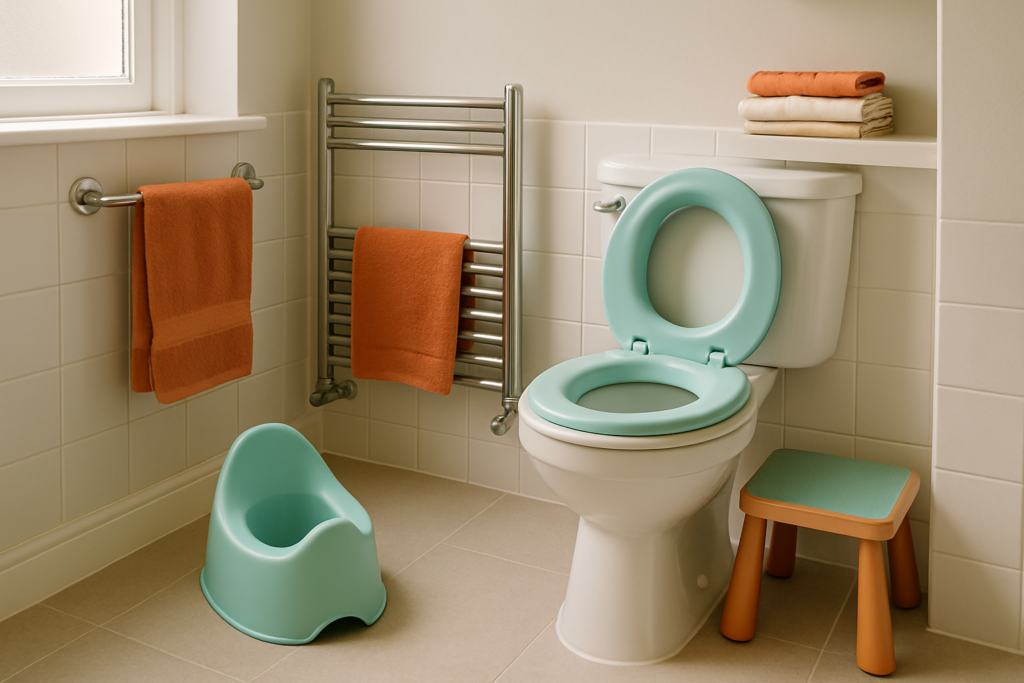
Before you start you need a potty, a toilet seat reducer, and a step stool so your child can climb up and reach the sink independently. You will also want at least 15 pairs of pants, something to protect the mattress and sofa, a handful of small rewards, and pull-ups for sleeping only.
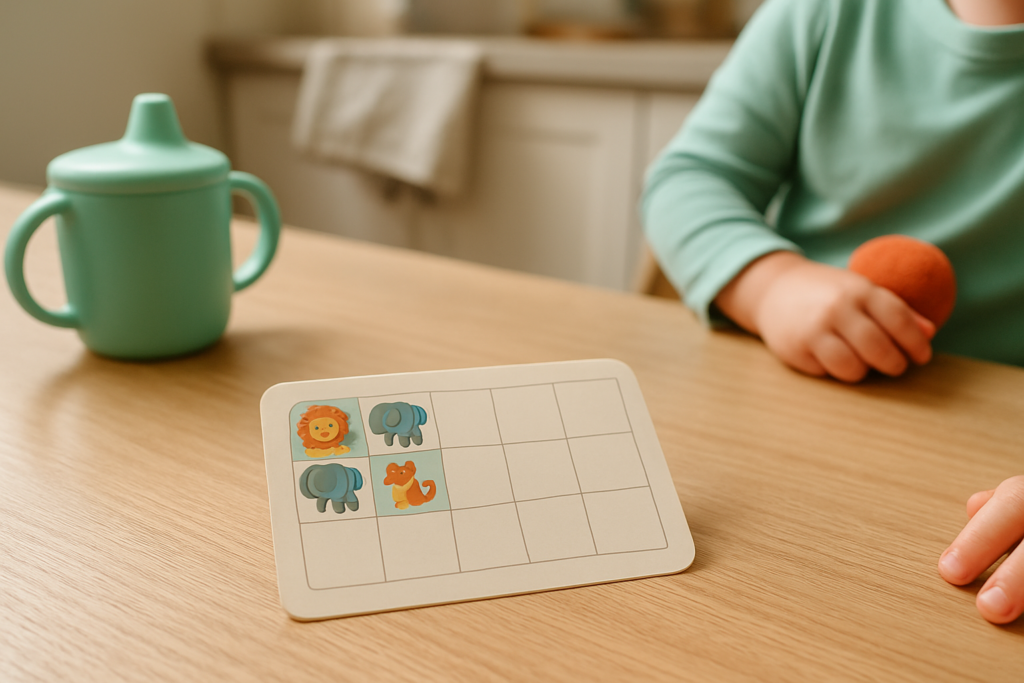
Potty Training Box is the day-by-day programme itself: a booklet that coaches you through the week, instruction cards, compliment cards, tracking schedules, sticker cards, animal and poo stickers, a diploma, and a year of access to a community where the brand’s team answers questions daily. It does not include a potty, a toilet seat reducer or pants, so plan to buy those separately rather than discovering the gap on day one. For the full shopping list in one place, our complete UK potty training kit checklist is worth reading before you start. If you would rather follow the method without the physical box, the Digital Handbook is a lighter option that covers the same seven-day plan.
What happens on day one, day two and day three?
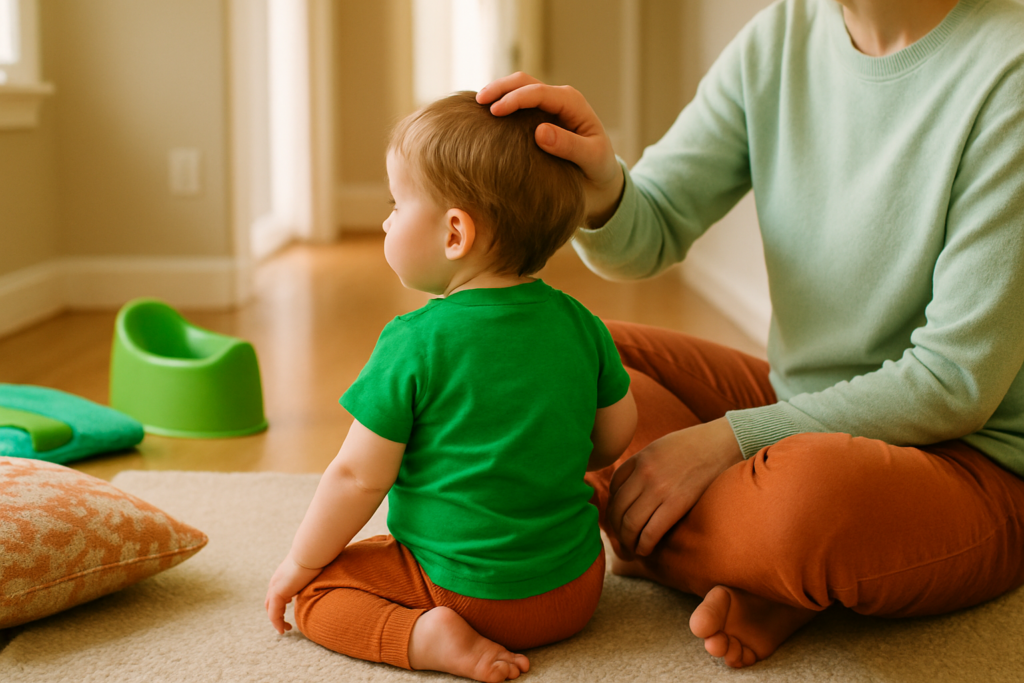
The first three days are spent at home, because that is when a child learns fastest with your full attention and no distractions. Nappies, including pull-ups, come off in the daytime from day one, not gradually.
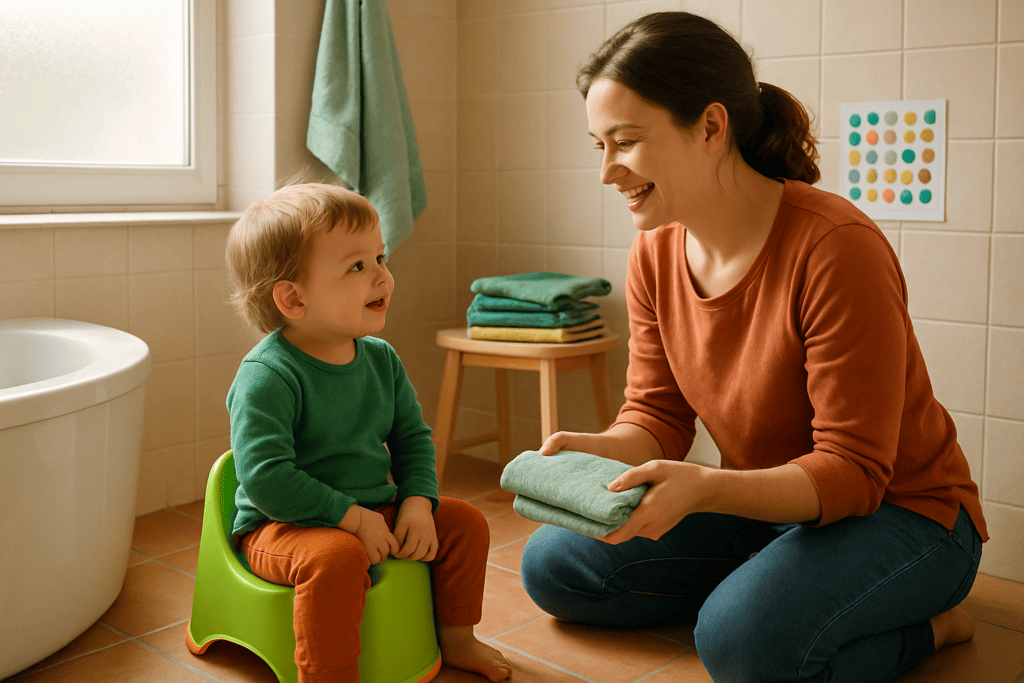
On day one, offer plenty of drinks, dress your child in pants only from the waist down, keep the potty nearby, and praise every single attempt, wet or dry. On day two, you start to notice your own child’s particular signals, whether that is going quiet, wriggling, or hiding behind the sofa. By day three, many children begin to signal first, before you offer, and this is the point where short outings can begin.
Sticker cards and compliment cards exist for exactly the days you run out of new ways to say well done. Accidents are treated as part of learning throughout, never as a setback to be scolded for. Reading how one week actually went for a real family can help: how one week looked for Anouk is a useful, honest account.
| Stage | What the child is learning | What the parent does |
|---|---|---|
| Days 1-3, at home | Connecting the urge with the potty | Nappies off, offers often, praises every attempt |
| Days 4-7, short outings | Signalling before it happens | Watches for cues, follows the child’s lead |
| Weeks 2-4, consolidating | Holding on and asking in time | Rewards taper, fewer reminders |
| Later, night-time | A separate, later skill | Pull-ups at night, no pressure |
How often should I put my child on the potty? (why a clock is the wrong tool)
Offering the potty on a schedule early on is scaffolding, not the method itself. It creates opportunities and gathers information about this particular child, and it is meant to come down quickly, not stay in place for weeks.
This is what the 14 tracking schedules in the box are actually for: recording when your child goes, so you learn their own timing and signals rather than imposing a fixed one on them. Watch for going quiet, crossing legs, hiding, wriggling, or holding themselves, and offer the potty at those moments rather than by the clock.
A strict every-30-minutes routine can backfire, because it can teach a child to wait passively to be put on the potty instead of learning to recognise and act on the feeling themselves. Within days, most families find the offering gives way to the child asking on their own, which is the actual goal. Learning to hold on briefly, just long enough to get to the potty, is part of learning to signal in the first place.
What is the 3 day potty training rule, and does it work?
The three day potty training rule claims a child can be fully trained in three days flat, using intensive nappy-free time at home. What is genuinely useful in it is real: three days at home, no nappies, and full parental attention do speed things up for many children.
Where it oversells is treating three days as the norm rather than the fast end of a range. In practice, three days at home followed by short outings tends to lead to most children being dry in the daytime in about a week, with some needing two to three weeks and a few needing longer. There are no guarantees here, and a child who genuinely is not ready should wait rather than be pushed through a fixed deadline.
Accidents, refusing the potty and going backwards: what now?
Accidents are expected and are useful information, not failure. The calm, matter-of-fact response, change and move on without comment, tends to work better than a big reaction in either direction.
What you actually say in the moment matters more than it seems. A simple ‘never mind, next time you’ll get to the potty, let’s get you changed’ does the job, without turning the accident into a drama your child has to manage as well as their own bladder. Save the excitement for successes, not for the recovery from a miss, and try not to ask ‘what happened?’ as though it needs explaining: your child usually cannot tell you any more than you can already see.
For the sofa and mattress, a washable protector saves a lot of stress, but if an accident does happen on fabric that is not protected, blot rather than rub, use a fabric-safe cleaner, and let it air properly before anyone sits or sleeps on it again. Keeping a small emergency kit, a change of pants, wipes and a plastic bag, near wherever your child spends most of the day means a miss does not turn into a bigger disruption than it needs to be.
Regression is common after a new sibling arrives, starting nursery, an illness, or even a holiday that disrupts routine, and it is not a sign the training has failed. If a child refuses to sit on the potty, back off the pressure for a few days and keep the potty visible without insisting.
If an attempt genuinely is not working after a proper try, the method’s own advice is to stop and leave it a few weeks before trying again, rather than grinding on. That pause is a deliberate part of the approach, not giving up. For more ideas when a child is hesitant, 10 tips to encourage potty training covers common sticking points, and Potty Training Box customers have a year of community access where the brand’s team answers questions seven days a week on exactly the days that go badly.
How do we move from potty to toilet?
The potty is mainly a first-three-days tool. Once a child is reliably using it, the toilet becomes the destination, with a toilet seat reducer and a step stool so their feet are properly supported and they feel secure.
Boys usually sit to begin with and learn to stand later, once daytime training is established. Wiping, flushing and hand washing become part of the routine from early on, ideally with the child doing as much as they can manage themselves.
Out and about, carry spare pants and expect a few near misses while your child learns to ask for a public toilet in time. For broader everyday guidance at this stage, practical tips for potty training toddlers is a good companion read.
When will my child be dry at night?
Night-time dryness is a separate developmental step that follows daytime dryness, sometimes by several months and sometimes by a couple of years. There is no fixed date for it, and the box makes no promises about night-time training because it genuinely varies child to child.
Pull-ups for sleeping are entirely appropriate while daytime training is underway or newly established. ERIC and the NHS both note that bedwetting is common in young school-age children and should be seen as a normal part of development, not a behaviour problem.
Bedwetting that continues past around age six is worth discussing with a GP or health visitor. Restricting drinks in the evening is not a recommended fix on its own, and this is genuinely one to take to a professional rather than solve at home.
Potty training a child who is autistic, has Down syndrome or is non-verbal
The method is used successfully with autistic children, children with Down syndrome, and non-verbal children, usually over a longer stretch than a week. The core shift is the same: reading the child’s own signals rather than waiting for them to tell you in words.
A visual routine, the same words used consistently every single time, and predictable steps tend to help more than variety does. Involving nursery, school or a support team so the same approach is used in every setting matters a great deal here.
Because individual needs vary so widely, it is worth speaking to your child’s health professional or clinic about pacing and any specific adjustments before you begin.
When is potty training a question for the GP?
Some things are outside the scope of any training method and belong with a doctor. These include constipation or hard, painful poos, withholding stool or soiling accidents, pain when weeing or wee that is cloudy or smelly, which can point to a urinary infection, no progress at all by around three and a half to four years, and bedwetting that continues past age six.
The NHS is clear that these signs are worth checking with a GP, health visitor or child health clinic rather than working through with stickers and encouragement. None of this is something an article, or a box of cards and stickers, should try to diagnose or treat.
What the Potty Training Box adds to a guide like this
A guide like this can tell you the theory. What it cannot give you is a plan for exactly what to do on a bad afternoon three days in, which is where the box earns its keep. Potty Training Box sets out what to do on day one, day two and day three, including the days that go badly, and pairs it with sticker cards that taper off gradually rather than stopping abruptly, plus a year of community access for exactly the questions that come up mid-week.
It is reusable for a later child, and if you have already used your stickers, extra sets are sold separately as an extra reward system, including sets aimed at boys or girls if that suits your family better, rather than needing a whole new box. None of this replaces the potty, seat reducer, pants or protection you buy yourself, and the method it teaches can be followed without buying anything at all, using the principles set out through this guide.
Frequently asked questions
What age is best to potty train?
The NHS says almost all children can be potty trained somewhere between 18 months and two and a half years, but age is only a guide. Readiness signs, such as staying dry for an hour or two and showing interest in the toilet, matter more than the number on the calendar. A child who is not showing those signs yet is usually better off waiting a few more weeks.
What is the 3 day potty training rule?
It is an approach that claims a child can be fully potty trained in three intensive nappy-free days at home. The genuinely useful parts, staying home and giving full attention with no nappies, do help many children progress quickly. Three days is the fast end of the range rather than the norm, and most children take closer to a week, with some needing two to three weeks.
What is the fastest way to potty train a toddler?
The fastest results tend to come from waiting until a child shows real readiness signs, then committing to three full days at home with no nappies and constant praise for every attempt. Even then, some children take longer, and pushing before a child is ready usually slows things down rather than speeding them up. There is no method that reliably guarantees a fixed number of days.
How often should I put my child on the potty?
Offering the potty every so often in the early days is meant to create opportunities and gather information, not to become a fixed schedule you keep for weeks. Using a tracking schedule to note when your child actually goes helps you learn their own timing, and within days most children start signalling on their own rather than being told. Watching for cues like going quiet or wriggling works better than a set clock interval.
How long does potty training take?
Most children are dry in the daytime within about a week of starting, once they show real signs of readiness. Some manage it in as little as three days, while others take two to three weeks, and that range is entirely normal. Night-time dryness is a separate skill that usually comes later, sometimes months or years afterwards.
Should I use pull-ups during potty training?
The NHS advises stopping nappies, including pull-ups, during the day once daytime training starts, since pull-ups can feel too similar to a nappy for a child to notice the difference. Pull-ups are still appropriate for sleeping, both during daytime training and afterwards, since night-time dryness develops separately and later.
Sources
- NHS
- NHS
- ERIC, The Children's Bowel and Bladder Charity
- ERIC, The Children's Bowel and Bladder Charity
- NHS
This article was written with AI assistance and checked by Dustin van de Sande.
Ready for the next step?
The Potty Training Box holds the day-by-day programme this article is built on: tracking charts that show you when your child actually needs to go, instruction cards for each day, and a reward system that tapers off on its own.