
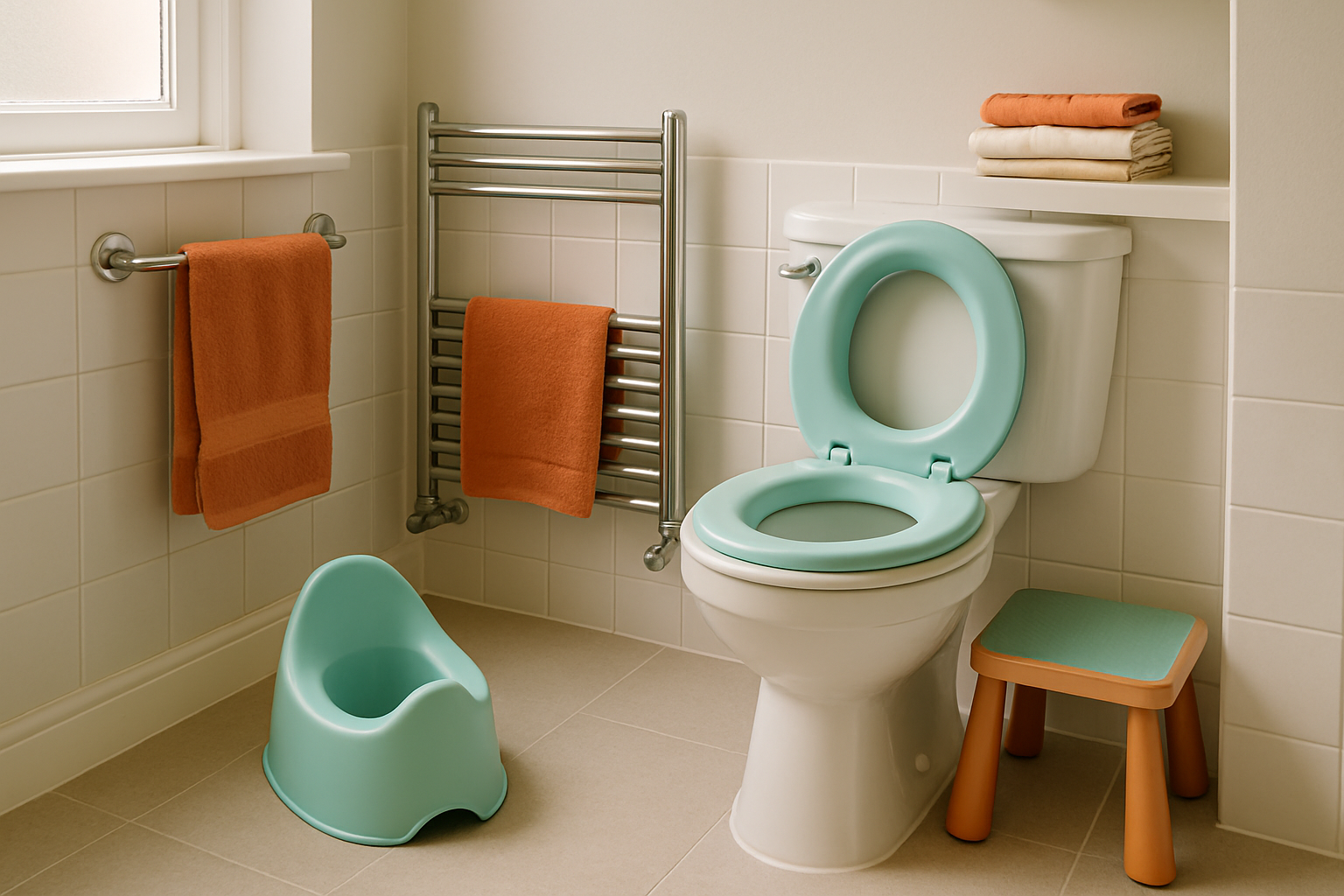
A parent needs a handful of genuine essentials: a potty, a toilet seat reducer, a step stool, at least 15 pairs of pants, something to protect the mattress and sofa, a few small rewards, and pull-ups for sleeping. Everything else, from musical potties to potty training apps, is optional at best. The plan matters more than the kit.
A travel potty, a couple of potty-themed books and one or two small toys can help but are not required. Big-ticket gadgets, character-branded kits and anything that promises to do the work for you are safe to skip. What actually gets a child dry is knowing what to do on day one, day two and day three, not the size of the shopping bag.
Which potty should you buy, and does the fancy one help?
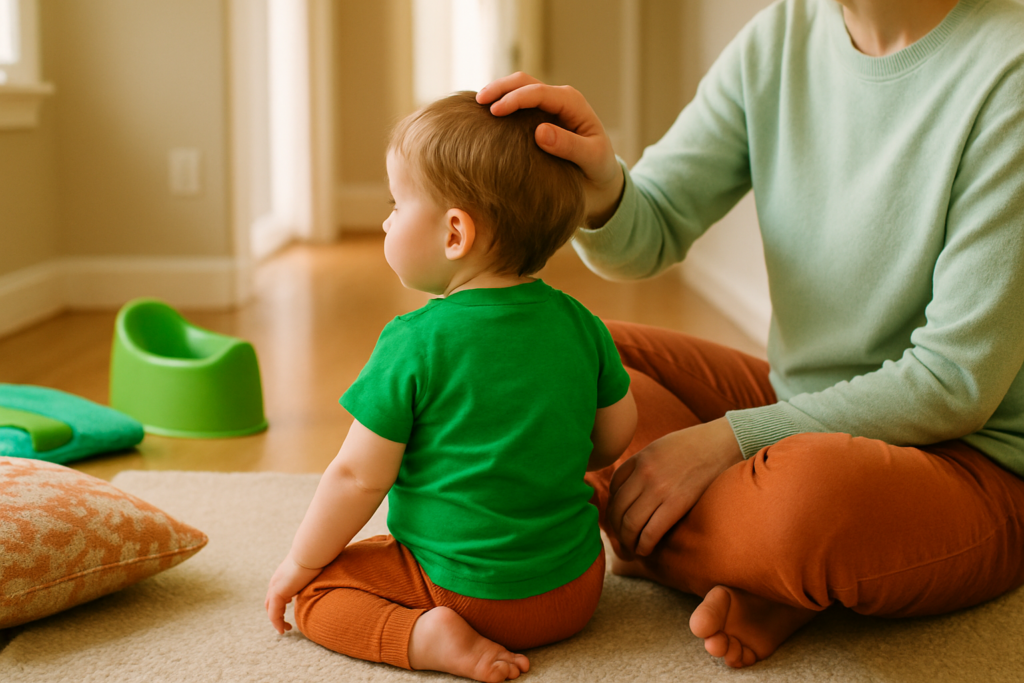
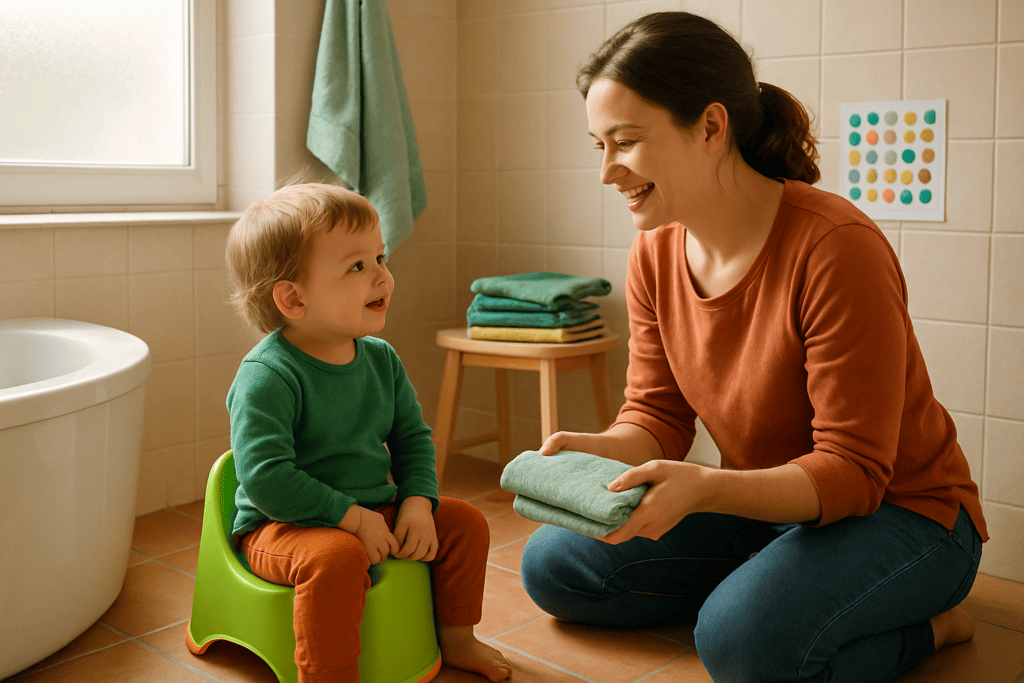
A plain, stable potty with a wide base is enough. The details that matter are that the child’s feet reach the floor and the potty does not tip when they shift their weight, not the colour or the character printed on the front.
Musical potties, light-up potties and ones shaped like vehicles can be fun, but they can also turn sitting on the potty into a game about the noise or the lights rather than the job at hand. A child who is fascinated by the sound effect is not paying attention to the feeling that tells them they need to go.
The potty is mainly needed for the first few days at home, before short outings begin and the child starts using the toilet with a seat reducer instead. Once that shift happens, the potty is used less and less. The Potty Training Box does not include a potty, and that is deliberate: parents already have very different preferences here, and a potty bought to fit a specific bathroom is a better fit than one included in a box.
Do you need a toilet seat reducer and a step stool, or just one of them?
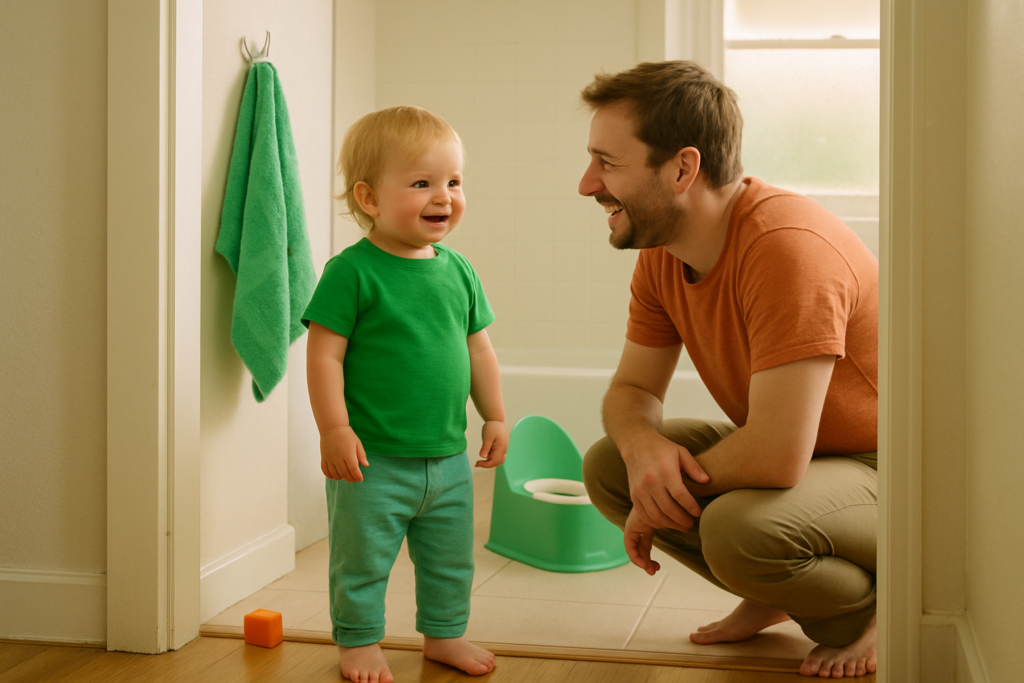
You need both, because they do different jobs. A method that moves the child from potty to toilet within the same week relies on the toilet being usable and unfrightening from early on, and a reducer is what makes an adult-sized seat feel safe rather than cavernous.
A step stool gives a small child the independence to climb up and down without help, and something solid to brace their feet against, which genuinely helps when they are learning to push for a poo. Buy a stool the child can climb on their own rather than one that needs lifting into place each time.
Combined seat-and-steps units exist and can save a bit of space in a small bathroom, but they add nothing to the method itself. A separate reducer and a separate stool work exactly as well. If poos on the potty or toilet are proving a sticking point, it is worth reading about when your toddler will not poo on the potty, since it is one of the most common snags parents hit around this stage.
Pants or training pants? What to buy and how many
Buy at least 15 pairs of ordinary cotton pants for the daytime. That sounds like a lot, but with accidents and washing, running out of clean pants by day two is a genuinely common complaint, and it derails the day for no good reason.
Pull-ups worn all day can blur the message for many children, because a pull-up feels enough like a nappy that wetting it does not register as an event worth noticing. The whole aim of the early days is for the child to feel wet and connect that feeling to what just happened, which is much harder inside absorbent material.
Pull-ups still have a clear place at night, since night-time dryness is a separate skill that tends to develop later than daytime control, according to ERIC, The Children’s Bowel and Bladder Charity. Washable training pants sit somewhere in between ordinary pants and pull-ups, with a bit more absorbency than pants but still enough sensation to notice, and they can suit a child who is close but not quite ready for plain cotton. Letting the child pick their own pants from the shop or the drawer costs nothing and tends to boost their enthusiasm for wearing them.
What do you need to protect the mattress, sofa and car seat?
A waterproof mattress protector is worth having, ideally two, so there is always a dry one on the bed while the other is in the wash. This is the kind of purchase that gets forgotten until the first night-time accident, at which point it is needed immediately.
A wipeable throw or an old towel over the sofa covers the same problem downstairs without needing to buy anything specialist. For the car, a simple seat protector is useful once short outings start from around day three or four, since accidents in a car seat are awkward to clean properly.
Pack spare bedding for a quick night-time change and a small change bag with a spare set of clothes and pants for outings. On the floor, a stack of old towels does the job just as well as a purpose-made mat, and costs nothing extra.
Potty training rewards: what works and what to skip
Small, immediate, low-value rewards work better than big prizes for this age group, because a toddler responds to something they can have right now, not a promise of something bigger later. A sticker, a sticker, and another sticker beats a big toy dangled at the end of the week.
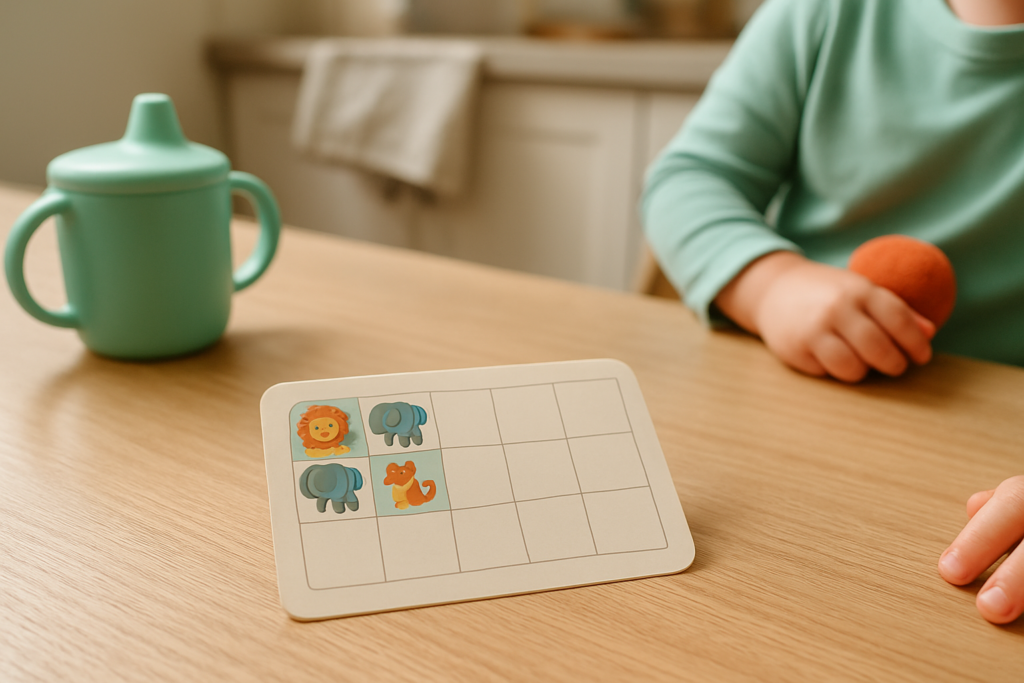
The sticker cards in the Potty Training Box come in four sizes, 3, 5, 7 and 9 squares, used in that order. A child fills the 3-square card quickly, so the reward comes fast and they see straight away that trying pays off, and the cards then grow larger so successes need to happen more times before the next reward arrives.
That growing gap matters more than it looks. Because the reward becomes rarer as the child improves, the habit of using the toilet has time to become normal before the stickers stop altogether, rather than the child dropping the habit the moment the prizes end. Compliment cards are included for the days when a parent has run out of fresh ways to say well done, and a wee and poo diploma at the end gives the week a clear finishing point.
| Reward type | Verdict | Why |
|---|---|---|
| Small immediate stickers | Works well | Instant, low-stakes, easy to give often |
| Escalating sticker cards | Works well | Fast first reward, rarer as skill grows |
| Sweets on demand | Skip | Turns every attempt into a negotiation |
| Big toys as prizes | Skip | Too distant to motivate a toddler |
| Screen time bargaining | Skip | Adds pressure and delay to the moment |
If the sticker cards from the box run out, or you simply want a reward system without the rest of the kit, extra sets are sold as an additional reward system, with boy and girl versions of the stickers available separately too. Skip sweets given on demand, big toys used as bribes, and bargaining with screen time; all three tend to make the next accident harder to handle calmly, not easier.
Are potty training toys and books worth buying?
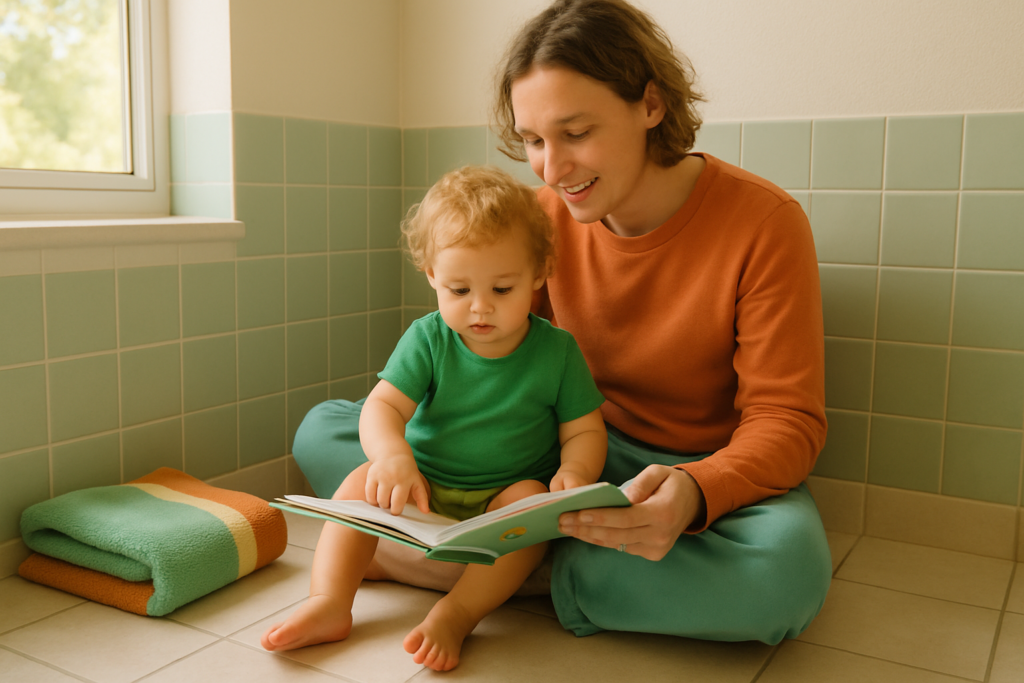
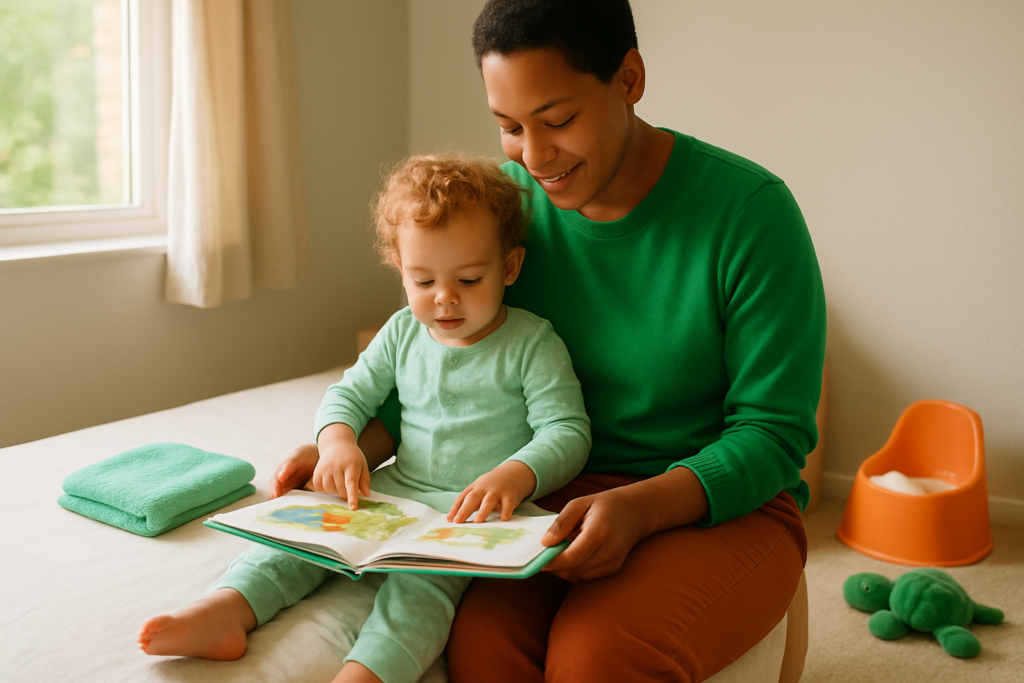
A doll or teddy that can be sat on a play potty is genuinely useful, because it lets a child rehearse the whole idea before it is their own body involved, in a low-pressure and slightly silly way. Books about using the potty, read a few times in the week or two before starting, help build familiarity for a child who seems nervous about the whole idea.
Where toys go wrong is when they are handed over only while the child is sitting, since that can turn sitting into a long, unproductive activity built around the toy rather than around actually going. A tablet or phone during toilet time is worth avoiding for the same reason; a child absorbed in a screen is not paying attention to their body’s signals, which is the entire point of the exercise.
A toy used this way is a rehearsal tool for before and around the process, not part of the training itself.
What about tracking sheets, charts and apps?
A tracking schedule is there to record when a particular child actually goes, so a parent can learn their timing and signals; it is not a timetable to be imposed on the child regardless of what they are showing. Offering the potty at set intervals because a chart says to is a different approach, and it works against the aim here, which is the child eventually saying they need to go before being asked.
When filling one in, it helps to have the child drink a cup in one go rather than sipping it over an hour, because that is the only way to see clearly how much went in and how long it then took before they needed the toilet. That link between the amount drunk and the time to wee is exactly what the sheet is designed to show, and it disappears if the drink is spread out.
The tracking schedule in the Potty Training Box has six columns: time of drinking, time on the toilet, whether nothing happened, wee marked green for success or red for an accident, poo marked green for success or red for an accident, and a notes column for anything else worth remembering.
| Column | What it records |
|---|---|
| Time of drinking | When the child had a drink |
| Time on the toilet | When they were offered or sat down |
| Nothing (yes/no) | Whether anything happened at that sitting |
| Wee (green/red) | Green for success, red for an accident |
| Poo (green/red) | Green for success, red for an accident |
| Notes | Anything else worth remembering |
The box includes 14 of these schedules, which covers roughly two weeks, usually more than enough time for a pattern to become clear. As the pattern emerges, the parent offers the potty or toilet less and lets the child’s own signals take over, which is the whole point of collecting the data in the first place.
What a potty training kit adds over buying loose products
A pile of loose products, however well chosen, does not tell a parent what to actually do on day two when the first day has gone badly. That is the gap a structured programme fills: a plan for each day, including the difficult ones, and somewhere to ask when things are not going as expected.
The Potty Training Box is a day-by-day programme booklet plus the cards and schedules described above, along with a year of access to a community where the brand’s experts answer questions seven days a week. It does not include a potty, a seat reducer, a step stool, pants, pull-ups or protective sheets; those are supplied separately by the parent, and it is worth having them ready before day one rather than discovering the gap partway through.
The box is reusable for a later child, and extra sticker sets can be bought separately when they run out. For anyone who wants the method without the physical materials, the Digital Handbook is a lighter option covering the same seven-day approach. Most children are dry in the daytime in about a week using this kind of structured approach, some manage it in as little as three days, and others take two or three weeks; none of that is a guarantee, since every child moves at their own pace.
For a complete shopping list to work through before starting, see the full potty training kit checklist.
The honest waste of money list
- A potty for every room of the house; one or two is enough
- Musical or app-connected potties, which distract from the job
- Character pull-ups worn all day, which work against noticing wetness
- Branded ‘kits’ that are just a potty and a seat in a bag, sold as a full solution
- Reward charts with a single fixed card, which stall once that one card is full
- Anything at all bought before the child shows real signs of readiness
When to spend nothing yet and wait
A child who is frightened of the potty or the toilet is not ready to start, and the honest answer is to build familiarity first and try again later. Reading a book about it, letting the child sit on the potty fully clothed, or simply leaving it in the bathroom without pressure can turn fear into curiosity over a few weeks. The Potty Training Box keeps until then; there is no benefit to pushing ahead of a frightened child.
Common signs that a child is ready include staying dry for longer stretches, showing interest in the toilet or potty, and being able to follow simple instructions, though every child reaches these at their own pace and there is no single right age, according to the NHS. If the first attempt does not work, the method’s own advice is to stop and leave it a while before trying again, rather than pushing on through a run of accidents that is upsetting everyone.
The same approach is used successfully with children who are autistic, have Down syndrome, or are non-verbal, usually over a longer stretch and by reading the child’s signals rather than waiting to be told in words. Patience and repetition matter more than pace in these cases, and there is no fixed timetable to hit.
Night-time dryness is a separate skill from daytime control and tends to come later, sometimes considerably later, so the box does not promise it and pull-ups at night are entirely normal for a good while after daytime training succeeds, according to ERIC, The Children’s Bowel and Bladder Charity. Constipation, a child withholding poo, urinary infections, or bedwetting that continues past the age of six are all matters for a GP or health visitor rather than a training method; the NHS notes that bedwetting beyond this age is worth discussing with a doctor. None of that should be worked through with stickers alone.
Frequently asked questions
What supplies do I need to start potty training?
You need a potty, a toilet seat reducer, a step stool, at least fifteen pairs of pants, a waterproof mattress protector, something to protect the sofa, a few small rewards, and pull-ups for sleeping. A travel potty, a book or two and a couple of small toys are useful extras rather than essentials. Nothing else on the shelf is required to get started.
What is the best thing to use when potty training?
A plain, stable potty and a clear day-by-day plan matter far more than any single product. The potty is mainly used for the first few days at home before the child moves to the toilet with a seat reducer and step stool. Fancy features like lights or music are not needed and can distract from the actual job of noticing the need to go.
Is age 3 too late to potty train?
No. There is no single right age for potty training and children reach readiness at their own pace, which the NHS confirms varies widely. Many children start around two and a half to three, and some children are older still when they are genuinely ready; what matters is the child's own signs of readiness, not the calendar.
Should I buy pull-ups or pants for potty training?
Ordinary cotton pants work better in the daytime for most children, because wetting them is noticeable in a way that a pull-up often is not. Pull-ups still have a clear place at night, since night-time dryness develops separately and usually later than daytime control. Washable training pants are a middle option for a child who is close but not quite ready for plain cotton.
Does the Potty Training Box include a potty?
No. The Potty Training Box does not include a potty, a toilet seat reducer, a step stool, pants, pull-ups or protective sheets. It provides the day-by-day programme, cards, tracking schedules and rewards, while the parent supplies the physical hardware separately, ideally ready before day one.
Are potty training toys worth buying?
A doll or teddy that 'uses' a potty can help a child rehearse the idea beforehand, and books read in the run-up to starting build familiarity for a nervous child. They are worth having if useful, but they are not required, and handing a toy over only while the child sits can turn sitting into an unproductive activity in itself.
Ready for the next step?
The Potty Training Box holds the day-by-day programme this article is built on: tracking charts that show you when your child actually needs to go, instruction cards for each day, and a reward system that tapers off on its own.
Sources
This article was written with AI assistance and checked by Dustin van de Sande.