
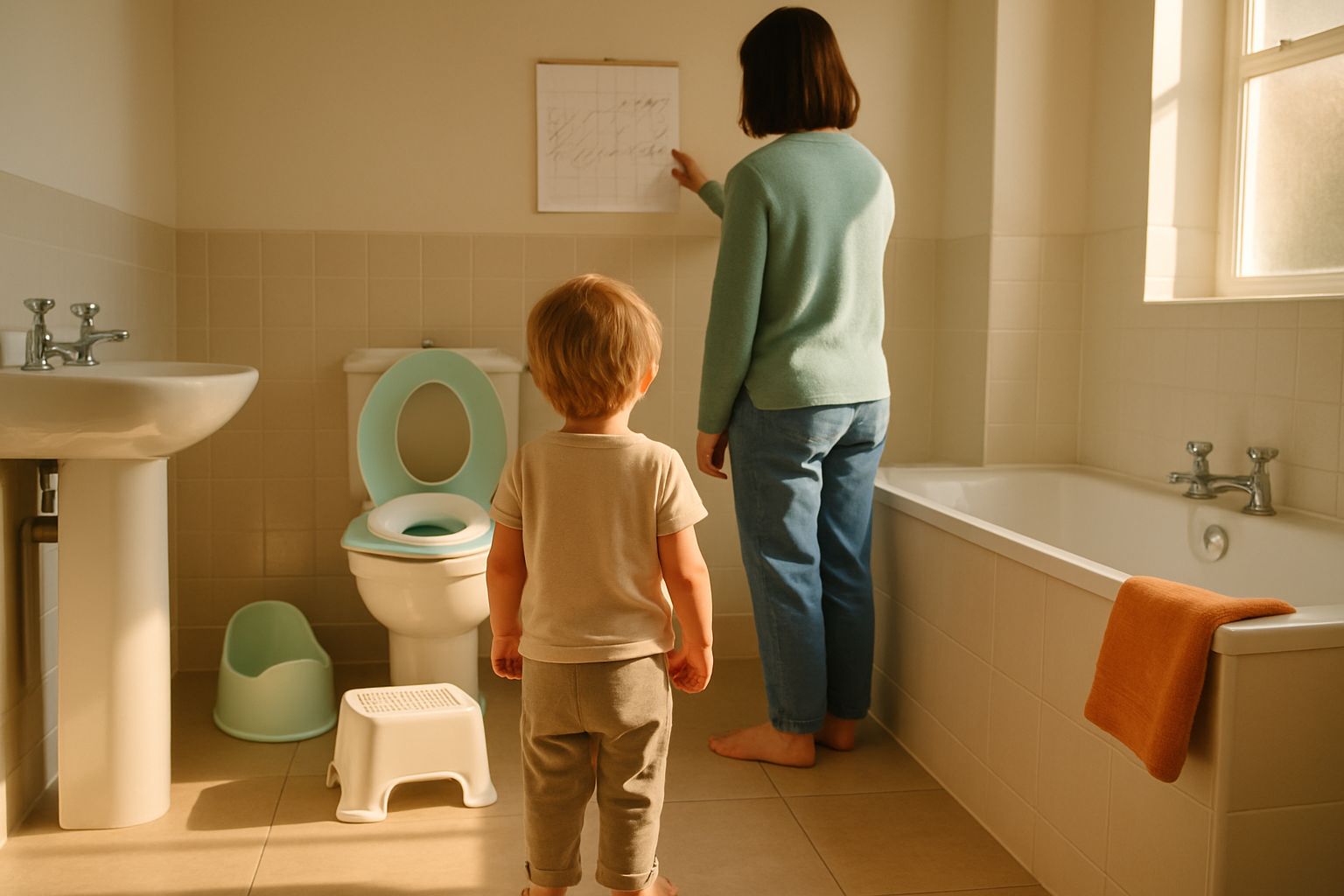
Most children are dry in the daytime within about a week of focused potty training, though the honest range runs from three days to two or three weeks depending on readiness and temperament. Night-time dryness is separate and comes later, through the body’s own development rather than practice. A child who isn’t ready yet is better off waiting.
There’s no single number that fits every child, and anyone promising one isn’t being straight with you. Some children are reliably using the toilet by the third day. Others need two or three weeks of patient, low-drama practice. Both are completely normal outcomes of the same approach.
What matters more than the exact day you hit is whether your child was ready to begin, how much calm, uninterrupted time you have at home, and how you respond on the days it goes wrong, because there will be days it goes wrong. You can read the full week-by-week plan for getting potty trained in a week if you want the structure behind this timeline rather than just the shape of it.
What the week actually looks like, day by day
The first three days are usually spent entirely at home, because this is when a child learns fastest: no car seats, no nappy as a fallback, no new faces to navigate. Nappy stays off, and ordinary cotton pants go on, because a child feels wetness in cotton pants in a way they simply don’t in a padded training pant. Short outings, a trip to the shop, a visit to a friend, tend to start from around day four, once the basics are holding at home.
| Stage | What usually happens | What you do |
|---|---|---|
| Days 1 to 3 | Learning fastest, frequent accidents, lots of asking ‘will you tell me when you need a wee?’ | Stay home, cotton pants, no nappy, ask your child to tell you |
| Days 4 to 5 | The hard bit: boredom and resistance set in | Ask less often, hand over more responsibility |
| Days 6 to 7 | Short outings, fewer accidents | Move from potty towards the toilet |
| Weeks 2 to 3 | Still settling for some children | Keep going, don’t compare to week one |
| Later, separately | Night dryness develops | Pull-ups at bedtime, no pressure |
A lot of guidance online describes the second day as the hardest. In practice it’s usually day four or five that trips families up, because that is when the novelty has worn off and your child is simply tired of being asked, over and over, whether they’ll tell you when they need a wee.
The fix for that dip isn’t to ask more often, it’s to ask less, and hand your child a bit more of the responsibility for noticing the feeling themselves. Leave longer gaps between the question, wait for them to say something unprompted, and resist the urge to narrate every trip to the bathroom. If you’re in that dip right now, tips that parents tell us made the difference are usually small and practical rather than dramatic.
Accidents through all of this are part of learning, not a setback that resets the clock. A puddle on day six doesn’t undo day one. If an accident has just happened and you want something calm to watch together, rather than treating it as a drama, this short video is designed for exactly that moment.
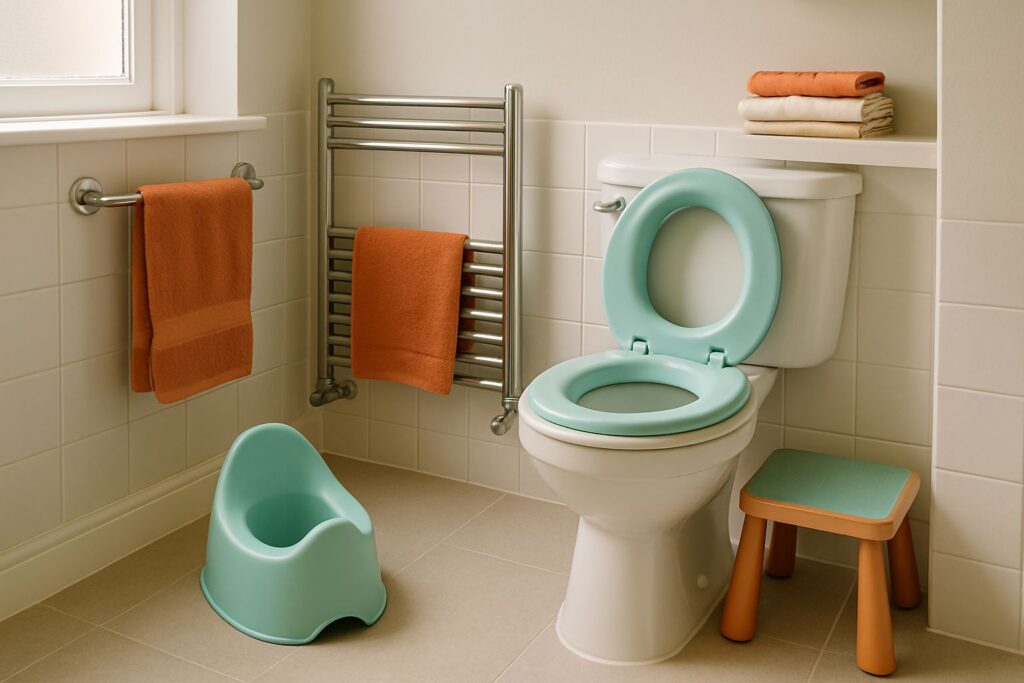
The potty itself is mostly a first-three-days tool. Once your child is reliably using it at home, the natural next step is moving towards the toilet with a reducer seat and step stool, rather than keeping the potty going indefinitely.
Why your timeline depends on readiness, not your child’s age
Most families start somewhere between eighteen months and three years old, and there is no single correct age to begin. Readiness, not a birthday, is what decides whether the week ahead goes smoothly.
Signs worth watching for include your child staying dry for an hour or two at a stretch, telling you, in words or clearly, that they’re wet, showing curiosity about the toilet or the potty, being able to pull their own pants up and down, and being able to follow a simple two-step instruction.
If you’re not sure whether your child is showing enough of these yet, a short readiness check can help you decide whether this week is the week, or whether it’s worth waiting a little longer.
A child who is frightened of the potty or the toilet is not showing readiness, whatever their age. The honest move is to build familiarity gently over a few weeks, perhaps just sitting on the potty fully clothed to begin with, or reading a picture book together about it, such as Potty, and start the actual training later. Waiting is not a failure, and nothing in the method is lost by pausing: the box, or any other plan, keeps perfectly well until your child is ready.
Starting at three, or even a little after, is not a failure and not too late. Plenty of children who weren’t ready at two are ready, and quick, at three.
Does the 3 day potty training method really work in three days?
Three days at home is the intensive start of most modern potty training approaches, including this one, but it’s rarely the finish line. Some children are genuinely dry and asking to go by the end of day three. Many more are most of the way there, with the remaining few days spent consolidating that progress on short outings.
The phrase ‘three day potty training’ tends to get used as shorthand for this intensive at-home start, rather than as a promise that every child finishes by day three. It describes the shape of the first stretch, not a guaranteed deadline.
Nappy comes off for this stretch, and ordinary cotton pants go on rather than a padded training pant, because your child needs to feel wetness clearly to connect the sensation with the habit. If three days at home sounds right for your family but you’re weighing it against a slower, gentler approach, an honest comparison of the potty training methods lays out the trade-offs without picking a winner for you.
What makes one child quicker than another?
Readiness and temperament explain most of the gap between a three-day success and a three-week one. A child who was already showing every sign of readiness, plus a parent with a genuinely clear few days at home, tends to move fastest.
Poos very often take longer to master than wees, even in children who are otherwise doing brilliantly, and that’s ordinary rather than a sign anything is wrong.
Illness, a new sibling arriving, starting nursery, or a house move will all stretch the timeline, because a child’s attention and sense of security are elsewhere. It’s sensible to pick a quieter stretch of weeks to begin if you can choose one.
Highly sensitive children, and children who are autistic, have Down syndrome, or are non-verbal, often need a longer stretch of weeks rather than days, led by reading the child’s own signals closely rather than waiting to be told in words. If this sounds like your child, it’s worth reading about a highly sensitive child and potty training before you set expectations for the week.
How do you know if it is taking too long?
After one week, some wobbliness and the odd accident is completely normal and not a sign to worry. After two weeks with little to no progress at all, it’s worth pausing rather than pushing harder. After three weeks of real struggle, many families find it’s better to stop altogether for a while.
If an attempt isn’t working, the method’s own advice is to stop and leave it for a few weeks before trying again, rather than grinding on through daily battles. That pause is a deliberate part of the plan, not a parent giving up.
Genuine medical questions don’t belong in a timeline article, and they’re not something to work out yourself. Constipation, a child withholding poo, pain when weeing, repeated urinary infections, or bedwetting that continues past age six are all worth raising with your GP or health visitor directly.
How long until your child is dry at night?
Night-time dryness is a separate skill that comes later, often months after daytime dryness, and it develops once the body makes enough of the hormone that slows down urine production overnight, something that simply happens later for some children than others rather than through practice or encouragement. Plenty of children are still wet at night well past the age they’re dry in the day, and that is ordinary rather than a sign anything has gone wrong.
Pull-ups for sleep alongside daytime cotton pants is the ordinary, sensible combination while you’re training in the day, and there’s no need to push night training alongside it.
Bedwetting that continues regularly past around age six is worth a conversation with your GP or health visitor, simply so it can be looked at properly rather than left to resolve on its own indefinitely.
How often should you put your child on the potty, and for how long do you keep doing it?
The goal isn’t a timetable, it’s the moment your child tells you themselves. Rather than sitting your child down every half hour by the clock, you simply ask whether they’ll tell you when they need a wee, and let that question do the work instead of a schedule.
Fixed intervals and half-hourly sitting are a different approach, and one that tends to work against the thing you actually want, which is your child noticing and acting on their own signals. A small number of moments stay fixed, both during the training week itself and for a good while afterwards: before and after sleep, and before you leave the house, simply because those are reliably useful opportunities rather than because the clock says so.
Tracking schedules exist to record when your particular child actually goes, not to impose a rota on them. To fill one in properly, let your child drink a full cup in one go rather than in sips spread across the morning, because only then can you see clearly how much went in and how long it took before they needed to go. That link between quantity and timing is exactly what the schedule is for, and how long after a drink your toddler needs a wee goes into that timing in more detail.
| Column | What it records | Note |
|---|---|---|
| Time of drinking | When the cup was drunk, in one go | Full cup, not sips |
| Time on toilet | When they sat down | |
| Nothing happened | Yes or no | |
| Wee | Green or red | Green is a success, red is an accident |
| Poo | Green or red | Green is a success, red is an accident |
| Notes | Anything else worth remembering |
If you’d rather fill one of these in on paper than work from a screen, there’s a printable tracking chart you can print at home.
What a plan does to the timeline
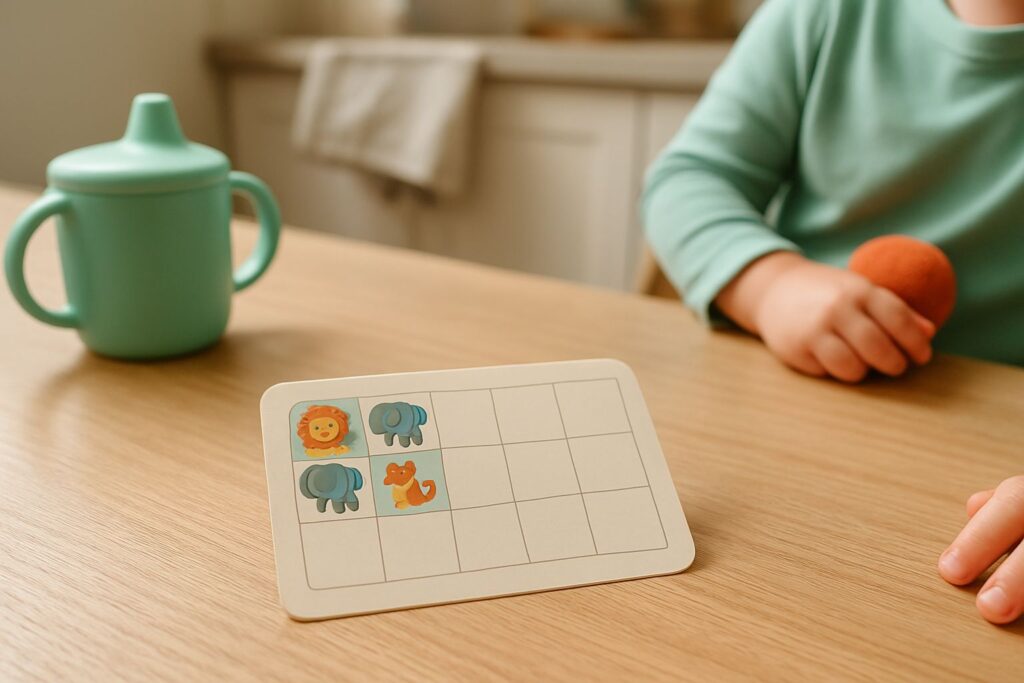
A plan doesn’t shorten the biology, but it does tell you exactly what to do on the days that go badly, which is often what actually determines whether week one turns into week three. The Potty Training Box is a physical box built around a day-by-day booklet and tracking schedules to learn your child’s own timing. It also includes sticker cards that grow from three squares up to nine, so the reward comes quickly at first and then gets rarer as your child improves, letting the habit outlast the stickers rather than stopping the moment they do, plus a year of access to a community where the brand’s experts answer questions seven days a week.
Alongside the box, it helps to have ready: a potty, a toilet seat reducer, a step stool, at least fifteen pairs of cotton pants, something to protect the mattress and sofa, a few small rewards, and pull-ups for sleeping. Some links in this article are affiliate links, which means we earn a small commission if you buy through them. It costs you nothing extra and does not affect what we recommend. For the potty itself, My Carry Potty is a popular choice that travels well; for the toilet transition, a non-slip toilet seat reducer and a sturdy two-step stool make the toilet feel manageable rather than enormous.
If you’d rather run things your own way with a lighter resource, the Potty Training Box Digital Handbook walks through the same structure without the physical materials, and separate reward systems are sold on their own too if you want to build your own version of the sticker approach. The box itself is also reusable for a second child, with refill sticker sets available separately.
Frequently asked questions
What's the hardest day of potty training?
Most families find day four or five the hardest, not day two, because by then the novelty has worn off and your child is tired of being asked whether they need a wee. The fix is to ask less often and let your child take more responsibility for noticing the feeling themselves.
How many days does it take to potty train a toddler?
Most children are dry in the daytime within about a week. Some manage it in as little as three days, while others take two or three weeks, and the right timeline depends on readiness and temperament rather than a fixed number.
What is the hardest age to potty train?
There isn't one fixed hardest age. What matters far more than age is whether your child is showing genuine signs of readiness, such as staying dry for longer stretches and telling you when they're wet, rather than simply reaching a particular birthday.
Is age 3 too late to potty train?
No. Three, or even a little after, is a perfectly normal age to start and is not a sign of being behind. Many children who weren't ready at two are ready, and often quick, once they reach three.
How long does it take for a child to be dry at night?
Night-time dryness usually comes well after daytime dryness and develops as a child's body matures, rather than through practice. There's no set timeline, and pull-ups at bedtime alongside daytime pants are the ordinary approach while this develops on its own.
What is the 10, 10, 10 rule for potty training?
This isn't a rule used in this method, and sitting a child on the potty at fixed intervals works against the goal of teaching them to notice and signal the need themselves. The approach here is to ask your child whether they'll tell you when they need a wee, and to use a tracking schedule to learn their own timing instead of a fixed rota.
Ready for the next step?
The Potty Training Box holds the day-by-day programme this article is built on: tracking charts that show you when your child actually needs to go, instruction cards for each day, and a reward system that tapers off on its own.
This article was written with AI assistance and checked by Dustin van de Sande.