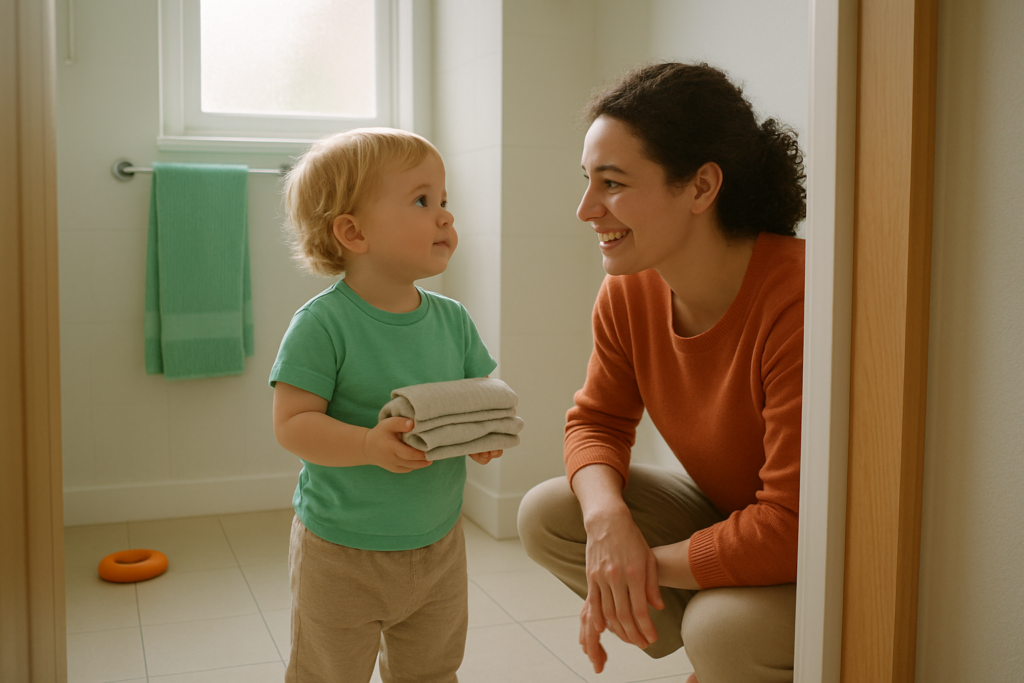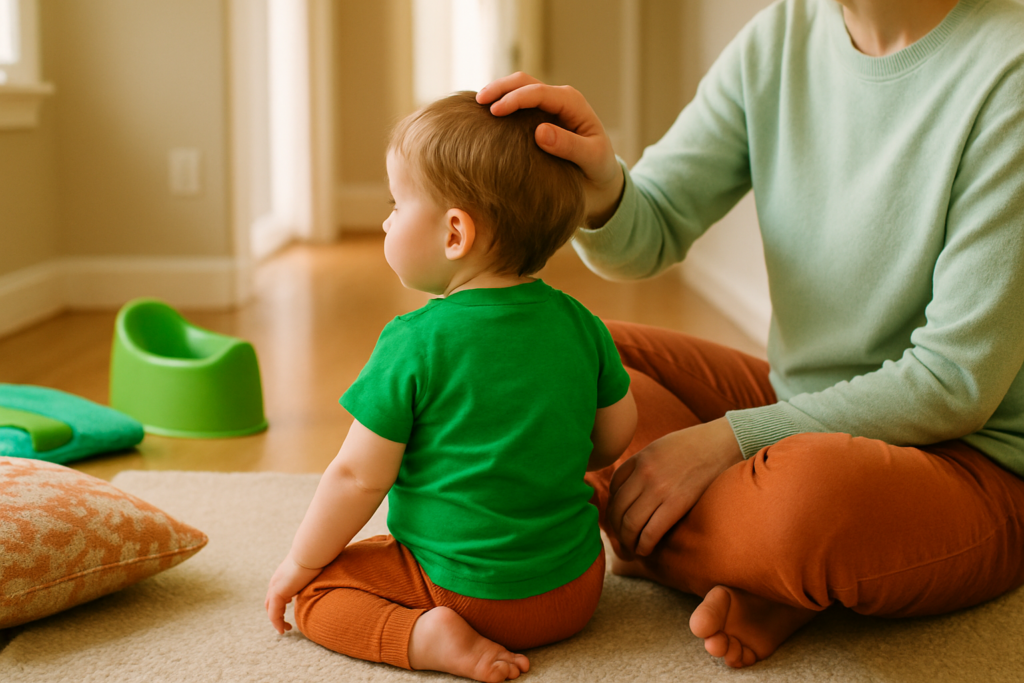


The best potty training method is whichever one ends with your child telling you they need to go. For most UK families, a structured week that builds towards this fits well. Most children are dry in the daytime in about a week, some in three days, others two or three weeks, and no method guarantees results.
Readiness matters more than the method you choose. A child who is not showing signs of readiness will get less out of any approach, however well it is designed. This article compares four approaches parents actually use in the UK: child-led, gradual parent-led, three-day intensive, and a structured week built around the child’s own signals.
All four methods discussed here focus on daytime dryness. Night-time dryness comes later as a separate stage, whichever route you take.
The four potty training methods UK parents actually choose between
There is no single correct method, only one that fits your child and your week. The four most common approaches in the UK differ mainly in pace and in how much structure the parent brings.
Child-led potty training means waiting until the toddler shows sustained interest and following their lead entirely, with no set timeline. It respects the child’s pace well, but some children show mild curiosity for months without progressing, and parents can find themselves waiting indefinitely for a moment that needs a bit of a nudge.
Gradual parent-led training introduces nappy-free stretches over several weeks or months, often around nursery days. It suits families who cannot clear a run of days at home, though progress can be slower and harder to track without a dedicated few days of focus.
Some links in this article are affiliate links, which means we earn a small commission if you buy through them. It costs you nothing extra and does not affect what we recommend.
Three-day intensive training keeps the child bare-bottomed or in pants at home for three solid days, with the potty offered frequently at first purely to gather information about the child’s own timing, before quickly giving way to the child asking for it themselves. It is closely associated with books such as Oh Crap! Potty Training, and the underlying idea of very fast toilet learning traces back to research by Foxx and Azrin in the 1970s. It works quickly for many children but is demanding on the parent and does not suit every temperament.
A structured week where the child takes the initiative combines the focus of the three-day approach with an explicit shift towards the child’s own signals from day one. The first few days are spent at home, then short outings follow, and offering the potty gradually gives way to the child telling you. You can read more about the 3-day potty training method and what it really involves if the fast-track version appeals.
| Method | How it works | Suits which family |
|---|---|---|
| Child-led | Wait for the child to lead, no fixed start | Relaxed households, no rush |
| Gradual parent-led | Short nappy-free spells over weeks | Busy nursery weeks, can’t clear days |
| Three-day intensive | Bare-bottomed at home, fast and focused | Ready child, parent free three days |
| Structured week, child-initiated | Three days home, then outings, child leads | Most families wanting a plan |
All four can and do work. None of them suits every child, and switching from one to another mid-attempt usually causes more confusion than starting again with a clear plan.
Why potty training by the clock is the one approach we would steer you away from
Sitting a toddler on the potty every twenty or thirty minutes because a schedule says so teaches the child to respond to a timer, not to their own body. That is the opposite of what potty training is meant to achieve, which is the child recognising and acting on their own need to go.
Offering the potty often in the first day or two is not the same as training by the clock. Early on, frequent offers simply gather information: how long after a drink does this particular child usually need a wee? That scaffolding is meant to come down quickly, not stay in place for weeks.
Rather than repeatedly placing your child on the potty, the more useful question is simply asking your child, in these words or similar: will you tell me when you need a wee? That single shift, from offering to asking, is what teaches a child to notice and signal the feeling themselves.
A few moments are worth keeping as fixed habits, both during training and long after it: before and after sleep, and before leaving the house. These are not a schedule so much as sensible routine, and they stay useful well beyond the training week itself.
A tracking chart exists to record when this child actually goes, not to impose a timetable on them. Once you can see the pattern, the number of times you offer the potty should fall away fast, leaving the child to do the asking.
What a child-led method looks like when it still has a plan
A structured week that is built around the child’s initiative is not a contradiction. The Potty Training Box is one example: it spends the first three days at home, because that is when a child learns fastest with fewer distractions, and short outings follow once things are going well.
Nappies come off and the child goes straight into ordinary cotton pants rather than training pants, because a child feels wetness through cotton in a way they don’t through a padded training pant, and that feeling is part of what teaches them to notice and hold on.
A tracking schedule is used to learn this child’s own timing. It works best when the child drinks a cup of fluid in one go rather than in sips spread through the day, because that is the only way to see clearly how much went in and how long it takes before a wee follows. A free printable version of this kind of chart is available at the potty training tracking chart page if you want to try recording this pattern yourself.
Reward cards come in four sizes, three, five, seven and nine squares, used in that order. The first reward arrives quickly at three squares so the child sees straight away that trying pays off, then rewards become rarer as the skill becomes routine, so the habit outlasts the stickers rather than stopping the moment they do.
Accidents through the week are treated as part of learning, not as a setback to worry over. A child who wets themselves on day six has not undone day one; it is simply part of how this particular skill gets learned.
How do you know which method suits your child?
Readiness signs matter more than age on a calendar: staying dry for longer stretches between nappy changes, noticing or reacting to a wet or soiled nappy, following simple two-step instructions, and showing curiosity about the toilet or bathroom. The NHS notes that most children show these signs somewhere between two and four years old, though the range is wide.
Ask yourself practical questions before choosing a method. Can you clear three days largely at home? If not, a gradual approach around nursery days may suit your family better than trying to force a fast-track week into a busy schedule. Nursery and childminder days can support either approach, but they work best once you have told staff what words and routine you are using, so the child hears consistent signals in both places.
A child who is frightened of the potty or the toilet is not ready, whatever method you pick. The sensible response is to build familiarity gently first, perhaps letting them sit on it fully clothed or watch a sibling, and start the actual training later. The box or any plan you have keeps until then.
Potty training is also used successfully with autistic children, children with Down syndrome, and children who are non-verbal, usually over a longer stretch and by reading the child’s own signals rather than waiting for them to ask in words. ERIC, the children’s bowel and bladder charity, has specific guidance for children with additional needs and is worth consulting directly for this.
Age three is not too late to start, and many children begin around then rather than earlier. If your child is older and previous attempts stalled, it may help to read more on potty training a 3-year-old before you try again.
What actually goes wrong, and which day is really the hardest
Day four or five is usually the hardest day, not day two. By that point the novelty has worn off and the child is often tired of being asked so often whether they need a wee, and this can show up as resistance or refusal rather than progress.
The fix is to ask less often and hand more responsibility back to the child. Cutting back the number of times you prompt, and leaning more on the fixed moments such as before sleep and before leaving the house, tends to settle the resistance within a day or two.
Poo often lags behind wee by some days or weeks, and this is common rather than a sign anything has gone wrong. Wees are easier to notice and predict early on, while a comfortable poo on the toilet or potty tends to take a little longer to establish confidence.
Accidents returning in the second week do not mean the method has failed. A dip after initial success is a normal part of the process for a lot of children, and it usually settles with patience rather than starting over. If a week’s attempt genuinely is not working, the honest advice is to stop, put things away for a few weeks, and try again later rather than pushing through a stalled attempt. If things feel overwhelming at home, it can help to read when potty training is stressing everyone out before deciding whether to pause.
Some things are worth taking to a doctor or health visitor rather than working through alone: ongoing constipation, a child who seems to be withholding poo, signs of a urinary infection, or bedwetting that continues past around age five, which the NHS notes is common up to that age but worth discussing with a GP if it persists beyond it.
What you need to have ready, whichever method you pick
Whatever method you choose, a similar set of practical things helps: a potty for the early days, a toilet seat reducer and step stool once you move to the big toilet, at least fifteen pairs of pants, something to protect the mattress and sofa, a few small rewards, and pull-ups for sleeping. A fuller rundown of what to have ready before you start is worth reading before your chosen start date.
You will also want some way to record what your child actually does, and a reward system that starts generous and tapers off rather than staying fixed. If you want to run this part of it your own way rather than using a full kit, sets of reward stickers and cards are sold separately as an extra reward system for potty training.
What a box adds that a free article cannot
A free article can explain the theory, but it cannot tell you exactly what to do on the morning of day one, day two and day three, including the days that go badly, or give you someone to ask when they do. That concrete, day-by-day structure, plus somewhere to ask questions, is the practical gap a box fills.
The Potty Training Box includes a day-by-day programme booklet, 7 instruction cards, 6 compliment cards, 14 tracking schedules, and sticker cards in four sizes, three, five, seven and nine squares, along with 100 animal stickers, 20 poo stickers and a wee and poo diploma. It also includes a year of access to a community where the brand’s own team answers questions seven days a week, and the whole kit is reusable for a younger sibling later, with refill sticker sets sold separately.
If you would rather have the plan in a lighter, digital format than the physical box, the Digital Handbook covers the same day-by-day structure without the physical kit. And if you are still weighing up whether potty training kits actually work for your family at all, that is a fair question to sit with properly before deciding.
Frequently asked questions
What is the fastest way to potty train a toddler?
The fastest results tend to come from an intensive approach that clears three or more days largely at home, offering the potty often at first purely to learn the child's own timing, and moving quickly towards the child signalling themselves. Most children following a focused week are dry in the daytime within about a week, though some manage it in three days and others need two or three weeks. Speed depends heavily on readiness, not just on the method chosen.
What is the 3 day potty training trick, and does it work?
The three-day method keeps a child bare-bottomed or in ordinary pants at home for three full days, with the potty offered frequently at first only to gather information, before this gives way to the child asking for it themselves. It works well for many children who are genuinely ready, though it is intensive for the parent and does not suit a child who is frightened of the potty or a family who cannot clear the time. It works best as the start of a longer process rather than a one-off trick.
Is age 3 too late to start potty training?
No. Many children begin around age three rather than earlier, and there is no cut-off age after which the method stops working. What matters more than the exact age is whether the child is showing readiness signs such as noticing a wet nappy and following simple instructions.
What is the 10, 10, 10 rule for potty training?
This is not a rule used by the structured, child-initiated method described here, and fixed interval rules of this kind sit closer to potty training by the clock, which trains a child to respond to a timer rather than their own body. The approach recommended here instead uses a tracking chart to learn this child's own pattern, then asks the child to signal themselves rather than sitting them down on a fixed count.
Which is the hardest day of potty training?
Day four or five is usually the hardest, once the novelty has worn off and the child grows tired of being asked repeatedly whether they need a wee. This often shows up as resistance rather than an accident increase, and it usually settles once the parent asks less often and hands more responsibility to the child.
Can you potty train without a potty training kit?
Yes, the underlying method can be followed without buying the full box. Rather than putting together your own tracking chart and reward system from scratch, an extra reward system with sticker cards is sold separately for parents who want to run this part of it their own way.
Ready for the next step?
The Potty Training Box holds the day-by-day programme this article is built on: tracking charts that show you when your child actually needs to go, instruction cards for each day, and a reward system that tapers off on its own.
Sources
- NHS
- ERIC, The Children's Bowel and Bladder Charity
- NHS
- Foxx and Azrin, Behaviour Research and Therapy (1973)
This article was written with AI assistance and checked by Dustin van de Sande.