
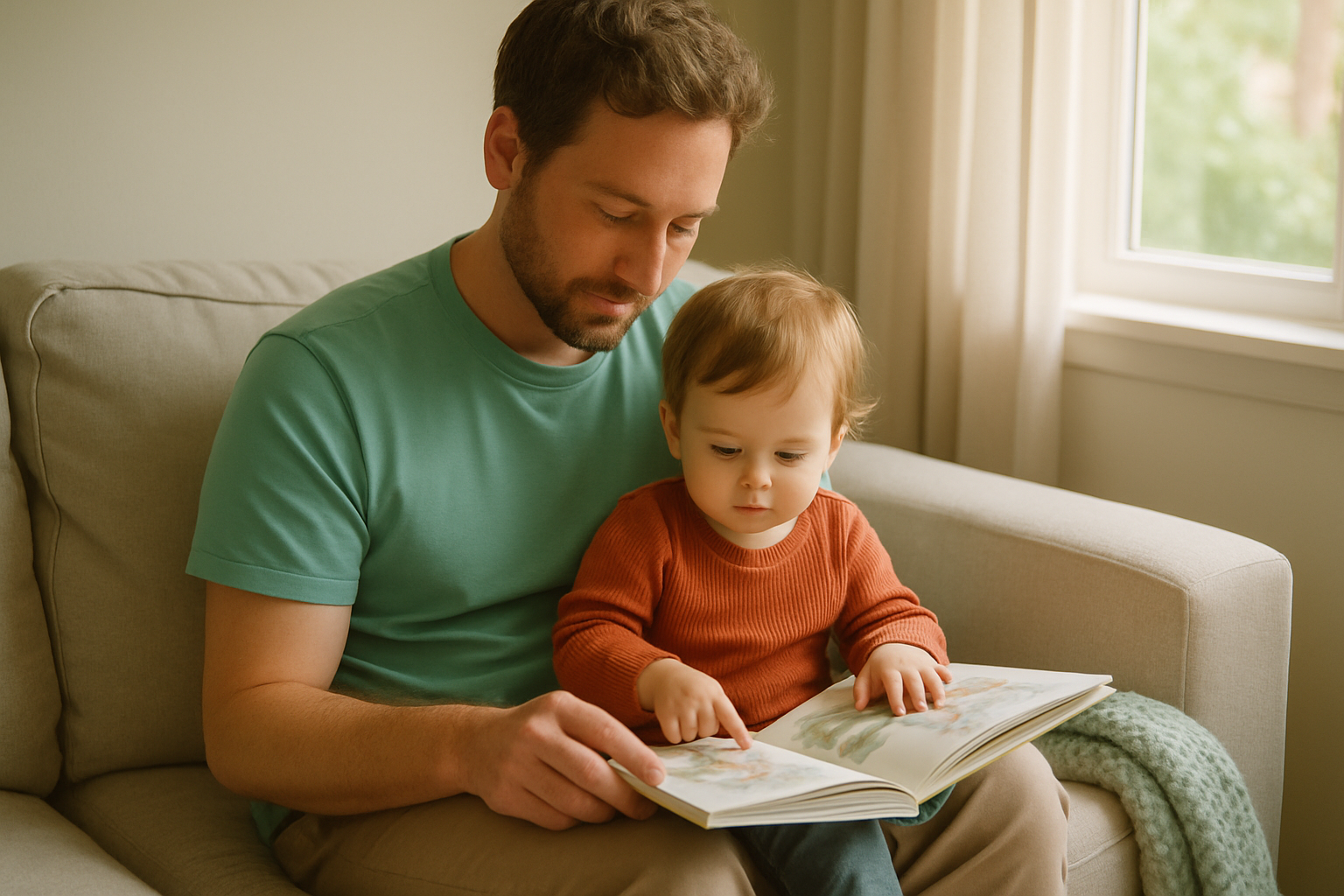
A small number of toys help potty training: dolls and books that build familiarity before you start, and small rewards given straight after a success. Toys that entertain a child while they sit, such as musical potties or tablets, work against the goal because the aim is the child recognising and signalling the need themselves, not staying parked on the potty.
Any toy that turns the potty into an entertainment spot delays that moment rather than bringing it forward. If a child is happy sitting there with a book or a tablet, there is less reason to get up, and getting up quickly (whether they have gone or not) is part of learning that sitting has a purpose. No toy, however clever, replaces having a plan for what actually happens on day one, two and three, including the days that go wrong.
What are the best toys to use during potty training?
The most useful toys are the ones used before and around sitting, not during it. A doll or teddy the child can sit on their own little potty and ‘show how it is done’ works well in the days leading up to starting, because it lets the child rehearse the idea without pressure.
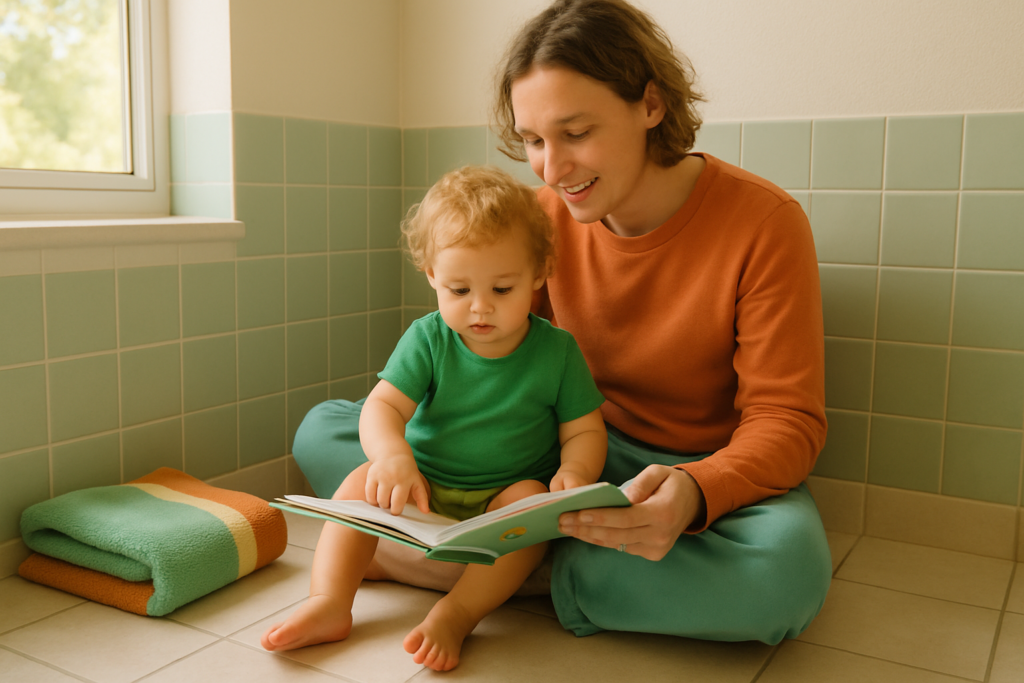
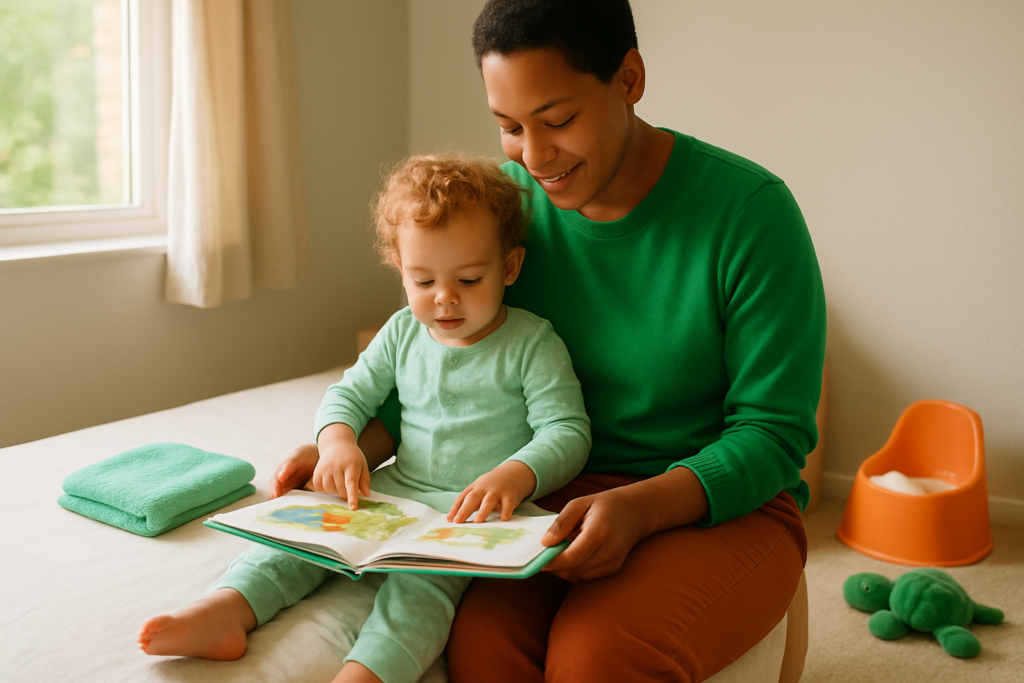
A handful of picture books about using the potty are worth having, read at bedtime or on the sofa rather than while the child is actually sitting. Ordinary pretend-play items a family already owns, a doctor’s kit, a tea set, dolls, all work just as well because they let a child rehearse routines through play generally.
Stickers and small rewards belong after a success, given quickly and with enthusiasm, not handed over to occupy a child during the sit itself. What to leave on the shelf: singing or musical potties, tablets, and anything designed to make the potty somewhere a child wants to linger.
| Toy or reward | Does it help? | Use it when |
|---|---|---|
| Teddy or doll demonstration | Yes | In the run-up, before day one |
| Potty picture books | Yes | Bedtime or sofa reading, away from the potty |
| Stickers and small rewards | Yes | Straight after a success |
| Novelty pooping toy | Sometimes | For a squeamish or worried child, as familiarity building |
| Quiet fidget item | Occasionally | Short-term bridge for a child anxious about sitting |
| Musical or singing potty | No | Never during the actual method |
| Tablet or phone | No | Never on the potty |
What is a good pooping toy for potty training, and does it help?
A pooping toy is a doll or animal figure that produces modelling compound or pellets to mimic having a poo, and it can genuinely help a child who finds the idea of poo frightening or embarrassing by normalising it through play. These toys work best in the days before you start, alongside books and open conversation about what a poo is and where it goes.
What they cannot do is teach the release itself, the sensation of needing to go, or the signal to a parent. A child can enjoy the toy thoroughly and still hold on, get anxious on the actual potty, or refuse entirely, because the toy addresses squeamishness rather than the physical and emotional steps involved in letting go.
Never present the toy to a child as the reason they will poo on the potty; it sets up disappointment when the toy does not translate into the real thing. If poo is the actual sticking point, the more useful read is when your toddler will not poo on the potty, which covers withholding, fear and what tends to help. If a child seems to be holding stool in, has hard or painful poos, or shows signs of constipation, that is a matter for a GP or health visitor rather than something to solve with a toy.
Should my toddler play with toys while sitting on the potty?
Mostly no, and never as a way to keep a reluctant child sitting for longer. A sit should be short: the child sits, they go or they do not, and they get up again, whether or not anything happened.
A quiet fidget item or a familiar book can be a reasonable temporary bridge for a child who is anxious about sitting at all, used briefly while confidence builds rather than as a permanent fixture. Screens are a different matter: a tablet on the potty creates a habit that is genuinely hard to unpick later, because the child learns to associate sitting with screen time rather than with the sensation that got them there.
Long, entertained sits also teach the wrong lesson about who is in charge of the process. The point of the week is for the child to decide when they need to go and to say so; if the parent is filling the time to keep them seated, the child is being managed rather than learning to lead.
What is the 10-10-10 rule for potty training, and is it worth using?
The 10-10-10 rule is commonly described as sitting a child on the potty for ten minutes, ten times a day, for ten days. It is a fixed-interval, clock-based approach: the timetable decides when the child sits, regardless of what the child’s own body is doing at that moment.
That is a different method to the one this brand teaches, and worth naming as such rather than blending the two. Fixed sit times and repeated intervals put the parent’s clock in charge; the aim here is for the child to recognise their own need and say so, which a strict timetable does not build towards.
What the parent does instead in the early days is create opportunities by offering the potty at plausible moments (after waking, after meals, before outings) and watching closely, rather than sitting the child on a schedule regardless of signals. Tracking schedules exist to record what this particular child actually does: the times they go, not a plan for when they must sit. Within days, as the child starts to show or say they need to go, the parent offers less and follows the child’s lead more, until offering fades out almost entirely.
How do rewards fit in, and when do you stop giving them?
Rewards work best given immediately after a success, kept small and quick rather than drawn out into a production. A sticker, a cheer, or a specific compliment in the moment matters more than anything elaborate handed over later.
Stickers double as a visible record of progress a child can look back on, which is part of why the Potty Training Box includes 100 animal stickers and 20 poo stickers for exactly this purpose. The sticker cards range from three squares up to nine, so the frequency of reward naturally tapers as a child improves instead of stopping abruptly on some arbitrary day, which avoids the jolt of a reward suddenly disappearing.
Compliment cards in the box exist for the moments a parent has run out of fresh ways to say well done, and a wee and poo diploma gives the child a clear finish line to work towards. For a second child, or simply to top up stickers, the extra reward system is sold separately with the same tapering card structure.
What you actually need to buy before day one (and what is not a toy)
The Potty Training Box is not a potty, and no potty is included in it. This catches parents out at exactly the toy-shopping stage, so it is worth stating plainly: a potty (mostly needed for the first three days), a toilet seat reducer, and a step stool all need to be bought separately.
Also worth having ready before starting: at least 15 pairs of pants, something to protect the mattress and sofa, a handful of small rewards, and pull-ups for sleeping, since night dryness is handled separately and later.
What the box does contain is the plan itself: a training programme booklet, 7 instruction cards, 6 compliment cards, 14 tracking schedules, 20 sticker cards from 3 to 9 squares, the stickers and diploma already mentioned, and a year of access to a community where questions get answered daily. It is the structure the toys and hardware sit inside, not a substitute for either.
What age should a child be potty trained, and does a toy change the answer?
Most children begin potty training somewhere between about 18 months and 4 years old, and the NHS notes there is wide normal variation in when a child is ready. No toy changes that; readiness is about the child, not the equipment.
Signs worth checking for, as commonly described by the NHS and by ERIC, the children’s bowel and bladder charity, include staying dry for a couple of hours at a time, showing interest in the potty or toilet, being able to follow simple instructions, and telling a parent after they have been, before they can reliably tell them beforehand. ERIC also advises letting a child take the lead rather than prompting constantly, which fits directly with the box’s own approach of building around the child’s signals rather than a parent-led schedule.
A child who is frightened of the potty or the toilet is not ready yet; the better move is building familiarity through books, dolls and calm exposure, then trying again later. Most children who are ready are dry in the daytime in about a week using this kind of approach, some in as little as three days, others taking two or three weeks, and that range is entirely normal. Night-time dryness comes later and is a separate skill; buying any particular toy will not speed up either.
Which toys get in the way, and what to do instead
Musical or reward-noise potties reward the act of sitting rather than the act of going, which teaches a child the wrong lesson about what earns praise. Use a plain potty and save the praise for an actual wee or poo.
Screens and tablets on the toilet or potty create a habit that is hard to reverse; use a short book instead, and only briefly, if a child needs something to settle an anxious sit.
Giving a big toy for every single success leaves nothing to taper down to, which makes it harder to wean a child off constant reward later; small stickers that step down over the sticker cards work better than one large prize repeated endlessly.
Using toys to bribe a child who is actively resisting tends to backfire, turning the potty into a negotiation. If an attempt genuinely is not working, the method’s own advice is to stop and leave it a while before trying again, rather than pushing through with bigger and bigger bribes.
How toys and rewards work for a child who is autistic, has Down syndrome or is non-verbal
Potty training with these children usually takes a longer stretch of time, and works best by reading the child’s own signals and patterns rather than waiting for them to say something in words. This is the same underlying principle, just applied more patiently.
Visual materials, including stickers, picture schedules and simple sequences, can carry more of the load when spoken language is limited, because they give a consistent, repeatable cue that does not depend on verbal instruction. Sensory considerations matter too: some children are bothered by particular textures, noises or the feel of a seat, which is one of the few situations where a quiet, familiar fidget item genuinely earns its place rather than being a distraction to avoid.
A community of other parents who have been through something similar can be useful for troubleshooting day-to-day questions, while anything touching on development, continence concerns, or ongoing bedwetting past the age of six is better raised with a health visitor, GP, or a paediatric continence service. Very frequent, very small wees during training is a separate, common pattern worth reading about at my child keeps peeing small amounts, particularly for parents who have been doing frequent short sits and are wondering why progress feels slow.
Frequently asked questions
What are the best toys to use during potty training?
The most useful toys build familiarity before you start, such as a doll or teddy demonstrating the potty and picture books read away from the potty itself. Stickers and small rewards given straight after a success also help; toys meant to entertain a child during the actual sit, like musical potties or tablets, work against the goal.
What is a good pooping toy for potty training?
A pooping toy is a doll or animal that produces modelling compound or pellets to mimic having a poo, and it can help a squeamish or worried child feel less anxious about poo generally. It does not teach the physical release, the signal, or the holding on, so it works best as familiarity-building before you start rather than as the reason a child actually goes.
What is the 10-10-10 rule for potty training?
The 10-10-10 rule is commonly described as sitting a child on the potty for ten minutes, ten times a day, for ten days. It is a fixed, clock-based approach that differs from methods built around watching for and responding to a child's own signals rather than a set timetable.
What age should a child be potty trained?
Most children start potty training somewhere between about 18 months and 4 years old, with wide normal variation in when a child is genuinely ready, as the NHS notes. Readiness signs to look for include staying dry for a couple of hours, showing interest, following simple instructions, and telling a parent after they have been.
Should I let my toddler use a tablet or phone on the potty?
No. A tablet or phone on the potty creates a habit that is hard to unpick later, because the child starts associating sitting with screen time rather than with the physical sensation that should prompt them to go. A short book is a better option if a child needs something calming during an occasional anxious sit.
Does the Potty Training Box include a potty or any toys?
No, the Potty Training Box does not include a potty, a toilet seat reducer, a step stool or any toys, and these need to be bought separately. It contains the training programme booklet, instruction cards, compliment cards, tracking schedules, sticker cards, stickers, a diploma and a year of community access.
Ready for the next step?
The Potty Training Box holds the day-by-day programme this article is built on: tracking charts that show you when your child actually needs to go, instruction cards for each day, and a reward system that tapers off on its own.
Sources
- NHS
- ERIC (Education and Resources for Improving Childhood Continence)
- ERIC (Education and Resources for Improving Childhood Continence)
This article was written with AI assistance and checked by Dustin van de Sande.