


Potty training in 10 steps — how to get your child nappy-free in one week
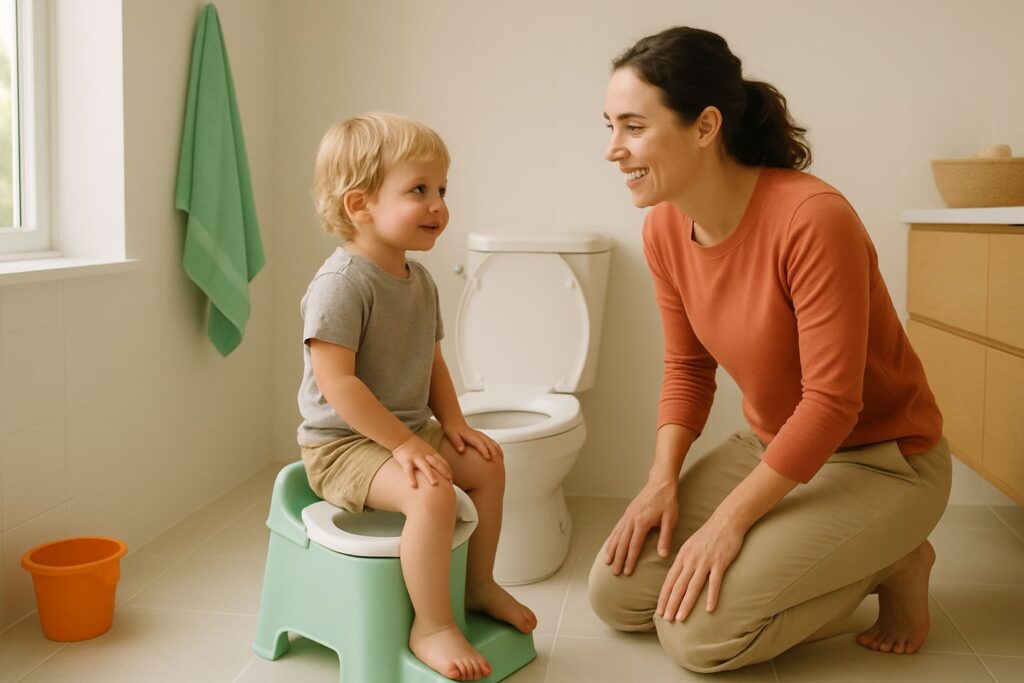
There are a lot of ways to approach potty training. The slow, gradual route — introducing the potty alongside pull-ups, waiting for accidents to decrease over months — works for some families. But most parents we speak to didn’t want months. They wanted it done.
That’s exactly what the Potty Training Box Method is built for: one focused, positive week. No confusing back-and-forth between nappies and pants. No drawn-out process that loses momentum. Just a clear plan, followed consistently, that gets your child there fast.
There’s a side effect worth mentioning too. Because you’re with your child almost constantly that week — cheering every success, working through every setback together — the bonding is real. They get undivided attention. You get a child who finishes the week standing a little taller, genuinely proud of themselves. The mopping is not the highlight. Everything else is.
The 10 steps
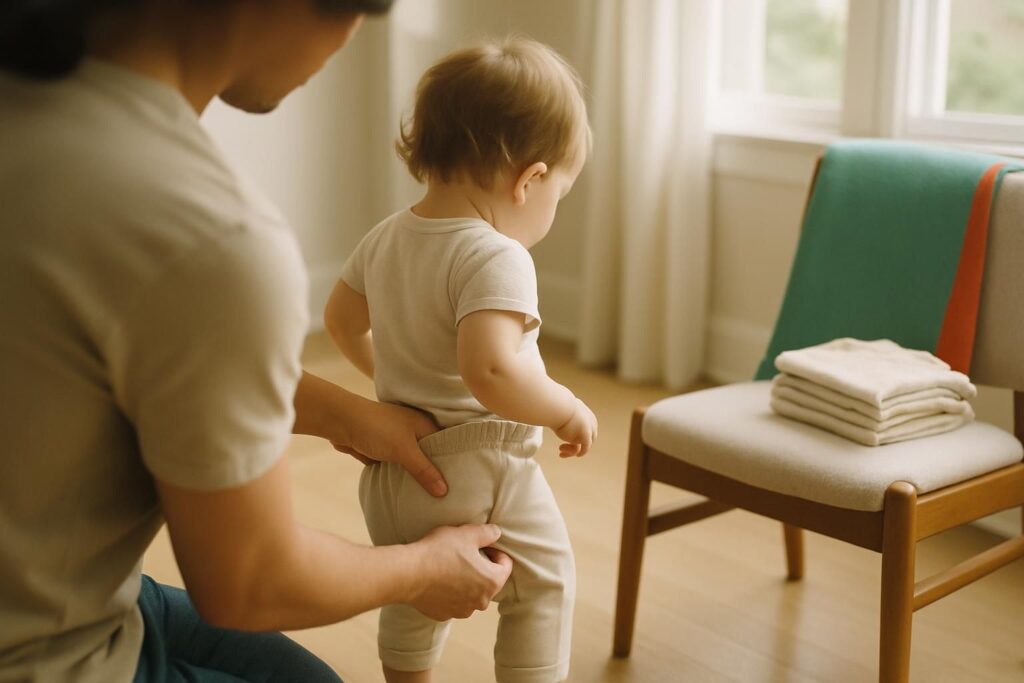
Children thrive on clarity. Switching back and forth between nappies and pants creates confusion and slows everything down. On day one, the nappy comes off and stays off during waking hours. That’s the line.
Bag them up and move them somewhere your child won’t see them — a cupboard, the car, a neighbour’s. You can pass them on later. This isn’t about waste; it’s about sending a clear signal that things have changed.
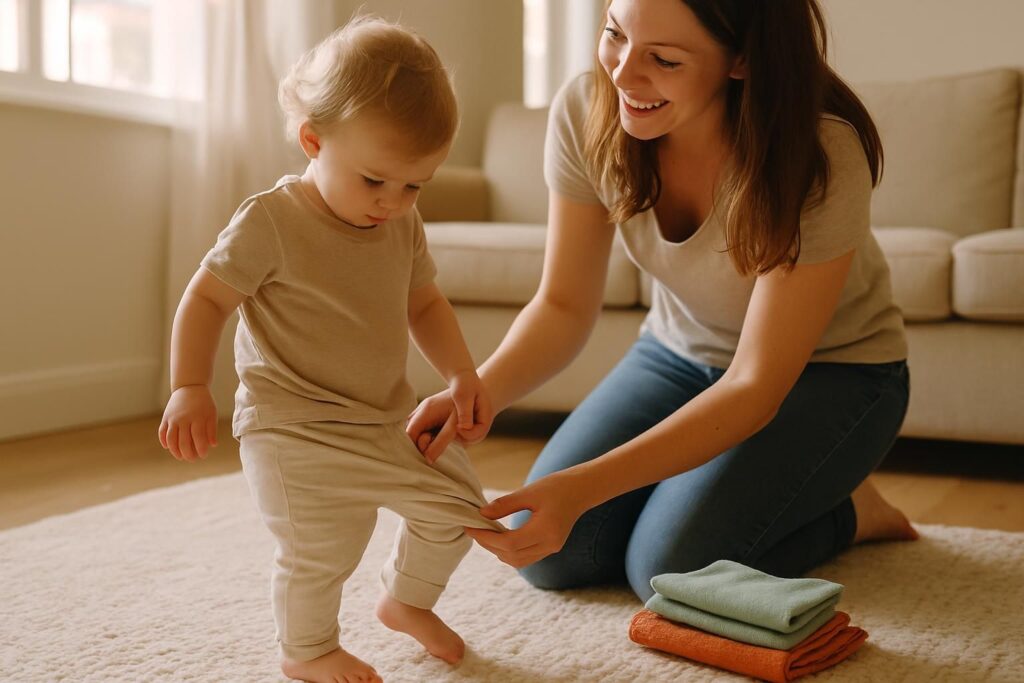
Let your child choose. Give a genuine compliment. “Real pants” are a big deal to a toddler — use that. This is the first win of the week, and it sets the tone.
Bin bags cut open flat, layered with towels. Mattress protectors on beds and sofas. Accidents will happen — especially on days one and two — and the faster you can clean up without stress, the better the atmosphere stays.
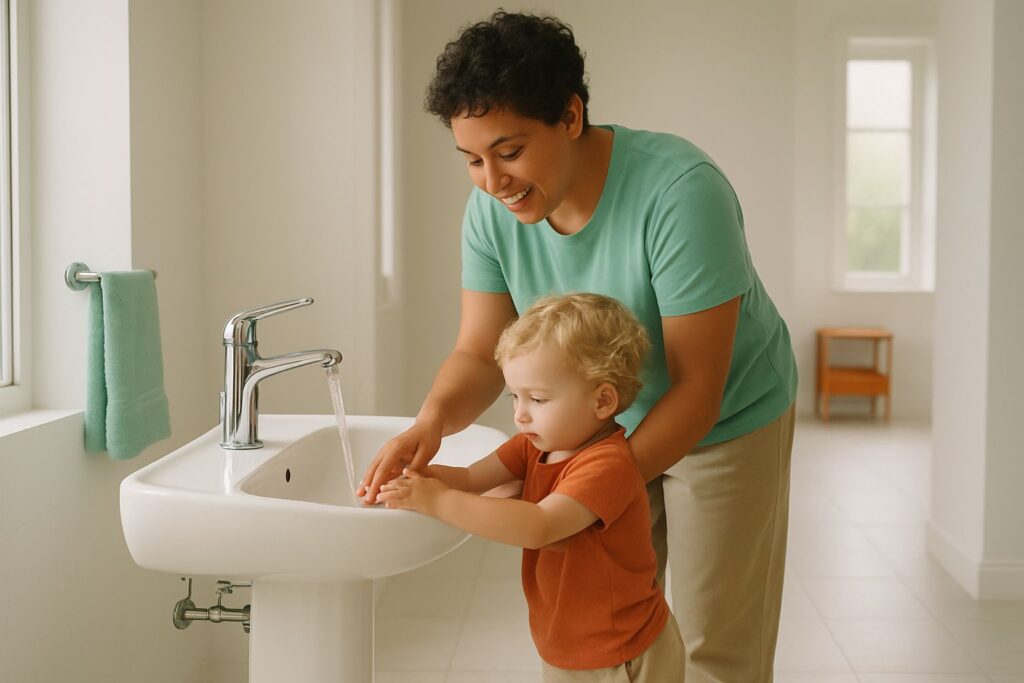
More drinks means more practice. If your child is reluctant to drink, get creative — a new cup, their favourite drink (forget the sugar rules for this week), homemade ice lollies. Every child loves a lolly, and it counts as fluid.
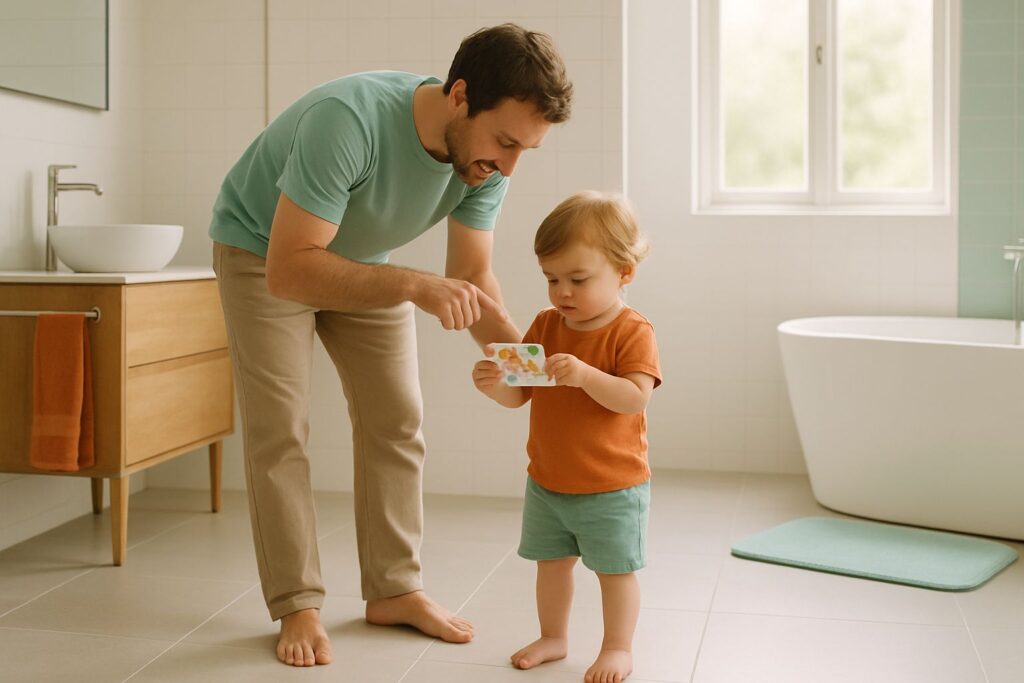
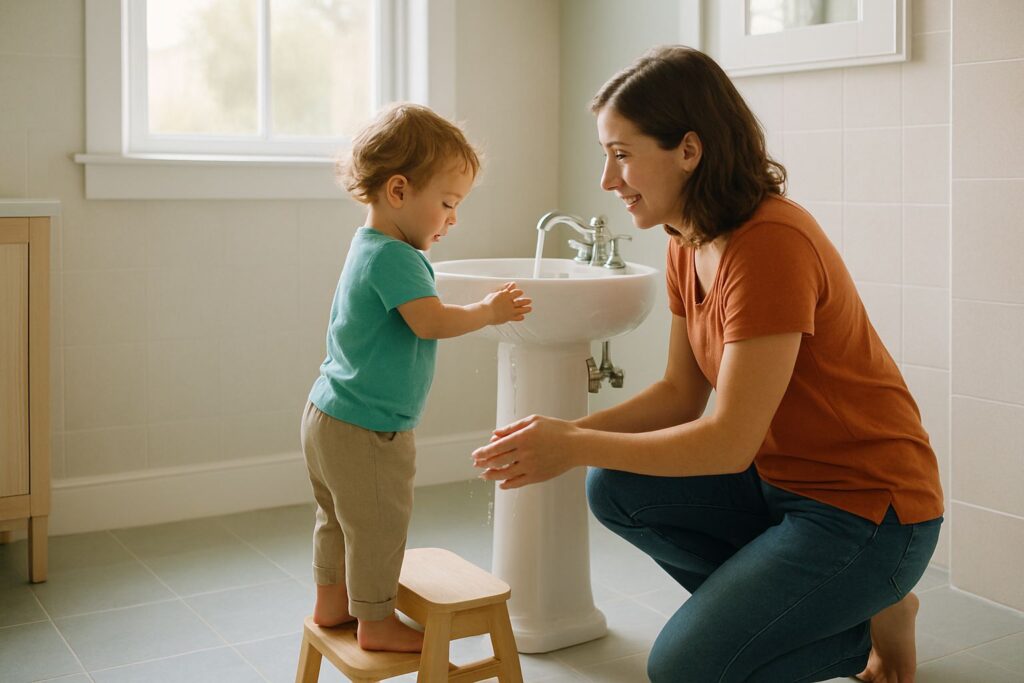
Instead of constantly asking “Do you need the potty?”, say: “Will you tell me when you need to go?” This small shift puts ownership with your child — which is exactly where it needs to be. It also reduces the nagging dynamic that makes some children dig their heels in.
This is the step that’s hardest on day three. Accidents are not setbacks — they’re information. Your child is learning what the feeling of needing to go actually feels like, and accidents are part of that process. Stay calm, clean it up matter-of-factly, and move on. Your reaction teaches them how to feel about the whole experience.
A big cheer. A sticker earned and placed on the chart by your child. Make it feel earned, because it is. The sticker chart isn’t just a nice prop — it gives your child a visual record of their own progress, which keeps motivation going through the harder moments.
Daytime and night-time training are two different things — the bladder control needed for sleep takes longer to develop. Using a pull-up for naps isn’t going backwards. Call it “sleep pants” to keep it separate in your child’s mind, and put the regular underwear straight back on when they wake up.
If you need something for naps and bedtime, look for a pull-up your child can pull up and down themselves, like these:
Some links in this article are affiliate links, which means we earn a small commission if you buy through them. It costs you nothing extra and does not affect what we recommend.
Day 3 is almost always the hardest. Progress from day 1 and 2 can seem to plateau or even reverse. This is normal — it’s the point where many parents quietly put the nappies back on. Don’t. The children who get through day 3 consistently come out the other side dry. Stay the course.
What makes this method work
These 10 steps aren’t complicated — but the reason they work is the combination of clarity, consistency, and motivation running through all of them. Your child always knows what the rules are. Every success gets recognised. And you always know what to do next, including when things go wrong.
That last part is what most parents are missing. It’s easy to find tips. It’s harder to find a plan that tells you exactly what to do on day 3 when it feels like you’re going backwards, or how to handle a child who refuses to sit on the potty, or what an accident on day 5 actually means.
That’s what the Potty Training Box is for. Everything in this method, with the daily tools to execute it — instruction cards, reward charts, stickers, and a diploma your child earns at the end of the week.

Common questions about this method
What if my child isn’t ready?
Before starting, check the readiness signals — not age. Can they walk to the bathroom independently, let you know when their nappy is wet, and follow simple two-step instructions? If three or four of those are true, they’re ready. If you’re not sure, take the free readiness quiz.
What if my child keeps peeing small amounts?
Very common in the first few days — the bladder is still learning. Slow things down, encourage them to sit a little longer before getting up, and keep the atmosphere calm. Read our full guide: my child keeps peeing small amounts.
When do I start night training?
Not yet. Get daytime dryness solid first — usually one to two weeks after completing this method. Night-time bladder control develops separately and on its own timeline. Rushing it tends to make both harder.
What if my child is highly sensitive?
The method works, but the pacing may need adjusting. Read our guide on potty training a highly sensitive child before you start.
Hiya my daughter is 2.5 we have been potty training for 5 weeks and she is doing amazing! She wees in a potty in the toilet and always tells me when she needs to go.
The struggle we are having is with number twos. She goes in her pants, she knows when she needs and is having a poo but goes in her pants. I don’t know how else to stop this.
She has “nap Pull ups and sleep pull ups” again she will poo in these. She tried to go on the potty but has no success and not always. Any suggestions would be amazing.
Hi Hannah, thank you for your message. So nice to hear that she’s doing amazing with wees. We made a blog article with some advice about poo. Number 4 is a good one to try because your daughter can decide if she’s ready for the next step. https://pottytrainingbox.co.uk/my-child-is-afraid-to-poop-5-super-valuable-tips/ Hopefully this will work for her!
hi my son is 4 and a half he has a few learning disabilities, we have been trying to potty train for about 6 months now and somedays he will do it (maybe 1 out of 7 days) and others he point blank refuses, he will not wear pants only a pull up as he has a sensory disorder and does not like the feel of them against his skin, he also refuses to drink sometimes and we have done everything on your list but some days he refuse’s every drink offered to him. could you possibly help with what we could try or is he just not ready yet? the school have said he goes there and i put a mark on his pull up everyday and he still has the same one on when he comes home but it’ll be wet and i’ll have to change him. thankyou
Hi Natasha,
Seems like your struggeling for a while now. Our programme is used before with children with autism, syndrome of Down and other disabilities with great results. I think the reason for this is the intensive but relatively short training period of a week. This week is fully dedicated to potty training instead of just see if he will go.
As for your problem with him refusing to drink we also have tips in our programme, like giving him handmade popsicles, cucumber, or use a special cup with special straw to drink from to make him enthusiastic.
I think with for years old he is ready. It’s just making him enthusiastic to potty train. Your enthusiasm is key for making him want to.