
The best potty training kit in the UK — everything you need for one successful week
If you’re searching for the best potty training kit, chances are you want something that actually works — not a loose collection of items you’ll abandon by day three. This page explains what makes a potty training kit genuinely effective, what to look for, and why over 50,000 families across the UK and Europe have chosen the Potty Training Box.
What should a potty training kit actually include?
A lot of “potty training kits” are just a potty and a book. That’s a starting point — not a system. A kit that gets results needs to cover three things: a clear method your child can follow, a motivation tool that keeps them engaged day after day, and enough guidance that you know exactly what to do when things go wrong.
Here’s what we recommend looking for:
- A step-by-step training guide — not general advice, but a day-by-day method you can follow without having to make it up as you go
- A reward chart with stickers — visual, tangible rewards are consistently the most effective motivation tool for toddlers aged 18 months to 3.5 years
- A completion certificate — children respond powerfully to recognition of achievement; it signals that the training is “done” and they’ve succeeded
- Clear guidance on common problems — small frequent wees, refusal, night training, regression — a good kit tells you what to do, not just what to hope for
What you probably don’t need: an expensive potty (a simple £5–£8 one works fine), training pants as a first step (they delay the process for most children), or a method that stretches over months rather than weeks.
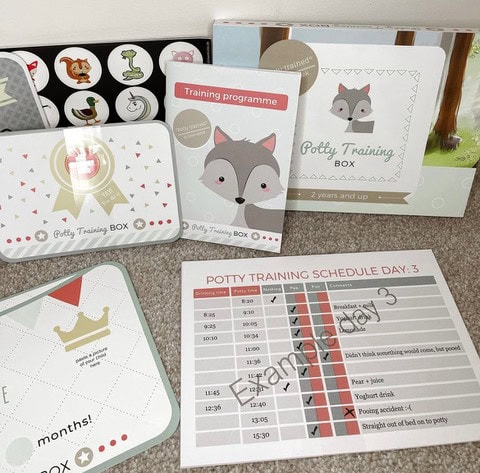
The Potty Training Box — the UK’s most complete potty training kit
The Potty Training Box was designed by a certified potty training specialist and is built around a proven seven-day method. It’s used in the Netherlands, Belgium, Germany, France, the UK, and beyond — and the results speak for themselves.
📋 Step-by-step training method
A clear day-by-day plan written for both parents and child — no guesswork, no conflicting advice. You’ll know exactly what to do on day one, and what to do if day two doesn’t go as planned.
⭐ Reward chart and stickers
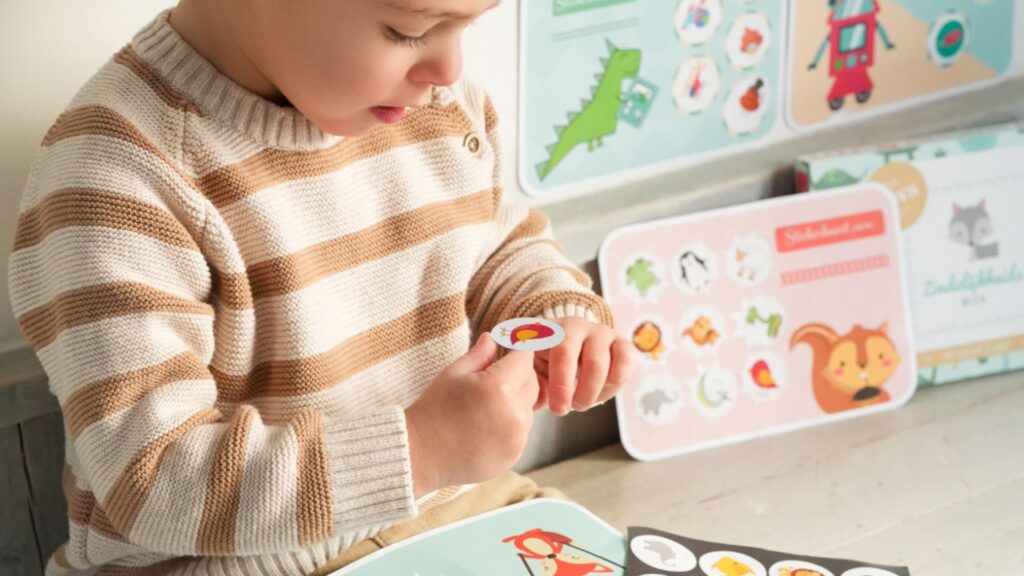
A large, colourful reward chart with stickers that your child earns for each successful use of the potty. The visual progress keeps children motivated — and gives parents a clear tool to work with.
🎓 Diploma certificate
When training is complete, your child receives their own official diploma — a moment that children take seriously and genuinely feel proud of. It marks the end of the process in a way they understand.
The box also includes guidance for night training, handling setbacks, and adapting the method for sensitive children.
What parents say
The thing we hear most often — more than anything else — is: “I wish I’d started sooner.”
Parents who use the Potty Training Box typically see their child reliably dry within the first week. Not perfect, but dry — with accidents becoming the exception rather than the rule.
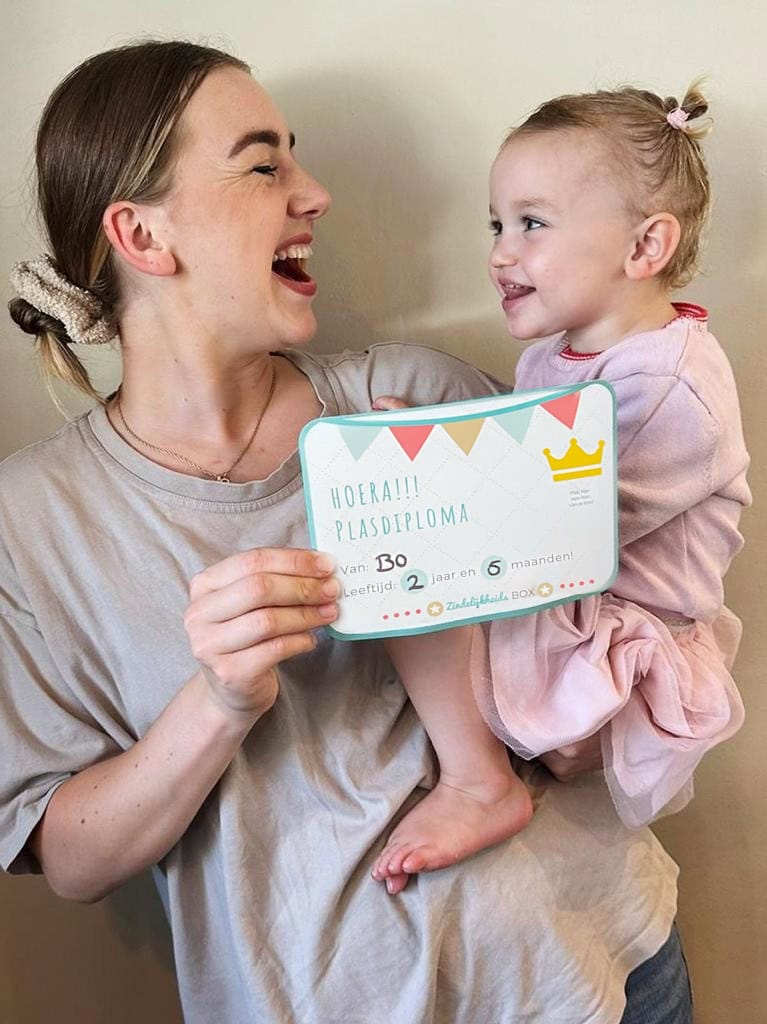
Beyond the practical results, the moment that surprises parents most is how their child responds to receiving their diploma. The pride a toddler shows holding that certificate — the seriousness with which they treat it — is something that’s hard to predict until you see it yourself.
A few things parents tell us regularly:
- “We did it in four days — I couldn’t believe it.”
- “Having a clear plan made all the difference. I wasn’t winging it.”
- “My son carried his diploma around for a week. He showed everyone.”
- “The reward chart worked better than anything else I’d tried.”
The Potty Training Box has been used by over 50,000 families in the UK and Europe, and it was developed by a certified specialist — not assembled from generic advice.
When is the right time to start potty training?
Before investing in any potty training kit, it’s worth making sure your child is ready — because starting before readiness leads to frustration for everyone, and starting after it means more months in nappies than necessary.
Look for these signals rather than going purely by age:
- They can sit unsupported and walk to the bathroom independently
- They let you know — in some way — when their nappy is wet or dirty
- They understand and follow simple two-step instructions
- They can say or signal “no” (shows self-awareness)
- They’ve shown any interest in the potty or in what you do in the bathroom
If three or four of these are true, your child is ready. Most children hit this point somewhere between 18 months and 3 years. There’s no one right age — readiness is what matters.
Not sure yet? Take our free online readiness test — it takes about two minutes and gives you a clear answer.
Is the Potty Training Box right for every child?
The core method works for the vast majority of children aged 18 months to 3.5 years. The box also includes specific guidance for situations that often require a different approach:
Highly sensitive children
Children who are more sensitive to change, pressure, or sensory experiences often do best with a gentler introduction to the potty before training begins. The box includes guidance on this — and we have a dedicated article on potty training sensitive children if this sounds like your child.
Children with developmental delays
The readiness checklist — rather than age — is the guide. Many children with developmental delays get there successfully with the same method, just on a slightly different timeline. We’re always happy to answer specific questions over email or message.
Children who’ve tried and “failed” before
This is actually one of the most common situations we hear about. If a previous attempt didn’t work, it usually means the timing was off or the approach wasn’t clear enough — not that anything is wrong with your child. A structured reset with the box often works well in this situation.
The practical case for starting now
Beyond the training itself, there’s a straightforward financial argument for not waiting. The average UK family spends around £50–£60 per month on nappies and wipes. Over six months, that’s £300–£360. The Potty Training Box costs a fraction of that — and the saving starts from the week you use it.
There’s also the environmental side. The average child uses around 4,000 nappies before they’re potty trained. Every month of training you bring forward is hundreds of nappies out of landfill.
And then there’s the practical daily relief — no more nappy changes, no bag packed full of supplies every time you leave the house, no wondering whether the nursery will accept them next term.
Most parents look back and wish they’d done it sooner. The families who commit to a structured week — rather than a slow, gradual approach over months — almost always get there faster and with less stress.
Common questions about potty training kits
What age is best for a potty training kit?
Most children are ready somewhere between 18 months and 3 years. Age is less important than readiness — use the signals checklist above to find out if your child is ready now. If they are, there’s no advantage to waiting.
How long does potty training take with a kit?
With a structured approach, most children are reliably dry within five to seven days. Some get there in three or four. “Reliably dry” means accidents are the exception — most children still have the occasional accident for a few weeks after training, and that’s completely normal.
Do I need a special potty, or will any potty do?
Any simple potty works. A £5–£8 basic potty is fine. The method and the motivation tools matter far more than the equipment. The Potty Training Box doesn’t include a potty — it’s the method, reward system, and guidance that make the difference.
What if my child refuses to use the potty?
Refusal is usually either a readiness issue (the signals aren’t quite there yet) or a motivation issue (the child doesn’t yet see a reason to change). The step-by-step method in the box addresses both — and if you’re stuck, you can always reach us directly.
Is the Potty Training Box suitable for night training too?
The main method focuses on daytime dryness first, which is the right approach for most children. Night training guidance is included in the box for when you’re ready to take that next step.
More helpful reading
