


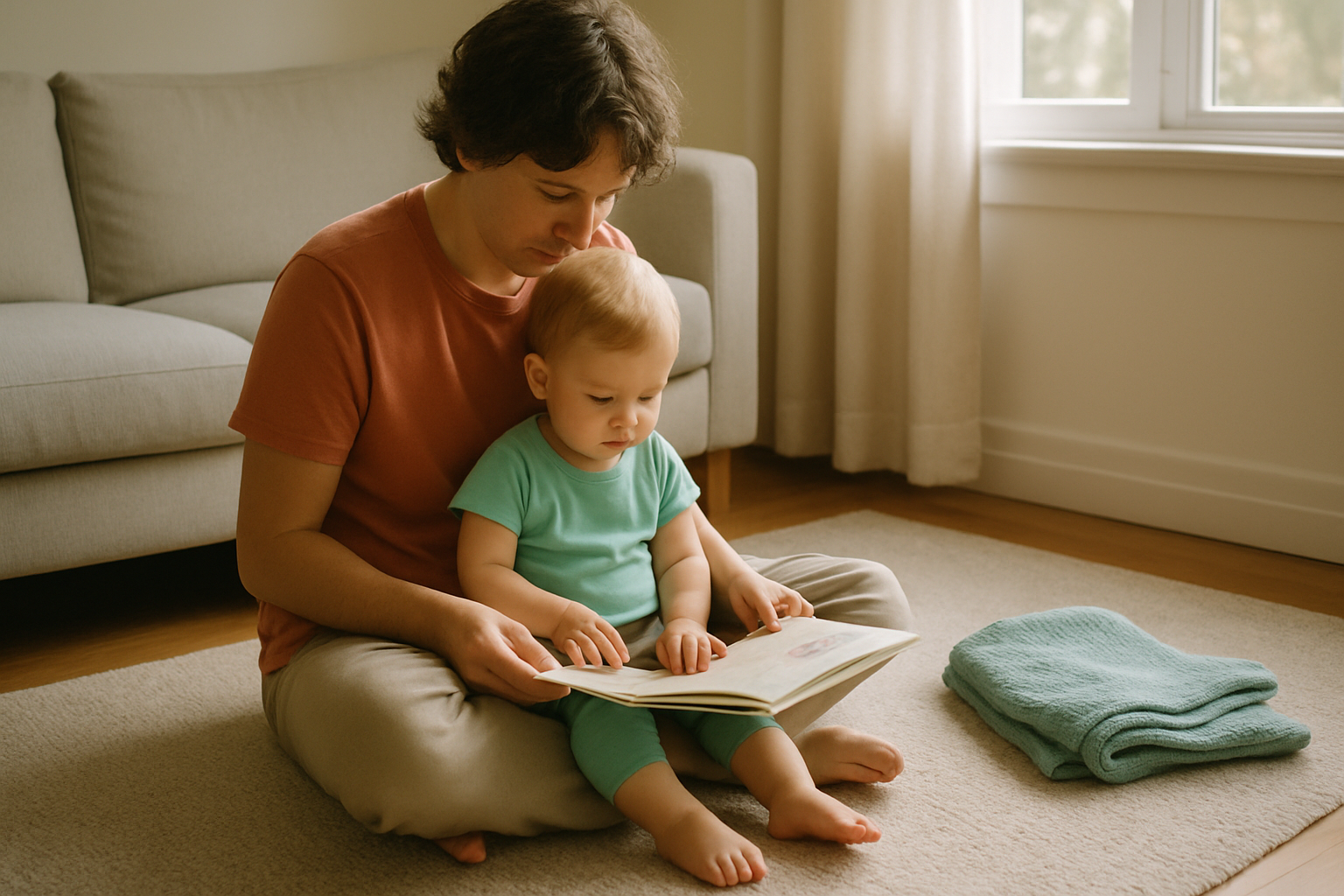
The method for a highly sensitive, autistic or non-verbal child stays the same as for any child: nappy off, cotton pants, three days at home, tracking what actually happens. What changes is the pace: expect a longer stretch, more time on familiarisation, fewer demands each day, and more reading of signals than waiting to be told.
What actually changes when your child is highly sensitive?
What stays exactly the same is the structure: nappy off during the day, cotton pants instead of a nappy or a training pant, the first three days spent at home, and a schedule that records what this particular child actually does. That structure is what does the work, whatever the child’s temperament.
What changes is pace and volume. A sensitive child usually needs a longer stretch of days, more time simply getting used to the potty or the toilet before anything is expected of them, fewer things asked of them in a single day, and praise pitched quietly rather than loudly. You will lean more heavily on reading the child’s own signals, because asking them outright can be one demand too many on a day that already has plenty.
The Potty Training Box is used successfully with children who are autistic, have Down syndrome, or are non-verbal, usually over a longer stretch than a week and by reading the child’s signals rather than waiting to be told in words.
Is my sensitive child ready, or are we starting too soon?
Common readiness signs include staying dry for a couple of hours at a time, noticing and reacting to a wet or dirty nappy, following a simple one-step instruction, and showing some interest in the toilet or in other people using it. These are the signs the NHS points parents towards when deciding whether to start, rather than any fixed birthday.
A child who is frightened of the potty or the toilet is not ready yet, whatever their age. The honest move is to build familiarity first and start the training itself later. If you are not sure where your child stands, the readiness signs checklist goes through this in more detail than one section here can.
Plenty of parents of sensitive children have already tried once and stopped. That is not a failure and it is not wasted effort. The method’s own advice after an attempt that did not go well is to pause and leave it a few weeks before trying again, rather than pushing on through a run of bad days.
What to do about the sensory side: noise, feel and the flush
A toilet seat reducer and a step stool matter more for a sensitive child than for most, because dangling feet with nothing to press against feel unsafe and unsteady, and that alone can be enough to make a child refuse to sit at all.
Sound is often the bigger issue. The flush, the extractor fan, and the echo of a tiled bathroom can all be startling. In the early days, let the child leave the room before you flush, and reintroduce the sound gradually once sitting itself is comfortable.
Cotton pants rather than training pants matter for the same reason across every child, but especially here: a child needs to feel wetness properly to learn from it, and cotton lets them feel it in a way a thicker training pant does not. Clothing that comes down in one movement, with no poppers, buttons or tights in the first few days, removes one more obstacle between noticing the need and getting there in time. It is also worth a glance at seat temperature, bathroom lighting, and whether your usual wipes have a strong scent, since any one of these can be the thing a sensitive child fixates on.
How often should I put my child on the potty? And why that is the wrong question
The aim of the whole method is the moment your child tells you themselves, so the better question is not how often to sit them down but how you get to the point where you can ask them, and trust the answer. In practice that means asking your child directly: ‘will you tell me when you need a wee?’, and treating the potty offer as a way of gathering information rather than a routine you impose by the clock.
Sitting a child down every thirty minutes because a timetable says so trains the parent to watch the clock, not the child to notice their own body. The tracking schedule exists precisely so you stop needing a fixed interval: it shows you when this particular child actually goes, and that is what you build the routine around instead.
There are only a few moments worth keeping as standing habits, both during training and afterwards: before and after sleep, and before you leave the house. Outside of those, the aim is to ask less often as the days go on, not more, so your child takes over the noticing themselves.
For a non-verbal child, agree on one clear signal early and use it consistently, whether that is a picture card, a hand sign, a particular sound, or simply a hand placed on the tummy. Early on you will create opportunities and offer the potty more than you expect to long term. That scaffolding is meant to come down quickly once your child starts giving you their own signal, whatever form it takes.
What the tracking schedule shows you about a sensitive child
Each tracking schedule card has six columns: the time your child had a drink, the time they were on the toilet, whether nothing happened (yes or no), whether there was a wee (marked green for a success or red for an accident), whether there was a poo (again green or red), and a notes column.
When you fill it in, it helps to have your child drink the cup in one go rather than in sips spread across the hour. That is the only way to see clearly how much went in and how long it then took before they needed the toilet, and that link between quantity and timing is exactly what the schedule is designed to show you.
The notes column is where the real work happens for a sensitive or non-verbal child. This is where you write down going quiet, wriggling, hiding behind the sofa, pulling at clothing, or any other small tell that comes before a wee or a poo. Over a handful of days those notes turn into a pattern you can act on, even when your child never says a word about needing to go.
| Column | What you write in it | What it tells you |
|---|---|---|
| Time of drinking | When your child had a full drink | How much went in, and when to expect a toilet need |
| Time on the toilet | When they sat, whether offered or self-led | How the gap after drinking narrows over time |
| Nothing (yes/no) | Whether they sat but nothing happened | Whether the timing offered was too early or too late |
| Wee (green/red) | Green for success, red for an accident | How often the child’s own signal was caught in time |
| Poo (green/red) | Green for success, red for an accident | Whether poos follow a more predictable time of day |
| Notes | Quiet spells, wriggling, hiding, pulling at clothes | The signals a non-verbal child gives instead of words |
The box includes 14 of these schedules, enough to cover the training week and a stretch beyond it. If you want extra copies, a printable tracking chart is available on the site.
Why day four or five is the hard one, not day two
Resistance most often shows up on day four or five, not day two. By that point many children are simply bored of being asked ‘will you tell me when you need a wee?’ over and over, and that boredom can look a lot like a setback.
The fix is to ask less often, not more. Cut back on the direct question and let your child carry more of the responsibility for noticing themselves. Paradoxically, stepping back at this point tends to move things forward, because it is often the repeated asking itself that a child is pushing against, not the toilet.
In a sensitive child this resistance can look different from a straightforward strop: it can show up as real distress, flat refusal, or a child who goes floppy and unresponsive rather than shouting. Read that as overload or boredom rather than as failure on anyone’s part.
If a run of days like this does not settle within a day or two of easing off, it is worth pausing the whole attempt and coming back to it in a few weeks, exactly as you would after any attempt that has not gone well.
What to do when your child is scared of the potty
Start with familiarisation and nothing more: the potty sitting in the room where your child can see it, sitting on it fully clothed, with no expectation that anything will happen while they are there. The goal at this stage is simply that the potty stops being a threat.
Never hold a child in place on the seat, and never flush while they are still sitting there, since either can turn a wobble into a fixed fear. A calm picture book about using the potty, read at a quiet moment rather than right before you expect a wee, can help build familiarity without pressure.
A short video watched together can also help take the edge off, since it shows another child going through the same thing rather than an adult explaining it.
If the fear seems to be specifically about poo rather than the potty in general, it is worth reading about a child who is afraid to poo on the toilet, since withholding is common in sensitive children and needs a slightly different approach from a general fear of the seat.
Rewards that work for a child who is overwhelmed by fuss
The sticker cards in the box come in four sizes, with 3, 5, 7 and 9 squares, used in that order rather than as a single fixed card. The first reward at three squares arrives quickly so a child sees straight away that the system works, and the squares needed grows as they improve, so the habit outlasts the stickers instead of stopping the moment they run out.
For a child who finds fuss overwhelming, quiet praise tends to land better than clapping and cheering: a calm word, a steady smile, a hand squeeze. The compliment cards in the box are there for exactly the moments when you have run out of your own words to say it differently again.
The two certificates, one for wees and one for poos, give a child something to see and hold at the end, which matters more for a child who cannot yet fully follow a spoken explanation of how well they have done.
Not every child responds to stickers or presents in the way you might expect, and that is worth reading about on its own if it applies to yours: see my child isn’t interested in rewards. If you would rather run a reward system your own way, the Extra Reward system Potty Training is sold separately for exactly that.
Autistic, Down syndrome or non-verbal: how the plan is adapted
The core structure does not change for these children. What changes is the timeframe and how closely you have to watch. Weeks rather than a single week is common and is not a sign that anything has gone wrong, whatever guidance you started from.
Where a verbal child might eventually be asked outright, here you are reading signals from the start: posture, quietness, a particular sound, a change in play. The same routine, the same bathroom, and the same order of steps every single time carries far more weight than any instruction does, because predictability is doing a lot of the reassuring for a child who cannot process a spoken plan the way another child might.
Small visual consistencies help too: the same phrase said each time, the same cup for drinks, the same drawer for pants. None of these are dramatic changes, but together they make the routine recognisable to a child who relies on sameness rather than explanation.
Anything that looks medical rather than behavioural, ongoing constipation, withholding, urinary infections, bedwetting that continues past the age of six, or a broader developmental concern, belongs with a GP or health visitor rather than being managed through a training method alone.
What the Potty Training Box gives you that a checklist cannot
The box contains a day-by-day training programme booklet, 7 instruction cards, 6 compliment cards, 14 tracking schedules, 20 sticker cards across the four sizes described above, 100 animal stickers, 20 poo stickers, two certificates, and a year of access to a community where the brand’s own team answers parents’ questions seven days a week.
Alongside it, it helps to have ready a potty for the first few days, a toilet seat reducer, a step stool, at least fifteen pairs of cotton pants, something to protect the mattress and sofa, a handful of small rewards, and pull-ups for sleeping. None of this needs to be elaborate; it just needs to be to hand before day one.
What a plan like this adds over a free checklist is the detail of what to actually do on a day that goes badly, not only on a day that goes well, plus somewhere to ask when it does. It is reusable for a later child, and refill sticker sets can be bought on their own when the originals run out.
Results vary and nobody can promise a date. Most children are dry in the daytime in about a week, some manage it in as few as three days, and others take two or three weeks, particularly if they are more sensitive or need more time to settle into a new routine. Night-time dryness is a separate matter that tends to come later and is not something any method here promises. If you are working towards a particular deadline such as starting school, it is worth reading about getting toilet trained before reception for how that pressure is best handled.
None of that changes the basic point for a sensitive child: the timeline matters far less than going at the pace they need, reading what they are actually telling you, and keeping the same calm routine for as long as it takes.
Frequently asked questions
At what age are children psychologically ready to potty train?
There is no single correct age. Readiness is judged by signs such as staying dry for a couple of hours, noticing a wet or dirty nappy, following a simple instruction, and showing some interest in the toilet, and the NHS bases its guidance on these signs rather than a fixed birthday. Some children show these signs nearer two, others nearer three or later, and both are normal.
What is a red flag for potty training?
A child who is visibly frightened of the potty or the toilet, who withholds wees or poos, or who shows no interest in the process at all after several weeks of gentle familiarisation, is not showing readiness yet. In that case the honest response is to pause and build familiarity before trying again, rather than pushing through distress. Ongoing constipation, withholding, or bedwetting past the age of six should be discussed with a GP or health visitor rather than managed alone.
Are highly intelligent or highly sensitive children harder to potty train?
There is no reliable evidence that intelligence makes potty training harder or easier. Sensitivity can genuinely slow the process down, because a sensitive child often needs more time to get used to sensory changes such as noise, the feel of the seat, or a new routine, but slower is not the same as harder or less capable.
How long does potty training take for an autistic or non-verbal child?
It varies a great deal and no single figure applies to every child. Many families find it takes noticeably longer than the week that is typical for the general method, often stretching over several weeks, with progress built through repetition of the same routine and careful reading of the child's own signals rather than relying on them to ask in words.
My child screams when I put them on the potty. What should I do?
Stop asking for a wee or a poo and go back to familiarisation: the potty in the room, sitting fully clothed for a moment with no expectation attached, and never held in place or made to stay. Screaming is a clear sign the child is not ready for that step yet, and the useful response is to slow right down rather than repeat the same request.
Should I use training pants for a child with sensory issues?
No. The method works with the nappy off and ordinary cotton pants rather than training pants, because a child needs to feel wetness properly through cotton in order to learn from it. A thicker training pant blunts that feedback, which is exactly the sensation a sensitive child relies on to connect the feeling with the need to go.
Ready for the next step?
The Potty Training Box holds the day-by-day programme this article is built on: tracking charts that show you when your child actually needs to go, instruction cards for each day, and a reward system that tapers off on its own.
Sources
This article was written with AI assistance and checked by Dustin van de Sande.